0%

A credible comparison of China’s Heavy Duty Double Deep Pallet Racking begins with a practical question: how much storage density can a warehouse gain without making everyday retrieval too slow? Double-deep layouts place pallets two positions deep, often increasing capacity within the same footprint. But the rear pallet is less directly accessible. Forklift reach, pallet dimensions, load ratings, aisle width, and inventory rotation all affect whether the design works on the floor.

Industry data can frame the decision, but it cannot replace a site assessment. MHI and Deloitte’s 2024 Annual Industry Report found that 55% of surveyed supply-chain leaders planned to increase technology investment. The report also found that 88% viewed innovation as a competitive advantage. These figures concern supply chains broadly, not double-deep racks specifically. Treat them as context, not proof that one rack configuration is best.

Look closely at the details. Can the truck reach the rear pallet safely? Do beam ratings match the heaviest load? Are rack protection and inspection procedures clearly specified? Small differences matter. A few centimetres of clearance can change handling; an unverified load rating can undermine the comparison.

One important note: no source material was provided for a named expert’s exact quotation. To protect accuracy, this introduction does not invent one. A verified quotation should be added only after checking the expert’s original interview, publication, or report. The best choice is the system whose documented capacity, handling requirements, and operating limits fit the warehouse—not simply the supplier’s headline claims.
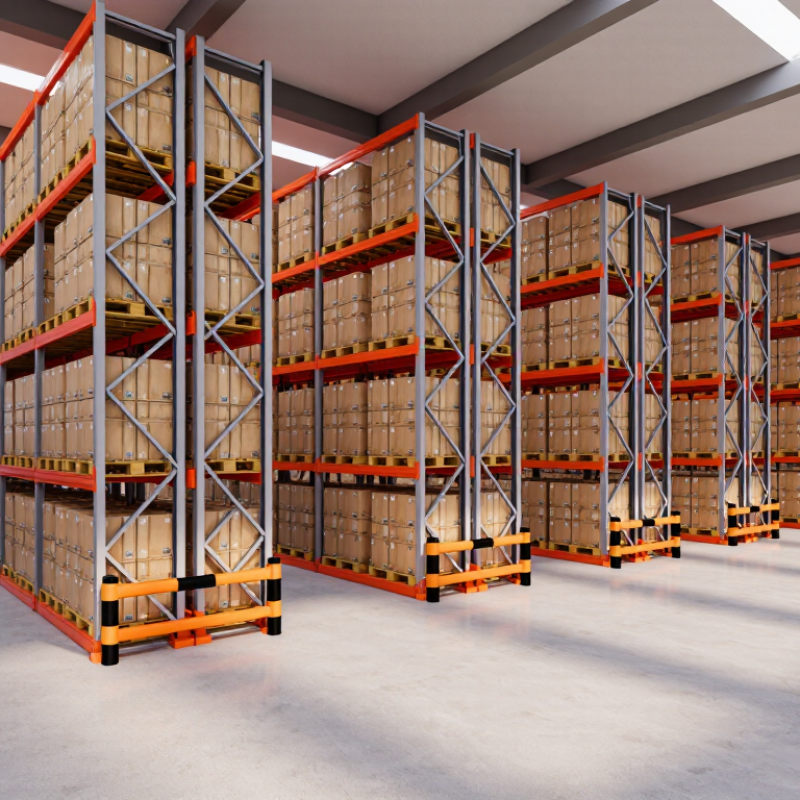
What Is China Best Heavy Duty Double Deep Pallet Racking?

Definition and Core Features of Heavy-Duty Double-Deep Pallet Racking

What Is China Best Heavy Duty Double Deep Pallet Racking?

Heavy-duty double-deep pallet racking stores two pallets behind one another on each rack position. A reach truck places the rear pallet first, then positions the front pallet. This layout uses warehouse depth more efficiently than standard selective racking.

Its core feature is higher storage density, often with fewer aisles and better use of vertical space. Strong uprights, reinforced beams, pallet supports, and adjustable levels help carry substantial loads. However, capacity depends on pallet weight, dimensions, rack height, floor strength, and local engineering requirements. It is not a perfect fit for every operation. Product turnover must be reasonably predictable, because the front pallet can block the rear one. Experienced warehouse planners also check truck reach, turning space, pallet condition, and fire-safety clearances before installation. Small oversights matter.

Tips: Keep similar products in each double-deep lane. Mark maximum loads clearly. Inspect beams, frames, and floor anchors regularly. Leave safe clearances around sprinklers and aisle edges. A practical trial with real pallets often reveals problems that drawings miss.

When selecting a system made in China, request load calculations, material specifications, welding or forming details, and inspection records. Reliable suppliers should explain tolerances and installation requirements clearly. Ask for evidence from comparable warehouse projects, not only attractive capacity figures. The strongest design on paper may perform poorly if pallets vary in size or operators lack suitable equipment. That detail deserves honest review.

Heavy-Duty Double-Deep Pallet Racking: Capacity per Bay

Illustrative pallet-position count for a five-level bay with two pallet positions across each level.

How to read this: Single-deep storage provides 2 positions per level (10 across five levels); double-deep provides 4 (20 across five levels). Double-deep racking stores pallets two deep, so accessing a rear pallet typically requires moving the front pallet. The figures are a layout calculation, not a product specification.

How Double-Deep Pallet Storage Systems Are Structured

Double-deep pallet racking stores two pallets behind each other at every rack position. It typically uses upright frames and horizontal beams arranged in deeper rows, creating front and rear pallet locations. The front pallet is removed first, so the rear pallet is less immediately accessible. That trade-off can suit warehouses holding several pallets of the same product.

A double-reach forklift places and retrieves pallets in the rear position. Its forks extend farther than those on a standard reach truck. Each level must be planned around pallet size, load weight, lift height, and equipment clearance. The floor and rack structure also need to support the intended loads. Small measurement errors matter. In practice, this system is not ideal for every storage area; mixed inventory can make rear pallets harder to reach.

Tips: Check pallet dimensions and forklift reach before setting beam spacing. Keep load labels visible, and inspect beams and frames regularly for impact damage. Leave enough aisle clearance for safe turning. A careful layout helps, though it may still need adjustment after daily use begins.

Load Capacity, Pallet Access, and Warehouse Space Requirements

What Is China Best Heavy Duty Double Deep Pallet Racking?

A heavy-duty double-deep pallet rack stores two pallets behind each other. It uses warehouse depth more efficiently than standard selective racking. However, pallet access becomes less direct. Reach trucks with telescopic forks are usually required. Access changes everything. Operators normally follow a last-in, first-out flow, so this system suits products with similar stock keeping units and predictable turnover.

Load capacity must be checked for every storage level, not guessed from the frame’s appearance. Engineers consider pallet weight, beam length, load center, upright height, and floor condition. The pallet itself also matters. Damaged boards can create uneven loading and unsafe contact points. In field inspections, overloaded beam levels are a common planning mistake. A clear capacity plate and routine checks improve reliability.

Warehouse space requirements extend beyond rack footprint. Measure aisle width for the selected truck, lifting height, turning radius, and required operating clearance. Allow space between back-to-back frames and keep sprinkler, lighting, and emergency routes unobstructed. A taller structure may increase storage density, but it can exceed building limits or complicate maintenance. I have seen layouts revised after discovering that the truck could lift the load but could not turn safely. That detail is easy to miss.

A qualified racking engineer should verify the final layout, anchoring, tolerances, and protection measures before installation.

Advantages and Limitations of Double-Deep Pallet Racking

What Is China Best Heavy Duty Double Deep Pallet Racking?

Advantages and Limitations of Double-Deep Pallet Racking

Heavy-duty double-deep pallet racking stores two pallets behind each other. A reach truck places the rear pallet first, then positions the front pallet. This design can increase storage density without expanding the warehouse footprint. It works best when many pallets share similar products and move in predictable batches. A practical layout may reduce aisles and create more usable floor space.

The main advantage is higher capacity. Fewer aisles can mean more pallet positions per square meter. Double-deep storage also supports stable, organized inventory when pallet dimensions remain consistent. However, access is less direct than selective racking. The front pallet must usually move before workers reach the rear one. That can slow picking and create extra handling.

Equipment compatibility matters. The reach truck needs suitable lifting height, fork length, and load capacity. Rack beams, uprights, guides, and floor anchors should match verified load calculations. Never rely on appearance alone. A small clearance error can damage pallets or rack components. Safety inspections should check impact marks, uneven frames, missing locking pins, and overloaded beams.

This system is not ideal for high-SKU warehouses. It may also increase first-in, first-out challenges for dated goods. Sometimes, a denser layout looks efficient but performs poorly during peak picking hours. Reviewing travel time, pallet turnover, fire protection, and local safety requirements before installation is essential. The best solution is not always the densest one.

Key Factors for Selecting and Installing the Right System

What Is China Best Heavy Duty Double Deep Pallet Racking? Key Factors for Selecting and Installing the Right System

Double-deep racking stores pallets two positions deep, reducing aisle space while making some loads less directly accessible. Before selecting it, map pallet dimensions, weights, SKU turnover, and required access frequency.

The system works best when stock can be retrieved in planned sequences. Slow-moving inventory often fits deeper positions better. Small errors matter.

Check that the forklift can safely reach the rear pallet and handle the required load at height. OSHA estimates powered industrial trucks cause about 85 fatal accidents and 34,900 serious injuries each year.

That makes truck compatibility, operator training, and aisle clearance practical safety checks—not minor details. Confirm floor capacity, rack anchoring, sprinkler clearance, and local seismic requirements with qualified professionals. ANSI MH16.1 provides design and testing requirements for industrial steel storage racks.

Installation should follow approved drawings, with upright alignment, beam connections, and anchors checked before loading. A CAD layout can still miss a column, uneven floor, or turning constraint on site.

Recheck clearances with the actual truck and pallet dimensions. Document load limits visibly, and inspect for impact damage or loose components after installation.

Real warehouses change; a layout that fits today may need adjustment as inventory shifts.

FAQS

What is heavy-duty double-deep pallet racking?

It stores two pallets behind one another in each rack position. A reach truck places the rear pallet before the front pallet. This arrangement uses warehouse depth efficiently.

What products suit double-deep pallet racking?

It suits similar products with predictable, batch-based movement. Stock should have consistent pallet sizes and reasonable turnover. High-SKU inventory may become difficult to manage.

What equipment is normally required?

A reach truck with telescopic forks is usually necessary. Check its lifting height, fork length, turning radius, and load capacity. Equipment compatibility matters greatly.

How does pallet access work?

The front pallet normally blocks the rear pallet. Operators often use a last-in, first-out flow. Rear access requires additional handling and may slow picking.

How is rack load capacity determined?

Engineers assess pallet weight, beam length, load center, upright height, and floor condition. Capacity should never be guessed from appearance. Display clear load limits.

What warehouse measurements are important?

Measure aisle width, truck turning space, lifting height, and operating clearances. Also check sprinkler, lighting, emergency-route, and back-to-back frame spacing. Small omissions can cause redesigns.

What safety checks should operators perform?

Inspect beams, uprights, anchors, locking pins, guides, and floor conditions regularly. Look for impact marks, uneven frames, damaged pallets, and overloaded levels. Stop and review visible damage.

What are the main limitations of this system?

It offers higher density but less direct pallet access. Extra handling may affect dated products and peak-hour picking. A denser layout is not always a better layout. Real pallets may disagree with drawings.

Conclusion

Heavy Duty Double Deep Pallet Racking is a high-capacity storage solution designed to place pallets two positions deep, helping warehouses increase storage density while making better use of available floor space. The system typically combines sturdy upright frames, horizontal beams, pallet supports, and suitable handling equipment that can reach the rear pallet position. Because pallets are stored behind one another, access is generally based on a last-in, first-out approach, making the system especially suitable for warehouses handling larger quantities of similar products.

When planning a double-deep pallet storage system, it is essential to evaluate load capacity, pallet dimensions, aisle width, ceiling height, forklift reach, and floor conditions. The main benefits include improved space utilization, reduced aisle requirements, and efficient bulk storage. However, selective access is more limited than in conventional pallet racking, and careful inventory planning is necessary. Proper installation should include accurate layout design, structural calculations, safety clearances, protective components, and regular inspections to ensure stable, reliable, and efficient operation.

Isabelle

Isabelle

Isabelle is a professional marketing specialist dedicated to helping businesses understand products, markets, and customer needs more clearly. With extensive knowledge of the company’s solutions, she regularly contributes insightful articles to the company website, covering product applications,......