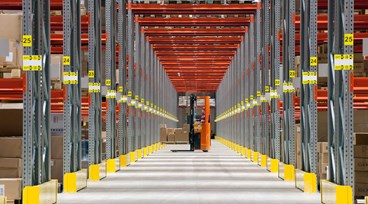
 Industry Benchmark
P90 Selective Pallet Racking
Cold-rolled from high-tensile structural steel with multi-hook connector claws. Engineered to withstand cyclic live loading while offering built-in deflection resilience up to 30 tonnes frame loads.
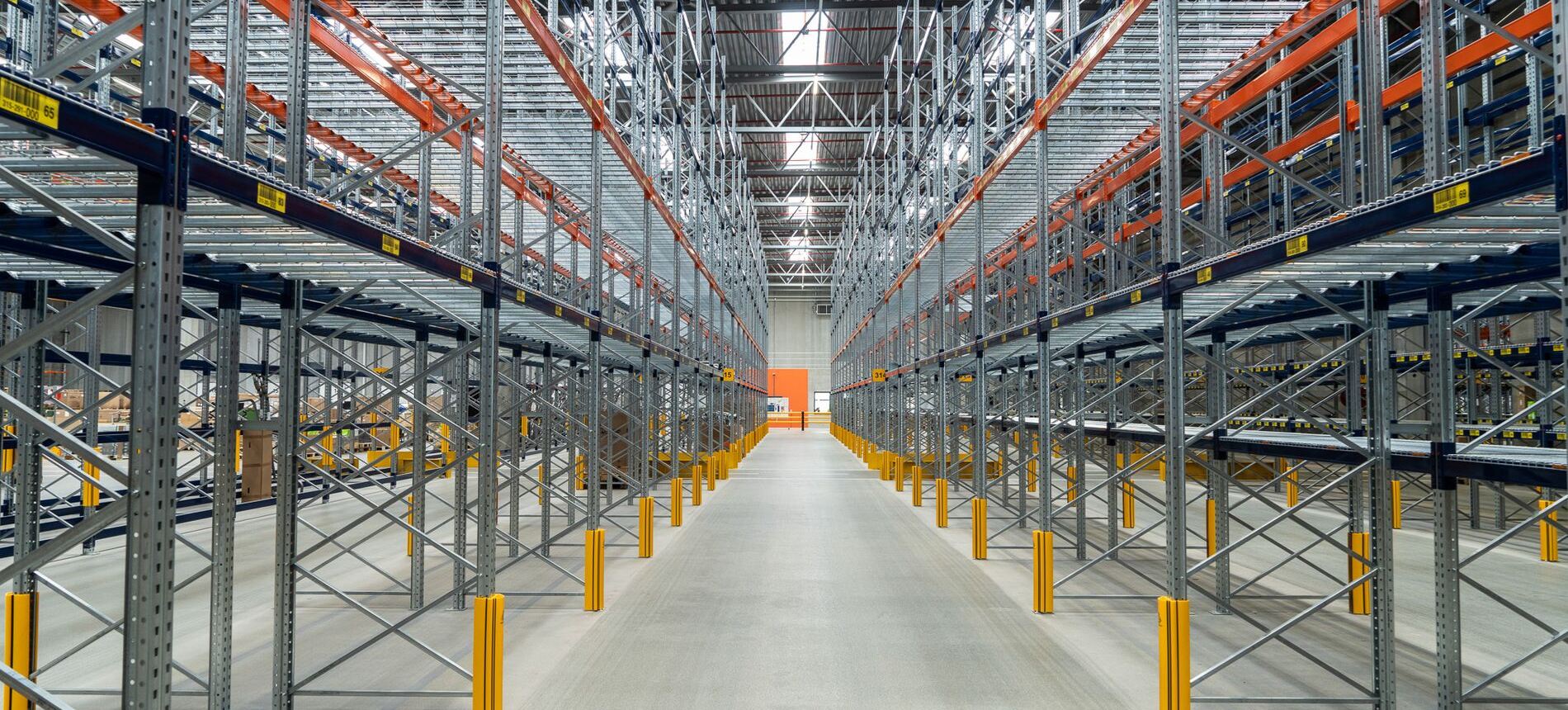
Structural integrity assessment, green-amber-red risk classification, deflection analysis, and engineered lifecycle compliance delivered worldwide by DEXION RACKING.
Send an Inquiry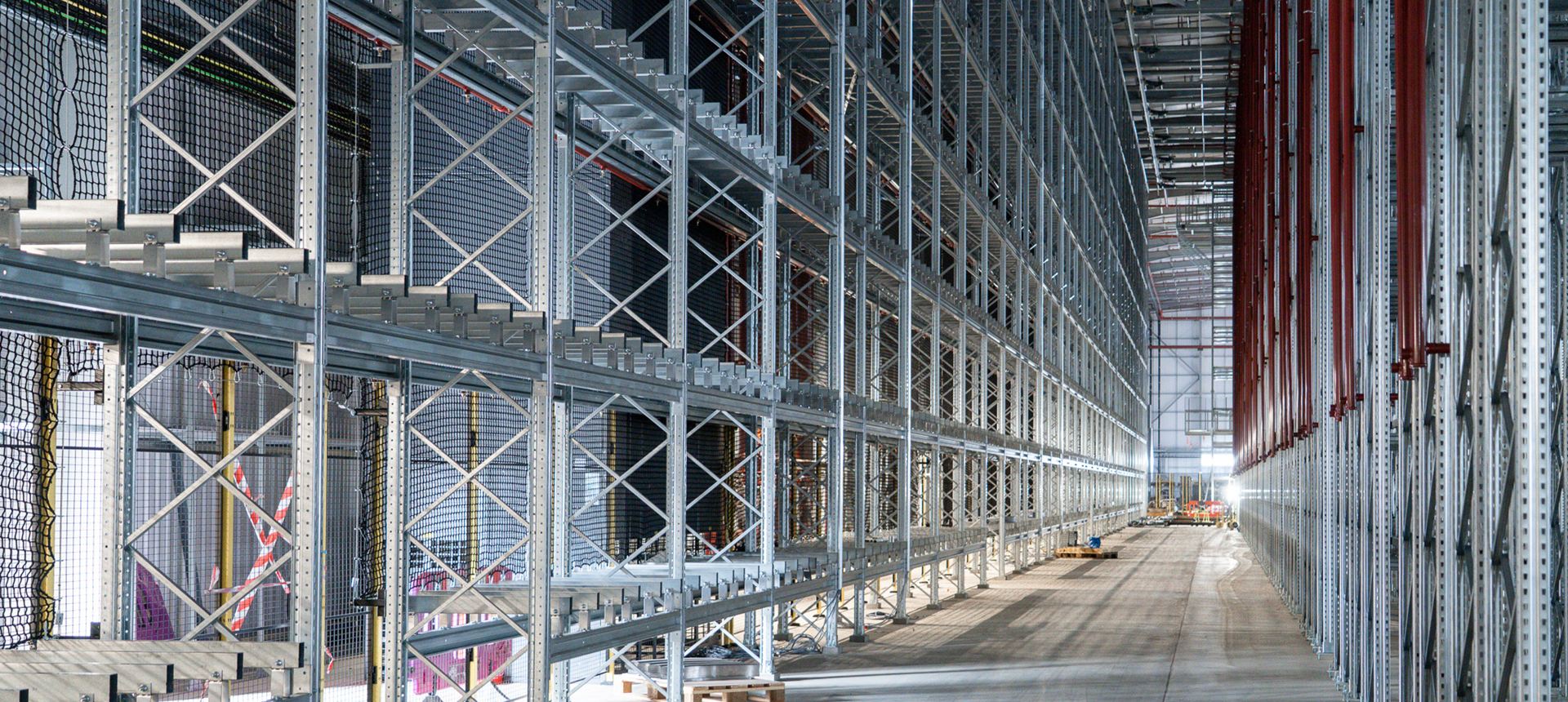
Structural Audit & Retrofit Services
Repair, reinforce, or re-profile damaged uprights and overloaded beams with precision-engineered cold-rolled steel components.
Send an Inquiry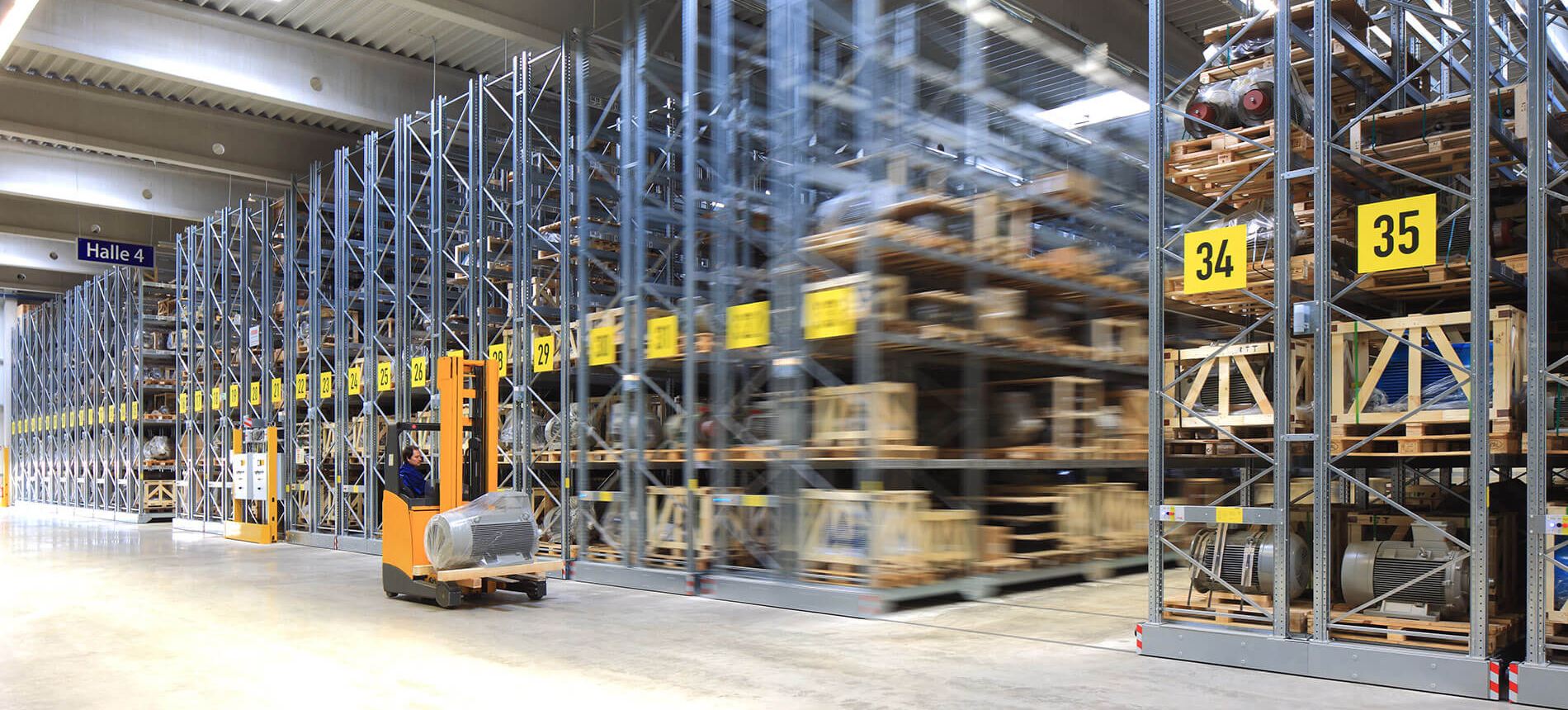
Deflection & Out-of-Plumb Tolerances
Quantitative millimeter-level verification of beam sag, column lean, and anchorage anchor-pull resistance under real operating loads.
Send an Inquiry
Mitigate Supply Chain Liability
Protect workforce health and secure statutory insurance compliance through structured annual expert rack inspections.
Send an InquiryPallet racking systems are free-standing, high-stress civil steel structures loaded with hundreds of tonnes of static and dynamic goods. Every minor forklift strike, loose floor anchor, or dislodged safety lock alters the mathematical equilibrium of the frame.
Under international safety governance, including European Standard EN 15635 ("Steel Static Storage Systems – Application and Maintenance of Storage Equipment"), rack inspection is not merely an optional maintenance checklist; it is an uncompromised legal and operational prerequisite. Modern high-density storage bays reach heights over 15 meters, where secondary structural stresses, commonly known as P-Delta effects, mean that an out-of-plumb column leaning by as little as 10 millimeters can exponentially amplify bending moments on lower upright sections.
At DEXION RACKING, our rack inspection methodology moves beyond basic surface observations. Our qualified structural engineers evaluate dynamic wheel impact loads, baseplate concrete anchoring shear values, shear pin deformation, and cold-formed profile strain fatigue. By establishing rigorous routine audits, global distribution centres insulate themselves against progressive structural collapse, regulatory non-compliance, catastrophic inventory destruction, and fatal workplace injuries.

Engineered rack audits: identifying micro-deformations before structural yield
Precise geometric measurement separates normal operational elasticity from acute structural failure risks.
When an auditor evaluates uprights and bracings, steel straightness gauges of 1.0 meter in length are positioned along the compressed profile. Damage is systematically categorized using standard color codes to prescribe operational remedies:
| Green Level (Requires Monitoring) | Deformation below maximum allowable thresholds (e.g., < 3.0 mm lateral deflection over a 1.0 m gauge in the cross-aisle plane, < 5.0 mm in the down-aisle direction). The rack system is deemed safe for continuing operational capacity; parts are logged for tracking in following quarterly inspections. |
|---|---|
| Amber Risk (Hazard Requiring Action) | Damage exceeds Green parameters by up to a factor of 2. Components must be offloaded and replaced or certified-repaired within four weeks. Re-loading the affected bay or adjacent spans with new pallets is strictly prohibited until structural verification is signed off. |
| Red Risk (Immediate Danger) | Severe structural yield, upright tears, dislodged locking pins, or bracing buckles exceeding twice the allowable tolerance (e.g., > 6.0 mm cross-aisle bend). Mandates immediate emergency offloading of all connected pallet positions and isolation of the bay with visible hazard barriers. |
Attempting unauthorized repairs via heat-straightening or uncertified welding destroys the metallurgical crystalline structure of cold-formed steel. DEXION RACKING provides factory-certified structural components and engineered repair kits that restore exact load-bearing integrity.
Send an Inquiry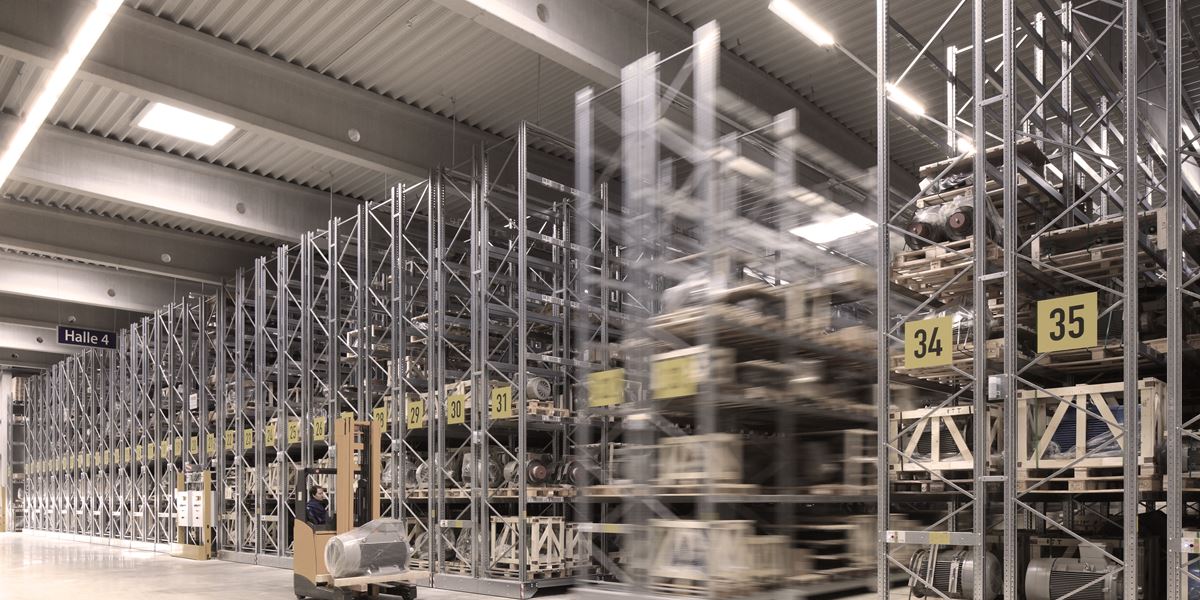
High-density dynamic racking systems require precise rail alignment and clearance audits
Procuring high-durability storage hardware significantly reduces inspection failure rates, lowers maintenance expenditure, and protects high-throughput logistics hubs.
Industry BenchmarkCold-rolled from high-tensile structural steel with multi-hook connector claws. Engineered to withstand cyclic live loading while offering built-in deflection resilience up to 30 tonnes frame loads.
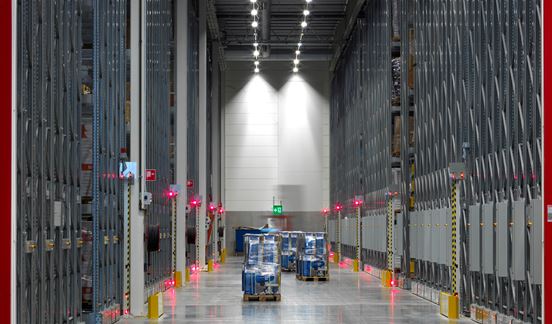 Density + Safety
Dynamic motor-driven base racks equipped with failsafe photoelectric barriers, rail emergency stop sweeps, and plc-managed interlocks to prevent mechanical impact during aisle traverse.
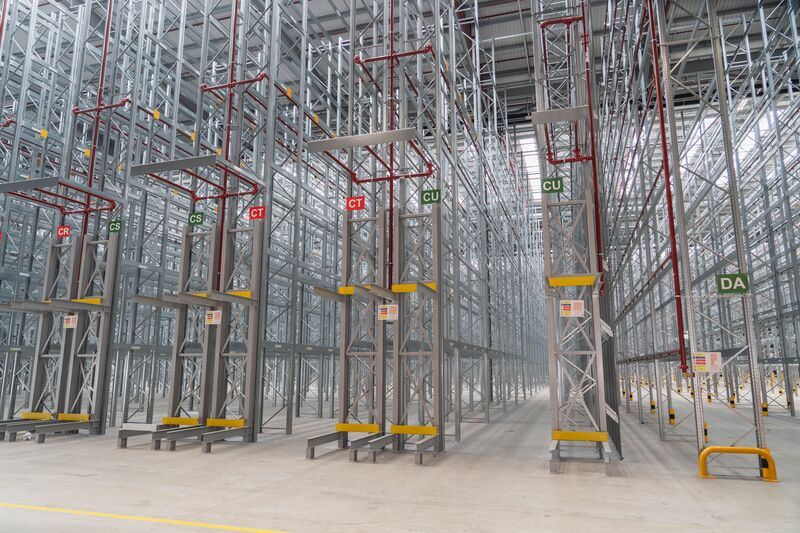 Impact Defense
High-energy absorbing polymer and heavy steel column wraps, tubular end-of-aisle crash barriers, and run spacers designed to deflect reach truck forks and prevent costly Red Risk downtime.
The future of racking safety is transitioning from retrospective paper clipboards to continuous, predictive, and sensor-driven structural intelligence.
As global supply chains expand, procurement executives and safety managers are encountering structural challenges driven by automated fulfillment operations. Forklifts moving at rapid acceleration cycles, coupled with automated automated guided vehicles (AGVs) operating in tight narrow aisles, demand microscopic structural tolerances. Over the next five years, procurement of warehouse rack inspection services will evolve across four core dimensions:
1. Autonomous Drone Audits & LiDAR Digital Twins: Manual climbing of multi-tier storage racks presents worker safety hazards and disrupts operating throughput. Warehouses are rapidly adopting indoor autonomous drones equipped with high-resolution optical cameras and LiDAR scanners. These systems cross-check millions of structural points against the building's digital BIM model, detecting bent diagonals and out-of-plumb deviations down to fractions of a millimeter without halting picking operations.
2. Continuous IoT Impact Telemetry: Instead of waiting for annual physical audits to reveal critical damage, intelligent uprights now feature integrated micro-electromechanical (MEMS) accelerometers. These compact sensors register dynamic G-force impacts from forklift masts in real time, instantly pinging the Warehouse Management System (WMS) to lock out compromised pallet locations before progressive collapse can occur.
3. Lifecycle Sustainability & Circular Steel Certification: Corporate ESG initiatives demand that supply chain managers verify the carbon intensity and structural pedigree of replacement steel components. Sourcing certified European-standard components from DEXION RACKING ensures complete traceability of raw steel melt, audited yield curves, and structural longevity that avoids early system scrapage.
4. AI-Powered Predictive Maintenance Software: Cloud analytics platforms leverage historical damage frequencies to model where forklift collisions cluster. Operations leaders use this empirical data to redesign aisle layout geometries, alter truck approach speeds, and pre-position reinforced column wraps where risk is mathematically highest.
Send an Inquiry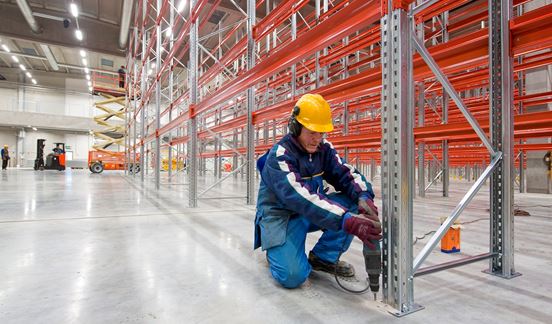
Next-generation storage systems are engineered with integrated telemetry and high-yield steel profiles
Backed by decades of industrial manufacturing leadership, DEXION RACKING is trusted by multinational 3PLs, automated integrators, and heavy industrial facilities.
In-house calculations according to EN 15512 and regional seismic codes, ensuring every component meets required safety margins.
Manufactured using high-strength steel with certified batch traceability, precision roll-forming, and strict dimensional tolerances.
Direct supply chain reach delivering certified inspection teams and turnkey installation crews worldwide across every continent.
Seamless integration of repairs, bay re-configurations, height extensions, and semi-automated machinery into active warehouses.
Full documentation, comprehensive risk reports, and official EN 15635 compliance load notices for complete insurance protection.
 Cold Chain
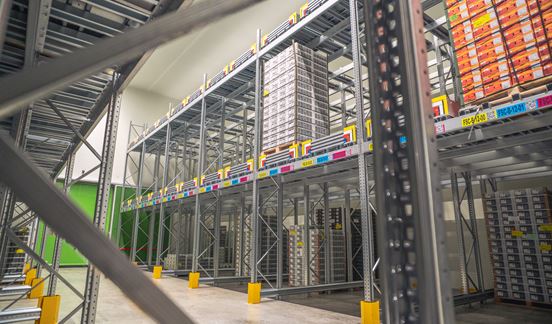
Low-temperature environments exacerbate steel embrittlement and baseplate anchoring stress. Our inspections audit condensation corrosion, frost heave uplift, and beam clip integrity down to -30°C.
 High Throughput
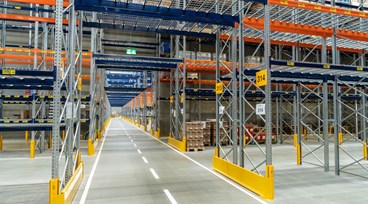
Multi-shift operations experience severe cycle fatigue and frequent forklift contact. We establish high-frequency visual check schedules alongside expert annual audits to preserve throughput speed.
A systematic rack inspection program does far more than satisfy regulatory compliance; it safeguards enterprise capital. Unplanned structural failures lead to catastrophic downtime, inventory write-offs, and supply chain interruption. Through scheduled audits, high-yield steel upgrades, and precision retrofit solutions, DEXION RACKING helps global enterprise facilities extend warehouse operational lifespans safely, economically, and sustainably.
Clear, engineering-backed answers to the top technical and regulatory questions asked by safety directors and logistics operations leaders.
Send an Inquiry