1. The EV Revolution Demands Heavier, Larger Racking Capacities
Electric vehicles (EVs) carry substantially greater gross vehicle weights due to high-voltage traction batteries, requiring tyres with reinforced sidewalls, sound-damping acoustic foam linings, and heavier internal steel belting. Consequently, the average tyre assembly is 20% to 35% heavier than legacy ICE vehicle tyres. Forward-thinking procurement teams are upgrading racking load specifications, demanding higher linear meter beam ratings to avoid catastrophic structural failure over time.
2. Boom in Outsourced 'Tyre Hotel' Subscription Services
Urban density, shrinking domestic garage storage, and stringent seasonal wheel-changeover legislation across Europe, North America, and Northern Asia have spurred exponential growth in commercial "Tyre Hotels". Dealerships and dedicated 3PLs are investing heavily in multi-tier mezzanine tyre racks with barcode and RFID scanning integrations, moving from manual floor stacking to fully managed cubic multi-tier storage assets.
3. High-Bay Automation & Robotic Handling (AS/RS & AMR)
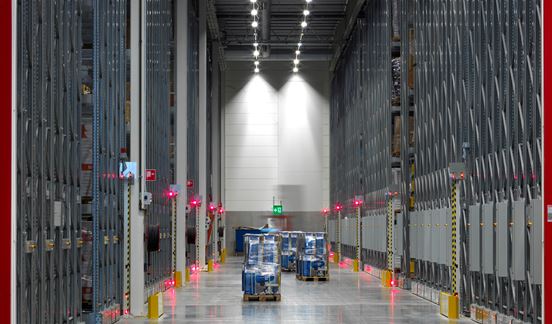
Tyre handling is notoriously labor-intensive, physically demanding, and injury-prone. Modern regional distribution centres are rapidly adopting automated storage and retrieval systems (AS/RS), automated guided vehicles (AGVs), and robotic arm tyre handlers. This transition requires millimetre-precise racking tolerances, rigid beam deflections, and specialized guide rails manufactured to the highest international quality standards.
4. Stricter Environmental & NFPA Fire Safety Enforcement
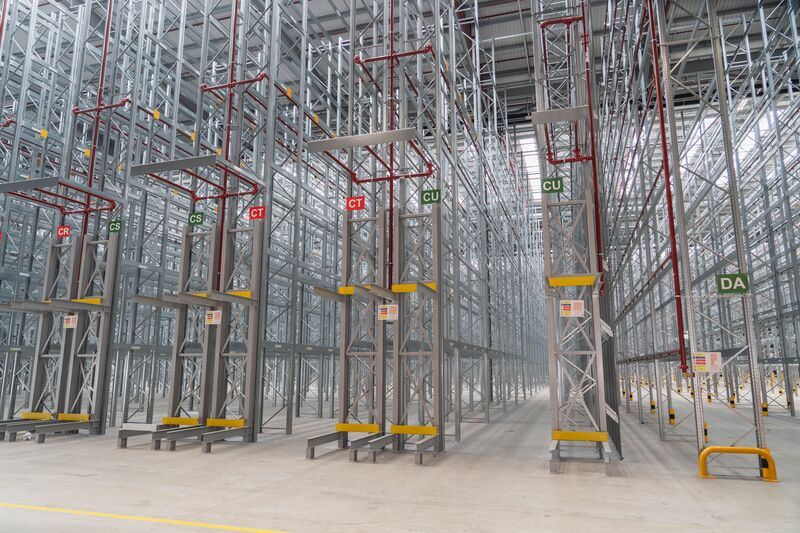
Tyres burn at extreme thermal heat release rates and generate noxious, highly combustible pyrolysis oils. Municipal fire marshals and international insurers are tightening enforcement of ESFR (Early Suppression Fast Response) sprinkler arrays, mandatory vertical flue gaps, and in-rack sprinkler barriers. Procurement contracts increasingly require racking suppliers to demonstrate integrated sprinkler bracket mounts and guaranteed chimney-space geometry.
5. Circular Supply Chains and Modular Warehouse Retrofitting
Rather than pouring new concrete, enterprise warehouse managers are retrofitting existing facilities. Modular tyre racking frameworks that can be reconfigured from passenger tyres to commercial van tyres—or disassembled and relocated as logistics networks shift—are commanding higher procurement priority over rigid, welded systems. DEXION RACKING's fully modular boltless clip-in designs lead this circular operational model.

 Industry Standard