Down to -30°CTested low-temperature impact-resistant steel alloys
Up to 50%Refrigeration energy reduction via cubic optimization
EN 15512 & CEFully certified structural and seismic design safety
Full LifecycleThermal layout planning, installation & EN 15635 audits
Engineering the Cold Chain
Overcoming the Thermodynamic and Structural Demands of Cold Storage
Cold storage warehouses represent some of the highest capital expenditure and operational cost environments in industrial logistics.
Refrigerating a single cubic meter of industrial warehouse space requires substantial continuous kilowatt expenditure. When facilities utilize conventional wide-aisle pallet racking, more than 50% of that costly conditioned volume is wasted on empty forklift transit space. DEXION RACKING develops high-performance cold storage solutions that convert unused air volume into high-density storage capacity, directly minimizing thermal footprints while elevating inventory turnover.
Operating in chilled (+2°C to +8°C) and deep-freeze (-18°C to -30°C) environments introduces severe structural challenges. Sub-zero temperatures alter the physical properties of steel, lowering its ductile threshold and increasing vulnerability to brittle fracture under dynamic impact. DEXION RACKING solves this by utilizing certified micro-alloyed structural steels, specialized cold-resistant coatings, and low-temperature mechanical drives that maintain absolute reliability without metal fatigue or mechanical freeze-up.
Charpy V-notch impact-tested steels compliant with European standards
Engineered airflow clearances to avoid hot spots and frozen evaporator zones
Turnkey execution: CAD analysis, load calculations, sub-zero drives, and installation
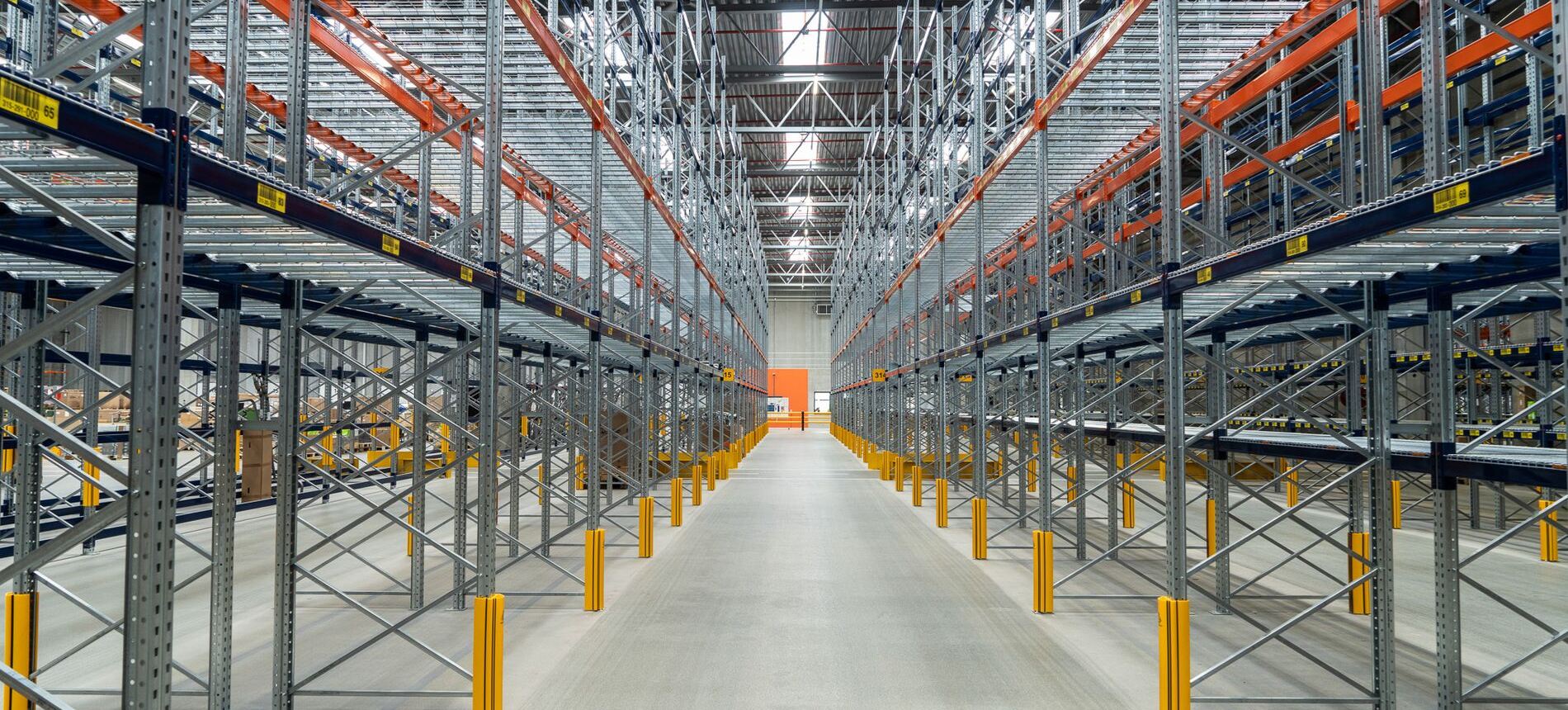
Sub-zero structural engineering: DEXION RACKING delivers complete cold chain systems across Europe and worldwide
Engineered Systems
Recommended Cold Storage Solutions for High-Efficiency Warehouses
Selecting the right cold storage configuration depends on your balance of SKU variety, pallet throughput velocity, and energy efficiency targets.
Highest Density + 100% Access
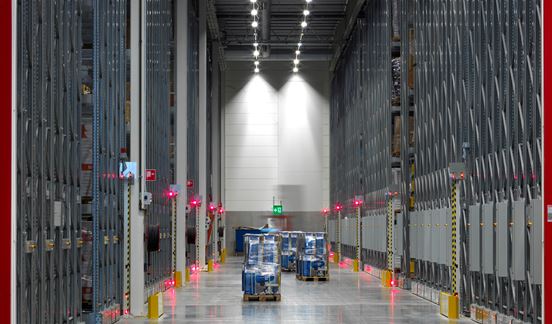
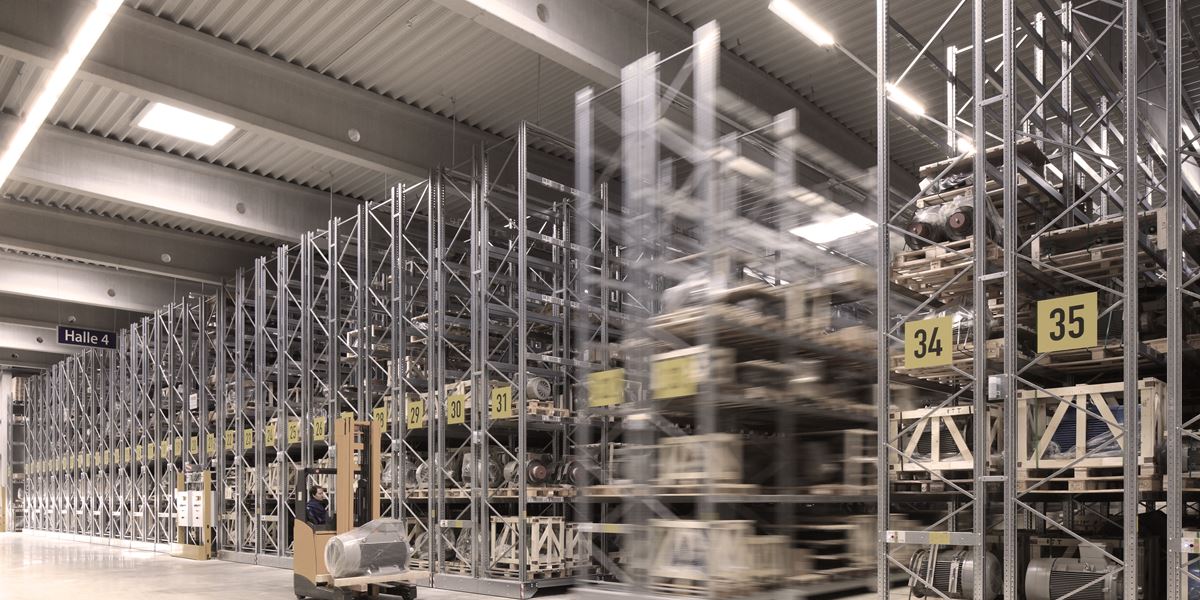
MOVO Heavy-Duty Mobile Racking
MOVO mounts heavy-duty P90 racking runs onto electronically controlled motorized mobile bases running on embedded floor tracks. By opening only the active aisle needed, MOVO unlocks up to 98% more pallet capacity within the identical refrigerated building footprint while maintaining direct 100% access to every single SKU.
Ideal for deep-lane frozen food storage with high volume per SKU. Independent battery-powered shuttles navigate deep storage channels to deposit and retrieve pallets automatically. Operators transfer pallets only at the aisle face, eliminating forklift travel inside sub-zero lanes and protecting structural steel from truck collisions.
Engineered for high-density bulk storage where mechanical automation is not required. Double-deep configurations reduce aisle requirements by 50% using pantograph reach trucks, while Drive-In systems maximize volume utilization for seasonal harvest cold stores requiring dependable batch rotation on a predictable budget.
Sub-Zero Structural Integrity: Metallurgy, Finishes, and Floor Kinetics
Building a compliant cold store requires understanding the thermodynamic laws governing steel, lubricants, and thermal air currents.
Standard carbon steel undergoes ductile-to-brittle transition when exposed to freezing environments. DEXION RACKING engineers cold storage systems using low-carbon, micro-alloyed structural steels that possess verified impact energy toughness at -20°C and -30°C under EN 10025-2 specifications. This ensures that accidental lift-truck contact does not cause catastrophic upright cracking.
Furthermore, our engineering teams address thermal expansion and contraction differentials between steel structures and the underlying concrete slab. In frozen environments, sub-floor thermal insulation barriers and glycol heating loops prevent frost heave. DEXION RACKING anchors are calculated to withstand thermal cycling stresses, ensuring rigid vertical alignment across multi-decade lifecycles.
Operational Temperatures
Ambient down to Chilled (+2°C) and Deep Freeze (-30°C)
Steel Specification
High-strength structural grades with sub-zero Charpy V-notch verification
Surface Finishing
Hot-dip galvanizing, Magnelis®, and sub-zero flexible epoxy powder coatings
Electrical & Drives
IP65 low-temperature heating elements, cold-rated cabling, and synthetic ester lubricants
Compliance Standard
EN 15512, EN 15620, EN 15635, and FEM 10.2.07 regulations
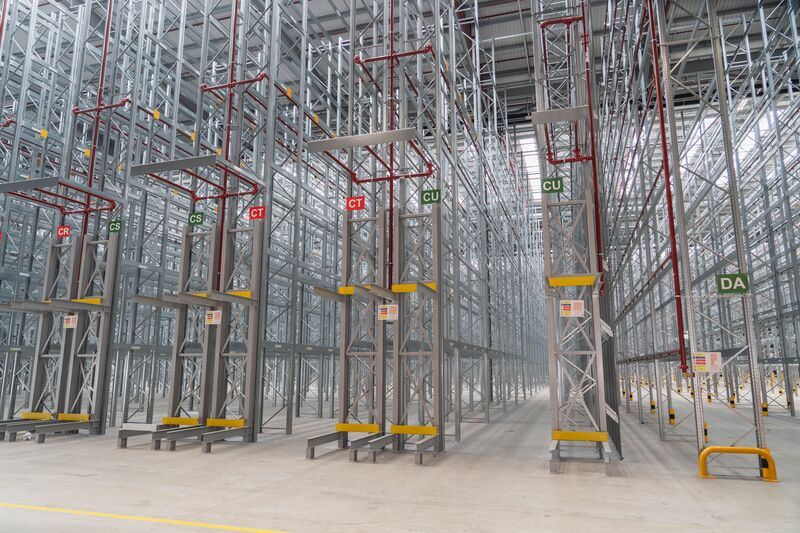
Engineered P90 frame profiles: customized for extreme cold chamber load capacities and thermal stability
Strategic Market Intelligence
Future Procurement Trends in Cold Storage Solutions
Global supply chain shocks, extreme energy cost volatility, and rapid expansion in biopharma logistics are fundamentally reshaping how cold storage infrastructure is procured and constructed.
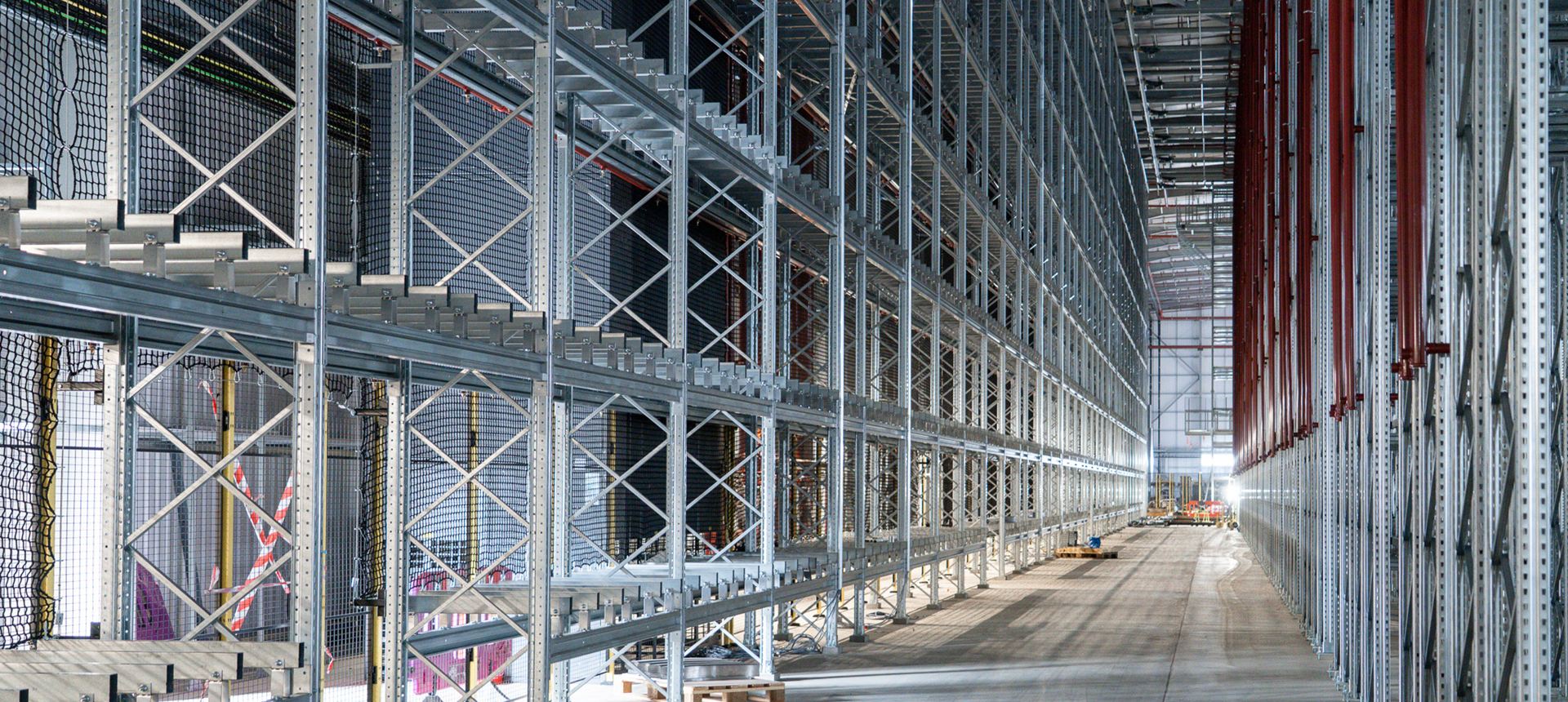
Escalating commercial power tariffs are forcing procurement teams to evaluate cold storage facilities on a "cost-per-cooled-pallet" metric rather than initial construction CAPEX. Buyers are shifting away from traditional 8-meter low-bay warehouses to 25m to 40m automated high-bay clad-rack structures. In clad-rack construction, the racking itself forms the load-bearing framework for insulated wall and ceiling panels, minimizing unnecessary roof voids, accelerating construction schedules, and reducing building envelope thermal leakage by over 40%.
2. Eradicating Labor from Hostile Sub-Zero Environments
Labor shortages in refrigerated supply chains have reached unprecedented levels. Working prolonged shifts in -25°C freezers causes physical fatigue, high turnover, and elevated lift-truck collision rates. Future procurement prioritizes semi-automated shuttle racking, Automated Guided Vehicles (AGVs), and stacker cranes that operate inside the deep-freeze chamber, allowing personnel to remain in climate-controlled picking or dispatch staging docks.
Regulatory mandates across biologics, mRNA therapies, and perishable foods demand uninterrupted traceability and strict validation under GxP and GDP standards. Racking layouts must incorporate dedicated air circulation channels to avoid thermal dead zones. Simultaneously, enterprise ESG commitments are driving procurement officers to specify steel systems manufactured via low-carbon circular electric-arc furnace (EAF) production lines with comprehensive product lifecycle declarations.
At DEXION RACKING, our engineering teams assist clients in future-proofing cold chain assets. By integrating predictive maintenance sensors, scalable racking geometries, and hybrid automated interfaces, we ensure your cold facility delivers enduring structural resilience and optimal thermal performance over a 25-plus year horizon.
Slashing Cold Chain Carbon Emissions Through Smarter Racking Layouts
Refrigerated logistics is one of the highest energy-intensity sectors in industrial supply chains. By condensing pallet positions, eliminating unnecessary aisle cubic volume, and ensuring optimal thermal airflow across evaporator cooling units, DEXION RACKING helps businesses reduce refrigeration power demand by up to 50% while lowering the lifetime carbon footprint of frozen goods.
Engineering Excellence and Global Cold Storage Capabilities
For decades, DEXION RACKING has engineered mission-critical storage solutions for multinational 3PLs, temperature-controlled food distributors, and pharmaceutical giants.
01
In-House Calculation
Our dedicated structural engineering department designs every cold storage system in strict compliance with EN 15512, factoring in dynamic seismic forces, live floor deflections, and sub-zero impact loads.
02
Sub-Zero Steel Sourcing
Controlled European and international steel procurement ensures verified grain structures, low-temperature ductility, full mill-test traceability, and superior resistance to micro-cracking down to -30°C.
03
Tailored Manufacturing
Modern production facilities run specialized roll-forming lines, automated welding, and specialized protective finishing for high-humidity and freezing environments.
04
Cold-Trained Riggers
Experienced installation crews equipped with specialized torqueing tools and sub-zero anchoring expertise erect and laser-align systems accurately within constrained client timelines.
05
EN 15635 Cold Audits
Certified rack inspectors perform comprehensive annual safety assessments, load sign verification, and structural integrity audits to keep your cold store completely incident-free.
Explore answers to the most frequent technical, operational, and financial questions asked by global logistics directors and supply chain engineers when planning sub-zero storage facilities.
Why is cold storage racking significantly different from ambient dry warehouse racking?
Cold storage facilities face extreme thermodynamic constraints. First, operating costs are dominated by cooling energy; refrigerated cubic meters are up to five times more expensive than dry ambient space, demanding ultra-high-density storage. Second, structural steel becomes brittle under sub-zero conditions (down to -30°C), requiring certified low-temperature impact-resistant steel grades (such as EN 10025-2 S355J2 or J4). Third, moving components, sensor electronics, wiring, and lubricants must be specifically engineered to prevent freezing, condensation, and electrical failure.
Which high-density storage system delivers the fastest ROI in a sub-zero freezer room?
For facilities requiring 100% pallet selectivity alongside maximum density, DEXION MOVO mobile racking delivers the fastest ROI, cutting refrigeration cubic air footprint by 40% to 50% while maintaining individual pallet accessibility. For operations with high pallet volumes per SKU and high rotation cycles, Semi-Automated Pallet Shuttle Systems provide superior ROI through rapid pallet turnover, zero forklift entry into deep storage lanes, and reduced structural impact risks.
How does DEXION RACKING mitigate ductile-to-brittle transition risk in freezer storage?
DEXION RACKING engineers all cold storage structures strictly in accordance with EN 15512 and regional cold-temperature codes. We verify steel chemistry, notch toughness, and Charpy V-notch impact values at -20°C and -30°C. Upright columns, safety locks, baseplates, and mechanical fixtures undergo cold-specific galvanization or specialized powder-coat finishes that resist thermal contraction micro-fractures.
Can an existing ambient warehouse be retrofitted into a cold or chill storage facility?
Yes. Retrofitting involves conducting dynamic thermal layout assessments, evaluating concrete floor insulation and frost-heave heating systems, verifying structural anchor depth, and redesigning the racking array to optimize airflow around refrigeration evaporator units. DEXION RACKING specializes in retrofit conversions using high-density P90 configurations and compact MOVO rails.
How do automated shuttle systems perform with lithium-ion batteries in sub-zero freezers?
Modern automated shuttles utilize specially insulated lithium iron phosphate (LiFePO4) battery packs equipped with integrated internal heating circuits. When operating in -25°C environments, the thermal control system preserves optimal battery chemistry during operation and charging, preventing rapid degradation and delivering continuous 8-to-10 hour operational shifts.
Start Your Cold Chain Transformation
Optimize Your Cold Storage Footprint with DEXION RACKING
Connect with our cold storage engineering specialists for structural design, cubic density calculations, and custom layout proposals.
Whether designing a new deep-freeze logistics hub or retrofitting an existing cold store to cut power bills, DEXION RACKING provides complete engineering documentation, site surveying, and fully compliant sub-zero racking systems.
 Highest Density + 100% Access