Why Global Logistics Directors Are Shifting to Mobile Pallet Racking
Industrial land prices, sky-high construction premiums, and escalating cold storage utility bills have rendered conventional static racking economically obsolete in high-density distribution hubs.
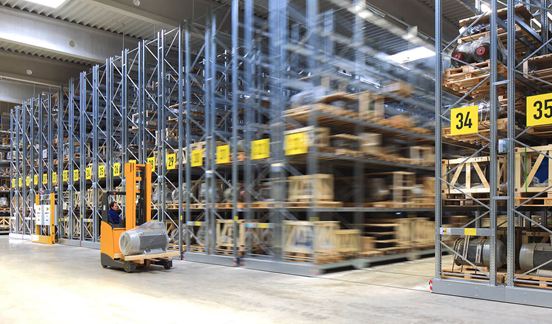
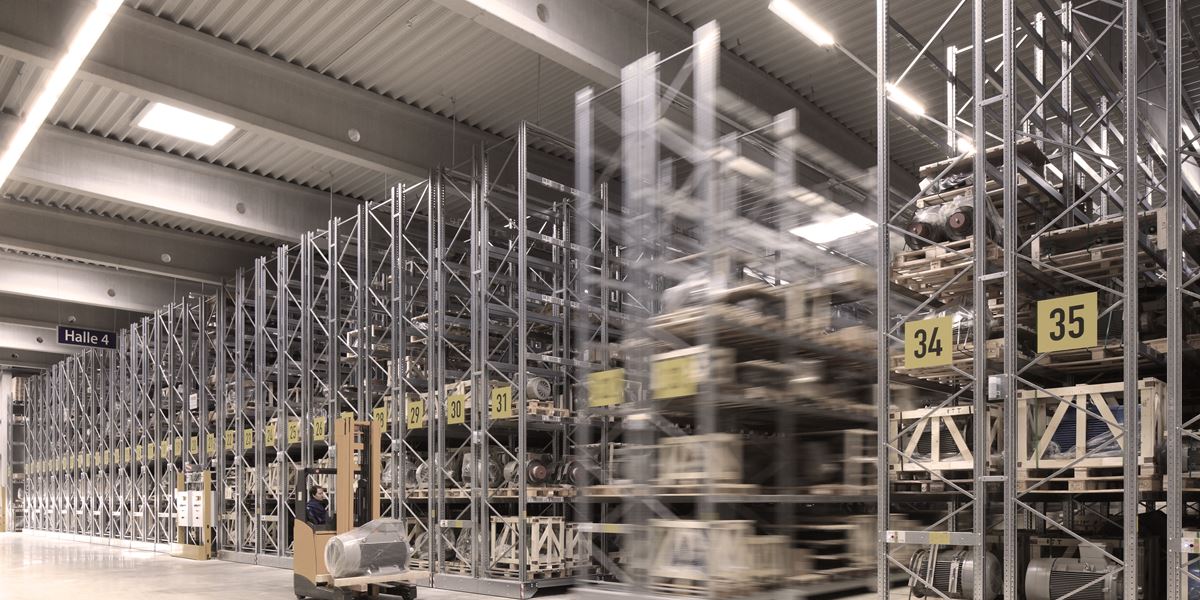
Standard selective pallet racking requires a dedicated operational aisle between every double run. In typical logistics facilities, between 55% and 65% of clear floor space is consumed by empty aisle pathways reserved exclusively for occasional forklift transit. Mobile pallet racking completely re-engineers this spatial geometry. By placing heavy-duty industrial racking superstructures onto electronically driven mobile bases running on flush precision floor rails, multiple fixed aisles are consolidated into a single movable aisle.
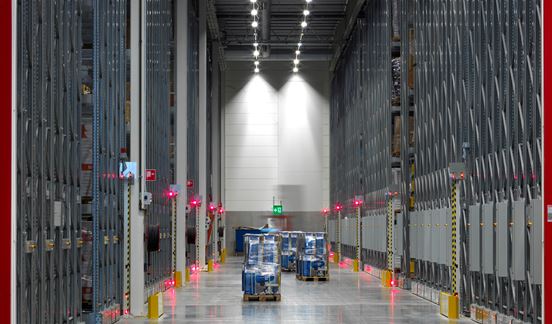
Whenever an operator or automated vehicle requests access to a specific rack face, the motorized carriages traverse laterally in unison at speeds up to 4.5 meters per minute, opening an aisle precisely where required. The result is transformative: warehouses achieve an immediate 80% to 90% increase in pallet storage density while completely avoiding the SKU-blocking bottlenecks associated with Drive-in, Shuttle, or Push-Back channel configurations.
100% SKU Selectivity: Direct immediate picking for every single pallet bay without honeycombing delays.
CapEx Avoidance: Delay or eliminate multi-million dollar greenfield facility constructions by doubling current cube volume.
Heavy-duty motorized MOVO carriages operating under PLC multi-sensor protection
Engineered Product Configurations
Recommended DEXION RACKING Mobile Systems & Configurations
Every supply chain operation possesses unique throughput velocities, load dimensions, and ambient constraints. DEXION RACKING engineers custom structural profiles to match exact payload dynamics.
Ambient Hubs
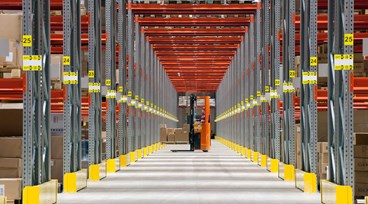
Heavy-Duty Ambient MOVO
Engineered for high-turnover central distribution warehouses, 3PL facilities, and raw material manufacturing reserves. Supports bay heights exceeding 12 meters with individual carriage payload capacities up to 24,000 kg.
Up to 24t CarriagesPLC ControlledRadio Frequency Remote
Featuring low-temperature certified steel alloys, IP65 sealed motor drives, condensation-proof electronics, and automated night-parking ventilation cycles that optimize airflow to slash refrigeration power consumption.
Designed for timber yards, steel pipe manufacturers, and extruded aluminum distributors. Integrates heavy cantilever arm uprights on continuous synchronized mobile carriages without restrictive front vertical columns.
Zero ObstructionPipes & ExtrusionsContinuous Carriages
Technical Data & Design Criteria for Procurement Teams
Procurement engineers and warehouse facility architects require verified technical metrics to conduct accurate civil slab calculations and intralogistics throughput modeling.
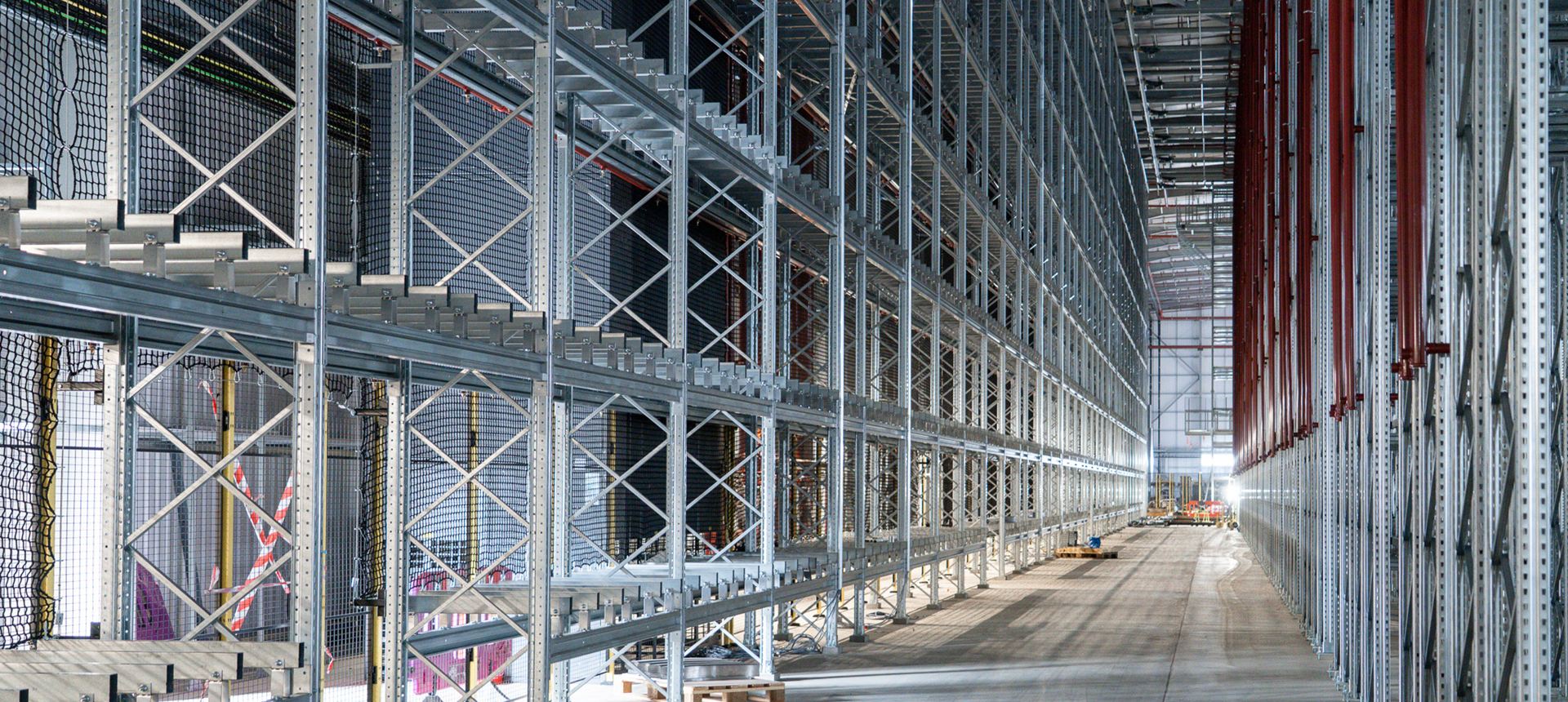
DEXION RACKING mobile pallet racking components undergo rigorous finite element method (FEM) testing under European standard EN 15512 (structural rack design) and EN 15095 (power-operated mobile storage safety). Drive systems utilize decentralized geared motor drives coupled directly to precision wheel sets, preventing torque distortion and mechanical binding across rail spans reaching over 80 linear meters.
Carriage Payload Capacity
Up to 24 metric tons per carriage base (custom engineered up to 300 kN)
Max Installation Length
Exceeding 80 meters run length with continuous multi-wheel synchronization
Traversing Movement Speed
Adjustable up to 4.5 meters/minute with soft-start and soft-stop frequency inverters
Operating Temperature Range
-30°C deep freeze to +40°C ambient humidity environments
Drive System Architecture
Decentralized multiple shaft-mounted geared motor units (SEW-Eurodrive / Nord)
Safety Compliance Architecture
EN 15095, optical light curtains, ground trip bars, photoelectric safety zones
Control Modes Available
Manual pushbutton, handheld RF remote, fork-truck terminal, or full WMS/WCS API
Engineered components fabricated from certified high-tensile structural steel
Market Analysis & Future Insights
Future Procurement Trends in Mobile Pallet Racking (2025–2030)
Procurement executives are no longer evaluating pallet racking purely as static structural steel; they are acquiring dynamic material handling assets integrated directly into automated supply chain ecosystems.
1. Total Cost of Ownership (TCO) Replaces Initial CapEx
Industrial land leasing rates in Tier-1 logistics nodes across Europe, North America, and Asia-Pacific have risen by over 38% since 2020. International procurement directors recognize that while mobile racking carries a higher upfront electro-mechanical capital cost than standard static frames, the total cost of ownership over a 7-year lifecycle is 30% to 50% lower. The dramatic reduction in required square footage, civil building permits, property tax footprints, and warehouse foundation perimeters delivers immediate ROI.
2. Cold Chain Energy Mandates & Carbon Border Taxes
Refrigerated warehouse facilities consume substantial electrical power, with up to 60% directly expended cooling unused air buffers in wide forklift aisles. Future procurement specifications are increasingly driven by corporate decarbonization targets and ISO 50001 energy standards. By compacting chilled cubic meters by nearly half, mobile racking reduces required refrigeration compressor loads by 35% to 42%, dramatically lowering annual operational expenses and Scope 2 carbon emissions.
3. AGV & AMR Autonomous Interoperability
Manual counterbalanced forklift labor shortages are accelerating the deployment of Autonomous Guided Forklifts (AGVs) and Autonomous Mobile Robots (AMRs). Modern procurement RFPs now require mobile pallet racking systems equipped with industrial IoT controllers and bidirectional WMS/WCS application programming interfaces (APIs). When an AGV receives a pallet retrieval order, it automatically signals the mobile racking PLC via Wi-Fi to open the designated aisle before the vehicle arrives, achieving zero dwell time.
Technological Evolution
Engineering Advancements Driving System Longevity
The technological evolution of mobile pallet racking centers on preventative diagnostics, low-wear drive physics, and advanced personnel protection.
Early-generation mobile racks historically faced criticism regarding carriage drift, mechanical rail wear, and prolonged aisle opening cycles. Contemporary systems developed by DEXION RACKING solve these historical challenges through sophisticated digital synchronization:
Decentralized Frequency-Inverter Drives: Soft-acceleration and soft-deceleration algorithms eliminate pallet load inertia shifting and minimize gearbox mechanical stress.
Intelligent Night-Parking Modes: Automated PLC commands trigger uniform, partial spacing between all carriage blocks during non-operational hours, ensuring optimal fire sprinkler penetration and homogeneous cold air circulation.
Predictive Maintenance Telemetry: Motor vibration sensors, wheel bearing thermal monitors, and power cycle counters continuously stream telemetry data to identify maintenance needs before downtime occurs.
With decades of intralogistics leadership, DEXION RACKING delivers turnkey engineering, traceable fabrication, and comprehensive regulatory compliance across four continents.
01
Structural Design
Certified in-house civil and mechanical structural engineers perform seismic calculations, wind-load analysis, and rack frame FEM modeling to European standard EN 15512.
02
Quality Fabrication
Manufactured using certified virgin structural coil steel with automated robotic roll-forming, laser profiling, and electrostatic thermoset epoxy powder coating.
03
Turnkey Rails & Slabs
Precision floor rail integration expertise, supporting both new construction embedded rail casting and secondary screed retrofits for existing logistics warehouses.
04
EN 15095 Safety
Multi-layered active safety architecture integrating Category 4 safety relays, triple-redundant infrared beam arrays, and optical perimeter laser scanners.
05
Lifecycle Inspection
Comprehensive after-sales service, technical training, remote PLC software diagnostics, and accredited EN 15635 annual rack safety inspection certifications.
Engineering a Greener, High-Efficiency Supply Chain
Constructing a new industrial warehouse requires immense quantities of concrete, structural steel, and environmental land disruption. DEXION RACKING mobile pallet racking enables multinational corporations to consolidate operations within existing assets, preventing land consumption and conserving thousands of metric tons of embodied building carbon.
How does mobile pallet racking compare to radio shuttle and standard VNA systems?
Unlike Drive-In or deep-lane Radio Shuttle systems which operate on strict batching principles (LIFO or FIFO by channel) and suffer from honeycombing capacity loss when pallets are partially picked, mobile pallet racking guarantees 100% direct access to every SKU at all times. Compared to Very Narrow Aisle (VNA) racking, mobile racking removes up to 80% of dedicated access aisles altogether, liberating up to 90% more pallet storage density within the same physical warehouse volume without requiring expensive specialized turret trucks or wire guidance systems.
What structural floor slab tolerances and rail embedments are required?
Mobile pallet racking relies on structural running and guide rails embedded directly into the structural slab or laid within a secondary concrete topping screed. Installation must strictly adhere to DIN 18202 standards for surface flatness to prevent mechanical wheel resistance. DEXION RACKING bases distribute massive point loads across forged steel wheel sets, requiring an engineered floor capable of withstanding dynamic wheel loads between 25 kN and 120 kN per axle depending on system height and pallet density.
Can mobile pallet racking operate reliably in sub-zero cold storage facilities?
Yes. DEXION RACKING mobile systems are engineered specifically for temperature-controlled applications down to -30°C. They feature low-temperature synthetic lubricants, IP65-rated drive motors, heated floor guide tracks to prevent condensation icing, and PLC-controlled "night-park" ventilation spacing to optimize ambient airflow and cut refrigeration cooling losses by up to 40%.
What multi-tier safety systems protect operators and handling machinery in mobile aisles?
In accordance with European Safety Directive EN 15095, DEXION RACKING carriages incorporate continuous floor-level photoelectric trip bars, high-precision optical laser safety scanners along carriage profiles, integrated acoustic starting sirens, flashing warning beacons, and instant manual e-stop interlocks on each electrical faceplate. If an obstacle, pedestrian, or dropped carton interrupts the infrared barrier, the entire carriage block arrests movement in fractions of a second.
Can existing static pallet racking uprights and beams be retrofitted onto mobile bases?
Yes. Provided the existing upright frames and horizontal beams comply with EN 15512 structural integrity and match load deflections, DEXION RACKING can bolt certified superstructure racks onto newly installed motorized chassis carriages. This retrofitting strategy dramatically decreases capital expenditure and project downtime while doubling overall warehouse storage density.
What is the average cycle time to open a working aisle?
A standard working aisle typically requires between 25 and 45 seconds to open fully, depending on the number of moving carriages and the programmed clearance width (generally 3.0 m to 3.5 m for reach trucks). Utilizing radio-frequency remote controls mounted on forklift dashboards or automated WMS pre-opening modules, drivers trigger aisle movement while approaching the block, ensuring the picking aisle is completely cleared and locked in position upon arrival.
 Ambient Hubs