Choosing the right China Best Heavy Duty Selective Pallet Racking supplier requires more than comparing prices. It requires evidence, practical experience, and clear communication. Heavy Duty Selective Pallet Racking supports direct access to stored pallets, making it suitable for warehouses with varied products and regular stock movement. A dependable supplier should understand pallet dimensions, forklift turning space, floor conditions, and required load levels before proposing a design.
Details matter. Upright frames, beams, bracing, and safety locks must work as one stable system. Accurate drawings help installers position each bay correctly. Quality inspections should include steel thickness, weld consistency, coating coverage, and beam deflection checks. Factory experience also matters when racks are used in cold stores, manufacturing plants, or distribution centers.
Real projects are rarely perfect.
A professional supplier should explain limitations instead of hiding them. A proposed rack may need adjustment after a site survey. Actual pallet weights can differ from initial records. Forklift behavior may also create unexpected impact risks. These points deserve honest discussion before production begins. Reliable manufacturers provide technical documents, installation guidance, spare parts, and responsive after-sales support. They should also explain maintenance routines, inspection intervals, and safe operating practices in practical language.
The strongest supplier is not simply the one offering the lowest quotation. It is the partner that connects engineering knowledge with consistent manufacturing control. By reviewing certifications, project references, production photographs, and communication quality, buyers can make a more confident decision. The final goal is simple: a safe, accessible, and adaptable storage system that performs reliably every working day.
What Is Heavy Duty Selective Pallet Racking?
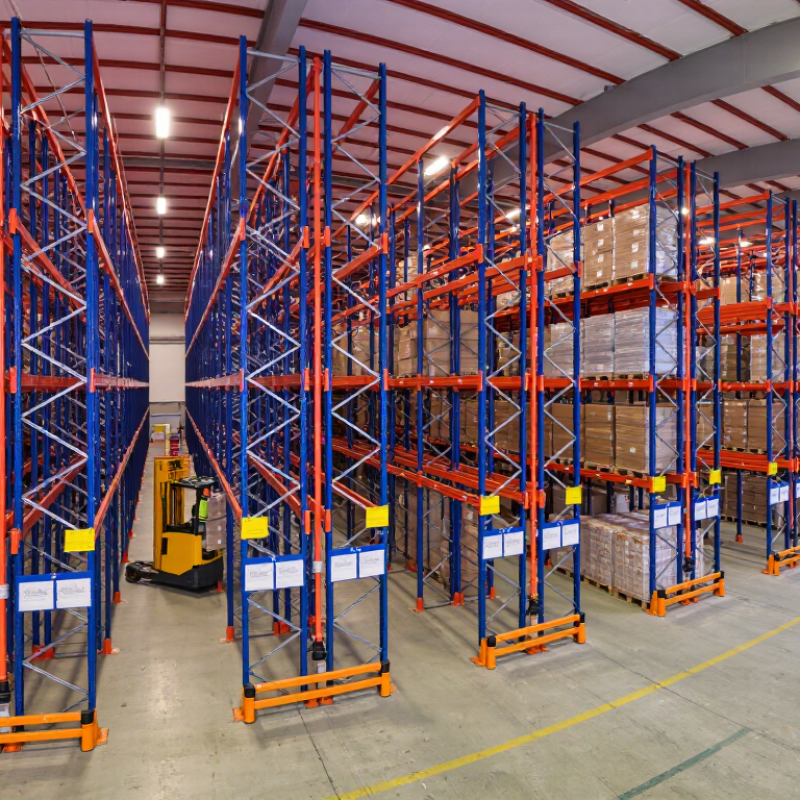
Heavy duty selective pallet racking is a steel storage system that gives forklift operators direct access to each pallet. Upright frames support horizontal beams, creating adjustable bays for different pallet loads. A worker can retrieve one pallet without moving another. Simple, but practical. In a busy warehouse, that access can help teams handle many product types and frequent order changes. The trade-off is density: aisles and direct-access positions use more floor space than some high-density storage systems.
The Mobile Handling Institute and Deloitte’s 2024 Annual Industry Report surveyed nearly 1,000 supply chain professionals; 55% expected to increase investment in supply chain technology. That finding does not prove selective racking improves performance, but it reflects growing attention to warehouse operations and visibility. Rack selection still depends on pallet dimensions, load weight, forklift reach, and site conditions. Loads should be clearly specified, and damaged uprights or beams need prompt inspection. A rack may look sturdy and still be incorrectly configured. That detail is easy to miss.
Selective pallet racking stores pallets in individual locations that can be accessed directly from the aisle. This chart uses a simplified single-face lane model: the front pallet position is immediately accessible, so the accessible share is calculated as 1 divided by the lane depth. Actual warehouse layouts and access vary.
China Best Heavy Duty Selective Pallet Racking Supplier
Key Features of China-Made Heavy Duty Pallet Racking
China-made heavy duty selective pallet racking is designed for direct access to individual pallet locations. Its layout suits warehouses handling varied products and frequent picking. Upright frames, horizontal beams, and diagonal bracing form the main structure. Beam levels can usually be adjusted to match different pallet heights. That flexibility matters when stock changes through the year.
Look closely at steel thickness, weld consistency, and the fit between beam connectors and uprights. These details affect stability and everyday handling. A beam locking pin helps prevent accidental disengagement during forklift contact. It is small, but important. Load capacity should be specified for each beam level and frame configuration, not treated as one universal figure. Floor condition, pallet dimensions, and clear aisle width also shape the final design.
A practical specification should include the expected load, pallet size, lifting equipment, and planned rack height. Anchoring and protection at busy aisle ends deserve attention too. Before installation, confirm that the drawings match the warehouse’s actual floor and operating conditions. A supplier’s figures are useful, but they are not a substitute for site review. I would still question any quote that lists capacity without explaining the configuration. That is easy to miss.
| Feature | Typical Specification or Configuration | Practical Consideration |
|---|---|---|
| Rack Type | Adjustable selective pallet racking with upright frames and horizontal beams | Provides direct access to each pallet position and suits warehouses storing a wide range of SKUs. |
| Load Capacity | Designed to a specified load per beam level and per bay; capacity varies with beam span, frame height, steel section, and configuration. | Confirm the rated loads with project-specific engineering calculations. Do not treat a general capacity range as a rating for a particular installation. |
| Upright Frames | Cold-formed steel uprights with diagonal and horizontal bracing; frame depth and height are selected for the pallet and building layout. | Frame capacity depends on dimensions, steel properties, bracing pattern, base conditions, and connection details. |
| Beams and Connections | Steel beams connect to perforated uprights using end connectors; beam levels can generally be repositioned in increments supported by the upright design. | Use compatible components and locking devices, and follow the manufacturer's installation and inspection instructions. |
| Pallet and Aisle Layout | Bay width, beam level, and aisle width are determined by pallet dimensions, handling equipment, and the required clearances. | Measure actual pallet loads and forklift turning requirements before fixing the layout. |
| Surface Finish | Common options include powder coating for indoor use and galvanized finishes for applications requiring greater corrosion protection. | Select the finish according to the operating environment; coating choice does not replace suitable corrosion assessment. |
| Safety Accessories | Options may include row spacers, column guards, frame protectors, mesh decking, pallet supports, and beam safety locks. | Choose accessories based on the pallet type, site risks, and applicable local requirements. |
| Design and Standards | Rack design should follow the standards and regulations applicable to the installation location, such as EN 15512 in relevant European projects. | The applicable design basis, seismic requirements, floor conditions, and building constraints should be confirmed for each project. |
| Installation and Inspection | Installation requires correctly assembled frames, secure anchoring where specified, level floors, and clearly displayed load information. | Inspect racks regularly for impact damage, loose or missing components, and changes to the original configuration. |
| Project-Specific Engineering | Final dimensions, component sections, load ratings, and anchoring details are determined from the approved warehouse design. | All specifications shown here are general selection considerations, not a substitute for engineered drawings and verified load data. |
Choosing a reliable Chinese racking supplier requires more than comparing online prices. Check their manufacturing experience, engineering team, and export records. A capable supplier should provide clear warehouse drawings, load calculations, and steel specifications. Ask how upright frames, beams, and connectors are tested. Small details matter.
Request a factory video or arrange an independent inspection. Look closely at welding consistency, beam locks, surface coating, and packaging protection. Reliable suppliers can explain steel grades, allowable loads, production tolerances, and installation requirements without avoiding technical questions. They should also provide traceable inspection reports and practical assembly instructions. Vague answers signal risk.
Samples can reveal more than polished presentations. Order a beam or connector sample when the project is important. Test its fit, finish, and locking action with your engineering team. Confirm delivery schedules, replacement parts, warranty terms, and after-sales response times in writing. A low quotation may hide thinner steel or weaker coating. I have seen buyers focus too heavily on price and regret the missing details later. That mistake is easy to repeat. Leave room for correction, because warehouse conditions often differ from the original drawings. A dependable supplier welcomes questions, revises documents carefully, and accepts reasonable third-party quality checks.
For a China-based heavy-duty selective pallet racking supplier, manufacturing quality starts with verified steel, not a polished catalogue. World Steel Association’s World Steel in Figures 2024 reports that China produced 1,019.1 million tonnes of crude steel in 2023. That scale supports a deep materials supply chain, but it does not prove the quality of any rack component. Buyers should request steel grade and mill certificates, then check that incoming sections match the approved drawings. Small differences matter. A beam that looks straight can still have inconsistent thickness.
Design and inspection should follow recognized requirements, including ANSI MH16.1 for industrial steel storage racks. For material verification, ISO 6892-1 specifies tensile testing of metallic materials. A dependable factory records test results, weld inspections, coating thickness, and dimensional checks by production batch. It should also identify who approved each inspection and when. Ask for rated load details and engineering documents for the actual configuration, not a generic sample. I would not treat a clean weld as proof of capacity; visual checks alone miss internal defects. A traceable inspection record is less impressive on a tour, but more useful after installation.
A reliable ordering process begins with accurate warehouse details. Share pallet dimensions, load weights, aisle widths, ceiling height, and local safety requirements. Photos and a simple floor plan can prevent costly misunderstandings. Our engineering team checks these details before preparing a racking layout and quotation. Load capacity should never be guessed.
Clear drawings matter. They show upright positions, beam levels, bracing, and forklift paths. We confirm steel specifications, surface treatment, packaging, and delivery terms before production. Small changes can affect the whole system. That lesson is easy to overlook.
Installation requires more than assembling frames. Technicians inspect the floor, check vertical alignment, tighten connections, and install approved anchors. Each bay should be reviewed against the drawings. A practical handover includes inspection records, usage guidance, and maintenance advice. We recommend training warehouse staff before loading pallets.
After-sales support should remain available after delivery. Replacement parts, technical questions, and layout adjustments may appear months later. Support teams can review photos, measurements, and operating conditions remotely. Some issues are not caused by the racking itself. Forklift impact, uneven floors, or overloaded beams must be examined honestly. Regular inspections help identify damaged components early. Response time matters. Clear communication matters more.
It provides direct access to individual pallets. This suits warehouses with varied products and frequent picking. Every pallet location remains visible.
Upright frames, horizontal beams, and diagonal bracing form the structure. Beam levels can usually adjust for different pallet heights. Small changes matter.
The pin helps prevent accidental beam disengagement during forklift contact. Inspect its fit before regular operation. It is small, but important.
Capacity should match each beam level and frame configuration. Consider pallet size, floor condition, and aisle width. One universal figure is not enough.
It should list pallet weight, pallet dimensions, lifting equipment, and rack height. The drawing should also show anchoring and aisle-end protection. Missing details deserve questions.
Check manufacturing experience, engineering support, and export records. Request drawings, load calculations, steel specifications, and inspection reports. Vague answers signal risk.
Yes, especially for important warehouse projects. Inspect a beam or connector for fit, coating, welding, and locking action. Photos are helpful, but limited.
Compare the drawings with the actual warehouse floor and operating conditions. Confirm delivery timing, replacement parts, warranty terms, and installation guidance. I would recheck everything.
Heavy Duty Selective Pallet Racking is a practical warehouse storage system designed to support high-load pallets while providing direct access to each storage position. Its modular structure typically includes upright frames, horizontal beams, bracing, safety locks, and protective accessories. China-made systems can be customized in height, width, load capacity, and layout to suit warehouses, distribution centers, and manufacturing facilities. Their key advantages include efficient space utilization, flexible pallet access, easy expansion, and compatibility with forklifts and standard handling equipment.
Choosing a reliable Chinese supplier requires careful evaluation of material quality, structural design, production capability, and quality-control procedures. Buyers should confirm steel specifications, welding or forming standards, load testing, surface treatment, and inspection records before placing an order. A dependable supplier should also provide clear technical drawings, professional installation guidance, spare parts, and responsive after-sales support. From initial planning and manufacturing to delivery, installation, and future adjustments, strong communication and documented service standards help ensure a safe, durable, and cost-effective racking solution.