0%

Heavy Duty Drive In Racking is a high-density pallet storage system designed for warehouses with large quantities of similar products. It uses upright frames, guide rails, and deep storage lanes. Forklifts enter these lanes to place or retrieve pallets. This design removes many individual aisles, creating valuable floor space. That efficiency is its main appeal.

The system usually follows a last-in, first-out process. It suits stable products with limited SKU variety, such as bottled drinks, frozen goods, and packaged raw materials. In a typical lane, pallets rest on rails at several levels. A forklift moves carefully beneath the rack structure, guided by the rail position and available clearance. Operators must check pallet condition, load limits, and rack alignment before regular use. Small errors can damage both pallets and frames.

Drive-in racking is not a universal answer. It can reduce product selectivity and make older stock harder to access. Drive-through layouts may support first-in, first-out handling, but they require access from both sides. The correct choice depends on turnover rates, pallet dimensions, forklift specifications, and warehouse temperature conditions. A clear site survey is essential. So is professional installation.

A useful definition should include its limits, not only its storage capacity. In practice, poor lane planning can waste the space this system promises to save. Reliable inspections, operator training, and documented load ratings support safer performance. When these details are reviewed honestly, Heavy Duty Drive In Racking becomes a practical solution for dense, predictable pallet storage.
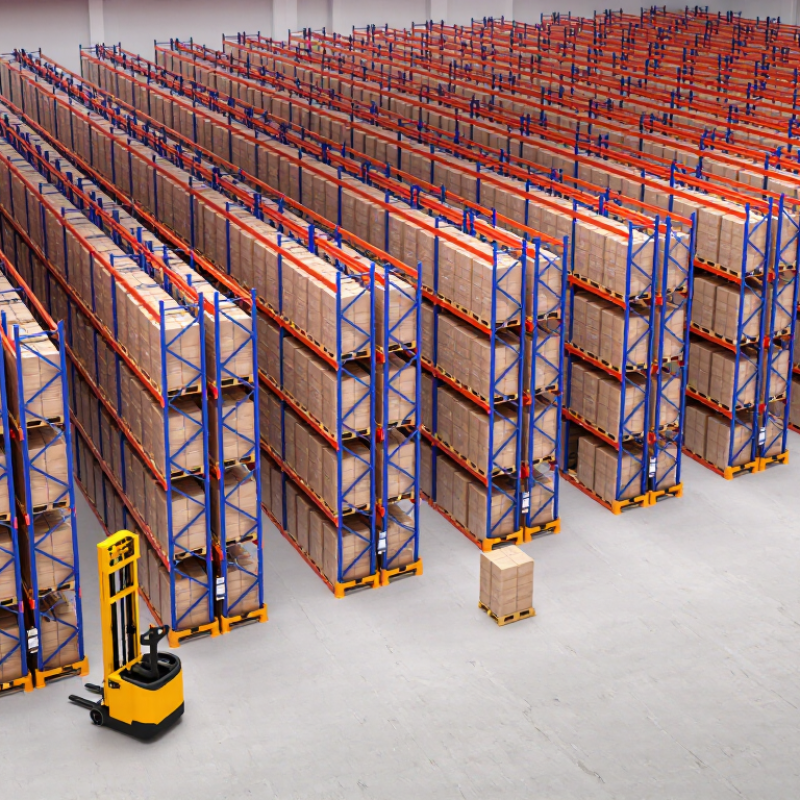
What Is Heavy Duty Drive In Racking?

Definition and Core Design of Heavy-Duty Drive-In Racking

Heavy-duty drive-in racking is a compact pallet-storage structure designed to use floor space efficiently. Instead of separate forklift aisles between every rack row, pallets sit in deep lanes. Forklifts enter a lane and place loads on horizontal rails supported by upright frames. The system commonly follows last-in, first-out access: the newest pallet is removed first. Trade-offs remain.

Its core design includes uprights, diagonal bracing, pallet-support rails, and lane-entry guides. Rail height and spacing must match the pallet dimensions and intended load. The clear lane width also needs to suit the forklift, including its turning movement and mast clearance. Small measurement errors can make loading awkward. They matter.

Unlike selective racking, this layout limits direct access to pallets behind the front position. It suits operations storing many pallets of the same product, where batches move in sequence. A practical design review should consider pallet condition, load weight, floor flatness, and forklift operating habits. Capacity figures should come from a qualified rack designer using actual site and load details. Even good drawings cannot predict every bump or rushed turn, so damaged rails and frames need prompt inspection. At the lane entrance, guides can help position the truck, but they do not replace careful operation.

How Forklifts Load and Retrieve Pallets

What Is Heavy Duty Drive In Racking?

Drive-in racking lets forklifts enter storage lanes and place pallets on supporting rails. The forklift loads the deepest position first, then works toward the aisle. Retrieval happens in reverse order, creating a last-in, first-out system. This design suits uniform products with limited stock rotation. It also reduces operating aisles, but visibility becomes restricted inside the lane.

A trained operator should approach squarely, keep the mast level, and move slowly. The forks must fully support each pallet before placement. During retrieval, the operator should lift clear of the rails before reversing. OSHA’s Powered Industrial Trucks eTool reports about 85 forklift-related deaths and 34,900 serious injuries annually. NIOSH has reported different totals, partly because reporting methods vary. That difference deserves attention, not dismissal. Rack damage, uneven pallets, and rushed reversing remain practical risks.

Tips: Mark entry points clearly. Use lane depth signs. Inspect rails, uprights, and pallets before each shift. Keep pedestrians outside active lanes. Training should include real loading and retrieval drills, not only classroom instruction. A competent inspector should review impact damage promptly. MHI’s 2024 Annual Industry Report identifies labor pressure and safety performance as major material-handling concerns. In practice, one poorly aligned pallet can expose both problems at once.

Main Components and Structural Features

What Is Heavy Duty Drive In Racking?
Main Components and Structural Features

Heavy-duty drive-in racking is built around upright frames, which carry vertical loads and define each storage lane. Horizontal pallet rails sit on brackets fixed to the frames, supporting pallets along both sides of a lane. Forklifts enter these lanes to place or retrieve loads, so clearance and rail alignment matter. Entry guides can help direct truck wheels. That matters.

Bracing, row spacers, and top ties connect the frames and help the structure resist movement. Optional rear stops can limit how far pallets travel, but they must suit the load and handling method. In a typical drive-in layout, pallets are stored several positions deep, reducing aisle space while limiting direct access to each pallet. Loads are often retrieved in last-in, first-out order. A bent upright or uneven floor can affect safe operation, so installation checks are not cosmetic. The exact frame, rail, and bracing design depends on pallet dimensions, load weight, forklift type, and site conditions. Even a small clearance mistake can become a daily problem.

What Is Heavy Duty Drive-In Racking? – Main Components and Structural Features

Drive-in racking is a high-density storage system in which forklifts enter storage tunnels to place and retrieve pallets. The chart presents common planning dimensions used to illustrate the relationship between pallets, rails, and rack structure.

Typical reference values: pallet depth is commonly about 1,200 mm, tunnel width is often approximately 1,350 mm, and a six-pallet-deep tunnel is about 7,200 mm before design allowances. Actual dimensions and load ratings depend on pallet type, forklift clearances, upright frames, guide rails, support rails, bracing, and site-specific engineering requirements.

Common Storage Applications and Suitable Goods

What Is Heavy Duty Drive In Racking?

Common Storage Applications and Suitable Goods

Heavy duty drive-in racking is commonly used in warehouses that store many pallets of the same product. Forklifts enter the storage lanes to place or retrieve pallets, allowing goods to be stored several positions deep. This design can make good use of floor space, though it requires careful vehicle operation. The lanes need to stay clear.

It suits durable, palletized goods with low product variety and relatively predictable stock rotation. Examples include bagged building materials, packaged beverages, and seasonal goods such as garden supplies. In cold stores, reducing unused aisle space may be useful, but equipment and pallet conditions must suit the environment. Damaged pallets can create problems inside a deep lane.

This system is less convenient when workers need frequent access to individual product lines. Stock is generally handled in a last-in, first-out sequence within each lane, so product dates and batch separation deserve attention. A layout can look efficient on paper and still feel awkward in daily use. Check pallet dimensions, forklift clearance, load ratings, and the actual picking routine before choosing it.

Advantages, Limitations, and Safety Considerations

What Is Heavy Duty Drive In Racking? Advantages, Limitations, and Safety Considerations

Heavy-duty drive-in racking stores pallets on rails inside deep lanes, allowing a forklift to enter the structure. It suits operations with many pallets of the same product and limited floor space. By reducing the number of access aisles, it can increase storage density. The trade-off is selectivity: workers generally remove the most recently loaded pallet first. That may not suit goods requiring strict rotation.

The structure needs careful planning. Lane depth, pallet dimensions, forklift clearance, and floor condition all affect safe operation. Deep lanes can make stock harder to inspect, while impacts from entering forklifts may damage upright frames or rails. Loads must stay within the system’s rated capacity, and damaged components should be assessed by a qualified professional before use. Dense storage is useful, but it leaves less room for mistakes.

Tips: Train forklift operators to enter slowly and keep loads level. Check frames, rails, and anchors on a regular schedule, and report impacts promptly. Keep aisles and exits clear. Even with good procedures, inspections can be missed during busy shifts, so use a simple written checklist and assign responsibility.

FAQS

What is heavy-duty drive-in racking?

It is a compact pallet-storage system with deep lanes and horizontal support rails. Forklifts enter the lanes to load or remove pallets. Aisles are reduced. Access becomes less direct.

How does pallet access usually work?

The system commonly follows last-in, first-out storage. The newest pallet is removed before older pallets behind it. This sequence may not suit date-sensitive goods. Check batch control carefully.

What goods are suitable for this system?

It suits durable, palletized goods with low product variety. Examples include bagged building materials, packaged drinks, and seasonal garden supplies. Similar pallets work best. Mixed products can become awkward.

When is drive-in racking less suitable?

It is less suitable when workers need frequent access to individual product lines. Each lane may hold several pallets of one product. Daily picking can feel slow. The design may look efficient but operate poorly.

What measurements must be checked before installation?

Check pallet length, width, height, and load weight. Measure lane width, rail spacing, mast clearance, and forklift turning movement. Floor flatness also matters. Small errors create large problems.

What forklift considerations are important?

The forklift must fit the lane and move without striking rails or frames. Entry guides can help with positioning. They cannot replace careful driving. A rushed turn still causes damage.

Can this system be used in cold storage?

It can be useful when reducing unused aisle space matters. Equipment, pallets, and structural materials must suit the cold environment. Wet or damaged pallets may create trouble. Inspect them closely.

How should capacity and condition be reviewed?

A qualified rack designer should calculate capacity from actual site and load details. Inspect damaged rails and frames promptly. Recheck after impacts. Drawings cannot predict every bump.

Conclusion

Heavy Duty Drive In Racking is a high-density storage system designed to make efficient use of warehouse space by reducing the number of access aisles. It uses deep storage lanes with upright frames, horizontal support rails, and bracing to hold pallet loads. Forklifts enter the lanes to place pallets on the rails and retrieve them, typically following a last-in, first-out sequence. This arrangement is best suited to large quantities of similar goods that can be stored in batches, such as seasonal inventory or products with limited variation.

The system can increase storage capacity and reduce wasted floor space, but it offers less direct access to individual pallets than selective racking. Careful planning is needed to match lane depth, pallet dimensions, forklift capability, and load limits. Safe operation depends on clear access routes, trained forklift operators, regular inspections, and prompt attention to damaged rails or frames. Protective measures and well-defined loading procedures also help reduce the risk of impact damage and unstable loads.

Isabelle

Isabelle

Isabelle is a professional marketing specialist dedicated to helping businesses understand products, markets, and customer needs more clearly. With extensive knowledge of the company’s solutions, she regularly contributes insightful articles to the company website, covering product applications,......