Specialized SKU
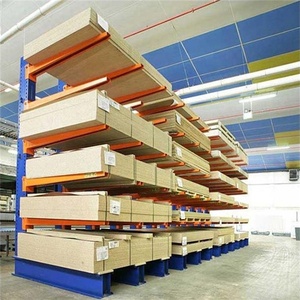
From extreme density Drive-In and Gravity Flow configurations to precision Cantilever arrays, our CE-certified manufacturing platforms serve demanding multi-tier industrial facilities worldwide.
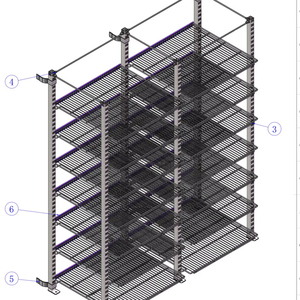
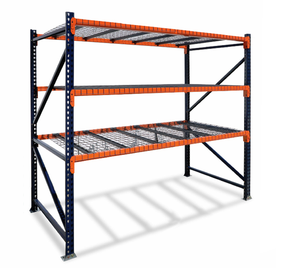
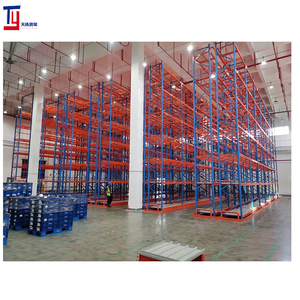
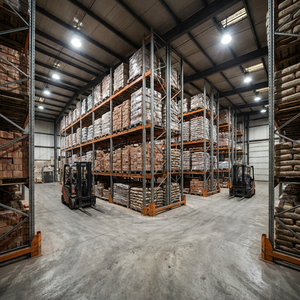
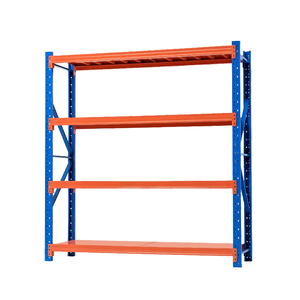
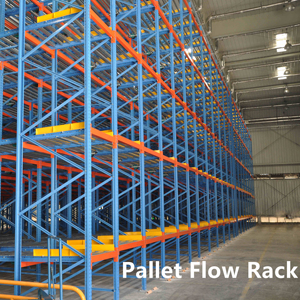
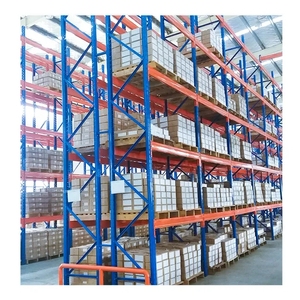
Drive-in and Drive-Through pallet racking systems represent the ultimate structural boundary condition in modern warehouse storage design. Unlike conventional selective racking—where horizontal load beams tie the upright columns continuously in both longitudinal and transverse axes—Drive-In systems intentionally omit traditional front-to-back crossbeams to create clear driving lanes for reach trucks and counterbalanced forklifts.
Consequently, our certified manufacturing facilities strictly conform to EN 15512:2020 (Steel static storage systems – Adjustable pallet racking systems – Principles for structural design) and FEM 10.2.07 regulations. Stabilizing unbraced portal frames requires advanced second-order (P-Delta) non-linear analysis to account for global frame drift, continuous arm deflection, and torsional buckling induced by forklift impact.
Raw material integrity dictates service life, seismic resistance, and deflection ratios. We utilize certified cold-rolled structural steel profiles (primarily Q235B and high-yield Q355B), engineered with continuous multi-bend omega (Ω) upright profiles. Each upright section features 11-13 specialized load-dispersing folds that maximize the cross-sectional moment of inertia (Ix and Iy) while minimizing tare weight.
Pallet loads are borne directly by continuous horizontal guide rails supported on heavy-duty cantilever brackets stamped from 3.0mm to 4.5mm high-tensile sheet steel. Our patented one-piece folded support arms interlock directly into upright perforations without weld seams, completely mitigating heat-affected zone (HAZ) embrittlement and catastrophic stress fracture risks caused by cyclic shock loading during pallet drop-off.
For temperatures down to -30°C in food preservation warehouses, standard electrostatic powder coating undergoes micro-fracturing and embrittlement. As premier factory exporters, we provide ISO 1461 compliant hot-dip galvanization with a minimum zinc bath layer of 65–85 microns, or electro-galvanized components coated with an anti-microbial epoxy-polyester copolymer formulated specifically to withstand constant condensation, thermal cycling, and aggressive chemical sanitize washes.
| System Architecture | Floor Space Utilization | Stock Rotation Logic | Typical SKU Concentration | Structural Load Rating | Best Application Profile |
|---|---|---|---|---|---|
| Drive-In Racking | Up to 80% | LIFO (Last-In, First-Out) | Low SKU / High Volume Pallets | Up to 2,000 kg / Pallet Position | Cold Storage, Seasonal Raw Ingredients, Beverage |
| Drive-Through Racking | Up to 75% | FIFO (First-In, First-Out) | Moderate SKU / High Batch Flow | Up to 1,800 kg / Pallet Position | Cross-docking, Perishable FMCG, Dairy |
| Selective Pallet Racking | 35% – 45% | 100% Direct Access | High SKU / Multi-Pick Diversity | Up to 5,000 kg / Beam Pair | E-commerce Fulfilment, 3PL Distribution, Spare Parts |
| Gravity Pallet Flow | Up to 75% | Strict FIFO Dynamics | High Volume / Controlled Expiry SKUs | Up to 1,500 kg / Carrier Lane | Pharmaceutical Distribution, Rapid Beverage Staging |
Driven by rising industrial real estate costs, supply chain resilience mandates, and automated handling technologies, procurement strategies are undergoing fundamental structural shifts.
Procurement teams are shifting away from standalone manual drive-in lanes toward AGV-compatible tolerances. Modern high-density storage requires tight vertical and horizontal guide rail tolerances (compliant with EN 15620 Class 300) to allow autonomous reach vehicles and laser-guided automated counterbalanced trucks to enter rack lanes without human guidance error.
Experienced buyers no longer purchase on steel weight alone. Instead, procurement evaluates upright bottom-column reinforcement, heavy-duty wraparound column protectors (5mm steel), and elevated guidance floor rails. These protect uprights from recurring forklift wheel hub collisions, lowering lifecycle repair costs and rack failure shut-downs.
European and North American regulatory mandates require audited environmental declarations (EPDs). Global buyers require verifiable Scope 1-3 carbon tracking from cold-rolled steel mills. Upgrading from conventional batch painting to VOC-free thermoset powder coats or high-efficiency continuous galvanizing lines reduces carbon tariffs under border adjustment rules.
Warehouses are increasingly transforming existing drive-in lane steel frames into semi-automated 2-way and 4-way radio shuttle systems. Forward-looking procurement specifies upright profiles and pallet runner geometries capable of hosting motorized self-powered shuttles in the future without tearing down the structural steel frame.
To eliminate 25%–35% markups from domestic intermediaries, enterprise logistics developers engage directly with qualified export-grade manufacturing plants. Crucial prerequisites include standardized EN design calculations, verifiable ISO 9001 quality certificates, third-party weld testing (NDT), and pre-drilled components that speed field installation.
Before steel stamping and container shipping, procurement teams require interactive BIM Revit models and finite element stress analysis simulations. Verifying the layout against real warehouse slab loadings, sprinkler distribution head positions, and lift-truck turning clearances ensures zero on-site component rework.
Integrating heavy-gauge cold-roll profiling, automated robotic welding, and certified European structural compliance from a single source of truth.
Our heavy-duty drive-in and pallet storage solutions comply rigorously with EN 15512 and FEM 10.2.07 standards. Every export batch includes structural engineering reports, material mill certificates, and stamped maximum load rating plaques for simple local council and insurance approval.
Our plants operate continuous automated punching and roll-forming production lines. Punching spacing is maintained within an ultra-precise ±0.2mm tolerance, ensuring that Drive-In arm cantilever clips, top tie beams, and back-diagonal bracing assemble square and level on site.
Our in-house project engineering office delivers complete layout feasibility reviews, forklift mast clearance assessments, and load capacity optimization studies. We supply Revit BIM files to ensure our racking integrates with your automated logistics infrastructure.
Clear answers to the structural, operational, and commercial questions asked most during project planning and international tender tenders.
Drive-In racking utilizes a single common entry/exit aisle for forklift handling, executing Last-In, First-Out (LIFO) inventory control, with top and back horizontal cross-bracing stabilizing the rear structure. Drive-Through racking allows forklift entry from both ends, achieving First-In, First-Out (FIFO) stock rotation. Because Drive-Through racks cannot utilize full vertical rear x-bracing, they require heavier top-portal tie beams and larger upright cross-sections to counter operational frame sway.
Because forklifts enter directly inside the rack structure, impact mitigation is critical. Our installations feature floor-anchored continuous guide rails (structural angle or inverted C-channel) running down the lane depth to keep trucks centered. We also integrate 10mm to 12mm thick heavy steel column entry boot protectors, flared lead-in guide plates, and brightly marked overhead load-stop safety indicators.
Standard Drive-In rails require consistent pallet quality. Standard Euro pallets (1200 x 800mm) and ISO Industrial pallets (1200 x 1000mm) must feature bottom perimeter baseboards running perpendicular to the support rails. Softwood pallets with broken lower boards or missing blocks must not be stored on continuous rails without heavy-duty secondary support channels or pallet staging adapters.
Steel exhibits lower impact toughness and ductile-to-brittle transitions at sub-zero cold room conditions. Our engineers specify high-grade Q355B or Q355D steel grades, which are tested for high Charpy V-notch impact values down to -20°C and below. Combined with multi-stage zinc immersion or anti-corrosive powder coating, our components resist moisture micro-corrosion and avoid brittle structural failures under load.
To produce an EN 15512 calculation and layout proposal, our engineering team needs: 1) Architectural CAD floor layout indicating clear building height and slab joints; 2) Pallet dimensions (W x D x H) including overhanging load; 3) Maximum gross pallet weight; 4) Lift-truck model, minimum chassis width, and overall mast height; and 5) Local seismic zone coefficients.
Long structural uprights, tie beams, and pallet rails are bundled with corrugated corner protectors, heavy-gauge steel strapping, and wooden dunnage to prevent transit chafing and deformation. Smaller brackets, bolts, and base plates are palletized inside moisture-sealed export-grade plywood crates, ensuring safe marine transit and simple offloading at your site.