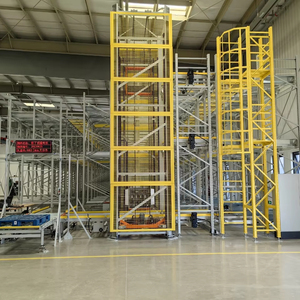
Industrial Product Portfolio
Featured Industrial Heavy-Duty Storage & Material Handling Systems
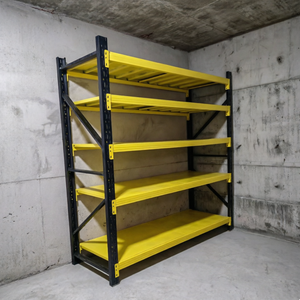
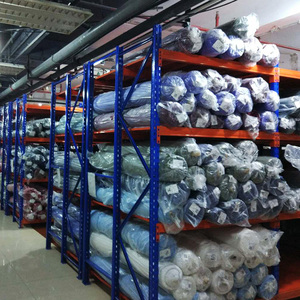
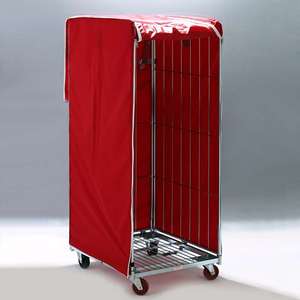
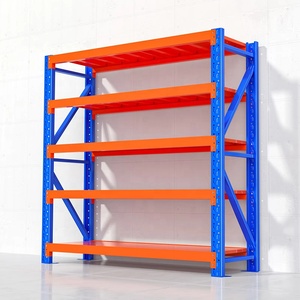
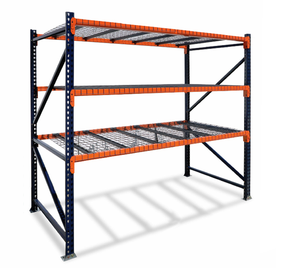
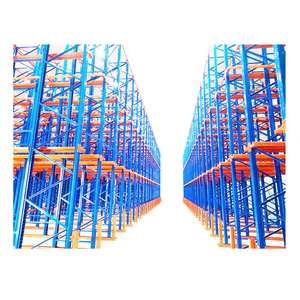
Discover our fully certified, precision-fabricated storage systems configured to optimize dynamic floor loading, improve crane/forklift access, and protect critical capital tooling across demanding industrial sectors.
Why Global Operations Choose Our Engineering
Full-Lifecycle Manufacturing, Structural Design & Global Compliance
We eliminate structural failure risks and operational downtime by combining European engineering benchmarks with high-throughput steel rolling infrastructure.
EN 15512 & CE Certified Safety
Every racking component undergoes rigorous finite element analysis (FEA) calibrated to EN 15512 European structural codes, FEM guidelines, and ANSI/RMI MH16.1 specifications, providing certified static and dynamic load safety margins up to 1.5x nominal loads.
High-Tensile Cold Rolled Q235B / Q355B Steel
Our upright columns, drawer slide arms, and load beams are roll-formed exclusively using prime, lab-tested structural steel coils. We deliver full mill test certificates (MTC) ensuring ductile resistance against repeated impact and heavy localized mold pressures.
Integrated Overhead Crane & Hoist Compatibility
Designed specifically for precision injection molds, stamping dies, and casting equipment. Our mold racking platforms integrate top-mounted monorail traveling hoists, electric cranes, and interlocked pull-out drawer shelves for rapid, safe tool handling.
EN 15635 Lifecycle Safety Audits
We supply complete engineering validation packages, seismic zone calculations, floor anchoring simulation maps, and ongoing rack inspection frameworks to guarantee compliance during annual safety audits by regional regulatory inspectors.
5,000+ kg
Capacity Per Drawer Tier
100%
EN 15512 Compliance
65%
Footprint Compression
80+
Export Destination Ports
Technical Engineering Whitepaper
Industrial Mold Storage Systems: Structural Dynamics, Failure Modes & Procurement Specifications
A comprehensive engineering guide for warehouse directors, plant tooling managers, and procurement officers deploying heavy-duty mold racking platforms in modern manufacturing plants.
In high-pressure manufacturing operations—such as plastic injection molding, automotive metal stamping, precision die casting, and rubber vulcanization—molds represent the single highest concentration of capital expenditure per square meter on the factory floor. A medium-to-large precision mold tool can weigh anywhere from 800 kg to over 10,000 kg, with fabrication replacement costs exceeding several hundred thousand dollars. Storing these mission-critical assets on inadequate standard pallet racks or haphazard ground storage introduces extreme workplace hazard vectors, tooling deflection damage, and unacceptable changeover latency.
CE-certified heavy-duty mold storage racking systems are specialized structural engineering solutions designed to eliminate point-load deflection and provide 100% direct access to dies via pull-out roller drawers, heavy-duty guide rails, and overhead hoisting integration. Understanding the structural dynamics, safety lock mechanics, and manufacturing metallurgy is critical for technical buyers sourcing these installations internationally.
| System Category | Standard Load Capacity | Drawer Extension Ratio | Operating Handling Mechanism | Primary Industrial Applications |
|---|---|---|---|---|
| Standard Roll-Out Mold Rack | 1,000 kg – 2,000 kg / level | 65% – 70% Semi-Extended | Overhead Crane / Hand Chain Hoist | Small-to-medium plastic injection, rubber mold tooling |
| Heavy-Duty Full Open Mold Rack | 2,000 kg – 5,000 kg / level | 95% – 100% Full Open Stroke | Built-in Electric Monorail Hoist & Trolley | Automotive exterior stamping, die-cast tooling, forged blocks |
| Power-Driven Motorized Mold Rack | 5,000 kg – 12,000 kg / level | 100% Automated Electro-Mechanical Push | Automated Guided Vehicle (AGV) / Stacker Crane | High-tonnage stamping dies, foundry casting fixtures |
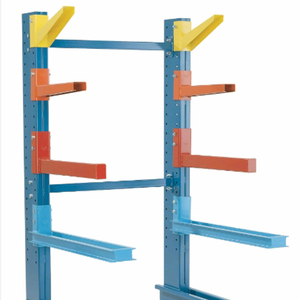
| Cantilever Tool & Bar System | 1,500 kg – 4,000 kg / arm | Static Cantilever Structure | Heavy Side-Loading Forklift / Crane Rigging | Long cylindrical molds, extruded dies, continuous profiles |
Mechanical Structural Integrity: Beam Deflection & Overturn Moments
The engineering physics governing mold storage racks differ substantially from standard selective pallet racking. In standard pallet racking systems, loads are distributed across twin horizontal box beams. In contrast, heavy-duty mold racks feature cantilevered or roller-track mounted horizontal drawers. When a technician pulls open a shelf carrying a 3,500 kg automotive die, the center of gravity shifts outward from the vertical axis of the upright frames.
This dynamic stroke creates an extreme forward overturning moment. To counteract this operational torque and satisfy strict CE Machinery Directive (2006/42/EC) and structural safety standards, our manufacturing protocol incorporates three critical engineering countermeasures:
- Mechanical Interlocking Anti-Tilt Linkage: Our patented safety linkage ensures that only one drawer tier can be extended at any given time. Extending a second tier while one is open is mechanically locked, permanently preventing frame tip-over risks caused by operator error.
- Dynamic Base Anchoring Calculations: Heavy-duty mold racks are anchored using high-grade anchor bolts calculated against dynamic pull-out stresses, floor concrete compressive strengths (minimum C25/30 specification), and regional seismic acceleration coefficients.
- Linear Bearing Guidance & Hardened Roller Tracks: Each slide drawer relies on heavy-duty needle roller bearings and structural cold-formed guide channels to provide effortless manual extraction (requiring less than 35 N of pull force even at maximum nominal load) without binding or galling.
Market Intelligence
Future Procurement Trends: Industry 4.0 & Mold Traceability
The global mold storage market is transitioning from passive steel storage racks to smart, cyber-physical tooling management hubs. Industry 4.0 integration now demands automated tool retrieval, intelligent mold heating staging, and RFID/WMS integration directly into the racking superstructure.
Global procurement teams are prioritizing modular architectures that can scale into Automated Storage and Retrieval Systems (ASRS), reducing tool changeover intervals (SMED - Single-Minute Exchange of Die) and integrating real-time telemetry on mold cycle life, ambient humidity, and preventive maintenance milestones.
Future Technology Evolution in Heavy Tooling Logistics
As manufacturing moves toward smaller batch sizes, high-mix custom production, and rapid prototyping, tool changing frequency has increased by over 300% across automotive tier-1 and electronics contract manufacturing plants. This operational shift drives three decisive development trends:
1. Autonomous AGV / AMR Tool Delivery Integration: Modern mold racks are increasingly being designed with optical and magnetic docking channels that allow automated guided vehicles to automatically dock with bottom mold drawers, transfer heavy dies, and transport them directly to the injection molding machine bed without human intervention.
2. Microclimate & Humidity Control Enclosures: High-precision mirror-polished optical molds and medical-grade injection dies are extremely sensitive to surface oxidation and corrosion caused by ambient humidity. Next-generation heavy-duty mold racking integrates sealed acrylic enclosure panels, HEPA filtration units, and localized dehumidification chambers to protect mirror steel tooling surfaces without messy chemical anti-corrosion grease.
3. Digital Twin & Sensorized Weight Monitoring: Strain gauges embedded in load-bearing crossbeams collect real-time load telemetry, transmitting alerts to supervisory SCADA networks if an operator attempts to load a tool exceeding the structural rating of the specific level, ensuring 100% operational audit compliance.
Procurement Guidance
Frequently Asked Questions for Industrial Mold Racking Procurement
Authoritative technical answers to assist factory planners, logistics engineers, and international procurement specialists in choosing the ideal storage configuration.
What structural certifications should an international buyer require for heavy-duty mold racks? +
International buyers should verify compliance with the European CE Machinery Directive (2006/42/EC) (for units featuring integrated hoists or motorized drawers) and structural standard EN 15512 (steel static storage systems - adjustable pallet racking principles). In North America, racking must adhere to ANSI/RMI MH16.1. Additionally, the manufacturer must provide ISO 9001 certified production control, welders certified under ISO 9606-1, and formal Mill Test Certificates (MTC) proving steel yield strengths for Q235B or Q355B profiles.
What is the difference between semi-open and full-open mold drawer racks? +
Semi-open mold racks typically stroke out between 65% and 70% of the total drawer depth. They offer an economical solution for tools loaded by standard forklift trucks or side-positioned crane attachments. Full-open mold racks extend 95% to 100% out of the rack framework, allowing an overhead crane or top-mounted electric hoist direct vertical plumb-line clearance over the mold without any upright beam interference, which is mandatory for heavy, bulky, or high-value precision dies.
How do you guarantee the racking will not tip forward when heavy drawers are extended? +
Anti-overturn stability is achieved through three integrated safeguards: First, mechanical interlock linkages prevent more than one drawer level from being opened at any single time. Second, the rack base is securely bolted into high-strength reinforced concrete slabs using heavy M16/M20 chemical or wedge anchor bolts calculated for dynamic shear and uplift stresses. Third, back-to-back bracing, top frame cross-ties, and optional ceiling/wall anchoring ensure full structural rigidity.
Can the mold storage racking system be customized to fit unique factory ceiling heights? +
Yes. Every heavy-duty mold racking project is engineered to order. We customize overall frame heights (from 2 meters up to 8 meters), shelf clear widths, drawer stroke depth, load capacities per tier (from 500 kg up to 10,000 kg), and hoist monorail cantilever lengths to seamlessly integrate with your building's clear height, HVAC ductwork, and existing bridge crane envelope.
What surface treatments are applied to protect against factory oil, coolants, and humidity? +
All steel components undergo an automated 7-stage pre-treatment process, including degreasing, acid pickling, rust removal, and zinc phosphating. This is followed by an electrostatic thermo-hardened epoxy-polyester powder coating cured at 180°C–200°C. For aggressive coastal or high-humidity environments, we offer hot-dip galvanization according to ISO 1461, ensuring lasting corrosion protection against oils, cooling emulsions, and atmospheric moisture.
How are international ocean freight shipments packaged to prevent transit damage? +
Components are packaged for export in compliance with ISPM 15 standards. Upright frames and beams are bundled with protective corrugated paper wrapping, air-cushion foam, and heavy-duty steel strapping with corner edge protectors. Bearings, electric hoists, hardware, and safety accessories are securely crated in fumigated solid plywood cases with internal desiccant bags to prevent moisture damage during container ocean transit.