Engineering Heavy Duty Automated Racking: Structural Integrity Meets High-Throughput Intralogistics
Modern global distribution hubs, high-bay automated warehouses, and cold chain cold-storage vaults demand absolute spatial efficiency without sacrificing structural resilience. Selecting the right China heavy duty automated storage racking factory has evolved from a transactional equipment purchase into an integrated mechanical, civil, and software engineering partnership.
Across global material handling ecosystems, the convergence of automated guided vehicles (AGVs), autonomous mobile robots (AMRs), high-speed stacker cranes, and automated storage and retrieval systems (ASRS) has placed unprecedented structural demands on rack manufacturers. In automated environments, deflection tolerances are drastically narrower than in conventional selective forklift rack layouts: standard beam deflection must be restrained within L/300 to L/400 (compared to manual forklift tolerances of L/200) to ensure laser-guided sensors and crane positioning mechanisms avoid optical distortion or collision. Choosing an elite Chinese manufacturing facility guarantees top-tier automated roll-forming lines, automated laser punching with pitch tolerances within ±0.1mm, and complete metallurgical traceability.
Featured Heavy Duty Storage & Automated Racking Systems
Precision-machined structural racking, heavy capacity mezzanine platforms, and dynamic high-density storage solutions engineered to your payload, floor loading, and throughput specifications.
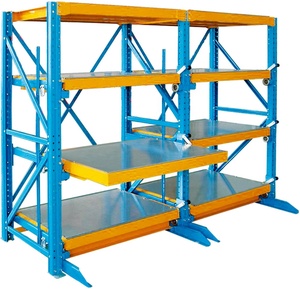
Warehouse Storage Mold Display Shelving / Mold Racking System
- Payload Capacity: 500kg - 3,000kg/Drawer
- Extension Type: 65%-100% Slide Out
- Safety Mechanism: Self-Locking Interlock
Engineered with heavy-duty roller bearings, pull-out drawer decks, and crane top hoist tracks for safe mold, die, and tooling storage.
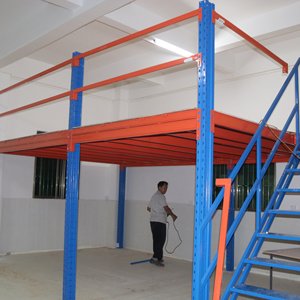
Heavy Duty Customized Gangli HD-MR-22 Corrosion Protected Mezzanine CE
- Floor Load Rating: 300kg - 1,200kg/m²
- Deck Type: Galvanized Steel / Perforated
- Compliance: CE / EN 1090 Structural
Integrated multi-level mezzanine system utilizing rack uprights as structural load columns to double or triple usable vertical volume.
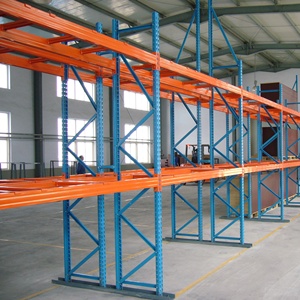
Adjustable Heavy Duty Pallet Rack Two Levels High Load Capacity Racking
- Beam Capacity: 1,000kg - 4,500kg/pair
- Steel Specification: Q355B Cold Rolled
- Pitch Adjustability: 50mm / 75mm Increments
Engineered with interlocking 3-claw or 4-claw safety connectors, seismic anchor bases, and high modulus profile section configurations.
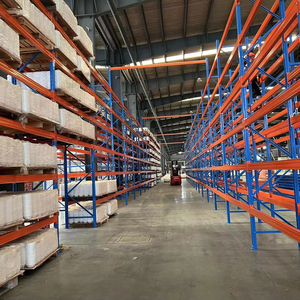
Heavy Duty Selective Pallet Rack Custom Size For Industrial Logistics
- Selectivity: 100% Immediate Direct Access
- Aisle Width: 1.8m (VNA) to 3.5m (Standard)
- Finish: Epoxy Electrostatic Powder
The gold-standard baseline for high-turnover logistics distribution, accommodating broad SKU counts and all conventional handling forklifts.
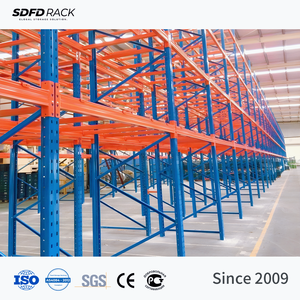
Adjustable Steel Pallet Racking 4-Layer Beams 800kg - 2 Ton Industrial
- Tier Height: Customized Upright Profile
- Load Index: 800kg - 2,000kg/Level
- Upright Section: 90x68 / 100x70 / 120x95
Modular 4-beam assembly with custom step-beams or box-beams, compatible with wire mesh decking or drop-in cross-bars for non-standard skids.
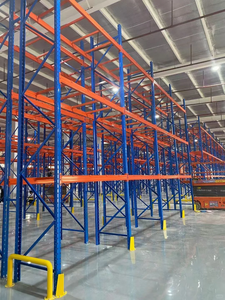
Heavy Duty Selective Pallet Rack-5-Layer Cold Rolled Steel Corrosion
- Layer Configuration: 5 Multi-Level Storage Decks
- Anti-Corrosion: Pre-treatment + 90μm Coat
- Safety Factor: 1.65 (FEM / RMI Standard)
High-volume multi-tier logistics racking featuring omega upright profiles with double-ribbed webs for maximum torsional rigidity against dynamic impacts.
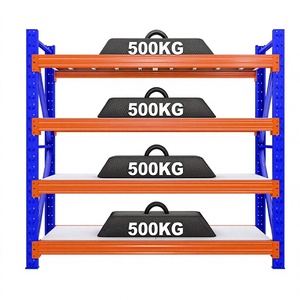
Medium Duty Storage Racks Adjustable Steel Shelves Pallet Direct
- Unit Capacity: 300kg - 800kg/Tier
- Assembly: Boltless Rivet / Lugged Connection
- Shelving Inserts: Steel Plates / MDF Board / Mesh
Ideal for dual-purpose operations combining hand picking on ground tiers with pallet replenishment reserves on upper beam levels.
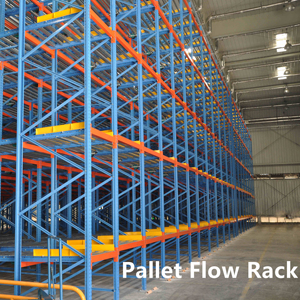
Customized Gravity Flow Pallet Roller Shelf System Pallet Flow Rack
- Inventory Rule: Strict First-In, First-Out (FIFO)
- Gradient Slope: 2.5% to 3.5% Roller Pitch
- Speed Control: Centrifugal Brake Rollers
High-throughput gravity-fed pallet lanes engineered with zinc-plated heavy rollers and entry separators for FMCG, cold storage, and food logistics.
Structural Calculations, Steel Grades, and Tolerances in ASRS Racking
Unlike static, manually operated pallet rack configurations, automated storage and retrieval systems (ASRS) and clad-rack warehouse structures act as the building's own civil skeleton. When thousands of tons of dynamic dead weight are sustained across 30+ meter heights, micro-deformations directly dictate the viability of crane and shuttle navigation.
-
EN 15512 & FEM 10.2.02 Mathematical Modeling: Finite Element Analysis (FEA) evaluating buckling, beam-end connector moment-rotation curves, and seismic floor interaction under full live-load states.
-
Metallurgical Superiority (Q355B vs. Q235B): Utilizing certified structural steel coils featuring yield strength ≥ 355 MPa and high elongation to ensure impact shock absorption in cold-storage sub-zero environments down to -30°C.
-
Strict Deflection Criteria: Maintaining vertical upright tilt within 1/1000 of building height and horizontal beam deflection within L/300, avoiding sensor blind spots for laser-guided stacker cranes.
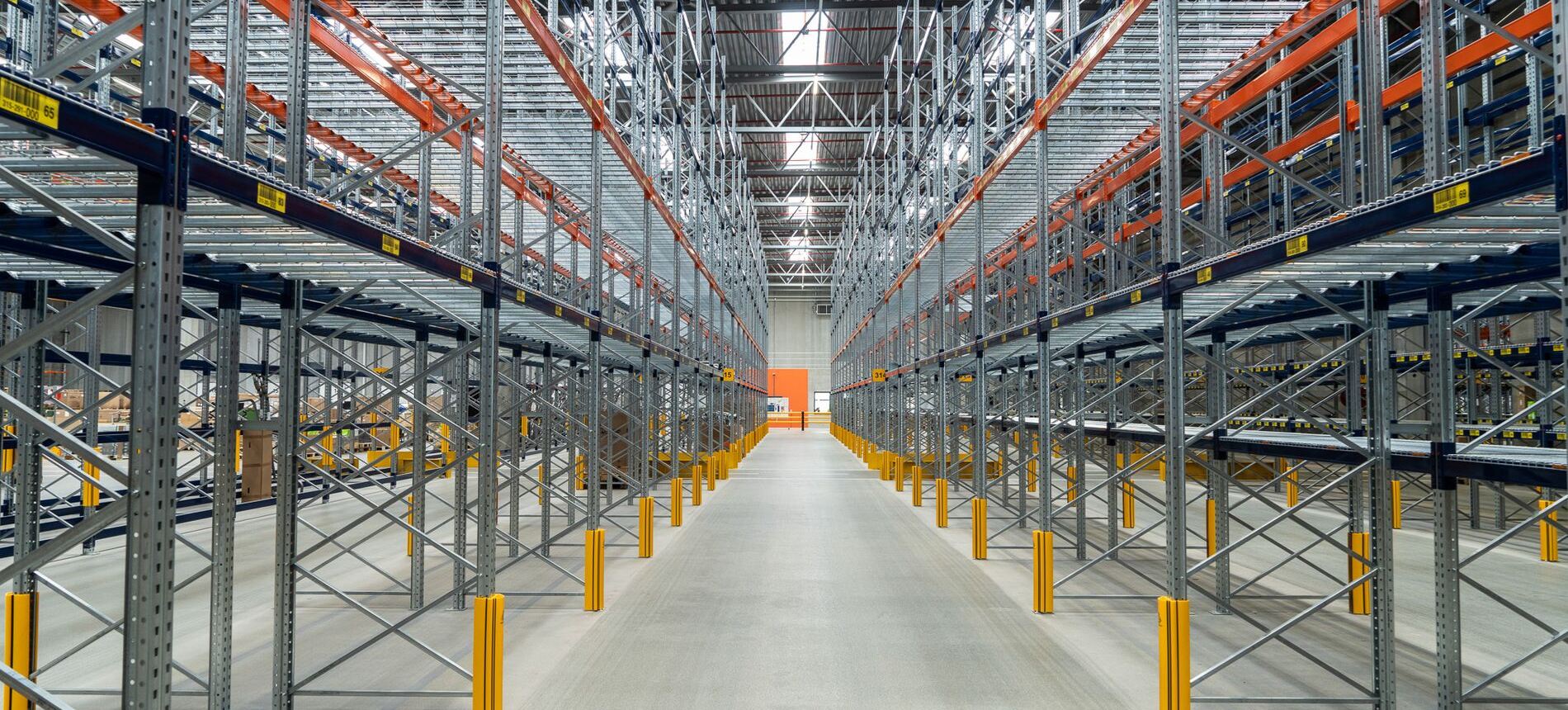
Engineering Benchmark: Automated High-Bay Racking vs. Standard Selective Racking
| Structural Engineering Parameter | ASRS Clad-Rack & Automated Racking | Conventional Forklift Pallet Rack | Impact on Facility TCO |
|---|---|---|---|
| Permissible Beam Deflection | L/300 to L/400 (strict sensor clearance) | L/200 (visual fork entry limit) | Eliminates automated stacker crane downtime |
| Height Potential (Verticality) | 18m – 45m continuous uprights | 6m – 12m standard mast limit | Decreases footprint land acquisition cost by 60% |
| Steel Fabrication Tolerance | ±0.5mm punch center variance (EN 15620) | ±2.0mm general industrial tolerance | Guarantees crane rail alignment longevity |
| Floor Flatness Requirement | VNA / Superflat DIN 18202 Class 4 / TR34 DM1 | Standard Industrial Slab (FM3 or TR34) | Protects optical scanners and rail guides |
| Surface Coating Resilience | Double-coat epoxy or Hot-Dip Galvanized C4/C5 | Standard electrostatic powder 50-70μm | Prevents micro-flaking in cleanrooms and cold chains |
Future Procurement Trends in Heavy-Duty & Automated Storage Racking
How automation integration, decarbonization mandates, and supply chain volatility are reshaping international procurement strategies for enterprise racking installations.
Rise of 4-Way Radio Shuttle Matrixes
Warehouses are rapidly transitioning from traditional drive-in racks and single-direction cranes to multidirectional 4-way pallet shuttle systems. These require continuous cold-formed run-rails rolled with precise anti-sway track tolerances, allowing dynamic cross-aisle routing without crane re-docking.
Sub-Zero Cold Chain Automation
Surging global demand for biologics, pharmaceuticals, and fresh food has driven investments into automated cold storage operating at -25°C to -30°C. Steel formulations require high Charpy impact values (CVN) to eliminate cryogenic brittleness and avoid catastrophic weld fractures under heavy dynamic cycle loading.
Embodied Carbon & Green Steel Sourcing
Enterprise buyers are evaluating Tier-1 Chinese manufacturers based on Scope 1, 2, and 3 carbon emissions. Factories leveraging electric arc furnace (EAF) processing, zero-VOC powder finishes, and ISO 14064 greenhouse gas reporting maintain a decisive edge in European and North American infrastructure bids.
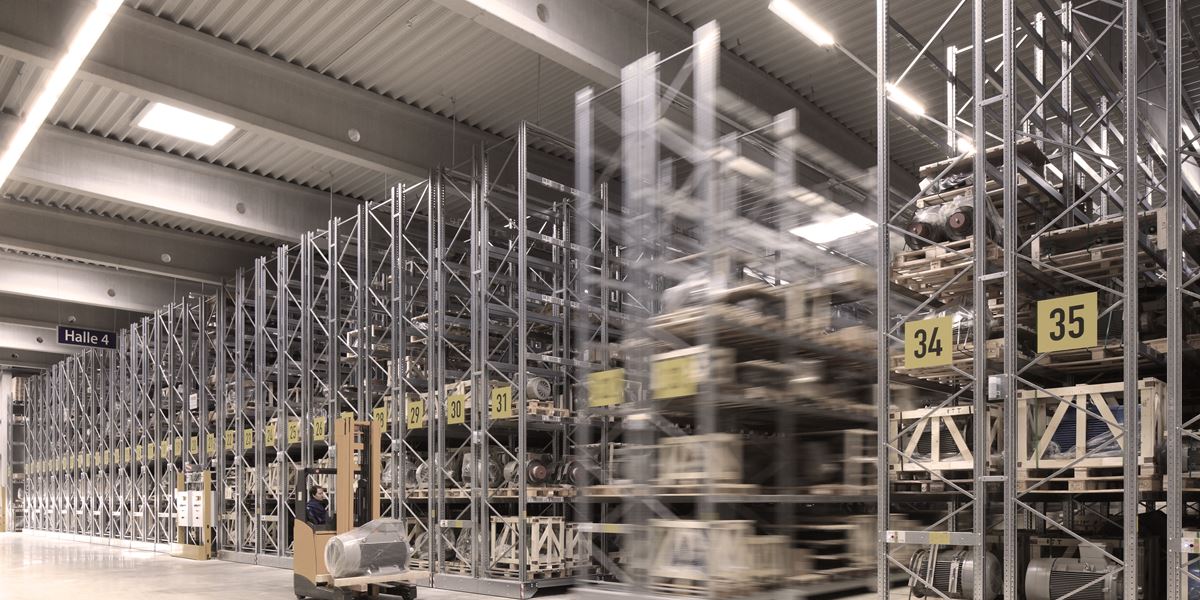
The Technological Evolution of Automated Racking Systems
Warehouse storage has shifted from passive steel frames to responsive, mechatronic frameworks. Today's smart racks incorporate real-time strain-gauge load cells inside the beam connectors, transmitting wireless deflection telemetry directly to the facility's Warehouse Execution System (WES) to detect overloaded tiers before mechanical yield failure occurs.
Furthermore, integration with Autonomous Mobile Robots (AMRs) has reshaped base-plate anchor configurations. Concentrated point-loads induced by rapid acceleration and braking cycles are distributed via high-tensile chemically grouted anchor bolts, backed by finite element analysis verifying anchor group shear resistance under dynamic cyclic stress.
Why Global System Integrators & EPCs Choose Our Factory
From initial site analysis and structural calculations to cold-roll fabrication, robotic welding, and overseas installation supervision, we bring engineering confidence to high-bay capital investments.
Certified Engineering (EN 15512 & RMI)
Our in-house structural engineering department models each rack configuration through ANSYS finite element analysis and SCIA structural calculation engines, verifying seismic compliance with Eurocode 8, AS 4084, and US RMI MH16.1 specifications.
Continuous High-Speed Roll Forming
Equipped with advanced multi-station automatic cold-roll forming mills featuring online punching. We guarantee pitch hole precision within ±0.1mm, ensuring effortless connector engagement, frictionless crane glide rails, and structural alignment across entire high-bay aisles.
Full Product Traceability & Testing
Every steel coil arrives with authenticated 3.1 Mill Test Certificates. In-house mechanical test rigs conduct continuous destructive tensile tests, beam-connector bending shear tests, and salt spray anti-corrosion verification to guarantee unyielding performance.
Engineering & Sourcing FAQ: Heavy Duty Racking from China
Technical clarifications addressing safety factors, deflection limitations, lead times, and factory audits directly from our structural design specialists.