High-Performance Industrial Storage Solutions
Engineered for high-bay rigidity, maximum material yield strength, and seamless compatibility with specialized material handling equipment (MHE) including multidirectional sideloaders and AGVs.
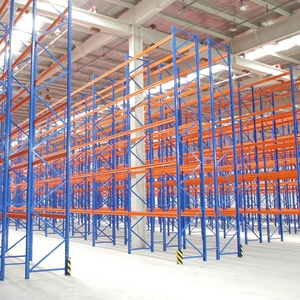
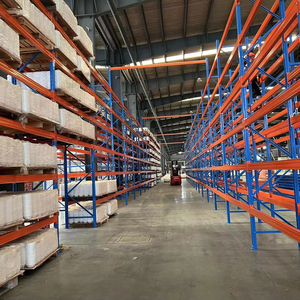
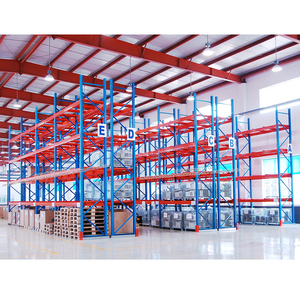
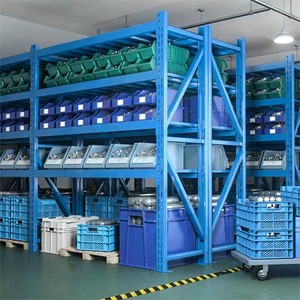
Engineering Physics Behind Heavy-Duty Cantilever Structural Design
A comprehensive examination of bending moment thresholds, dynamic arm deflection limits, base anchor shear calculations, and high-tensile metallurgical profiles.
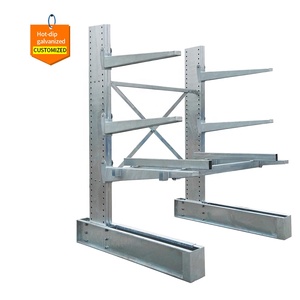
Cantilever racking represents an indispensable structural tier within modern supply chain infrastructure, specifically engineered to eliminate the frontal upright columns that restrict conventional pallet racks. For global project engineers, procurement directors, and system integrators, understanding the physical kinematics, deflection tolerances (L/300 standard), and steel tensile grades is crucial to maintaining operational safety while optimizing footprint utilization.
| Structural Parameter | Light / Medium Duty Series | Heavy Duty Structural Series | Extra-Heavy Engineered Series |
|---|---|---|---|
| Column Section Profile | Roll-Formed C-Profile (200 × 60 × 2.0-2.5mm) | Hot-Rolled I-Beam (IPE 240 / 300 / 360) | Welded Box Section / Heavy Wide Flange (HEA / HEB 400+) |
| Arm Capacity (UDL) | 250 kg – 750 kg per arm | 800 kg – 2,200 kg per arm | 2,500 kg – 5,000+ kg per arm |
| Maximum System Height | Up to 4,500 mm | Up to 9,000 mm | Up to 15,000 mm (High-Bay AS/RS Compatible) |
| Standard Arm Lengths | 600 mm, 800 mm, 1000 mm | 1000 mm, 1200 mm, 1500 mm | 1500 mm to 2400 mm (Custom Engineered) |
| Design Code Compliance | FEM 10.2.02 / EN 15512 | EN 15512, ANSI MH16.1, AS 4084 | Seismic Design Category D/E/F, EN 1993-1-1 |
| Surface Protection System | Electrostatic Epoxy Powder Coat (60-80 μm) | Thermally Cured Powder / Hot-Dip Galvanized | Hot-Dip Galvanized to ISO 1461 (>85 μm) for Severe Environments |
Why International Enterprise Buyers Choose Our Racking Platforms
Rooted in certified metallurgical standards, in-house Finite Element Analysis (FEA), and complete end-to-end quality control traceable from raw coil to site commissioning.
Controlled Steel Sourcing & Full Traceability
Every structural batch originates exclusively from tier-one domestic steel mills (such as Baosteel and Shougang). Raw coils arrive with authentic Mill Test Certificates (EN 10204 3.1) detailing chemical composition, yield limits, and elongation ratios before undergoing laser profiling.
In-House FEA Simulation & Layout Engineering
Our dedicated engineering department executes rigorous 3D Finite Element Analysis (FEA) to simulate complex stress concentrations, arm deflection under eccentric operational loads, and seismic shear resistance customized to local building codes (IBC, Eurocode 3, or AS/NZS).
Certified Robotic Welding & Precision Punching
Automated 6-axis robotic welding stations ensure consistent throat thickness, full penetration welds, and complete absence of porosity on column-to-base and arm gusset interfaces, certified under ISO 3834-2 and EN 1090-2 execution standards.
Advanced Surface Treatment: Powder vs. HDG
Equipped with a 12-stage automatic pre-treatment line with iron phosphating and nanoceramic passivation, our electrostatic powder coating guarantees 1,000+ hours salt spray resistance. For harsh outdoor lumber yards, our ISO 1461 hot-dip galvanizing bath delivers decades of rust immunity.
Full Lifecycle Engineering & Global Supervised Erection
From initial DWG/BIM site analysis to dispatch, containerized packing sequences, and on-site certified engineering supervision, our team guarantees smooth project delivery without operational disruption to existing warehouse throughput.
EN 15635 Periodic Inspection Protocols
We provide global partners with standardized inspection templates, allowable deformation thresholds, safety signage, and immediate component replacement pathways to ensure your warehouse passes mandatory annual safety inspections without downtime.
Future Procurement Trends in Heavy Industrial Racking (2025–2030)
How forward-thinking procurement leaders are navigating Total Cost of Ownership (TCO), supply chain resilience, and environmental compliance.
TCO-Centric vs. Upfront CAPEX Sourcing
Procurement teams are shifting evaluations from initial price-per-kilogram metrics to lifecycle structural reliability. Lower-grade steel alloys that deflect prematurely lead to pallet drop risks, forklift impact damages, and costly warehouse shutdowns. High-spec structural profiles deliver far lower maintenance and reconfiguration costs over a 20-year operating horizon.
Supply Chain Diversification & Direct Factory Partnerships
Global distributors are bypassing intermediary trading entities in favor of direct alliances with vertically integrated Chinese original equipment manufacturers (OEM). Direct engineering collaboration accelerates custom prototype approvals, reduces lead times by 30-45 days, and unlocks transparent structural mill tracking.
Decarbonization & Green Steel Mandates
With the phased rollout of the EU Carbon Border Adjustment Mechanism (CBAM) and international corporate ESG mandates, tier-one manufacturers are investing in electric arc furnace (EAF) low-carbon steel profiles and low-VOC powder coating chemistries, accompanied by verified Environmental Product Declarations (EPDs).
Emerging Technological Trends in Long-Goods Material Handling
Discover how automation, telematics, and specialized material handling systems are redefining cantilever storage architectures.
Automated Cantilever AS/RS Integration
Modern distribution hubs are moving away from manual counterbalance trucks toward automated stacker cranes equipped with telescopic forks. These systems operate in ultra-narrow aisles (under 1,800 mm) at heights up to 18 meters, quadrupling long-material throughput while eliminating forklift collision hazards.
IoT Deflection & Overload Monitoring
Next-generation cantilever arms feature integrated fiber Bragg grating strain gauges and wireless tilt sensors. These edge devices transmit real-time deflection diagnostics to warehouse management software (WMS), issuing automatic lock-outs if dynamic arm loading exceeds structural safe limits.
Smart Anti-Corrosion Duplex Coating Systems
For chemical manufacturing, offshore storage, and tropical outdoor distribution centers, duplex protective systems—combining heavy hot-dip galvanizing with a top coat of thermosetting fluoropolymer powder—provide over 50 years of design service life in severe C5-M marine environments.
Parametric BIM Digital Twins
Integration with Autodesk Revit and Tekla Structures allows our engineering department to supply complete BIM families directly to architectural contractors. This eliminates layout spatial conflicts with HVAC runs, overhead sprinklers, and internal crane gantries prior to site mobilization.
Frequently Asked Questions: B2B Cantilever Racking Procurement
In-depth technical answers addressing load calculations, arm deflection allowances, outdoor drainage, foundation anchoring, and international shipping protocols.
What is the standard dynamic deflection limit for cantilever arms under full load?
What is the mechanical difference between roll-formed and hot-rolled structural cantilever racks?
Can cantilever racking be permanently installed outdoors, and how is moisture managed?
What foundation and concrete slab specifications are required for heavy-duty columns?
How are asymmetric loading conditions calculated when one side of a double-sided rack is empty?
What accessories are available to handle non-palletized or flexible materials?
Ready to Engineer Your Heavy Duty Storage Infrastructure?
Connect with our senior logistics engineering team for tailored load calculations, BIM-ready CAD layouts, and certified factory-direct export quotations tailored to your operational parameters.