Featured Industrial Storage & Heavy-Duty Racking Systems
Direct factory export from China's leading logistics equipment fabrication base. Engineered from premium Q235B and Q355B structural steel to international safety codes.
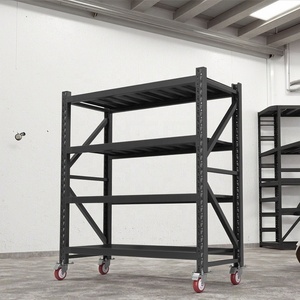
Medium Duty Warehouse Racking System with Adjustable Shelves and Caster Wheels for Easy Mobility Cargo & Storage Equipment
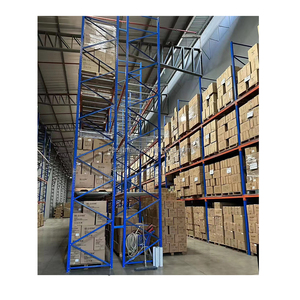
Logistics Center Pallet Rack Warehouse Rack Manufacturer Q235B Steel Heavy Duty Storage Rack Custom Design ISO Certified System
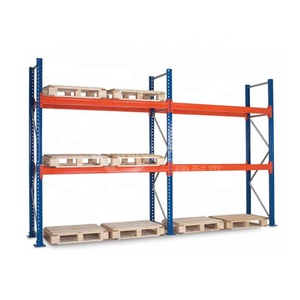
Heavy Duty Industrial Storage Selective Pallet Racking System Industrial Racking
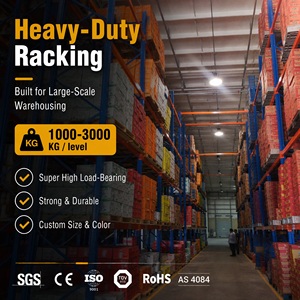
Durable Heavy Duty High Bay Pallet Rack with Reinforced Steel Frame for Industrial Warehouse Storage 3000kg Per Level
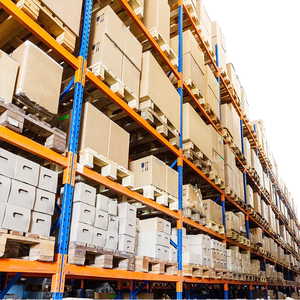
Customized Available Stacking Racks System Adjustable Industrial Warehouse Storage Heavy Duty Pallet Shelf for Pallet Use
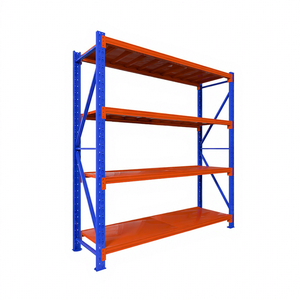
Racking Adjustable Metal Boltless Shelf and Racks Warehouse Storage Medium Duty Metal Rack Shelf
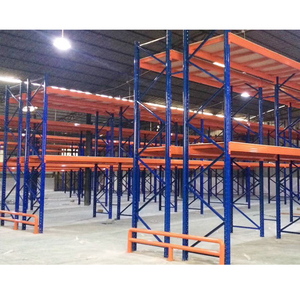
Chinese Manufacture Heavy Duty Metal Pallet Rack Shelving Wood Pallet Racks And Shelves
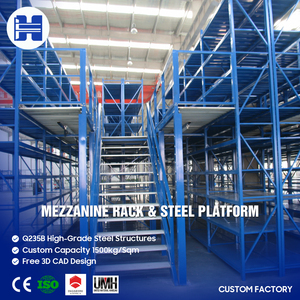
Q235 Steel Industrial Loft Design Mezzanine Racking System for Industrial Factory High Quality Supply Fast Delivery
Kinematic Storage Principles: The Mechanical Anatomy of Heavy-Duty Mobile Racking
In modern warehousing economics, footprint expansion is often constrained by escalating commercial land values, stringent building height zoning, or high operational costs in refrigerated cold stores. Heavy-duty mobile pallet racking (often designated as motorized mobile racking or MOVO) re-engineers volumetric space logistics.
Unlike conventional selective pallet racking arrays requiring a static operational aisle (ranging from 2.8m to 3.5m) between every rack face, motorized mobile racking eliminates dedicated aisles. Entire racking superstructures are securely anchored atop electronically synchronized, motorized mobile bases running along high-precision precision-milled guide rails embedded into the concrete slab.
With only a single operative aisle opened on demand via Radio Frequency (RF) remote controller, central Programmable Logic Controller (PLC) interface, or direct Warehouse Management System (WMS) handshake, a mobile racking installation instantly reclaims up to 45% of warehouse footprint floor area or expands raw pallet capacity by 85% to 100% within the identical square-meter boundary.
- Structural Cold-Formed Steel Cores: Upright profiles and box-welded cross beams crafted from certified hot-rolled coil Q235B and Q355B high-tensile steel alloys.
- Electronic Multi-Axis Synchronization: Variable Frequency Drives (VFD) guarantee vibration-free smooth acceleration, deceleration, and gentle mechanical docking.
- Multi-Tiered Safety Enclosure: Redundant optical infrared safety light curtains, laser scanners, tactile bumper bars, and emergency stop interlocks compliant with EN 15095.
Mobile Chassis Mechanical Parameters
- Maximum Bay Load Capacity: Up to 32,000 kg per bay
- Maximum Chassis Train Length: Up to 90 meters continuous run
- Linear Travel Velocity: 4.0 – 5.5 m/min (variable speed)
- Motor Reducer Architecture: Helical-bevel geared shaft-mounted
- Wheel Alloy Metallurgy: 42CrMo forged steel (hardened HRC 45-50)
- Operating Temperature Range: -35°C to +45°C (Deep Freeze Certified)
- Floor Rail Types: Flat guiding rails & crown profile rails
- PLC Control System: Siemens S7-1200 / S7-1500 Fail-Safe
- Structural Compliance: EN 15512, FEM 10.2.02, AS 4084-2023
Engineering Comparative Matrix: Mobile Racking vs. Alternative High-Density Systems
Selecting the optimum intralogistics system demands rigorous analysis of volumetric density, SKU selectivity, energy consumption, and long-term total cost of ownership (TCO).
| System Architecture | Floor Space Utilization (%) | SKU Selectivity (%) | Aisle Requirements | Cold Store Energy Savings | Suitability Profile |
|---|---|---|---|---|---|
| Heavy Duty Mobile Racking (MOVO) | 80% – 90% | 100% Direct Access | 1 Dynamic Operative Aisle | Up to 50% Reduction | Cold storage, intermediate picking, high-value bulk, automotive, chemical |
| Standard Selective Pallet Racking | 35% – 42% | 100% Direct Access | Multiple Dedicated Static Aisles | Baseline (High cost per pallet) | High SKU variety, fast-moving items, low land acquisition cost |
| Drive-In / Drive-Through Racking | 65% – 72% | 10% – 15% (LIFO / FIFO) | Entry aisles inside storage blocks | Moderate (30% Reduction) | Homogeneous SKU batches, seasonal buffers, low rotation frequency |
| Radio Shuttle Cart Racking | 75% – 85% | Deep lane selectivity (Batch) | Front charging/loading aisles | Significant (40% Reduction) | FMCG, food distribution, massive batch pallet storage |
| Double-Deep Pallet Racking | 50% – 58% | 50% Immediate Access | Reduced aisle count (Dual reach) | Low (15% Reduction) | Pallets stored in 2-deep configuration, pantograph truck dependent |
Capital Expenditure (CapEx) Payback
By halving required building footprint, developers can lower structural civil construction costs, roofing spans, slab footprints, and fire sprinkler piping volumes. Payback periods range from 14 to 28 months in high-cost commercial regions.
Cold Chain Thermal Efficiency
Cooled air represents pure operating expense. Compressing pallet density directly diminishes the refrigerated cubic airspace required per stored ton. Mobile racking cuts cold-store refrigeration power demand by up to 50% per pallet position.
Brownfield Warehouse Retrofit
Existing warehouse facilities running out of capacity can double operational pallet counts without structural external civil extensions. Standard floor slabs can be retrofitted with precision-diamond-cut rail channels or low-profile floor overlays.
Future Procurement & Technological Trends in Heavy-Duty Mobile Systems
As automated supply chains mature, heavy-duty mobile pallet racking is evolving from isolated mechanical carriages into fully integrated, IoT-monitored cyber-physical storage systems.
1. AGV/AMR Co-Working Orchestration
The next generation of high-density logistics unites motorized mobile racking with Automated Guided Vehicles (AGVs) and Autonomous Mobile Robots (AMRs). Rather than requiring a human forklift operator to trigger aisle opening via radio remote, the cloud-based WMS communicates via Industrial Ethernet (Profinet/OPC UA) directly with the racking PLC. The target aisle opens dynamically as the AMR reaches the rack approach zone, coordinating picking cycles with minimal idle buffer time.
2. Structural Health Deflection & Dynamic Load Sensing
Enterprise buyers are specifying strain-gauge IoT load cells and multi-axis vibrational accelerometers embedded in the upright base-plates and chassis bogies. These sensors continuously log structural deflection, impact forces from lift-truck forks, and uneven weight distributions, providing real-time data to maintenance teams before elastic deformation compromises safety.
3. Low-Carbon Steel & Eco-Engineered Powder Finishes
With Scope 3 supply chain carbon auditing becoming standard for European and North American buyers, manufacturing processes focus heavily on sustainability. Our fabrication uses high-efficiency electric arc furnace (EAF) refined steel, closed-loop phosphate-free degreasing, and heavy-metal-free thermosetting epoxy-polyester powder formulations with near-zero VOC emissions.
4. Dynamic Seismic Damping & Active Soft-Stop Curves
In seismic zones (classified under Eurocode 8 / AS 4084 / RMI guidelines), sudden acceleration or emergency braking of massive mobile chassis blocks creates dynamic sway resonance that can destabilize high-bay pallet stacks. Modern motor controls implement S-curve acceleration velocity profiles, active mechanical rail-gripping anchor brakes, and anti-tipping top guide rails that suppress upper-column harmonic deflection.
5. Multi-Deep Hybrid Mobile Storage Topologies
Procurement directors are shifting from pure single-deep mobile racking layouts toward hybrid systems: single-deep faces for high-turnover SKUs paired with double-deep or live roller gravity flow lanes mounted onto motorized chassis for medium-velocity batch items. This maximizes flexibility across variable manufacturing cycles.
From Structural Engineering Analysis to Turnkey Site Handover
A transparent, data-driven engineering protocol eliminates technical variance, guarantees on-time export delivery, and ensures complete compliance with global seismic and building codes.
Data Audit & Structural Feasibility
Comprehensive analysis of warehouse slab load capacities (kN/m²), clear ceiling heights, building column grids, lift-truck turn radiuses, and pallet load spectrums.
Finite Element Analysis (FEA) Modeling
Structural load calculation compliant with EN 15512 and FEM 10.2.02. CAD layouts, motor torque curves, rail alignment tolerances, and simulated seismic stress analyses.
CNC Roll-Forming & Quality Control
Continuous roll-forming lines, automated laser punching of upright slots, robotic welding of beam end connectors, and ultrasonic flaw inspection of metallurgical welds.
Seaworthy Export Modular Packaging
Customized steel pallet cradles, moisture-resistant VCI vapor corrosion film wrapping, protected electronic control cabinets, and optimized 40ft HQ container loading.
Installation Supervision & EN 15635 Sign-Off
Certified bilingual site engineers sent worldwide for laser rail leveling, carriage mechanical alignment, PLC commissioning, safety testing, and load-capacity plaque certification.
Engineering Authority, Traceability & World-Class Fabrication
For over two decades, our manufacturing facilities have engineered and exported high-density warehousing systems to system integrators, cold storage developers, and multi-national 3PLs across Europe, Australasia, the Americas, and the Middle East.
Every structural component produced across our automated roll-forming and robotic welding facilities traces back to certified primary steel coils with complete Mill Test Certificates (MTC). Our quality assurance protocol inspects every production batch across three strict stages: raw material spectral composition analysis, dimensional tolerance inspection under load, and dry-film thickness (DFT) adhesion testing.
Whether you are engineering a high-bay distribution hub from the ground up or upgrading an existing facility with minimal operational disruption, our specialized engineering teams supply full CAD schematics, 3D BIM models, dynamic load tables, and installation supervision.
Certified Engineering Standards
Our structural calculations and mechanical fabrication strictly adhere to European standard EN 15512:2020 (Steel static storage systems – Adjustable pallet racking systems – Principles for structural design), EN 15620 (Tolerances, deformations and clearances), EN 15095 (Power-operated mobile shelving and racking safety), and Australian standard AS 4084-2023.
Turnkey System Integrator Support
We act as the specialized mechanical and electrical fabrication partner for global intralogistics system integrators. We supply complete open-architecture interface packages: EPLAN schematics, Profinet/EtherNet/IP communications modules, pre-wired carriage conduits, and factory pre-commissioned control panels for rapid on-site commissioning.
Frequently Asked Technical & Sourcing Questions
Answers to common structural, civil, electrical, and commercial inquiries posed by international warehouse logistics directors and procurement teams.