Structural Engineering Whitepaper & Sourcing Authority

China Best Heavy Duty Single Sided Cantilever Racking Suppliers & Exporter

Engineered to European EN 15512 & ANSI MH16.1 specifications. High-moment load-bearing cantilever platforms for rapid vertical integration of long bar stock, structural steel, profiles, and industrial timber.

Precision Heavy-Duty Catalog

Featured Industrial Cantilever & Storage Configurations

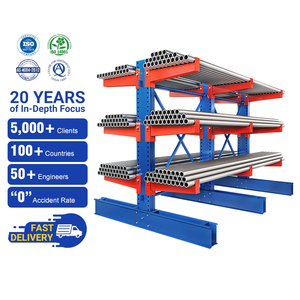
Standardized cold-rolled & hot-rolled structural steel cantilever systems calibrated for wall-adjacent single-sided arrays, double-sided heavy duty runs, and mobile warehouse conversions.

5,000+ kg
Max Column Capacity
EN 15512
Design Standard Validation
100% Direct
Selectivity For Long Loads
50+ Nations
Export Reliability Track Record
Industrial White Paper Analysis

Engineering Structural Integrity: Single-Sided Cantilever Mechanics

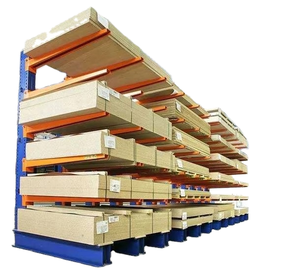
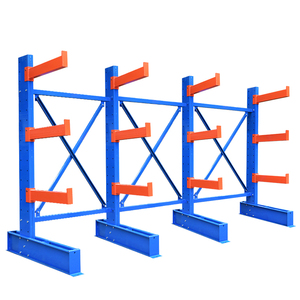
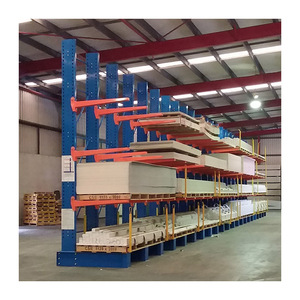
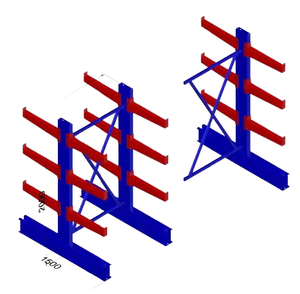
In modern industrial logistics, handling non-standard, linear, and oversized goods presents unique spatial and mechanical challenges. Conventional selective pallet racking relies on front upright vertical columns that obstruct items longer than standard pallet widths (1200mm). Single-sided heavy-duty cantilever racking eliminates the front aisle barrier entirely. By utilizing a rigid vertical column, a high-moment base beam bolted securely to concrete foundations, and horizontally cantilevered arms projecting outward, warehouse operators achieve a continuous unobstructed horizontal storage plane.

From a civil and structural engineering perspective, single-sided cantilever racking operates under significant eccentric cantilever load mechanics. Unlike double-sided configurations where loads on opposing arms counterbalance bending moments across the central column, a single-sided cantilever system transfers 100% of its working gravity load as an unmitigated overturning moment ($M_o = \sum P_i \times L_i$) into the base foundation and anchor bolts. Sourcing from certified Chinese manufacturers requires precise mechanical verification under European standard EN 15512 and American ANSI MH16.1 (RMI) standards.

Key Engineering Rule: The base length ($L_b$) of a heavy-duty single-sided cantilever rack must equal or exceed the projection length of the longest arm ($L_a$), engineered with continuous structural gussets to prevent local flange buckling under maximum combined axial and moment stress ($\sigma = \frac{P}{A} \pm \frac{M}{S}$).

Our engineering matrix evaluates hot-rolled I-beams (IPE, HEA, HEB profiles) versus heavy gauge roll-formed C-profiles. For arm load thresholds exceeding 800 kg per arm, hot-rolled structural steel provides superior torsional resistance, fatigue endurance under cyclic forklift impact, and predictable yield tolerances under heavy wind or seismic loading parameters in outdoor storage applications.
Structural Parameter Light-Medium Duty System Heavy-Duty Roll-Formed System Heavy-Duty Hot-Rolled (Structural H/I-Beam)
Load Capacity Per Arm 150 kg – 400 kg 500 kg – 1,000 kg 1,000 kg – 3,500+ kg
Column Upright Profile 200 × 60 × 2.0mm C-Section 305 × 100 × 3.0–4.0mm Omega IPE 240 – IPE 450 / HEB 200 – 300 H-Beam
Arm Connection Type Hook-in Pin Type (Pitch 50mm) Bolted Saddle Bracket (Pitch 100mm) High-Tensile 8.8/10.9 Bolted / Pivot Axle Pin
Deflection Limit ($\delta$) L / 150 under full load L / 200 (EN 15512 Standard) L / 250 to L / 300 (Strict High-Tolerance ANSI)
Common Applications Plastic extrusions, light wood trim PVC conduit, medium steel bars Steel coils, structural tubes, sheet packs
Surface Protection Electrostatic Powder (50-70μm) Epoxy Powder Coat (70-90μm) Hot-Dip Galvanized ISO 1461 (>85μm) / Dual Coat
Manufacturing Authority

Engineering Excellence & Export Verification Standards

Why tier-1 EPC contractors, international racking distributors, and 3PL logistic operators partner with certified Chinese heavy-duty cantilever exporters.

Full EN 15512 & RMI Compliance

Every single-sided cantilever run undergoes finite element analysis (FEA) testing for lateral torsional buckling, second-order $P-\Delta$ effects, and base-anchor shear force distribution, satisfying rigorous EU and US building codes.

Tapered Deflection Compensation

Arms are engineered with an intentional 2° to 2.5° upward pitch from factory manufacturing. Under nominal rated load, elastic deflection normalizes the arm perfectly horizontal, preventing load slippage or forklift hang-up.

Corrosion Shield Dual Processing

For outdoor lumber and steel yard storage, our continuous hot-dip galvanization meets EN ISO 1461 requirements with a zinc coating thickness exceeding 85 microns, yielding 25+ years of zero-maintenance salt spray resistance.

Full Lifecycle Traceability

Each batch of Q235B/Q355B mill steel is verified via raw material chemical spectroscopy and mechanical tensile testing (355 MPa minimum yield strength), accompanied by 3.1 Mill Test Certificates for international audits.

Custom Modular Architecture

Engineered with laser-punched vertical column patterns allowing 100mm, 125mm, or 140mm height adjustments without welding. Quick reconfiguration satisfies seasonal product profile transitions.

Export Container Nesting Packaging

Export components are packed with custom structural steel dunnage, high-density polyethylene interleaving, and corner armor to eliminate coating abrasion, maximizing maritime container weight efficiency up to 26.5 tons/40HQ.

Strategic Horizon 2025–2030

Global Procurement Trends & Technological Evolution

Procurement directors and supply chain managers are shifting from purely initial capital cost (CapEx) metrics toward long-term total cost of ownership (TCO), operational safety, and system scalability. The global cantilever market is being reshaped by four definitive trends:

1. Convergence of Single-Sided Cantilever with Mobile Chassis

Escalating industrial land costs in Europe, North America, and Australia have triggered rapid adoption of motorized, rail-guided mobile cantilever solutions. By mounting single-sided cantilever runs directly to electrically driven mobile carriage platforms, operations eliminate all fixed corridors except for one dynamic working aisle. This triples SKU storage capacity within identical footprints while retaining 100% individual arm accessibility.

2. AGV & Automation Interface Readiness

As omni-directional automated guided vehicles (AGVs) and heavy-capacity side-loaders enter long-goods yards, cantilever manufacturing tolerances have tightened. Modern procurement mandates laser-aligned guide rails (magnetic or physical steel angle tracking), optical retro-reflector targets on upright bases, and arm tip sensor targets to facilitate collision-free robotic placement of 6-meter bundle packs.

3. Decarbonized Steel Sourcing & LCA Auditing

Global procurement directives in the EU (CBAM - Carbon Border Adjustment Mechanism) require verifiable carbon accounting. Top Chinese exporters now partner with electric arc furnace (EAF) mills producing certified low-embodied-carbon structural steel profiles, backed by verified ISO 14025 Environmental Product Declarations (EPDs).

4. IoT Strain Gauges & Structural Safety Monitoring

High-bay cantilever installations exceeding 7 meters are increasingly retrofitted with embedded piezo-electric strain sensors along the column base fillet and high-stress arm joints. These IoT nodes monitor deflection anomalies in real time, alerting maintenance managers to structural impacts or unapproved point overload events.

Procurement Intelligence

Frequently Asked Questions for Single-Sided Cantilever Procurement

Definitive technical and commercial answers directly from our structural engineering and export compliance department.

Q1 What differentiates single-sided from double-sided cantilever stability?
Single-sided cantilever racking is subject to continuous, asymmetrical overturning moments because loads exist solely on one side of the vertical column. Double-sided racks naturally balance gravitational forces when evenly loaded. Therefore, single-sided systems require substantially deeper structural base members, thicker flange gussets, and high-embedment chemical or mechanical concrete anchors to resist base uplift forces ($T_{anchor} = \frac{M_o}{d} - \frac{W_{dead}}{2}$).
Q2 What slab specifications are mandatory for heavy-duty single-sided racks?
We recommend a minimum concrete slab thickness of 200mm to 250mm with a compressive strength of at least C25/30 (30 MPa), reinforced with steel mesh. Base plates must sit flush on uncracked concrete with zero void spaces. When point loads exceed 80 kN per column, we provide structural anchor embedment plans specifying M16 to M24 chemical capsule anchors (Hilti/Fischer equivalent).
Q3 How do you calculate safe load capacity for flexible or sagging materials?
When storing flexible goods such as thin-wall PVC conduits, copper pipe, or light timber packs, arm spacing is determined by the material's permissible sag between supports rather than the rack's arm strength alone. Sag must not exceed $\frac{L_{span}}{300}$. If necessary, cantilever arms can be fitted with continuous structural steel deck panels, wire mesh decks, or secondary cross support beams.
Q4 Should I specify roll-formed steel or hot-rolled structural H-beams?
For light-to-medium loads (up to 500-600 kg per arm) with indoor warehousing, roll-formed high-tensile steel provides an economical, light-weight, and highly adaptable solution. For severe industrial duty, heavy steel bar stock, plate handling, arm lengths exceeding 1500mm, or outdoor installations exposed to wind and seismic lateral loads, hot-rolled IPE/HEB structural steel is mandatory.
Q5 How are single-sided cantilever racks anchored against building walls?
While single-sided racks are often installed flush against warehouse perimeter walls to maximize space utilization, they must be engineered as freestanding self-supporting structures unless the building architect has formally certified wall tieback capacity. Connecting uncertified racking to precast panels or steel siding risks building envelope failure during seismic or impact events.
Q6 Can single-sided racks be converted to double-sided if facility needs change?
In standard systems, no, because single-sided bases are welded or bolted off-center. However, we engineer a universal modular column core with symmetrical bolt patterns. By ordering replacement double-sided symmetrical bases and supplementary arms, operators can easily reconfigure single-sided runs into central double-sided aisles during warehouse retrofits.
Q7 What inspection and maintenance intervals are required under EN 15635?
EN 15635 mandates a visual weekly check by an internal PRRS (Person Responsible for Racking Safety) and an exhaustive formal inspection every 12 months by a certified third-party racking engineer. Special focus must be given to column verticality (< 1/200 deviation), arm end deflection, anchor bolt torque verification, and baseplate weld integrity.
Q8 What are standard lead times and export documentation packages?
Standard production lead times are 25 to 35 calendar days from final structural CAD drawing signoff. All export orders include complete container packing lists, 3.1 Mill Test Certificates, structural calculation reports, powder coat micron verification logs, and comprehensive step-by-step 3D assembly manuals.

Design Your Custom Heavy-Duty Cantilever Racking System

Connect with our structural racking design engineering team for complimentary warehouse capacity layouts, load moment calculations, and factory-direct export container pricing.

Get Catalog