Featured Heavy-Duty Dynamic & Pallet Racking Systems
Precision roll-formed, cold-rolled structural steel racking fabricated to international payload specifications. Explore our wholesale production lines available for global deployment.
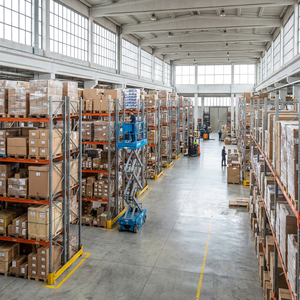
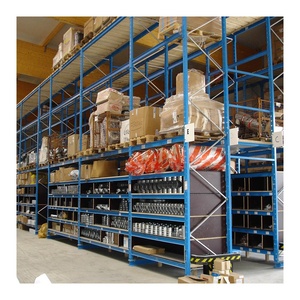
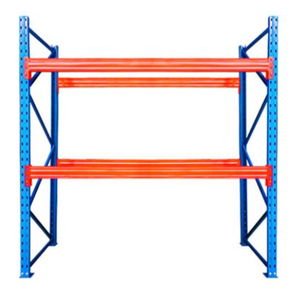
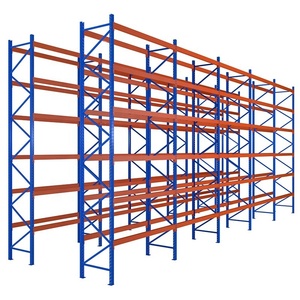
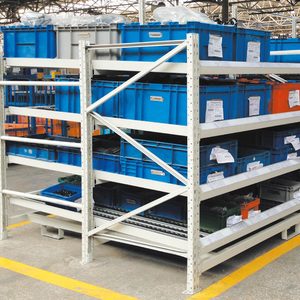
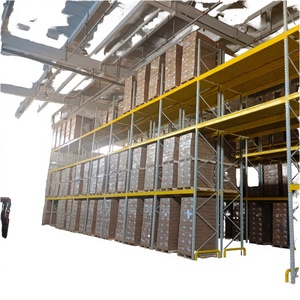
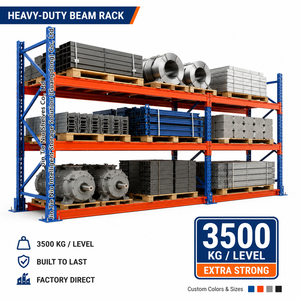
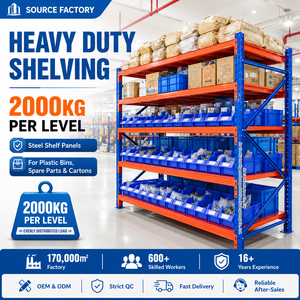
Engineered For Ultra-High Payload Volumetric Efficiency
Dynamic live storage racking eliminates unnecessary forklift aisles, accelerating SKU replenishment while upholding maximum warehouse safety standards.
The Kinematics and Engineering Behind Heavy Duty Live Storage Systems
Live storage racking, universally recognized across intralogistics as dynamic gravity flow racking, represents the pinnacle of compact, high-throughput warehouse engineering. Unlike static selective pallet racking that requires dedicated operating aisles for every two rows of racks, a heavy-duty live storage system is engineered around continuous roller beds inclined at a precise gradient—typically between 3% and 4%. Pallets loaded at the rear charging face advance smoothly under the controlled influence of gravity toward the forward retrieval face. This fundamental layout creates an inviolable First-In, First-Out (FIFO) material flow profile indispensable for temperature-controlled cold rooms, fast-moving consumer goods (FMCG), pharmaceutical stockpiling, and automotive component sequencing buffers.
As premier Chinese exporters and manufacturing specialists, our factory fabricates dynamic live storage systems that resolve the primary mechanical failure points observed in substandard systems: uncontrolled run-away pallets, roller axle binding under asymmetric concentrated wheel loads, and pallet crush pressures at the picking face. By integrating self-regulating centrifugal brake rollers, heavy-duty mechanical entry separators, and laser-aligned galvanized steel roller tracks, our gravity flow systems maintain consistent transit speeds regardless of whether a lane carries a 400 kg crate or a 1,500 kg dense engine block pallet.
Core Structural Components of Industrial Gravity Flow Lanes
The operational longevity and physical safety of a heavy-duty dynamic live storage installation depend entirely upon component metallurgical integrity and tolerance control. Our production facilities maintain rigorous automated manufacturing sequences across five critical engineering sub-assemblies:
- Continuous Heavy Duty Roller Tracks: Formed from 2.5mm cold-rolled structural steel profiles, zinc-galvanized to resist corrosive warehouse environments. Fitted with steel ball-bearing rollers capable of enduring dynamic impact loads during heavy forklift loading maneuvers.
- Centrifugal Speed Controller Rollers (Brake Rollers): Strategically interspersed along each lane at calculated pitch intervals (every 1 to 2 pallet depths). These internal centrifugal planetary gearboxes engage mechanically as pallet speed increases, automatically capping travel velocity between 0.1 m/s and 0.25 m/s.
- Safety Pallet Separator & Discharge Decoupler: Mounted at the picking discharge face, this mechanical interlock isolates the lead pallet from the cumulative hydrostatic head pressure exerted by all following pallets in the lane. Once the forklift driver extracts the front pallet, the secondary latch releases automatically, permitting the queued pallets to advance safely.
- Upright Columns with Micro-Pitch Adjustability: Cold-formed from high-yield Q355B structural steel, our omega-profile upright frames exhibit outstanding torsion resistance under dynamic vibrational stress, engineered in compliance with EN 15512 and FEM 10.2.02 codes.
- Impact-Absorbing Entry Funnels: Heavy-gauge flared pallet guides installed at the loading threshold rectify misaligned forklift approaches, shielding roller bearings from direct physical collisions.
System Architecture: Comparison of High-Density Storage Methodologies
When selecting a high-density warehouse storage strategy, procurement officers must balance volumetric utilization, capital expenditure, picking throughput speeds, and pallet selectivity. The following comparative engineering matrix outlines why live storage provides the fastest ROI for high-turnover logistics hubs:
| Storage Methodology | Density Efficiency | Inventory Principle | Labor & Forklift Travel | Safety / Risk Profile |
|---|---|---|---|---|
| Live Storage Flow Racking | Ultra-High (Up to 80%) | 100% Strict FIFO | Minimal (Separated load/pick aisles) | ✔ High (No truck-in-rack entry) |
| Drive-In Racking | High (Up to 70%) | Strict LIFO Only | High (Trucks enter deep rack bays) | Moderate (High collision risk to uprights) |
| Push-Back Cart Racking | Medium-High (55-65%) | Strict LIFO Only | Moderate (Same aisle loading/unloading) | Moderate (Nested cart binding risk) |
| Conventional Selective | Low (35-40%) | Flexible FIFO/LIFO | Very High (Wide travel aisle matrix) | High (Continuous traffic congestion) |
Key Procurement Trends in Global Heavy Duty Live Storage Racking (2025–2030)
International procurement trends for warehouse storage systems are experiencing a paradigm shift driven by e-commerce velocity, sky-rocketing industrial land lease rates, and stringent cold-chain regulations across Europe, North America, the Middle East, and Southeast Asia. B2B buyers seeking factory-direct sourcing from China are prioritizing four distinct procurement parameters:
1. Decoupled Loading and Unloading Traffic: Modern occupational safety and logistics protocols demand complete physical segregation between replenishment operations and order-picking workflows. Live storage flow systems isolate counterbalanced loading forklifts at the rear aisle, while reach trucks or order pickers operate exclusively along the discharge frontage. This eliminates forklift traffic collisions, cutting handling times by up to 45% compared to conventional multi-aisle layouts.
2. Compatibility with Automated Guided Vehicles (AGVs) and AMRs: Autonomous mobile robotics require millimeter-accurate pallet presentation at discharge terminals. Today's live storage engineering specifications incorporate optical sensor reflectors, high-tolerance mechanical positioning stops, and dampening buffers to present pallets within ±3 mm tolerance, enabling seamless automated end-of-line integration without human forklift drivers.
3. Cold-Chain Energy Optimization: Cold storage facilities represent the most energy-intensive commercial real estate sector. Every cubic meter of unutilized warehouse volume squanders refrigeration power. By eliminating empty access corridors, dynamic live storage compacts cold-room footprint requirements by up to 60%, yielding massive annual electrical energy savings and accelerating corporate carbon-reduction mandates.
4. Total Cost of Ownership (TCO) vs Cheap Initial Steel Cost: Seasoned EPC contractors and procurement managers recognize that a nominal 5% savings on low-grade uncertified flow racks is quickly obliterated by roller failure downtime, pallet hang-ups, and structural upright deflection. Discerning global clients prioritize traceable raw material origin (such as Baosteel or Shougang prime coils), certified weld penetration, structural FEA simulation reports, and field-tested centrifugal speed regulators that operate reliably across hundreds of thousands of cycles.
Technological and Manufacturing Innovations from Our Chinese Export Factory
As an industry-leading manufacturing exporter, our facility leverages state-of-the-art cold-roll forming, automated robotic welding, and high-polymer powder coating technologies to engineer storage systems that withstand the harshest industrial operating conditions:
High-Precision Roll-Forming Profiles: Our upright columns are cold-formed on multi-station automated continuous rolling lines. This controlled deformation process preserves steel crystalline microstructure, ensuring maximum yield strength and torsional stability under dynamic loading. Beam connection teardrop/butterfly slots are stamped with precision punching dies to ensure zero play and rapid field assembly.
Magnetic Eddy-Current Non-Friction Brake Rollers: Moving beyond conventional friction brake pads that suffer thermal degradation and mechanical wear over time, our advanced flow lanes can be equipped with contactless magnetic eddy-current brake drums. These maintenance-free braking systems adjust dynamic braking force automatically in direct proportion to pallet mass and velocity, guaranteeing whisper-quiet, wear-free deceleration even in sub-zero freezer environments (-30°C).
Environmentally Certified Electrostatic Coating: All steel surfaces undergo a 7-stage pre-treatment bath incorporating hot alkali degreasing, zinc phosphating, and deionized water rinsing prior to automated powder application. The resulting 60-80 micron epoxy-polyester coating achieves exceptional cross-hatch adhesion, resisting impact chipping, flaking, and chemical moisture corrosion in harsh chemical or cold storage installations.
Why Top Global 3PLs & Industrial Integrators Choose Us
From mill raw-material sourcing to seismic FEA stress testing and containerized export packing, our direct-factory infrastructure eliminates middlemen costs while ensuring flawless field execution.
Full Lifecycle Quality & Compliance
Every batch of structural steel is tracked from mill test certificate through continuous roll forming. Fabricated in full compliance with European EN 15512, FEM 10.2.02, and Australian AS 4084 standards. Third-party testing (SGS, TÜV) available upon project requisition.
Direct China Factory Pricing & High Output
Operating a modernized manufacturing complex equipped with multi-roll cold forming mills, automated robotic welding cells, and eco-friendly powder coating lines. We deliver wholesale pricing advantages while delivering large-scale export orders in 15 to 25 days.
Turnkey System Integration & Export Packaging
All beams, uprights, and dynamic roller beds are packed using high-density steel nesting frames and custom corner protectors to prevent transit damage. We provide comprehensive erection manuals, bolt-torque specs, and remote or on-site engineering supervision worldwide.
Frequently Asked Questions: Heavy Duty Live Storage Racking
Detailed answers to structural, commercial, and engineering questions commonly submitted by international logistics directors, supply chain engineers, and EPC contractors.
1. What is the fundamental difference between pallet live storage and carton flow racking?
2. How is the optimal slope or inclination angle calculated for heavy-duty gravity flow lanes?
3. Why are centrifugal brake rollers mandatory in pallet live flow lanes deeper than 3 positions?
4. What role does the pallet separator play at the discharge picking position?
5. Can our existing selective pallet racking system be retrofitted into dynamic live storage?
6. What international structural and safety codes do your racking systems comply with?
7. How does cold-room temperature (-25°C to -30°C) affect live storage performance?
8. What pallet types and base conditions are compatible with gravity flow rollers?
9. How do you protect overseas export shipments against moisture and physical transit damage?
10. What information is required to receive a custom engineering layout and factory wholesale quotation?
Transform Your Warehouse Density with Direct-Factory Engineering
Partner with China's premier heavy-duty live storage racking manufacturer. Send your building plans, SKU velocities, and pallet specifications to receive a free structural feasibility assessment and direct factory export quote.