Heavy Duty
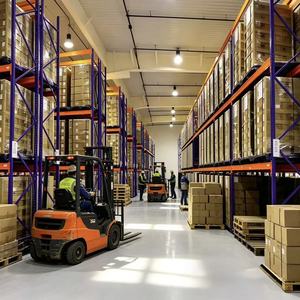
Manufactured using strict structural profiling, laser robotic welding, and automated surface electrostatic treatments, our high-density product range satisfies international EPC project loads and complex yard architectures.
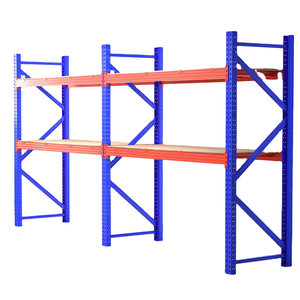
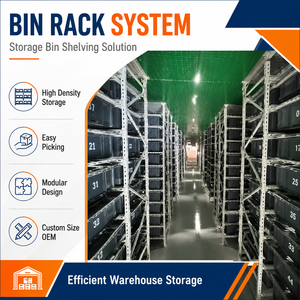
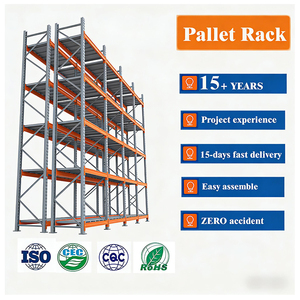
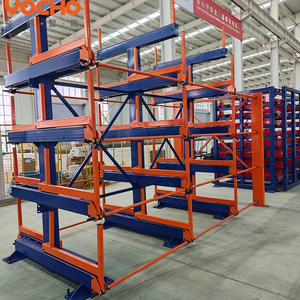
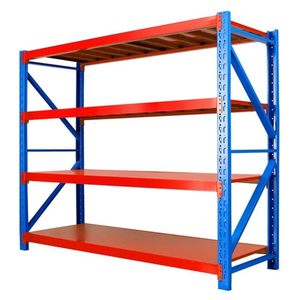
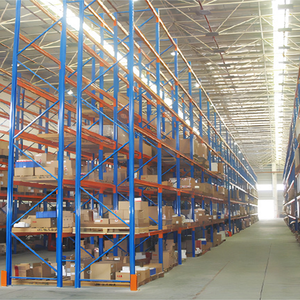
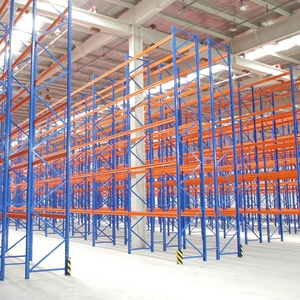
Storing long cylindrical items—such as drill strings, structural hollow sections (SHS/CHS), polyvinyl chloride (PVC) conduits, and heavy alloy round stock—presents distinct structural challenges that conventional pallet racks cannot accommodate. When loose or bundled tubular profiles are nested, they exert both vertical gravitational force and dynamic lateral thrust vectors outward against cantilever uprights and arms.
In accordance with EN 15512, EN 15635, and ANSI/RMI MH16.1, engineering pipe storage systems demands rigorous finite element analysis (FEA) evaluating concentrated point loads, cantilever root weld moments, and second-order P-Delta effects on slender columns.
Unlike standard teardrop connections, heavy-duty pipe racks employ articulated pivot-pin or high-tensile 8.8-grade bolted flange joints. Under accidental forklift impact, articulated pin arms yield upward instead of shearing the column's load-bearing face, preserving overall rack integrity.
Arms are prefabricated with a factory camber angle of 2° to 3° upward. Under total design capacity, maximum vertical deflection cannot exceed L/180. Removable retention end-stops with safety drop pins safeguard non-uniform bundles against lateral slippage.
Horizontal and diagonal structural channel bracing stabilizes longitudinal bays. Baseplates are secured into high-strength floor slabs using M20/M24 mechanical wedge anchors or chemical capsules, neutralizing overturning moments generated during high-speed handling.
| Structural Parameter | Light to Medium Pipe Racking | Heavy Duty Structural Cantilever | Automated Cassette High-Bay Racking |
|---|---|---|---|
| Load Capacity / Arm | 250 kg – 800 kg | 1,000 kg – 6,000 kg | 2,000 kg – 5,000 kg per Cassette |
| Structural Profile Material | Cold-Roll Formed Profile (Q235B) | Hot-Rolled Heavy IPE / HEA / HEB (Q355B) | Precision Welded Box / Rectangular Tube |
| Usable Arm Length | 600 mm – 1,000 mm | 800 mm – 2,500 mm | 3,000 mm – 12,000 mm (Full Cassette) |
| Handling Mechanism | Manual / Counterbalance Lift Truck | Heavy Combilift / 4-Way Reach Forklift | Automated Stacker Crane / AS/RS Crane |
| Corrosion Finish | Epoxy Powder Coat (60–80 µm) | Hot-Dip Galvanized ISO 1461 (≥85 µm) | Polyurethane Dual-Coat + Zinc Primer |
Over the next 3 to 5 years, tubular logistics is shifting from passive storage yards to intelligent, semi-automated and automated inventory distribution nodes. Global EPC contractors, pipeline fabricators, and metal service centres are optimizing yard space through several industry developments:
Floor-bound manual forklift handling of long bundles is increasingly replaced by automated honeycomb systems. Pipes are organized into standardized steel cassettes transported by automated cranes, boosting vertical space utilization by up to 350% compared with conventional cantilever racks.
Heavy-duty open-air pipe storage is exposed to varying environmental factors and dynamic loads. Integrated wireless telemetry sensors mounted directly to cantilever arm roots measure elastic deflection in real time, alerting safety managers to unbalanced loads and fatigue stress before failure occurs.
International infrastructure and offshore energy projects now require Environmental Product Declarations (EPDs) covering entire rack structures. Modern facilities utilize recycled scrap steel melted via Electric Arc Furnaces (EAF), delivering measurable emissions reductions across large-scale warehouse rollouts.
As a specialized OEM manufacturing partner, our operations integrate structural calculations, automated production lines, and quality verification into every production batch. Our engineering methodology provides clear technical oversight:
Every custom arm and column design undergoes complete computerized simulation for buckling, torsion, and deflection under static, dynamic, and seismic conditions before production begins.
Equipped with multi-stage pretreatment, automated shot blasting, and robotic Swiss Gema powder spray systems, alongside hot-dip galvanizing baths delivering up to C5-M marine-grade corrosion performance.
Key technical and logistical questions answered by our structural engineering and export teams.
Access our comprehensive structural engineering manuals, design calculation sheets, profile load tables, and factory layout consulting services. Request a dedicated OEM project review tailored to your warehouse specifications.
Get Catalog