Heavy Duty
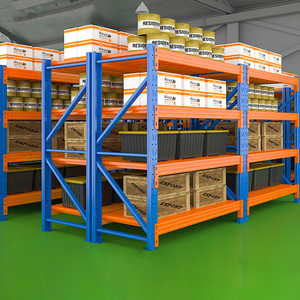
HY Heavy Duty Warehouse Rack Storage Shelf Pallet Racking
Multi-tier structural warehouse shelving designed for palletized inventory, certified to European structural design parameters.
Engineered for extreme structural resistance, tight warehouse footprints, and severe heavy-duty intralogistics applications across FMCG, chemical, cold store, and manufacturing hubs.
Multi-tier structural warehouse shelving designed for palletized inventory, certified to European structural design parameters.
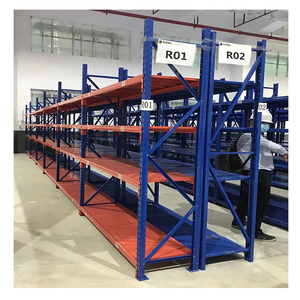
High-tensile beam profiles with interlocking connector brackets suited for rapid retrofit and heavy loading bays.
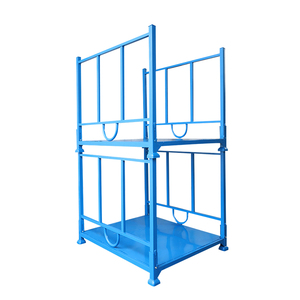
Customizable modular stacking nests providing adaptable bulk storage without anchoring into floor slabs.
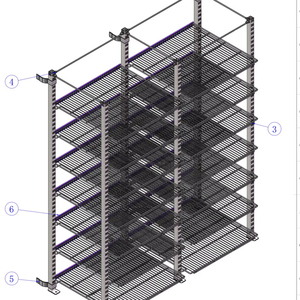
Specialized anti-corrosion frames engineered to resist embrittlement inside sub-zero industrial cold refrigeration units.
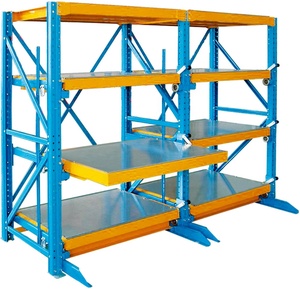
Slide-out drawer engineering with safety interlocks for super-heavy tool, die, and industrial mold storage.
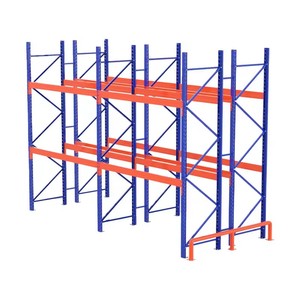
Thermoset epoxy polyester powder-coated finish designed for resilience against aggressive industrial atmospheric abrasion.
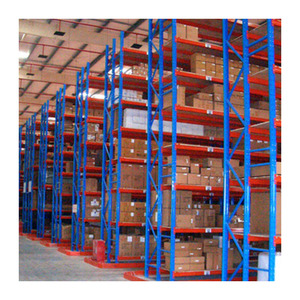
Engineered for integration with VNA cranes and automated storage handling setups for maximum vertical cubic gain.
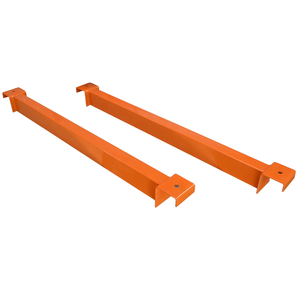
Reinforced box beams with stepped welded connectors tailored for irregular footprint pallets and high dynamic impact.
A deep technical overview designed for warehouse engineers, supply chain logistics directors, and structural procurement specialists evaluating high-density LIFO systems.
Push back racking relies on a graduated nesting system where low-friction steel wheeled carts ride along inclined structural steel channels. The first pallet rests on the top nested trolley. When the second pallet is loaded, the forklift operator pushes back the first cart, exposing the secondary cart beneath.
Dynamic friction variance poses a safety risk in gravity-driven systems. Custom OEM Push Back Racking integrates shielded, lubricated-for-life bearings mounted inside custom-machined steel wheels to prevent deceleration drift, lane jamming, or excessive impact speed at unloading faces.
Every frame assembly is computed to counter severe horizontal dynamic forces generated during the loading push stroke. High-grade hot-rolled or cold-formed micro-alloyed steel profiles are manufactured to comply with EN 15512 static deflection and RMI loading code safety limits.
| Evaluation Parameter | OEM Push Back Racking (Nested Cart) | Drive-In / Drive-Through Racking | Pallet Flow Racking (FIFO Gravity) | Radio Shuttle High-Density System |
|---|---|---|---|---|
| Selectivity vs. Density Index | High Density (LIFO per Lane) | Maximum Density (Low Selectivity) | High Density (FIFO Rotation) | Ultra-High Density (Deep Lane) |
| Operator Cycle Time | Fast (Forklift stays in outer aisle) | Slow (Requires internal lane navigation) | Medium to Fast | Fast (Automated internal travel) |
| Truck Impact Damage Vulnerability | Extremely Low (Zero rack entry) | Critical Hazard (High upright impact frequency) | Low | Minimal |
| Mechanical Complexity & Maintenance | Low (Passive gravity nested design) | Minimal (Static structural steel only) | Moderate (Rollers, separators, brakes) | High (Battery, sensors, drive shuttles) |
| Cold Storage Adaptability | Excellent (Specialized low-temp greases) | Good | Moderate (Brake roller freezing risks) | Moderate (Battery life drop in cold) |
Strategic perspectives on how warehouse real-estate pressures, automation integration, and sustainable metallurgy are reshaping racking specifications.
With refrigerated warehouse energy costs climbing 15-22% globally, cubic air space utilization is an urgent priority. Push back racking allows facilities to eliminate 60% of aisles needed in selective layouts, minimizing refrigerated volume losses while allowing mixed-SKU batch retrieval by lane.
Traditional push back systems relied heavily on manual counterbalance mast control. The next-generation OEM designs incorporate precision alignment sensors, low-tolerance push faceplates, and laser-guided positioning stops designed specifically for automated guided vehicles (AGVs) to execute smooth push strokes without manual override.
Procurement mandates are beginning to require continuous strain monitoring in heavy-duty bays. Integrated strain-gauge telemetry on key load-bearing uprights alerts warehouse management systems (WMS) to dynamic overloads or forklift shock forces, supporting predictive maintenance and compliance verification.
Delivering turnkey peace of mind through strict structural verification, controlled steel processing, and end-to-end lifecycle accountability.
Every structural upright profile, beam connection, and cart assembly is verified using 3D finite element analysis (FEA) against international seismic, dynamic, and dead-load storage standards.
We source prime, certified structural coil batches accompanied by EN 10204 3.1 inspection certificates, guaranteeing tensile stability and yield strength consistency across production lots.
From non-standard pallet geometries (chep, GMA, euro, steel tubs) to cold-store clearances, our CAD and production engineering departments tailor nest profiles to your exact load conditions.
From initial space feasibility studies and on-site assembly supervision to periodic EN 15635 racking safety audits and retrofits, we stand behind your installation over its full operational lifespan.
Direct technical and operational answers to support informed capital equipment decisions.
Push Back racking isolates the lift truck completely to the external aisle; drivers never navigate deep into the steel structure. This reduces pallet loading and cycle times by up to 50% compared to Drive-In racks. Crucially, forklift mast collisions with interior uprights are eliminated, drastically cutting recurring structural damage and reducing safety liabilities.
Yes. Unlike roller-based gravity pallet flow racks which require pristine pallet bottom runners to roll properly, push back racking places each pallet onto a rigid structural steel nested cart. The cart cradles the pallet entirely, allowing broken boards, euro pallets, industrial steel tubs, or plastic pallets to move reliably through the lane without snagging.
Standard configurations range from 2 to 6 pallets deep per lane. Pallet capacities typically support between 1,000 kg and 1,500 kg per position in standard setups, but our custom OEM heavy-duty systems can be engineered with reinforced box-channel rails and multi-bearing carts to manage specialized container loads exceeding 2,000 kg per cart.
Because the carts nest one on top of the other, there is a minor vertical clearance accumulation (often referred to as "stacking height"). Typically, each cart layer adds between 120 mm to 160 mm of total vertical beam pitch per level. In a 4-deep configuration, approximately 450 mm to 550 mm of vertical lane depth headroom is planned into the layout calculation.
Nested cart systems are well suited for cold storage because they avoid delicate electrical shuttle drives or intricate rubber brake rollers. For blast freezers and sub-zero storage (-20°C to -30°C), our OEM components are built with low-temperature synthetic lubricants, cold-rolled micro-alloyed steel to resist brittle impact, and zinc galvanized or epoxy powder-coated finishes to resist condensation corrosion.
Systems are calculated in accordance with European Norm EN 15512 (Steel static storage systems – Adjustable pallet racking systems – Principles for structural design), American RMI (Rack Manufacturers Institute) standards, and AS4084 where applicable. Factory manufacturing maintains strict quality management controls under ISO 9001, backed by EN 10204 certified structural steel traceability.