High-Performance OEM Wire Deck & Pallet Racking Solutions
Explore our certified industrial warehouse storage systems. Fully configurable beam spans, upright profiles, and wire deck waterfall configurations engineered to meet exact client load specifications and seismic requirements.
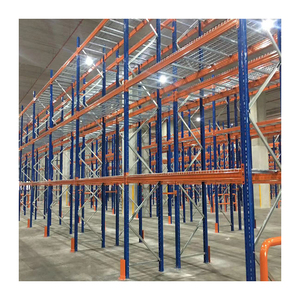
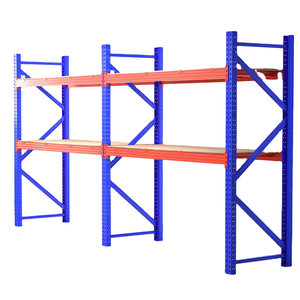
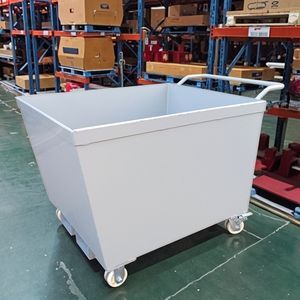
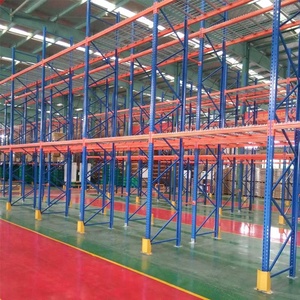
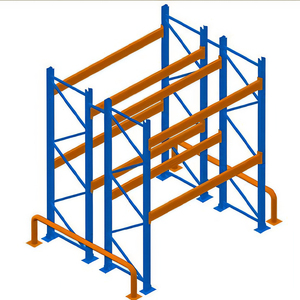
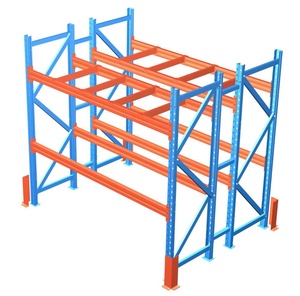
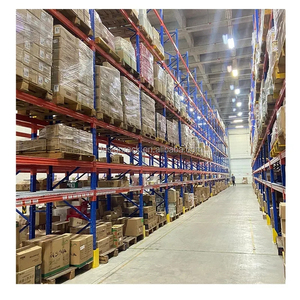
Engineering Structural Integrity: OEM Heavy-Duty Wire Deck & Racking
A technical examination of metallurgical requirements, load distribution mechanics, fire safety compliance, and robotic fabrication in modern intralogistics racking ecosystems.
1. Metallurgical Composition and Cold-Formed Steel Performance
In modern industrial warehouse infrastructure, pallet racking is a dynamic load-bearing structure subjected to cyclic stresses, impact loads from material handling equipment (MHE), and static dead loads. As an OEM manufacturer, our structural systems utilize cold-rolled high-tensile steel coils complying with Q235B and Q355B (equivalent to European EN 10025 S235JR and S355JR, or ASTM A1011 Grade 50). The yield strength (fy) is engineered to withstand extreme elastic deformation under localized stresses, ensuring that the deflection ratio under full uniform distributed load (UDL) remains strictly within L/200, well beyond standard regulatory safety factors.
Upright columns feature complex multi-bend omega (Ω) profiles cold-formed through high-precision continuous roll-forming lines. The roll-forming process introduces work-hardening along the bend radii, significantly enhancing torsional rigidity and axial load capacity without increasing raw steel deadweight. The beam connectors utilize multi-claw interlocking brackets cold-stamped from 4.0mm heavy steel plates, locking into inverted teardrop or diamond perforations at 50mm or 75mm increments. This connection establishes a semi-rigid joint that delivers superior rotational stiffness, dampening lateral frame sway in high-bay setups exceeding 12 meters in clear height.
Technical Distinction: Unlike generic commercial shelving, our heavy-duty wire mesh decking is manufactured using cold-drawn carbon steel wire (diameter 4.5mm to 6.0mm) welded with automated resistance grid mesh machines. Each wire intersection undergoes synchronous multi-spot welding, eliminating micro-fissures and guaranteeing tensile load resistance under un-palletized or fractional carton loading.
2. Fire Protection Hydraulics and NFPA 13 Compliance
A primary factor driving global enterprise adoption of wire mesh decking over solid timber or steel panels is regulatory compliance with warehouse fire codes, notably NFPA 13 (Standard for the Installation of Sprinkler Systems) and FM Global Data Sheets 8-9. Solid shelving acts as an umbrella barrier, deflecting sprinkler water discharge and creating dry localized hotspots where fires can escalate beneath storage levels.
Our OEM wire mesh decks are designed with a minimum of 70% open area across the standard 50×50mm or 50×100mm grid configurations. This structural aperture permits unobstructed vertical penetration of water from Early Suppression Fast Response (ESFR) ceiling sprinklers down to the lowest storage tiers. Furthermore, the open architecture enhances ambient illumination within interior aisles, minimizing shadow pockets for forklift mast cameras and operators while dramatically reducing dust accumulation compared to wood decking.
| Component Specification | Standard Industrial Grade | OEM Heavy-Duty Specification | Engineering Advantage |
|---|---|---|---|
| Upright Steel Grade | Q235A Carbon Steel | Q355B / S355 Cold-Rolled Structural | +35% yield strength; superior seismic absorption |
| Wire Deck Wire Gauge | 3.8mm – 4.2mm Drawn Wire | 5.0mm – 6.0mm Cold-Drawn High Carbon | Prevents local sag under concentrated point loads |
| Support Channel Profile | 1.5mm Flanged Channel | 2.0mm U-Channel with Inverted Flange | Compatible with Step, Box, and Structural C-Beams |
| Surface Pre-treatment | Single-Stage Solvent Wipe | 7-Stage Zinc-Phosphating / Nano-Ceramic | Surpasses 500-hour ASTM B117 salt spray testing |
| Coating Thickness | 40 – 50 μm Standard Paint | 80 – 120 μm Electrostatic Epoxy-Polyester | Abrasion-resistant against heavy wooden pallet dragging |
Why Tier-1 Integrators Choose Our Manufacturing Ecosystem
From metallurgical verification to computer-controlled automated powder coating lines, our vertically integrated plant delivers consistent, tight-tolerance storage hardware.
Structural Finite Element Analysis (FEA)
Every customized OEM layout is modeled through 3D CAD and ANSYS structural simulation to calculate exact axial capacity, buckling limits, and second-order P-Delta seismic effects before steel enters production.
- Site-specific seismic acceleration calculations
- Bespoke upright gauge optimization
- Full engineering calculation dossier provided
Robotized Welding & Precision Roll-Forming
Our workshop integrates multi-axis Japanese robotic welding cells for beam end-connectors and automated mesh welding matrices, eliminating human error and cold-lap defects in high-stress dynamic joint areas.
- Sub-millimeter beam pin alignment accuracy
- Continuous inert gas shielded CO2 welding
- Zero spatter finish for flawless coating bonding
Certified Full-Lifecycle Traceability
We trace raw steel heats from prime blast furnaces to finished pallets. Every batch is supplied with 3.1 Mill Test Certificates (MTC), tensile elongation logs, and batch-coded load capacity labeling.
- EN 15512 and ANSI MH16.1 factory compliance
- Ultrasonic weld integrity verification
- Export container packing optimization protocols
Macro Trends Shaping Heavy Duty Pallet Racking Sourcing (2025–2030)
Global supply chain directors and logistics developers must adapt their procurement roadmaps to rising automation, stringent carbon mandates, and warehouse density pressures.
AGV & AMR Interface Standardization
Autonomous mobile robots (AMRs) and automated reach trucks require tighter floor-level beam tolerances and precise bottom clearances. Forward-looking buyers are shifting away from traditional low-profile floor rails toward guided laser docking channels, recessed baseplates, and high-deflection impact-absorbing column guards that prevent automated sensor blind spots.
Green Steel & EPD Environmental Accounting
Scope 3 emission disclosures are now an executive procurement mandate across European and North American 3PL enterprises. OEM procurement is rapidly prioritizing suppliers utilizing Electric Arc Furnace (EAF) recycled scrap steel and accredited Environmental Product Declarations (EPD), significantly cutting embedded carbon per pallet position stored.
Retrofit-Ready Modular High-Density Bays
Given skyrocketing industrial real estate lease costs, greenfield construction is giving way to vertical warehouse optimization. Buyers specify modular boltless connections and adaptable beam steps capable of converting standard selective pallet racking into very narrow aisle (VNA), carton flow, or semi-automated shuttle racking without structural replacement.
Next-Generation Technology in Pallet Racking & Wire Decking
Discover how sensor technology, advanced metallurgy, and digital manufacturing transform static steel infrastructure into smart logistics assets.
IoT Strain-Gauge Sensors & Dynamic Impact Monitoring
Traditional racking safety relies on retrospective annual visual inspections. Next-generation systems integrate piezoelectric strain sensors and wireless accelerometers embedded within critical upright bases and loaded crossbeams. These telemetry nodes detect minor forklift collisions, eccentric overload events, and foundation settlement in real time, triggering instant alerts via cloud WMS platforms before micro-fractures compromise the entire bay.
Additionally, RFID tags integrated directly into robotic spot-welded wire mesh decks facilitate automated inventory auditing, allowing automated aerial drone systems to cross-reference physical shelf occupancy against cloud stock manifests.
Nano-Ceramic Surface Treatments & Zinc-Alloy Galvanizing
In cold storage fulfillment and coastal humid environments, standard powder coatings face micro-porosity degradation. Modern OEM production utilizes silane-based nano-ceramic pretreatment wash systems combined with automotive-grade electro-deposition primers.
For wire mesh decking, hot-dip continuous galvanizing is being superseded by proprietary Zinc-Aluminum-Magnesium (Zn-Al-Mg) wire drawing alloys. This surface technology creates a self-healing galvanic passivation layer over trimmed wire ends, boosting corrosion resistance fivefold against industrial salt sprays and condensation cycles without flake hazards.
Frequently Asked Questions on Heavy-Duty Wire Deck Pallet Racking
Clear, engineering-grounded answers to assist procurement managers, EPC contractors, and warehouse operations specialists in specifying compliant storage systems.
What is the engineering difference between Step-Channel and Flanged-Channel wire decking? +
Flanged (Universal) Channel Decking features a flattened, flared channel end profile that rests on top of structural box beams, structural C-channels, or roll-formed beams lacking a recessed step. Flanged decks offer universal interchangeability across diverse warehouse racks, though they add approximately 2mm to the overall shelf height profile.
How do you calculate safe uniformly distributed load (UDL) versus point loading for wire mesh? +
When dealing with point loads, line loads (such as metal container runner feet), or concentrated small-footprint items, the load is concentrated across unsupported wire cross-sections. In these applications, our engineering team reinforces the deck with high-gauge cold-drawn wire (6.0mm), narrows the mesh pitch to 25×50mm, or welds 4 to 5 internal heavy-gauge U-channels to prevent localized buckling.
Which structural design standard governs international racking shipments? +
- Europe & International: EN 15512 (Steel static storage systems – Adjustable pallet racking systems – Principles for structural design) and EN 15635 (Application and maintenance of storage equipment).
- North America: ANSI/RMI MH16.1 (Specification for the Design, Testing and Utilization of Industrial Steel Storage Racks) and ANSI MH26.2 for wire decking.
- Australia: AS 4084-2023 (Steel storage racking).
Why are waterfall edges recommended on heavy-duty wire mesh decks? +
- Beam Retention: They physically capture the rack beam, preventing the wire deck from sliding forward or backward during pallet insertion or withdrawal.
- Beam Tie Resistance: In heavy loading conditions, waterfall channels act as structural cross-ties, mitigating the natural outward torsional twisting of beam profiles under load.
- Operator Safety: Smooth rounded wire bends eliminate exposed sharp wire ends, protecting warehouse picking personnel and stretch-wrap film from tears.
What is the typical container loading efficiency and lead time for OEM global projects? +
Standard OEM production lead time is 3 to 4 weeks upon final approval of CAD production drawings, supported by weekly progress logs and third-party pre-shipment container inspections (SGS/TÜV compatible).
Ready to Engineer Your High-Density Warehouse System?
Connect with our senior structural storage engineers for immediate layout optimization, seismic calculations, custom OEM wire decking prototypes, and direct-from-factory volume quotes.