Heavy Duty
Engineering tolerances, structural FEM/EN compliance, high-bay automated racking architectures, and direct OEM procurement insights for global supply chains.
Custom-engineered racking assemblies manufactured under ISO 9001 and EN 15512 specifications. Designed for seamless interoperability with stacker cranes, AGVs, and complex logistics hubs.
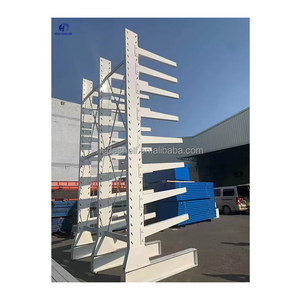
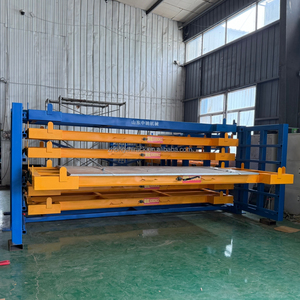
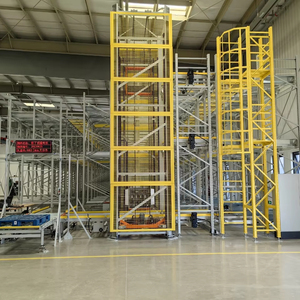
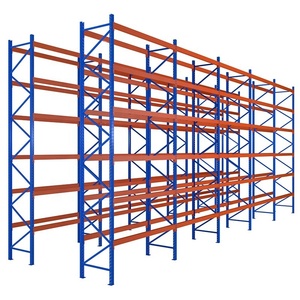
Automated Storage and Retrieval Systems (ASRS) transform static warehouse structures into active kinematic load paths. Procurement leaders must understand the structural interplay between cold-rolled steel profiles, mechanical cranes, and floor foundations.
Unlike manual forklift racking where human operators compensate visually for beam sag and frame lean, ASRS stacker cranes operate on millimetric programmatic coordinates. An unexpected rail deflection or localized frame twist will trigger optical sensor faults, stopping warehouse throughput immediately.
China's top-tier ASRS manufacturers engineer high-bay uprights based on strict limit state designs under EN 15512 and FEM 9.831 / FEM 9.832 codes. The maximum permissible deflection for unit-load beams under full static load is typically constrained to L/300 or L/400 (compared to L/200 in conventional setups). Moreover, horizontal sway under full crane acceleration (often exceeding 0.5 to 1.0 m/s²) must be counteracted through high-tensile X-bracing, portal bracing, and floor-level anchor shear-rings.
The structural integrity of deep-reach and high-bay racking systems relies heavily on raw material consistency. High-grade suppliers utilize cold-formed continuous rolled structural coils such as Q355B (equivalent to S355JR). Continuous roll-forming lines equipped with multi-station CNC punching preserve structural grain flow across complex perforation geometries (omega upright profiles, teardrop vs. diamond locks, and structural bolt webs).
| Structural Parameter | Conventional Selective Racking | Heavy-Duty Mobile Racking (MOVO) | Unit-Load High-Bay ASRS Racking |
|---|---|---|---|
| Typical System Height | 6,000mm – 12,000mm | 8,000mm – 16,000mm | 18,000mm – 42,000mm (Clad-Rack) |
| Horizontal Deflection Limit | H/200 under drift load | H/250 inter-rack constraint | H/500 to H/750 (Kinematic safety) |
| Beam Vertical Deflection | L/200 max | L/250 max | L/300 – L/400 (Optical clearance) |
| Installation Tolerance | ±3.0mm per 10m | ±2.0mm rail levelling | ±1.0mm cumulative across aisles |
| Integration Mechanism | Forklifts (Reach/Counterbalance) | Motorized floor rails, Radio/WMS | Stacker Cranes, Shuttles, AGV/AMR |
Procuring automated storage structures from certified manufacturing plants provides significant balance-sheet advantages through vertical manufacturing control, engineering pedigree, and complete project lifecycle mitigation.
Every racking component undergoes rigorous finite element structural calculation (FEA), verifying buckling safety factors, second-order P-Delta effects, and extreme seismic load states before shop-floor stamping.
Seamless CAD/BIM data exchange for global system integrators (Dematic, Swisslog, Daifuku). We supply high-precision mechanical interface brackets, crane rail anchor assemblies, and optical target mountings.
Every steel batch comes with certified 3.1 Material Test Reports (MTR). Chemical composition, yield tensile thresholds, and cold-bend tests are permanently matched with laser-etched lot identifiers on every upright.
From initial feasibility studies and soil dynamic load analysis to on-site assembly supervision and periodic EN 15635 racking safety audits, our structural engineers protect your operations indefinitely.
Transforming legacy selective setups into high-density mobile racking or multi-tier mezzanine layouts. Gain up to 20% to 50% storage capacity without investing capital into new physical real estate.
Automated powder coating and hot-dip galvanization processes designed for harsh conditions (-30°C cold stores, chemical processing plants, and high-salinity coastal logistics hubs).
Macroeconomic shifts, land shortages, and high interest rates are fundamentally altering how global logistics leaders procure warehouse storage infrastructure.
Global warehouse developers are bypassing traditional structural steel building envelopes. In clad-rack construction, the heavy-duty ASRS uprights support not only the pallet payloads but also the roof panels, side insulation cladding, and environmental wind/snow loads, reducing CAPEX by up to 25%.
With refrigerated space commanding premium energy and leasing costs, procurement is shifting toward deep-lane pallet shuttle ASRS and high-density mobile racking (MOVO). Reducing refrigerated volume while maximizing cubic efficiency lowers operating energy costs by up to 40%.
Next-generation high-bay racking systems feature embedded fiber-optic or wireless strain sensors. Structural loads, accidental crane collisions, and seismic ground shifts are tracked live within warehouse management software, shifting maintenance models from reactive repairs to predictive safety management.
Crucial considerations for engineering leaders, procurement specialists, and EPC system integrators purchasing high-bay storage solutions from China.
Connect directly with our structural engineering team for structural load calculations, project layouts, or customized OEM manufacturing inquiries.
Send an Inquiry