Top China Heavy Duty Double Sided Cantilever Racking Factories & Suppliers
Comprehensive Technical Whitepaper & Strategic Sourcing Guide Engineered to EN 15512 and ISO Standards
Industrial-Grade Cantilever & Automated Storage Solutions
Direct from leading Chinese manufacturing plants: Explore high-density storage platforms designed for handling extra-long materials, structural steel profiles, industrial tooling, and automated high-throughput picking facilities worldwide.
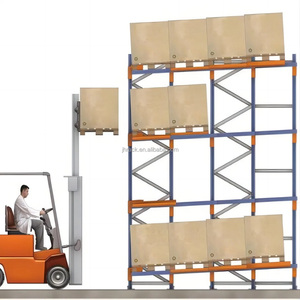
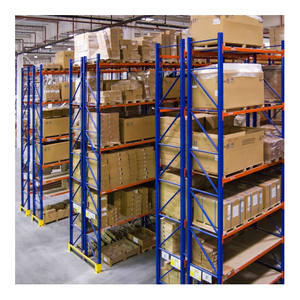
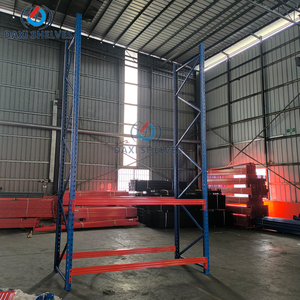
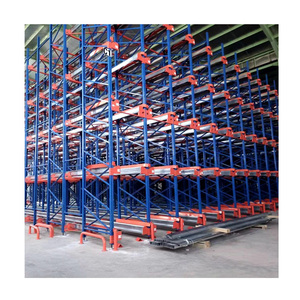
Mechanical Architecture
Structural Engineering of Heavy-Duty Double Sided Cantilever Racking
When engineering warehouse logistics for long, awkward, and heavy profiles—such as structural steel tubing, timber packs, PVC piping, sheet metals, and industrial coils—conventional pallet racks with front vertical uprights impose severe spatial constraints and damage risks. Heavy duty double sided cantilever racking eliminates frontal upright obstructions completely, utilizing a central vertical column anchored securely to a solid concrete slab with cantilevered arms radiating outward from both sides.
By shifting the vertical load onto a unified central column connected to reinforced bases, double-sided cantilever systems achieve optimal structural balance and load distribution. The moments generated by loads on side A are neutralized symmetrically by corresponding loads on side B, drastically reducing the torsional shear stresses exerted onto the base anchoring bolts compared to single-sided cantilever installations.
- Hot-Rolled Structural I-Beams (IPE/HEA Profiles): Engineered specifically for heavy dynamic loads from 1,000 kg up to 5,000+ kg per arm level without permanent deformation.
- Adjustable Pin & Wedge Articulation: Arms adjust on 100mm or 140mm vertical centers, allowing immediate operational reconfiguration without on-site welding or cutting.
- Calculated Incline Deflection Control: Arms are precision-welded with an inherent 2° upward safety camber to counteract elastic deflection under full design loads.
Standardization & Engineering Thresholds
Engineering Specifications Matrix: Double-Sided Cantilever Profiles
Procuring from premier Chinese racking factories requires precise cross-referencing between international engineering standards (FEM 10.2.02, EN 15512, RMI MH16.1) and raw material steel specifications.
| Structural Component | Material Grade | Dimension Profiles Available | Load Capacity Threshold | Surface Treatment Standard |
|---|---|---|---|---|
| Central Dual Column | Hot-Rolled Q355B (ASTM A572 Gr 50) | IPE 200 to IPE 600 / Welded Box Section | Up to 30,000 kg per column frame | Electrostatic Epoxy Powder (70-90µm) |
| Cantilever Arms | Q235B / Q355B Structural Steel | IPE 80 to IPE 240 / Tapered C-Section | 500 kg to 5,000 kg per arm | Safety Orange (RAL 2004) Powder Coat |
| Base Beam Assembly | Heavy-Duty Flanged I-Beam | Length: 1200mm – 3000mm (per side) | Engineered to match total column payload | Hot-Dip Galvanized / Industrial Powder |
| Horizontal & X-Bracing | Cold-Formed Channel / Angle Iron | Bay Spacing: 1000mm – 2500mm centers | Calculated per Seismic Zone & Wind Velocity | Zinc Phosphated Pre-treatment |
| Floor Anchor Fasteners | Grade 8.8 / Grade 10.9 High-Tensile | M16 to M24 Heavy Mechanical Expansion Anchor | Pull-out tension engineered per concrete grade | Electrolytic Zinc Plate / Dacromet |
Procurement Intelligence
Future Procurement Trends in Heavy-Duty Cantilever Sourcing
The global warehousing landscape is evolving rapidly. International EPC contractors, warehouse developers, and supply chain directors are no longer purchasing static steel racks solely based on metric tonnage price points.
1. High-Bay Mobile Base Mounting (MOVO Integration)
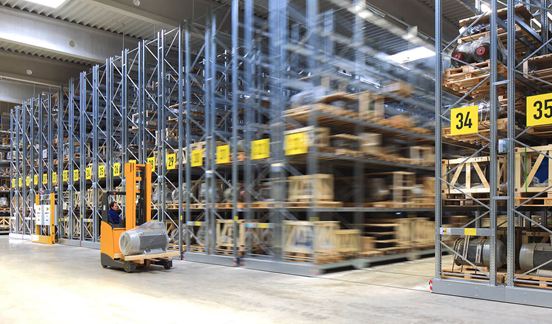
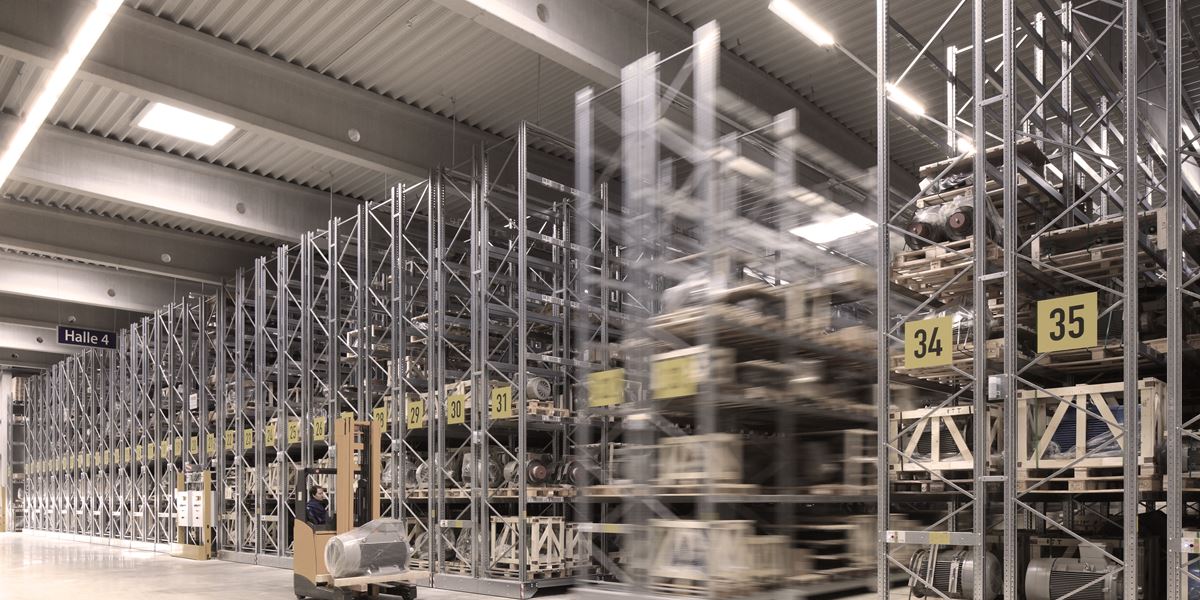
Industrial land prices have surged by 45% in major logistics corridors. Buyers increasingly specify double-sided cantilever systems engineered to mount on high-capacity electric mobile bases on floor rails, collapsing storage aisles into a single dynamic corridor and doubling real storage density without expanding the building shell.
2. Decarbonized Steel Sourcing & CBAM Verification
With the European Union Carbon Border Adjustment Mechanism (CBAM) entering definitive operational phases, global procurement managers mandate Chinese steel suppliers produce verified Environmental Product Declarations (EPDs) demonstrating low embedded carbon footprint throughout blast furnace or electric arc furnace (EAF) smelting routes.
3. Parametric 3D BIM & Digital Twin Synchronization
Leading tier-1 engineering houses require turnkey BIM (Building Information Modeling) objects with parametric load capacity tables (Revit, IFC formats). Factory-engineered structural calculation packages must seamlessly feed directly into automated warehouse simulation software to ensure precise slab loading verification before production commences.
Industry Technological Evolution
Technological Frontiers: Automated Cantilever Systems & Hybrid Storage
The traditional cantilever market—once dominated exclusively by manual counterbalanced forklifts, side-loaders, and 4-way multi-directional reach trucks—is undergoing an unprecedented digital transition. Chinese racking manufacturers are actively collaborating with automated guided vehicle (AGV) builders and automated crane suppliers to design robotic cantilever systems capable of handling 6-meter-long materials without human intervention.
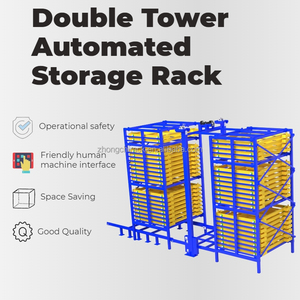
By pairing double-sided cantilever columns with automated high-bay stacker cranes, automated guided reach trucks, or continuous chain conveyors, distribution hubs are able to achieve storage heights exceeding 24 meters. This high-density architecture minimizes picking errors, guarantees operational safety in timber and metal manufacturing yards, and protects workforce personnel from falling heavy objects.
Furthermore, the integration of smart fiber-optic strain gauge sensors embedded within high-stress cantilever arms allows real-time structural health monitoring, warning safety managers via warehouse execution systems (WES) whenever dynamic or off-center loads exceed structural fatigue limits.
Verified Manufacturing Strengths
Why International Engineering Teams Choose Our Manufacturing Infrastructure
As a leading Chinese supplier committed to world-class manufacturing standards, we deliver end-to-end reliability, full structural certifications, and comprehensive lifecycle support for cross-border logistics projects.
In-House Finite Element Analysis (FEA)
Every cantilever project is subjected to rigorous ANSYS structural stress simulations and finite element load calculations matching Eurocode 3 (EN 1993-1-1) and EN 15512 specifications before raw materials enter automated punching lines.
Certified Mill-Test Steel Traceability
We source prime hot-rolled and cold-formed structural steels from premier state-owned mills. Full EN 10204 3.1 chemical composition and mechanical elongation test certificates are provided with every shipping bill of lading.
Automated CNC Laser & Robotic Welding
Cantilever arms and base connections are welded utilizing automated multi-axis robotic welding cells, ensuring complete structural weld penetration and clean joints compliant with ISO 3834-2 welding quality management.
Complete Full-Lifecycle Support
From initial DWG/BIM spatial layouts, structural anchoring calculations, export export packaging, to on-site international installation supervision and periodic EN 15635 racking safety inspections, our engineers accompany your project at every phase.
Procurement & Engineering FAQ
Frequently Asked Questions: Heavy Duty Cantilever Racking Sourcing
Clear, direct engineering answers addressing floor loading, surface durability, seismic calculations, and international logistics.
What are the key technical differences between roll-formed and hot-rolled structural cantilever racking?
Roll-formed cantilever racking is manufactured from cold-coiled sheet steel formed through roll-forming lines. It provides an economical solution for light to medium-duty applications (under 800 kg per arm). Hot-rolled cantilever racking is manufactured using heavy structural I-beams (IPE, HEA, or HEB profiles). It offers exceptionally high shear resistance, superior impact absorption against heavy forklift collisions, and supports extreme payloads exceeding 4,000–5,000 kg per arm, making it mandatory for heavy industrial steel coils, timber bunks, and external steel yards.
How do you calculate warehouse slab thickness and anchor bolt pull-out force?
Double-sided cantilever systems distribute vertical compressive loads evenly between two sides. However, when one side is fully loaded while the opposing side is completely empty, the central column experiences severe overturning moments. Our engineering team calculates the required concrete slab compressive strength (typically C25/30 or C30/37 with minimum 200mm–250mm thickness) and specifies high-tensile M16–M24 chemical capsule or expansion anchors to safely absorb calculated shear and tensile pull-out forces.
What surface treatment should be specified for outdoor timber and pipe storage?
For indoor dry environments, our electrostatic polyester thermosetting powder coating (70–90 microns thickness) provides superior abrasion and corrosion protection. For outdoor installations subjected to rain, UV radiation, and high humidity, we recommend Hot-Dip Galvanizing (HDG) compliant with ISO 1461 / ASTM A123. The zinc coating thickness of 65–100 microns creates an impervious metallurgical barrier offering 25+ years of maintenance-free service life in aggressive marine or outdoor industrial settings.
Can roof and wall cladding structures be added directly to the cantilever columns?
Yes, this is known as a Cantilever Rack-Clad Building or Shed System. The central heavy-duty vertical columns are extended upward to support pitched structural roof rafters, drainage guttering, and external wind-braced side wall panels. This completely eliminates the need for a separate structural warehouse building, reducing overall capital facility expenditure by up to 35% while creating protected covered storage for moisture-sensitive timber and pipes.
How does your factory ensure compliance with European EN 15512 and US RMI codes?
Our engineering protocols follow European Standard EN 15512 (Steel static storage systems – Adjustable pallet racking systems – Principles for structural design) and ANSI/RMI MH16.1. All arm-to-column welded connections, base anchoring plates, and horizontal sway braces are physically verified through laboratory destructive and non-destructive load deflection testing. Complete third-party inspection certificates (such as SGS or TÜV Rheinland) are provided prior to shipping.
Request an Engineered Cantilever Layout & Factory Quote
Partner directly with experienced Chinese manufacturing engineers. Send your warehouse AutoCAD drawings, material specifications, and load requirements to receive an engineered layout calculation and direct factory pricing within 24 hours.
Get a Quote