Engineered High-Density Storage Solutions
Explore our heavy-duty industrial racking and picking platforms manufactured under strict metallurgical quality control for global cold stores, distribution hubs, and automated factories.
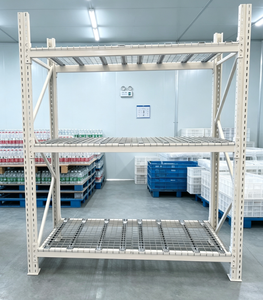
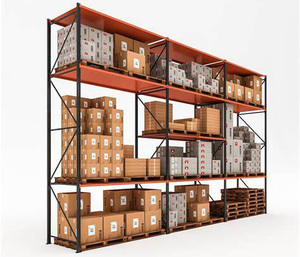
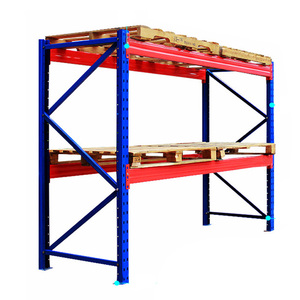
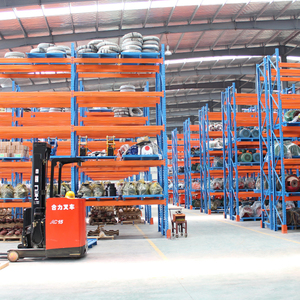
Architectural Engineering: Drive-Through vs. Drive-In Racking Mechanics
In modern industrial logistics, optimizing warehouse footprint while safeguarding cycle time requires an analytical evaluation of volumetric efficiency against operational accessibility. As premier China heavy duty drive through racking manufacturers and engineering suppliers, we construct systems designed to mitigate the inherent physics challenges associated with high-density vehicular storage tunnels.
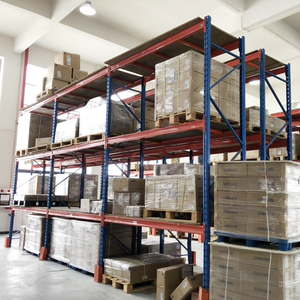
While standard Drive-In racking operates strictly on a Last-In, First-Out (LIFO) model with a single entry and exit point per storage lane, Drive-Through racking incorporates distinct loading and retrieval faces. This design establishes continuous structural drive corridors supporting true First-In, First-Out (FIFO) stock turnover. For time-sensitive inventories, fast-moving consumer goods (FMCG), agricultural produce, pharmaceutical batch management, and cold-chain staging operations, Drive-Through configurations eliminate stock obsolescence without requiring the mechanical motorized shuttles or inclined gravity rollers typical of flow racks.
Structural Integrity Note: Removing vertical cross-bracing in Drive-Through tunnels eliminates rear transverse bracing planes. To maintain structural equilibrium under full load ratings (often exceeding 2,000 kg per pallet level and up to 18,000 kg per bay), our structural engineers implement high-moment rigid portal top ties, reinforced spine portal frames, and torsion-resistant cantilever load rails compliant with European Standard EN 15512 and FEM 10.2.02 codes.
Continuous Load-Rail Physics and Cantilever Bracket Engineering
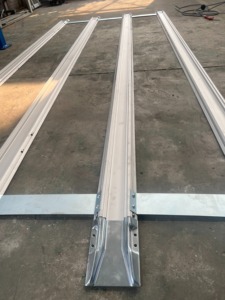
Unlike selective pallet racking where crossbeams support loads in pure bending moments, drive-through racks utilize continuous formed steel pallet rails attached to the upright columns via stamped cantilever brackets. This configuration introduces combined eccentric compression and torsional stresses to the upright profiles. Our continuous cold roll-forming process utilizes prime certified Q355B (equivalent to European S355JR / ASTM A572 Grade 50) structural coil steel, featuring specialized omega upright profiles up to 120 mm wide with metal thicknesses ranging between 2.0 mm and 3.2 mm.
Pallet support rails feature rolled, flared entry guides to align forklift forks and pallets automatically as the vehicle drives into the storage lane. Our heavy-gauge 4.0 mm formed wrap-around brackets provide maximum weld-contact surface area, distributing the lateral dynamic impact forces of lift trucks into the vertical column axes and concrete floor anchorage assemblies.
High-Density Intralogistics Systems: Engineering Comparison
Choosing the correct storage layout involves trade-offs between capital expenditure (CapEx), footprint savings, operational throughput, and forklift cycle speeds. The matrix below benchmarks Drive-Through racking against alternate industrial storage methodologies.
| Storage System Type | Space Utilization | Rotation Logic | Forklift Travel In-Lane | CapEx Cost per Pallet | SKU Selectivity | Seismic Resistance |
|---|---|---|---|---|---|---|
| Heavy Duty Drive-Through | Very High (75-85%) | FIFO (First-In, First-Out) | Yes (Direct Lane Entry) | Low - Medium | Lane-Based (1 SKU/Lane) | Rigid Portal Braced (Medium) |
| Drive-In Pallet Racking | Very High (75-85%) | LIFO (Last-In, First-Out) | Yes (Single Access) | Low | Lane-Based (1 SKU/Lane) | Rear X-Braced (High) |
| Four-Way Radio Shuttle | Maximum (85-90%) | FIFO / LIFO Hybrid | No (Robotic Carrier) | High (Automation CapEx) | Channel-Based | Standard Frame Braced |
| Gravity Pallet Live Flow | High (70-80%) | FIFO (Gravity Driven) | No (External Pick/Deposit) | Medium - High | Lane-Based | High (Rear Tied) |
| Conventional Selective | Low (40-50%) | 100% Direct Access | No (Standard Aisles) | Baseline Minimum | 100% Individual Pallet | High Structural Modularity |
Manufacturing Authority & Quality Engineering Pedigree
Originating from advanced heavy-duty intralogistics manufacturing centers in China and drawing on proven engineering standards (including alignment with Dexion P90 racking philosophies and European EN design criteria), our production lines adhere to strict traceability protocols from raw mill coils to installed facilities worldwide.
EN 15512 Structural Compliance
Every racking bay undergoes Finite Element Method (FEM) computer simulation, stub column testing, and beam-to-upright connector shear calculations to verify resistance against local buckling, torsional-flexural deformation, and seismic accelerations.
Continuous Roll-Forming Automation
Our plants operate high-speed, 24-station automated roll-forming lines with in-line CNC punching. This maintains a pitch tolerance within ±0.2 mm across 12-meter single-piece upright sections, ensuring accurate hole positioning for structural drop-in assemblies.
Thermosetting Epoxy Powder Coating
Following multi-stage automated chemical cleaning, surface phosphating, and deionized water rinsing, components receive electrostatic epoxy-polyester powder coats cured at 200°C. This process delivers high abrasion resilience, impact resistance, and corrosion defense for cold-chain systems down to -30°C.
Structural Floor Guides & Protection
To reduce forklift impact hazards within drive-through tunnels, we supply heavy-gauge floor-mounted angle-iron or tubular guide rails, welded column bullnose deflectors, and polymer impact dampers rated for 5-ton kinetic impact velocities.
Full Lifecycle Traceability
Every batch of steel comes backed by standard mill test certificates (MTC per EN 10204 3.1) showing verified yield strength, tensile elongation, and chemical composition. Our production tracking marks every frame and rail batch for safety compliance.
System Integrator Ready
We supply engineering packages, CAD models, calculation notes, and anchor design data tailored for global system integrators and turnkey logistics contractors executing comprehensive warehouse fit-outs.
Future Procurement & Intralogistics Technology Trends
Enterprise procurement for industrial warehousing is moving away from static, commoditized steel structures toward modular, automation-compatible architectures. Facilities managers and logistics directors must evaluate how current capital investments interface with emerging automated systems over a 15-to-25-year structural lifecycle.
1. Shuttle-Ready Hybrid Lanes
Operators are specifying Drive-Through steel profiles that can convert into semi-automated 2D or 4-way pallet shuttle systems. Pre-punched alignment holes on cantilever arms allow operations to swap manual forklift entry rails for motorized robotic shuttle guide tracks without replacing main upright columns.
2. AGV/AMR Guided Interfacing
As Automated Guided Vehicles and Autonomous Counterbalanced Reach Trucks take over pallet handling, lane entry tolerances must tighten. Procurement calls for laser-cut entry chamfers, ultra-flat ground anchors conforming to DIN 18202 standards, and high-visibility optical sensor targets integrated into structural upright bases.
3. Eco-Coatings & Low-Carbon Steel
Decarbonization criteria are increasingly driving supply-chain contracts. We lead this shift with pre-galvanized zinc-aluminum-magnesium (ZM) alloy steels that deliver over three times the salt-spray corrosion resistance of standard hot-dip galvanizing, while eliminating hazardous chemical effluents during production.
4. Structural Health IoT Monitoring
Modern mega-hubs are outfitting high-traffic Drive-Through tunnel entries with real-time wireless acoustic-emission stress sensors and piezoelectric shock monitors. These units log lift-truck collisions and alert warehouse safety supervisors via WMS webhooks before structural deflection limits are exceeded.
Frequently Asked Questions by Global Buyers
Detailed technical, engineering, and logistics answers addressing the primary concerns of operations directors and purchasing officers when ordering heavy-duty racking from China.
How does Drive-Through racking differ structurally from Drive-In racking?
What concrete slab tolerances are required for heavy-duty drive-through installations?
What are the primary safety mechanisms for preventing forklift collisions?
Can your Drive-Through racking systems be engineered for sub-zero cold storage?
How do you verify compliance with European (EN) and American (RMI) standards?
What is the typical shipping packaging and container loading optimization?
Ready to Engineer Your High-Density Intralogistics Facility?
Connect directly with our senior intralogistics structural engineers. We provide complimentary warehouse layout calculations, 2D/3D CAD configuration proposals, and itemized containerized FOB/CIF price schedules tailored to your project requirements.