High-Density & Heavy-Duty Warehouse Racking Systems
Comprehensive steel storage solutions built from certified Q235B and Q355B structural steel, rigorously tested under simulated seismic and maximum dynamic load conditions.
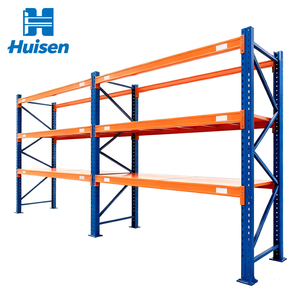
Modern High Density Storage Heavy Duty Pallet Rack For Industrial Warehouse Safety Load Tested
View Product Specs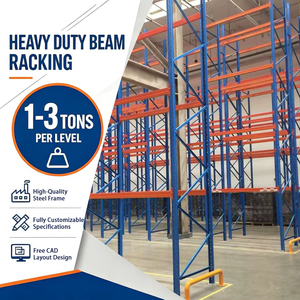
Q235 Steel Pallet Racking System Adjustable Layer Forklift Direct Access Warehouse Storage Frame
View Product Specs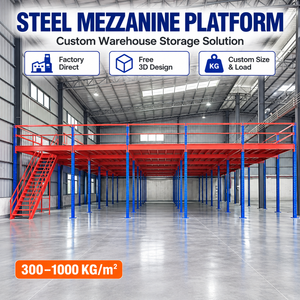
Heavy Duty Steel Mezzanine Floor Racking System For Industrial Multi-Tier Warehouse Storage
View Product Specs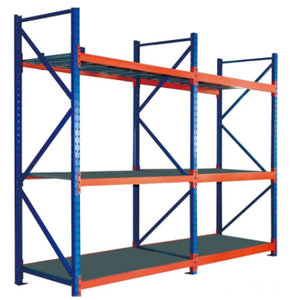
Heavy-Duty Industrial Radio Shuttle Racking System | Adjustable Pallet & Semi-Automated Solutions
View Product Specs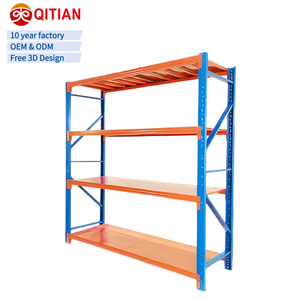
Custom Shelves 200kg 4-Tier Load Capacity Anti-Rust Boltless Steel Industrial Warehouse Storage Rack
View Product Specs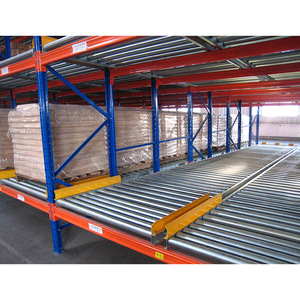
FIFO High Efficient Warehouse Storage Gravity Pallet Flow Racks Roller Rack System
View Product Specs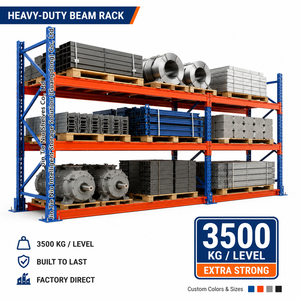
3500kg Extra Strong Industrial Steel Coil Motor Storage Heavy Duty Beam Pallet Warehouse Rack
View Product Specs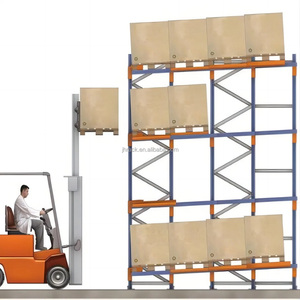
Slide System Warehouse Equipment Steel Shelving Industrial Push-Back Pallet Racking for Sale
View Product SpecsEngineering High-Density LIFO Racking: Structural Mechanics & Physics
A rigorous examination of Last-In, First-Out storage dynamics, nested carriage engineering, and structural load calculations for logistics directors and structural engineers.
LIFO Gravitational Physics
LIFO push-back systems utilize inclined nested carts riding on inclined structural steel channels with a calibrated gradient of 2.5% to 3.5%. The first pallet loaded sits on the top carriage. When subsequent pallets are inserted, the forklift operator pushes back previously deposited units using horizontal force. Gravitational deceleration ensures controlled forward positioning upon retrieval without operator line-of-sight obstruction.
Cold-Formed High-Tensile Steel
Our heavy-duty upright frames and load beams are roll-formed exclusively using prime certified Q235B and Q355B structural steel coils. Featuring an engineering yield strength (fy) up to 355 N/mm² and ultimate tensile strength up to 510 N/mm², our columns undergo continuous cold profiling with 18-stage roll-formers to minimize residual stresses and enhance torsional resistance against forklift impacts.
Seismic & Fatigue Modeling
Using finite element analysis (FEA) compliant with ANSYS and RFEM structural packages, our engineering team verifies seismic joint ductility under dynamic spectra (PGA up to 0.4g). Every beam-to-column connector integrates 4 to 5 cold-stamped locking claws with an electro-galvanized spring safety lock, preventing unseating during violent seismic excitation or aggressive handling.
Intralogistics Kinematics: LIFO vs. FIFO Storage Topology
Modern distribution centers, cold-storage facilities, and high-velocity manufacturing warehouses often face trade-offs between inventory rotation frequency, cubic volume occupancy, and throughput speed. Choosing a Last-In, First-Out (LIFO) architectural model yields remarkable advantages when processing non-perishable inventory or large manufacturing batches with multi-pallet SKU profiles.
| Architecture Metric | Push-Back LIFO (2 to 6 Deep) | Drive-In Racking (LIFO) | Radio Shuttle LIFO Mode | Selective Racking (Standard) |
|---|---|---|---|---|
| Cubic Density | Very High (Up to 75%) | High (Up to 70%) | Ultra-High (Up to 85%) | Low (Approx. 40%) |
| Operator Aisle Footprint | Single Operating Aisle | Truck Enters Bay Lane | Single Loading Face | Multiple Dedicated Aisles |
| Rack Collision Probability | Minimal (Forklift Stays Outside) | High (Trucks Drive Inside) | Zero Interior Impact | Moderate (Turning Impact) |
| Picking Cycle Time | 2.2 - 2.8 mins / pallet | 4.5 - 6.0 mins / pallet | 1.8 - 2.4 mins / pallet | 1.5 - 2.0 mins / pallet |
| Load Carriage Reliability | Sealed Flanged Bearings | Static Cantilever Rails | Lithium Battery Shuttle | Direct Beam Placement |
| SKU Granularity | 1 SKU per Level / Lane | 1 SKU per Entire Bay | 1 SKU per Channel Lane | 1 SKU per Individual Slot |
As illustrated above, a heavy-duty LIFO push-back or radio shuttle installation delivers up to a 90% increase in storage capacity compared with conventional selective pallet racks while eliminating the pervasive structural column damage that plagues drive-in configurations.
Why Global Procurement Leaders Choose Our China Factory
Decades of continuous manufacturing innovation, vertical integration from raw coil slitting to automated epoxy coating, and audited global compliance certifications.
Automated Roll-Forming Lines
Our 65,000 m² state-of-the-art facility houses 16 automated high-speed cold roll-forming production lines equipped with German CNC hydraulic punching heads. Pitch tolerance across 12-meter upright columns is maintained within ±0.5 mm, ensuring seamless connector engagements, zero vertical warping, and absolute structural plumbness across mega-bay multi-level installations.
Robotic Welding & Coating
Structural beam box connectors and push-back nested cart chassis are welded by OTC industrial multi-axis robotic workstations under continuous Argon shielding (Ar+CO2 mixture). Components undergo an 8-stage automated pre-treatment phosphating wash before electrostatic deposition of thermosetting polyester epoxy powder, cured at 200°C for exceptional corrosion and abrasion resistance.
Quality Assurance & Full Traceability
Every shipment is accompanied by Mill Test Certificates (MTC) conforming to EN 10204 3.1. We perform non-destructive ultrasonic flaw detection on primary weld seams, coating thickness gauges (minimum 70-90 microns), and destructive deflection tests on sample beams where deflection under full load is rigidly limited to L/200 or L/250 in accordance with international building codes.
Future Procurement Trends: What Global Supply Chain Directors Must Prepare For
The global intralogistics ecosystem is evolving rapidly under the twin pressures of urban land scarcity, soaring industrial real estate rates, and stringent carbon accounting mandates. In this context, the procurement of heavy-duty LIFO racking is transitioning from passive steel framing to dynamically engineered asset platforms:
- Hybrid Automation Integration (AGV & AMR Readiness): Forward-thinking warehouses are procuring LIFO push-back and radio shuttle systems tailored with optical guidance reflectors and precision floor-level stops to accommodate unmanned autonomous counterbalanced forklifts (AMRs), significantly driving down facility labor costs.
- Decarbonized Steel Sourcing & CBAM Compliance: European and North American buyers are requiring verifiable supply-chain carbon tracking. As a premier China exporter, our facility leverages EAF (Electric Arc Furnace) recycled scrap steel allocations and energy-efficient curing ovens to help overseas importers satisfy strict EU Carbon Border Adjustment Mechanism (CBAM) declarations.
- Sub-Zero Cold Chain Optimization: Demand for heavy-duty LIFO systems in temperature-controlled environments (-25°C to -30°C) is surging. In cold storage, every cubic meter of conditioned air costs up to four times more than ambient space. High-density LIFO eliminates wasted aisle volume while cold-resistant low-temperature lubricant steel bearings ensure cart glide reliability without freezing.
- Modular Retrofit Scalability: Modern B2B logistics leaders reject monolithic single-purpose systems. Today's LIFO push-back racking features standardized slotted upright profiles that allow straightforward conversion into radio shuttle lanes, automated storage and retrieval systems (AS/RS), or mezzanine platforms as business volumes double.
Ready to Scale Your Warehouse Storage Density?
Contact our senior structural engineers today for a complimentary 2D/3D CAD warehouse layout proposal, seismic load calculations, and competitive OEM factory-direct pricing.
Frequently Asked Questions on Heavy-Duty LIFO Racking
Objective technical, logistics, and cost-benefit answers derived from decades of manufacturing and global installation experience.
What is the structural difference between Push-Back Racking and Drive-In Racking?
What are the standard load capacities and depth configurations available for push-back systems?
How does your factory ensure international safety compliance (EN 15512, RMI, FEM)?
Can your heavy-duty LIFO systems be installed in seismic zones and deep-freeze cold storage?
What is the typical production lead time and international shipping packaging standard?
Do you provide OEM/ODM layout design services and on-site installation supervision?
Direct Factory Engineering Support
Partner with an established China manufacturing pioneer with over 20 years of export experience to Tier-1 logistics hubs, 3PL giants, and industrial enterprises worldwide.