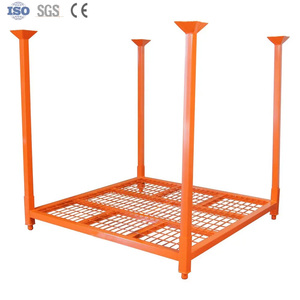
Galvanized Series
Discover our engineered post pallet nesting systems, high-density cold-rolled racks, and automated warehouse interfaces designed for seamless logistics operations, dynamic footprint reallocation, and heavy structural resilience.
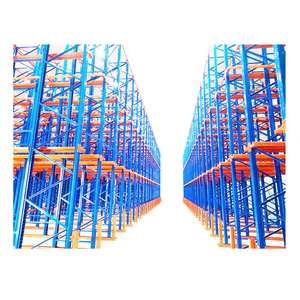
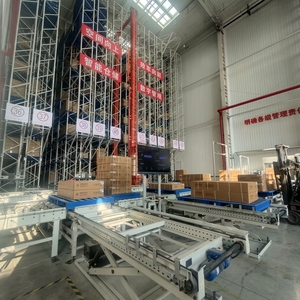
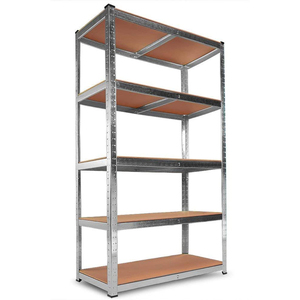
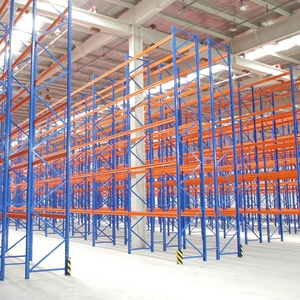
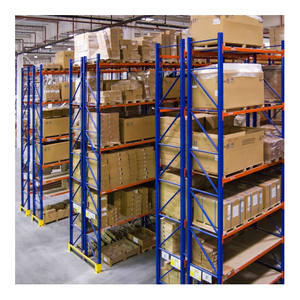
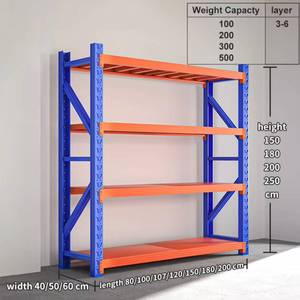
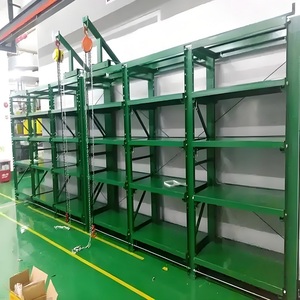
In modern supply chain velocity, fixed warehouse architecture frequently presents rigid bottlenecks during seasonal volume fluctuations, unexpected SKU surges, or temporary floor reconfigurations. Heavy-duty nesting racks—often specified globally as Manurack systems, nestable post pallets, or mobile stacking stillages—bridge the critical gap between fixed structural pallet racking and flexible bulk stacking.
As a leading Chinese supplier and exporter, our engineering philosophy revolves around finite element analysis (FEA) structural validation and automated roll-forming cold-rolled steel profiling. Unlike traditional timber or light stamped metal pallets, industrial nesting racks consist of an open welded steel chassis (available in symmetrical inverted-V or stepped flared footprint) and vertical removable hollow structural section (HSS) upright posts.
When deployed under maximum capacity, these units safely interlock up to 4 to 6 levels high without exerting vertical compression onto the stored payload. Conversely, when inventory turns deplete stock levels, the vertical posts disassemble swiftly, and the base chassis nests together telescopically. This process reduces empty equipment storage footprint by up to 80% to 85%, yielding astronomical savings on return logistics freights and dynamic cross-dock floor utilization.
Every structural profile is fabricated from verified high-tensile hot-rolled micro-alloy coil steel, eliminating cold embrittlement vulnerabilities and ensuring ductile shock absorption against heavy forklift tines.
Continuous twin-torch robotic welding cells guarantee 100% full-penetration seams across post sockets, base gussets, and stacking cups, strictly complying with AWS D1.1 and EN ISO 15614 structural welding standards.
Precision-calculated flare angles allow bases to slide compactly into each other. A stack of 30 nested empty bases occupies the identical footprint of just two assembled loaded units, revolutionizing container transit.
Procurement directors and facility planners must balance spatial volumetric efficiency against operational accessibility and CAPEX depreciation. Below is an empirical comparison across four foundational storage methodologies:
| Evaluation Parameter | Heavy-Duty Nesting Racks (Manurack) | Selective Pallet Racking | Drive-In Racking System | Automated AS/RS Shuttle |
|---|---|---|---|---|
| Initial Capital Expenditure | Low to Moderate; modular, zero civil foundation costs | Moderate; anchored to floor, rigid installation | High; substantial upright steel volume | Extremely High; software, controls, crane integration |
| Spatial Flexibility | 100% Dynamic; forklift relocatable in minutes | Fixed layout; unbolting & engineering recalculation required | Permanently fixed footprint; zero seasonal adaptability | Static structural infrastructure |
| Empty Equipment Return Ratio | 1:5 to 1:7 Nesting ratio for sea containers | N/A (Stationary immovable installation) | N/A (Stationary immovable installation) | N/A (Stationary immovable installation) |
| Cold Storage Adaptability | Superior; hot-dip galvanizing protects down to -35°C | Standard; susceptible to thermal stress and corrosion | Average; deep aisles restrict cooling airflow | High; requires low-temperature rated lubricants & sensors |
| Floor Anchor Requirements | Zero floor bolting; fully independent structural stability | Mandatory chemical/expansion floor anchors | Mandatory heavy-duty slab anchoring & guide rails | Micron-level precision floor tolerances & grouting |
| Stacking Load Capacity | 1,000 kg – 2,500 kg per pallet unit (Up to 4-high stacked) | Up to 4,000 kg per beam level | Up to 1,500 kg per pallet position | Up to 1,500 kg per automated shuttle carrier |
The global industrial warehousing ecosystem is undergoing an unprecedented transition driven by escalating land leasing costs, nearshoring supply networks, circular economy sustainability metrics, and rapid AGV/AMR autonomous material handling adoption.
Autonomous Guided Vehicles (AGVs) demand tighter dimensional tolerances than human forklift operators. Procurement contracts now enforce ±1.5mm tolerance thresholds on nesting rack entry chamfers and stacking cup crowns to enable automated 3D optical docking and sensor-guided pallet extraction.
Multinational 3PL logistics corporations are standardizing on ISO 1461 hot-dip galvanizing with zero-lead, low-emissions zinc baths. Galvanized nesting racks eliminate recurring paint touch-ups, resist caustic humidity in cold chains, and deliver a verifiable 25+ year lifecycle with 100% scrap circularity.
Modern export-grade nesting stillages feature welded laser-cut housing pockets for ruggedized UHF RFID tags or BLE beacons. This facilitates asset fleet geolocation throughout cross-border reverse logistics, preventing fleet loss across intermodal maritime freight routes.
Rooted in decades of heavy industrial racking fabrication, our manufacturing infrastructure combines European engineering rigor (EN 15512, EN 15620, EN 15635 compliance) with optimized supply chain scalability from China's primary steel processing hubs.
Every production run destined for export undergoes non-destructive and destructive batch verification before packaging:
Detailed answers to critical engineering, logistics, and compliance inquiries encountered by procurement officers, supply chain architects, and warehouse safety directors.
Structural stability during multi-tier stacking is achieved through engineered conical cup-and-socket stacking feet. The base legs of the upper unit nest securely into the trumpet-shaped alignment heads of the lower unit's upright posts. This mechanical interlock prevents lateral shifting under forklift dynamic impacts or seismic vibrations.
Furthermore, our designs incorporate cold-formed diagonal corner gussets on the base frame and comply with EN 15512 safety load calculations. A vertical plumb deviation limit of less than 1:500 is maintained, guaranteeing that all compressive axial loads pass directly through the hollow steel columns to the concrete floor slab without buckling.
The choice between finish treatments is dictated by operating environment temperature and corrosive exposure:
Hot-Dip Galvanizing (HDG): Steel components are immersed in molten zinc at ~450°C, forming metallurgical zinc-iron alloy layers. It provides sacrificial cathodic protection, making it impervious to scratches, condensation, and freezing temperatures down to -35°C in cold storage or external yard operations. Lifespan: 25+ years.
Electrostatic Powder Coating: Dry thermoset resin is applied electrostatically and baked at 200°C. Ideal for indoor dry warehousing, parts fulfillment centers, and ambient temperature facilities. It allows SKU or departmental color-coding with superior aesthetic smoothness and chemical resistance at lower upfront CAPEX.
Ocean freight represents a major cost component in global bulk steel procurement. To maximize payload economics, our packaging engineers design the base chassis nesting angle so that 25 to 30 empty frames nest nested tightly on a specialized base skid. Upright removable posts are bundled separately in dedicated heavy steel strapping cradles fitted with protective timber dunnage.
In a standard 40HC container, this engineered nesting geometry allows between 140 to 180 complete heavy-duty nesting sets (depending on customized dimensions and post lengths), reaching maximum weight capacity (~26,000 kg) without wasting volumetric cubic meter space.
Yes. Over 60% of our exported volume comprises bespoke dimensional modifications. In addition to Euro standard (1200x800mm) and North American GMA standard (48x40 inch / 1219x1016mm) footprints, we engineer custom solutions including:
1) Welded steel wire mesh or sheet steel decking for cartons and unpalletized bulk goods; 2) Removable or fixed V-cradle bars for rolled textiles, coils, and rubber tires; 3) Integrated four-way forklift guide pockets; and 4) Crane lifting lugs for offshore or heavy tooling maintenance environments.
Our production facilities maintain strict adherence to ISO 9001:2015 quality management and ISO 14001 environmental standards. For structural safety, products are engineered and tested in accordance with European Standard EN 15512 (Racking Structural Design) and CE declaration of conformity.
Prior to dispatch, we facilitate third-party inspections (including SGS, BV, TÜV) providing mill steel chemical certificates, ultrasonic weld inspections, coating thickness gauge readouts, and destructive static load tests with comprehensive digital photo dossiers.