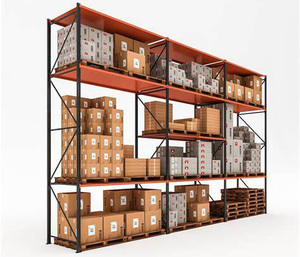
Enterprise Product Portfolio
Heavy-Duty Pallet Racking & Dynamic Storage Solutions
Precision-manufactured in China under strict ISO9001 and CE frameworks, engineered to optimize spatial footprint, inventory turnover, and heavy static load distribution.
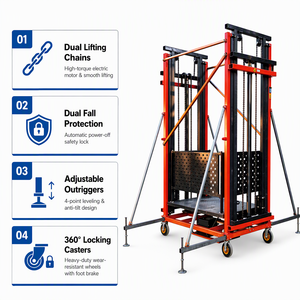
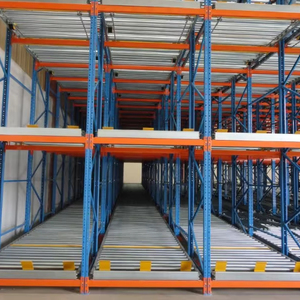
First-In First-Out
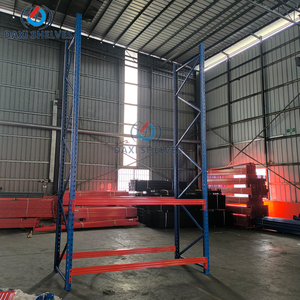
Heavy Duty Gravity Flow Pallet Rack Steel Roller Rack 1000kg Layer
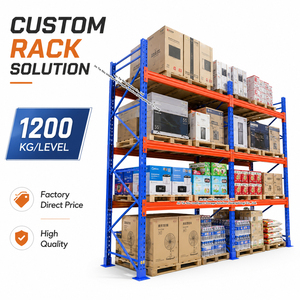
Heavy Capacity Storage
1200KG Steel Heavy Duty Rack Warehouse Pallet Storage Shelving System
Modular Stack Shelving
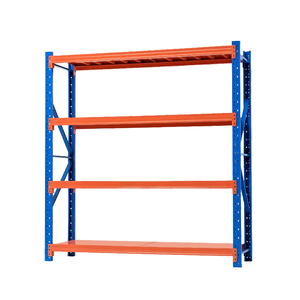
Industrial 4-Layer Metal Shelving Stack Rack Boltless Carton Storage Rack
Engineering Whitepaper & Strategic Sourcing
Navigating Heavy Duty Stack Racking Sourcing: Structural Integrity, Finite Element Analysis, and Global Logistics
In high-throughput industrial supply chains, the choice of storage architecture dictates capital expenditure efficiency, worker safety, and spatial ROI. As a premier China heavy duty stack racking manufacturer & exporter, we supply enterprise-grade warehousing equipment engineered to international standards (EN 15512, RMI MH16.1, and AS4084).
Heavy-duty stack racking systems—incorporating selective pallet racks, heavy-duty post pallets, dynamic gravity flow lanes, and automated dense storage platforms—serve as the structural foundation of modern industrial commerce. Global procurement departments face persistent structural risks: buckling under seismic stress, substandard welding embrittlement, deflection under static overload, and inconsistent steel metallurgical compositions. Mitigating these systemic failures requires understanding steel grain chemistry, computerized punch accuracy, and automated powder deposition.
Our manufacturing hub in China addresses structural vulnerability through rigorous vertical integration. Using prime cold-rolled structural steel (Q235B and high-yield Q355B), upright posts and load beams undergo continuous cold-roll forming to preserve material tensile resilience. Each batch of profile steel undergoes comprehensive yield strength testing, impact resistance assessments at sub-zero temperatures for cold-chain deployment, and ultrasonic weld testing along all critical joint interfaces.
Certified Metallurgy
Mill-certified Q235B and high-strength Q355B hot-rolled sheet coil ensures tensile capacity exceeding 510 MPa without structural micro-fissuring.
CAD/FEA Structural Modeling
Every bay profile undergoes advanced Finite Element Analysis (FEA) simulating static loads, forklift impact moments, and regional seismic acceleration.
Anti-Corrosive Finishing
Multi-stage automated phosphating combined with thermosetting epoxy polyester powder coating (60–80μm) protects against harsh chemicals and salt-mist corrosion.
| System Type | Typical Payload / Level | Structural Standard | Stock Rotation Strategy | Primary Sector Application |
|---|---|---|---|---|
| Heavy Duty Selective Rack | 1,000 kg – 4,500 kg | EN 15512 / RMI 2012 | 100% Direct Access (FIFO) | FMCG, 3PL Distribution, Engineering |
| Gravity Roller Flow Racking | 800 kg – 1,500 kg | FEM 10.2.02 / ISO 9001 | Gravity Assisted FIFO | Food & Beverage, Cold Storage, Perishables |
| Automated 4-Way Shuttle Bay | 1,000 kg – 2,000 kg | EN 15635 / CE Marked | Automated FIFO / LIFO | Pharma, E-Commerce, High-Density Hubs |
| Portable Heavy Duty Stack Racks | 1,200 kg – 2,500 kg | AWS D1.1 Structural Welding | Dynamic Bulk Stacking | Automotive Parts, Chemical Drums, Textiles |
Market Forecast & Technology Trajectory
The Evolution of Stack Racking: Emerging Procurement Trends for 2025–2030
Industrial procurement of warehousing equipment is shifting from passive steel procurement to dynamic, data-driven systems integration. Warehousing operations must handle escalating urban square-meter lease costs, acute industrial labor shortages, and aggressive environmental compliance mandates. When evaluating future infrastructure investments, procurement directors focus on three primary trajectories:
01
Hybrid Pallet Racking & AMR Co-Existence
Traditional static stack racks are evolving into hybrid automation platforms. Structural uprights now incorporate precision-machined guide rails, sensor reflectors, and calibrated tolerances (±1.0mm) to accommodate Autonomous Mobile Robots (AMRs) and automated 4-way shuttles, turning legacy pallet racks into semi-automated, high-density storage cubes without building expansion.
02
Circular Green Steel & Cold-Form Optimization
With global supply chains tracking Scope 3 carbon emissions, heavy-duty racking manufacturing is shifting toward high-strength micro-alloy steels. By transitioning from conventional carbon grades to advanced Q355B and higher tensile variants, cold-formed section profiles achieve equal or superior structural load ratings while reducing total steel mass by 12–18%, lowering international freight costs and embodied carbon footprints.
03
Modular "Demountable" Logistics Hubs
Fixed structural steel shelving is increasingly paired with modular, collapsible post-pallet stack racks. These systems offer flexibility for seasonal surges, bulk raw material handling, and temporary warehousing. When emptied, heavy-duty stack racks nest at a 4:1 ratio, reducing return transportation expenses and providing agility for agile supply chains.
Enterprise Manufacturing Capabilities
Engineered in China: Precision Fabrication and Full Lifecycle Quality Assurance
Our manufacturing facility operates under the principle that warehouse safety starts with raw metallurgical precision. As an established direct exporter to Europe, North America, Southeast Asia, and the Middle East, our technical teams balance high production volume with strict fabrication tolerances.
- Full Traceability from Mill to Berth: Every coil heat number is recorded, with mill certificates provided alongside physical test coupons and weld inspection reports.
- Automated Continuous Roll-Forming Lines: Custom CNC punch tooling ensures exact pitch alignment along 50mm and 75mm increments for seamless beam adjustability.
- Certified Welding Operations: Robotized pulse-welding systems comply with EN ISO 3834 and AWS D1.1 standards for high beam-connector shear strength.
- Lifecycle Engineering Support: From layout CAD drawings and seismic calculations to certified third-party testing, we support project engineering from start to finish.
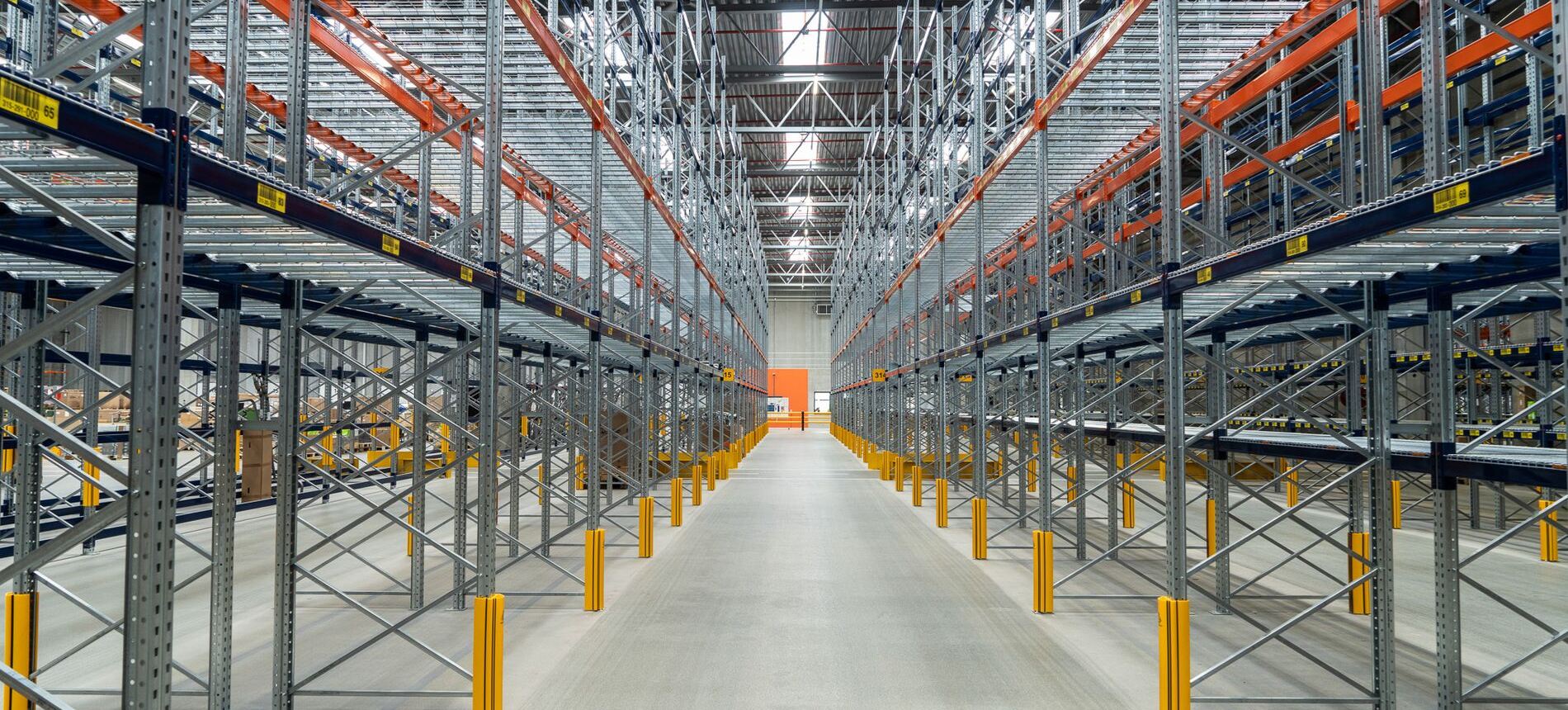
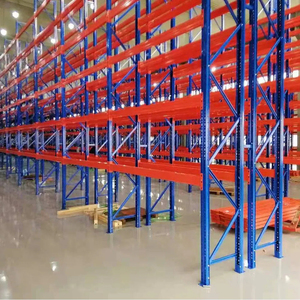
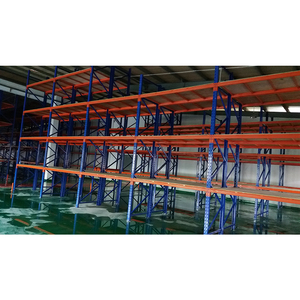
High-Bay Racking Layouts Engineered to EN 15512 Standards
Technical Procurement Guide
Key Factors in Heavy-Duty Rack Procurement
Procuring heavy-duty stack racks and selective warehouse shelving internationally requires a thorough technical evaluation. Overlooking floor point loads, dynamic material handling dimensions, or safety factors can lead to operational delays and project budget overruns. Before finalizing project requirements, evaluate these core engineering criteria:
Load Deflection Limits
European standard EN 15512 limits maximum vertical beam deflection under full working load to L/200 (or L/300 in tight automated installations). Verify that structural beam cross-sections meet these deflection limits under peak operational load.
Slab Loading & Anchor Integrity
Point loads from heavy-duty upright footplates can exert high pressure on concrete slabs. Baseplate dimensions, anchor bolt grade (such as Grade 8.8 wedge anchors), and embedment depth must match slab thickness and compressive strength.
Surface Pretreatment Quality
Epoxy-polyester coatings require a thorough 4-stage immersion or spray pretreatment (degreasing, acid derusting, phosphating, and deionized rinsing) to prevent underfilm corrosion creep in humid storage environments.
Procurement & Engineering FAQ
Frequently Asked Questions by Industrial Sourcing Teams
What structural design standards are used for exported heavy-duty stack and pallet racks? +
Our systems are calculated and fabricated to meet European Standard EN 15512 (Steel static storage systems – Adjustable pallet racking systems – Principles for structural design), American RMI MH16.1 (Specification for the Design, Testing and Utilization of Industrial Steel Storage Racks), and Australian Standard AS 4084. Project engineering documentation includes Finite Element Analysis (FEA) reports, material mill certificates, and safe working load (SWL) verification.
How do you guarantee steel quality and prevent alloy substitution? +
We procure certified prime hot-rolled and cold-rolled steel exclusively from premier steel manufacturers such as Baosteel, Shougang, and Ansteel. Each production run is tied to original heat numbers, with full mill test certificates confirming carbon, manganese, phosphorus, and sulfur content. In-house spectrometers and tensile testing machines regularly verify yield strength and elongation limits before roll-forming starts.
What anti-corrosion surface treatments are available for cold-storage and outdoor use? +
For standard indoor ambient warehouses, we apply an electrostatic thermosetting epoxy-polyester powder coating (60–90 microns thick) following an automated four-stage pretreatment process. For cold-storage environments (-30°C) or outdoor staging areas, we provide hot-dip galvanized (HDG) steel components according to ISO 1461, achieving coating thicknesses between 60 and 120 microns for long-term protection against condensation and corrosion.
How are shipping costs and sea container volumes optimized for oversized frames and beams? +
Upright frames are typically shipped unassembled (knock-down form) to minimize dead shipping volume inside 40ft High Cube (40HQ) containers. Diagonal and horizontal braces, upright profiles, and heavy footplates are packed in banded bundles with custom protective timber blocking. Load beams are bundled with steel strapping and protective corners to prevent transit abrasion, achieving container weight and volume utilization rates above 90%.
Can your engineering team assist with custom structural calculations for seismic zones? +
Yes. Our structural engineering department uses specialized layout and load simulation software to calculate seismic actions, ductility factors, and ground accelerations according to the local building code of your installation site (such as Eurocode 8, IBC, or ASCE 7). We provide baseplate anchor calculations, heavy-duty back-to-back ties, and cross-bracing profiles designed specifically for seismic safety.
What is the standard manufacturing lead time for full container loads (FCL)? +
Standard production lead time for orders between 2 and 10 container loads is 20 to 28 days following approval of CAD layout drawings and receipt of deposit. For high-volume projects requiring custom tooling or unique color runs, we maintain rolling reserves of raw structural steel coils to ensure stable dispatch timelines.