Featured Industrial Storage & Material Handling Equipment
Engineered to international structural standards (EN 15512, RMI, and AS4084), our complete portfolio provides optimized cubic density, high dynamic load capacities, and seamless integration with deep-reach material handling equipment.
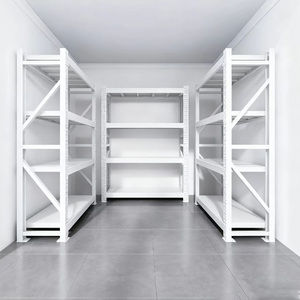
5/6 Layer Wholesale Heavy Duty Warehouse Material Handling Shelf & Battery Box Storage Rack
Applications: EV batteries, industrial parts, bulk totes
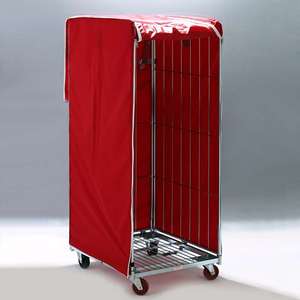
High-Capacity Warehouse & Hospital Laundry Industry Roll Cage Container with Heavy Covers
Mobility: 125mm PU anti-trace silent castors
Automated High-Rack Pallet Shuttle System for Deep-Lane Ultra-Dense Storage Warehousing
Cold Store: Rated down to -28°C operations
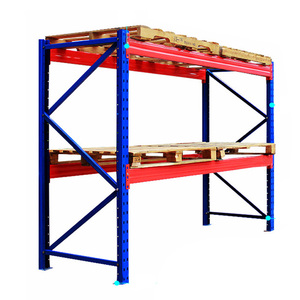
Weatherproof Hot-Dip Galvanized Pallet Racking for Outdoor & Harsh Yard Storage
Corrosion: ISO 1461 Hot-Dip Galvanized >85μm
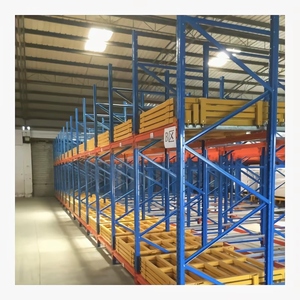
High-Density Gravity Push Back Pallet Racking System for Multi-Lane Dynamic Storage
Access: Gravity-fed cart nesting system
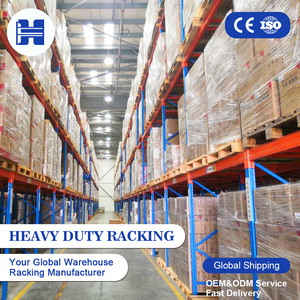
Industrial Heavy-Duty Longspan Shelving System for Workshop Tooling & Parts Logistics
Pitch Adjustment: 50mm pitch cold-formed uprights
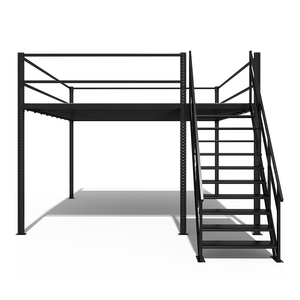
Multi-Tier Integrated Industrial Warehouse Mezzanine Floor Platform Racking System
Decking: Perforated steel or heavy OSB flooring
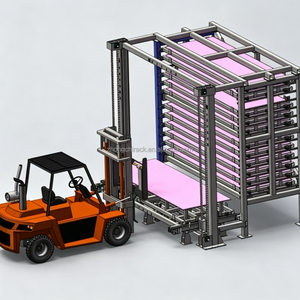
Space-Saving Heavy Automated Steel Plate & Raw Sheet Metal Drawer Storage Rack
Access: 100% crank-out roll-out mechanism
1. Structural Architecture & Mechanics of Industrial Double Deep Racking
Industrial Double Deep Racking represents one of the most cost-effective high-density pallet storage configurations available for modern supply chain facilities. By positioning pallet loads two positions deep in back-to-back rack rows, this configuration eliminates 50% of the access aisles required by conventional single-selective pallet racking. As global distribution hubs, third-party logistics (3PL) providers, cold stores, and heavy manufacturers face soaring commercial real estate lease rates, double deep configurations offer an optimal middle ground: delivering an operational storage density increase of 30% to 35% without the capital-intensive investment required for fully automated automated storage and retrieval systems (ASRS).
From a mechanical engineering perspective, double deep racking layouts require specialized material handling equipment. Warehouses must deploy pantograph-reach forklifts, tele-reach trucks, or articulated reach mast trucks equipped with extendable telescopic forks. The mechanical load transfer profile differs significantly from standard single-selective bays. Because the rear pallet must be lifted and placed across the front rack beam level, eccentric torsional moments are exerted upon the horizontal beams and vertical frame uprights. Our structural engineers design upright omega profiles and box-beam sections with higher polar moments of inertia ($I_x$ and $I_y$) to counteract beam rotation, column buckling, and deflection under high-cantilever reach scenarios.
2. Detailed System Comparison Matrix: Storage Systems Evaluated
Navigating warehouse intralogistics requires balancing selectivity, volumetric storage density, SKU variety, and material handling velocity. The comparative engineering matrix below outlines how double deep pallet racking compares against conventional and high-density industrial racking alternatives:
| System Type | Cubic Density | Pallet Selectivity | Forklift Compatibility | Stock Rotation | Relative Capex / Pallet |
|---|---|---|---|---|---|
| Standard Selective Rack | Baseline (100%) | 100% Direct Access | Standard Counterbalance / Reach | FIFO | Low |
| Double Deep Racking | High (+30% to +35%) | 50% Direct (2-deep) | Pantograph Reach / Deep-Reach Mast | FILO / Batch FIFO | Low - Medium |
| Push Back Racking | Very High (+40% to +50%) | Low (2-6 pallets deep) | Standard Forklifts | LIFO | Medium - High |
| Drive-In / Drive-Thru | Extremely High (+60%) | Very Low (Lane dedicated) | Specialized Drive-in Trucks | LIFO / FIFO | Medium |
| Automated Pallet Shuttle | Maximum (+70% to +85%) | High (per level lane) | Autonomous Shuttle + Standard Truck | FIFO or LIFO | High |
3. Global Procurement Trends: Sourcing from Top Chinese Manufacturers
International procurement directors in North America, Europe, Australia, and the Middle East are shifting from local fabrication toward certified Chinese original equipment manufacturers (OEMs). The drivers behind this transition extend beyond competitive raw material costs. Leading Chinese racking exporters maintain integrated, vertically controlled manufacturing operations featuring state-of-the-art continuous cold roll-forming lines, automated laser tube profiling, and robotic GMAW welding stations that achieve dimensional tolerances within ±0.5 mm across 12-meter upright runs.
Key factors governing modern procurement strategies include:
- Certified Metallurgical Integrity: Sourcing high-strength hot-rolled structural steel coils (grades Q235B and Q355B, equivalent to ASTM A36 and ASTM A572 Grade 50) accompanied by mill test certificates (MTC) verifying yield strength ($R_e \ge 355\text{ MPa}$), elongation percentages, and chemical trace elements.
- High-Durability Surface Coatings: Demanding high-adhesion electrostatic thermosetting epoxy-polyester powder coatings (60μm - 90μm thickness) with ISO 9227 neutral salt spray test ratings exceeding 500 hours, or hot-dip galvanization conforming to ISO 1461 for temperature-controlled cold-storage facilities.
- Structural Engineering Submittals: Overseas buyers require verified static and dynamic engineering calculation packages sealed by licensed structural engineers, validating compliance with EN 15512, RMI MH16.1, or AS4084-2023 seismic and wind loading criteria.
4. Technological Evolutions & Future Engineering Trends (2025–2030)
The industrial racking industry is evolving rapidly from static structural steel framing into intelligent, sensor-monitored infrastructure. The next decade will see three major technological developments revolutionize double deep rack applications:
1. AGV and Autonomous Forklift Compatibility: Traditional double deep operations relied heavily on operator skill to align pantograph forks at heights exceeding 8 meters. Today, warehouse automation is adopting autonomous reach trucks equipped with dual LiDAR and machine vision sensors. Modern double deep racking is engineered with tighter slot tolerances, pallet back-stops, and high-visibility optical targets to enable autonomous deep-lane picking at speeds matching manual drivers.
2. Structural Health Monitoring (SHM) via IoT Sensors: High-traffic distribution hubs increasingly deploy optical and strain-gauge IoT sensors embedded directly into critical rack upright baseplates and lower beam-to-column connectors. These systems deliver real-time alerts if a forklift collision exceeds structural impact thresholds or if rack frame out-of-plumb deflection exceeds the EN 15635 tolerance of $1/200$.
3. Cold-Formed High-Strength Light-Weighting: Advanced finite element modeling (FEM) allows manufacturers to introduce optimized stiffening ribs and variable gauge thicknesses across upright cross-sections. This increases dynamic load bearing while reducing total steel consumption, lowering both ocean freight shipping costs and embodied carbon emissions per pallet position.
Global Structural Authority & Manufacturing Excellence
As a tier-one Chinese industrial rack manufacturer and global exporter, our facilities integrate advanced metallurgical testing, robotic manufacturing, and complete project engineering lifecycles.
Fully Certified Structural Compliance
Every racking system is custom-calculated to EN 15512, FEM 10.2.02, RMI MH16.1, and AS4084 standards. Full static engineering calculations, seismic simulations, and finite element analyses are provided for municipal permitting and safety auditing.
Continuous Roll-Forming Precision
Operating 24 continuous cold-roll lines with automated in-line hydraulic punching and high-precision robotic welding. All upright frame components maintain slot pitch tolerances within ±0.2mm, ensuring rigid interlocking connections.
End-to-End Export & Site Supervision
From initial DWG/BIM 3D layout simulation to moisture-barrier ocean export packing and overseas installation supervision, we support 3PLs, EPC contractors, and automation system integrators across 60+ countries worldwide.
Industrial Double Deep Racking Procurement FAQ
Clear, engineering-backed answers addressing the most common technical questions posed by global procurement managers, logistics consultants, and warehouse operations executives.
What forklift aisle width is required for Double Deep Racking?
Double deep racking typically requires an aisle width ranging between 3.0 to 3.4 meters for standard reach trucks equipped with pantograph mechanisms. Guided VNA (Very Narrow Aisle) double deep reach trucks can operate in aisles as narrow as 2.2 to 2.4 meters when utilizing floor-mounted guide rails or inductive wire guidance.
How much load de-rating occurs on the forklift at the rear pallet position?
When extendable forks are fully projected to access the rear position, the truck's load center shifts from the standard 600mm to 1200mm or more. Depending on lift height, reach truck lifting capacity can de-rate by 30% to 50%. It is critical to calculate the maximum gross weight of your rear pallets to match forklift mast selection.
Are guide beams or pallet support bars mandatory for Double Deep bays?
Yes. Because operators have reduced direct line-of-sight when placing pallets into the second-depth position, heavy-duty pallet support bars or welded wire mesh decking are strongly recommended. Structural guide rails and rear mechanical pallet stops are standard safety additions that prevent pallet push-through.
Can existing selective racking be converted to Double Deep?
Yes. Conversion is often achievable if your warehouse clear ceiling height and concrete slab floor load capacity allow. The process involves re-spacing row spacers to connect two deep runs, installing pallet support cross-members, and replacing standard handling equipment with pantograph reach trucks.
What concrete slab tolerances are required for high-bay Double Deep racks?
For double deep racking installations over 6 meters in height, the warehouse concrete floor must meet DIN 18202 Table 3 Group 3 or ACI 117 F-min flatness standards. A stable, crack-free subgrade is necessary to prevent dynamic lean, frame twist, and mast sway during high-elevation pallet picks.
How do you ensure corrosion resistance in cold storage facilities?
For cold and blast-freezer operations operating down to -30°C, we supply structural components manufactured from low-temperature impact-resistant steel grades (preventing ductile-to-brittle transitions). Surface finishes include high-durability pre-galvanized sheet, hot-dip galvanizing, or specialized sub-zero powder formulations.