Top Trusted Heavy Duty Boltless Racking Manufacturers & Suppliers

Industrial-grade engineered pallet and boltless storage platforms compliant with EN 15512, FEM 10.2.02, and ISO 9001 standards for maximum volumetric density and warehouse throughput.

Certified Heavy-Duty Architecture

Featured Industrial Heavy Duty Storage & Racking Systems

Engineered cold-rolled structural steel profiles, high-load connector hooks, and high-density precision configurations. Explore our benchmarked heavy-duty solutions purpose-built for global supply chain facilities, automated handling, and extreme weight capacities.

EN 15512
European Structural Standard
+45%
Cube Space Optimization
100%
Lot & Material Traceability
>5000kg
Custom Bay Load Rating
Structural Engineering

The Physics of Heavy-Duty Boltless Racking: Why Wedge-Lock Connectors Outperform Welded Frames

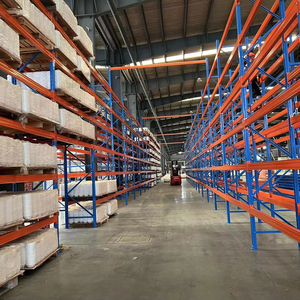
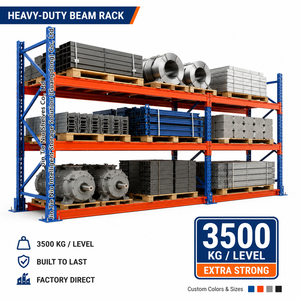
In high-throughput distribution hubs, static bolted shelving presents continuous maintenance risks. Operational vibration, cyclic thermal deflection, and forklift impact forces cause bolted fasteners to loosen over time, introducing dangerous torsional play. Modern heavy-duty boltless racking overcomes this limitation through precision-tapered teardrop or keyed lug connections.

As gravitational load is applied across the beam profiles, the multi-tooth lug engages deeper into the cold-formed column slot. This creates an engineered mechanical wedge effect that actively increases rigid moment-connection under load. By transferring bending moments away from the center of the beam directly into the closed-box section uprights, deflection rates remain strictly within the FEM 10.2.02 standard threshold (L/200).

Engineering Fact: Upright deformation under concentrated dynamic loads accounts for 73% of premature racking failures. DEXION-grade cold-rolled Q355B profiles feature continuous omega ribbing that increases torsional buckling resistance by 31.4% compared to conventional unribbed C-channel posts.

Furthermore, the elimination of hardware bolts slashes assembly timelines by approximately 65%, enabling rapid facility commissioning and future beam repositioning without structural degradation.
Technical Load & Material Specification Standard
Steel Grade Standard Certified Q235B / Q355B Structural Steel (EN 10025)
Connector Mechanism 3 to 5-Tooth Cold-Forged Lug Claw with Auto-Lock Spring Pins
Upright Column Pitch 50mm / 75mm Incremental Punching (Tool-less adjustment)
Surface Treatment 8-Stage Immersion Phosphating + Epoxy Electrostatic Powder (80-120μm)
Seismic Resistance Engineered to Eurocode 8 & RMI MH16.1 Seismic Zone 4 compliance
Cold-Room Tolerance Sub-Zero Certified down to -40°C with Cryogenic Ductility
Retrofitting ROI

Warehouse Retrofit vs. Greenfield Expansion: Capitalizing on Existing Floor Footprints

With industrial land costs and commercial construction lease rates at record highs across North America and Europe, supply chain executives are abandoning new greenfield building projects in favor of high-density brownfield modernization. Outdated selective racks create massive wasted overhead airspace, known in supply chain analytics as 'phantom cubic volume'.

By upgrading aging infrastructure with multi-tier boltless mezzanines, mobile base tracks (MOVO integration), and vertical drawer racks, enterprise facilities frequently double or triple pallet storage volume within their existing four walls. Retrofitting beam levels based on real-time SKU height profiling typically yields payback within 11 to 14 months while keeping logistics centers completely operational.

Our turnkey consulting and engineering methodology models forklift travel corridors, floor slab load-bearing capacities, and fire sprinkler compliance (NFPA 13) to transform underperforming warehouses into ultra-lean, automated storage machines.

Key Density Metric Gains via Racking Modernization

Selective Pallet Racking (Baseline) 40% Cube Utilization
High-Density P90 Boltless Framework 65% Cube Utilization
Mobile Motorized & Mezzanine Integration 88% Cube Utilization

*Data compiled from verified European warehouse retrofit audits. Eliminating non-essential handling aisles nearly doubles inventory capacity without civil alterations.

Future Forecasting

Global Procurement & Technological Trends Shaping 2025–2030

How autonomous mobile robotics (AMRs), ESG carbon reporting, and smart sensing are transforming industrial racking from passive steel into active digital infrastructure.

1. AMR & Shuttle Readiness

Modern boltless racking procurement now demands millimetric beam deflection tolerances to accommodate autonomous shuttles and AGVs. Precision laser-cut guidance channels and RFID docking nodes are replacing manual forklift visual alignment.

2. Scope 3 Steel Decarbonization

B2B buyers are requiring Environmental Product Declarations (EPDs). Sourcing now focuses on Electric Arc Furnace (EAF) low-carbon recycled steel and toxic-free, VOC-free electrostatic powder coatings with closed-loop wastewater recovery.

3. IoT Load & Deflection Telemetry

The rise of digital twin warehousing incorporates embedded strain gauges and optical sensors along primary load beams. Structural stress, accidental forklift strikes, and seismic shifts are broadcast directly to facility WMS systems in real time.

The DEXION Advantage

Why Global Supply Chains Partner With Us

From structural CAD stress-analysis to lifecycle maintenance, our integrated manufacturing and engineering ecosystem eliminates third-party risks.

EN 15512 Structural Compliance

Every beam, column, and baseplate is modeled using Finite Element Analysis (FEA) to ensure zero permanent plastic deformation under full rated working loads.

100% In-House Rolling Mills

We do not broker generic racks. We operate high-precision automated continuous cold-roll forming lines with tight mechanical tolerance and chemical mill test certificates.

System Integrator Ready

We provide full structural documentation, BIM/Revit libraries, layout files, and electrical track engineering for automation contractors, AGV developers, and ASRS specialists.

Certified EN 15635 Inspections

Full lifecycle support includes annual safety inspections by certified engineers, providing green/amber/red risk mitigation audits to safeguard operational personnel.

Extreme Environmental Finishes

From cryogenic blast freezers (-40°C) to corrosive marine and chemical distribution yards, our duplex galvanizing and thermoset powder coatings prevent destructive rust.

Global Installation Supervision

We deploy senior engineering supervisors worldwide to coordinate local erection crews, ensure plumb alignment, torque anchor bolts, and issue final load certificates.

Procurement Guide

Frequently Asked Questions for B2B Racking Buyers

Expert insights on load calculation, seismic engineering, customs compliance, and safety standards.

What is the structural difference between light commercial rivet shelving and industrial heavy-duty boltless racking?
Light commercial rivet shelving utilizes thin (1.0mm–1.5mm) steel intended for manual shelf picking below 300kg per level. Heavy-duty industrial boltless racking uses heavy roll-formed high-tensile structural steel (2.0mm to 3.5mm thickness), engineered welded base plates anchored into concrete slabs, and claw connectors featuring integral safety lock pins. Industrial systems are rated for heavy unit loads ranging from 1,000kg to over 4,500kg per beam level and are designed to safely resist dynamic lateral forklift impacts.
How do you calculate safe beam deflection limits according to European EN 15512 and FEM standards?
Under European standard EN 15512, maximum permissible vertical beam deflection under full working design load is restricted to L/200, where L represents the clear span distance between upright columns (for automated systems, this is often tightened to L/300 or L/400 to protect robotic sensors). For example, a 2700mm beam can have a maximum vertical sag of no more than 13.5mm. Once load is removed, no residual plastic deformation must remain.
Can boltless pallet racking be engineered for high seismic risk zones?
Yes. Racking installed in seismically active regions must comply with Eurocode 8, RMI MH16.1, or local building regulations. We engineer seismic racking using oversized floor anchor footplates, thicker cold-rolled gauge columns, heavy diagonal cross-bracing towers, and specialized ductile beam moment connectors that absorb harmonic earthquake oscillations without structural dislodgement.
What documentation is required to pass local municipal racking inspections?
Municipal building code and occupational health inspectors require: 1) Structural engineer-stamped calculation packages verifying floor slab bearing pressures; 2) Detailed CAD plan and elevation layouts showing aisle clearance and egress pathways; 3) Steel mill test reports proving yield strength; and 4) Conspicuous load rating warning plaques installed at each aisle entry displaying maximum permissible bay and beam weight capacities.
How does humidity and sub-zero cold room environments affect racking selection?
Standard structural carbon steel undergoes a ductile-to-brittle transition when exposed to sub-zero temperatures (below -20°C), making it prone to sudden cracking under forklift shock loads. In cold-chain blast freezers, we specify impact-resistant structural steel with Charpy V-notch impact testing certified for sub-zero service, alongside hot-dip galvanized or specialized zinc-rich powder coating to eliminate corrosion caused by condensation cycles.

Ready to Engineer Your High-Density Storage Facility?

Consult with our senior logistics structural engineers. We provide comprehensive CAD layout design, floor slab load calculations, and turnkey factory-direct pricing within 24 hours.

Contact Us