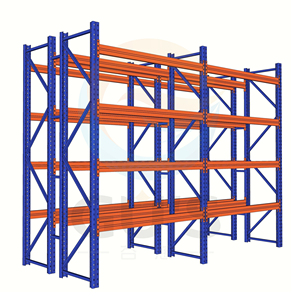
Industrial Product Portfolio
Heavy-Duty Warehouse & Mold Storage Solutions
Engineered for extreme point-loading, maximum space preservation, and ergonomic overhead crane access in modern stamping and injection molding environments.
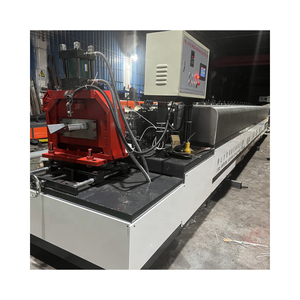
High Density Shuttle
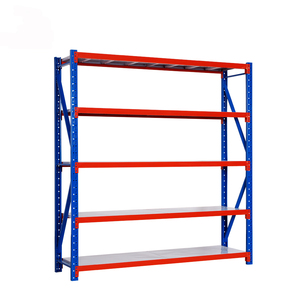
High Quality Shuttle Racking Production Line Bearing Drive-In Pallet Rack
Product Specs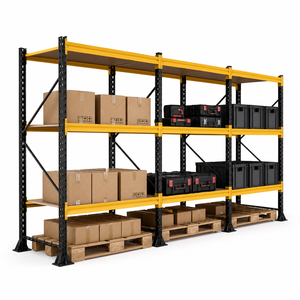
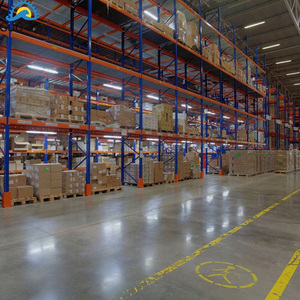
Engineering Authority & Mechanics
Structural Integrity for High-Mass Injection & Stamping Dies
Addressing point deflection, seismic drift, and floor load dispersion in metal stamping, plastic injection, and automotive die management.
In high-capacity manufacturing facilities, managing multi-ton tooling assemblies presents engineering challenges fundamentally distinct from uniform pallet logistics. Injection molds and stamping dies exert concentrated non-uniform point loads that can induce beam shear and horizontal beam deflection if conventional selective pallet racks are deployed without structural modifications. As an established direct-factory manufacturer operating under stringent European EN 15512 and FEM guidelines, our heavy-duty die storage racking platforms are constructed using high-yield structural steel profiles (Q235B / Q355B or grade S355JR) to maintain a safety deflection ratio superior to 1/200th span (L/200) under full dynamic roll-out extension.
A typical failure mode in second-rate mold storage involves the mechanical seizure of drawer runner bearings caused by torsion-induced frame twisting. When a 3,000 kg mold is pulled outward to 65% or 100% stroke for overhead crane hoisting, the horizontal cantilever force shifts the center of gravity outward, producing high rotational moment forces along the vertical uprights. Our engineering countermeasures integrate reinforced multi-flange roll-formed columns, robust cross-braced perimeter backbones, and dual mechanical interlock pins. This safeguards maintenance personnel against accidental multi-drawer pull-out and disastrous frame tipping.
| Structural Parameter | Standard Selective Pallet Rack | Industrial Heavy-Duty Mold Rack | Automated Crane-Integrated Die System |
|---|---|---|---|
| Load Distribution Type | Uniformly Distributed Load (UDL) | Concentrated Point Load (Tooling Footprint) | Dynamic Cassette Pallet Loading |
| Capacity per Level | 800 kg – 2,500 kg | 1,000 kg – 5,000+ kg (Drawer/Fixed) | 3,000 kg – 10,000 kg per Bay |
| Extraction Mechanism | Forklift Entry Only (0% Drawer Slide) | 65% Semi-open / 100% Full-Slide Drawers | Automated Stacker Crane / Shuttle Manipulator |
| Overhead Crane Direct Pick | No (Restricted by Upper Beams) | 100% Direct Vertical Access | Fully Integrated In-Out Station |
| Safety Interlocking | Standard Drop Pins | Single-Drawer Lockout System | Closed-Loop PLC Safety Interlocks |
| Target Manufacturing Industry | General Warehousing & Distribution | Plastics, Stamping, Die-Casting | Automotive Tier-1, Sheet Metal Press Lines |
Future Outlook: 2025–2030
Procurement & Technological Evolution in Tooling Storage
How automation, traceability, and Industry 4.0 are reshaping capital expenditures for die storage infrastructure worldwide.
AS/RS Integration & Manipulators
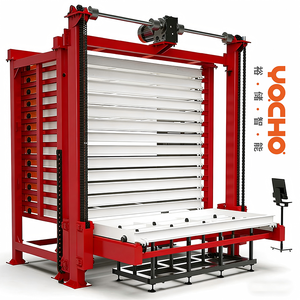
Manual forklift mold transport is rapidly giving way to automated sheet-metal and heavy-die storage systems. Incorporating automated stacker cranes (ASRS) and loading/unloading manipulators eliminates die damage, reduces setup times (SMED principles), and cuts overhead crane dependency across high-cadence production lines.
RFID & Digital Tooling Twins
Future enterprise procurement mandates telemetry integration. Modern die racks are designed with integrated RFID tracking, weight sensors, and maintenance cycle monitors. Warehouse Execution Systems (WES) register exact mold tier positions, total shots logged, and automated retrieval paths directly linked to MES.
Cube Maximization vs. Floor Footprint
With industrial real estate costs soaring globally, procurement heads are migrating from wide low-level shelving to vertical high-density mobile racking and automated high-bay die towers. Reclaiming up to 80% of floor space allows manufacturing facilities to add injection or stamping lines without physical footprint expansion.
Factory Heritage & E-E-A-T Credentials
Engineered to Excel: Why Global Industrial Leaders Partner with Us
Full-lifecycle manufacturing oversight from raw steel coil inspection to on-site European rack certification.
Certified Structural Engineering
Every racking project is backed by structural static calculations, finite element analysis (FEA), and seismic compliance to EN 15512 and FEM design codes. We calculate load capacities against live dynamic loads, foundation slab specifications, and hoist impacts.
High-Grade Mill Traceability
Our facility processes certified structural steel with full chemical and mechanical mill test certificates (MTC). CNC punch-pressing, automated robotic welding lines, and electrostatic thermosetting powder coatings ensure maximum corrosion resistance in humid mold workshops.
Turnkey Global Project Delivery
From initial site dimensional surveys and customized CAD layout optimization to supervised international on-site assembly and annual EN 15635 rack safety inspections, our global engineering team supports your operations throughout the entire equipment lifecycle.
Procurement Knowledge Base
Frequently Asked Questions by Industrial Plant Engineers
Technical clarification on safety interlocks, dynamic load deflections, seismic considerations, and custom mold rack installations.
What is the structural difference between standard pallet racks and mold die racks?
Standard pallet racking is calculated based on Uniformly Distributed Loads (UDL) over wide horizontal spans. Heavy-duty die storage racks are custom-designed for extreme concentrated point loading, incorporating thick steel bed plates, structural shelf support ribs, reinforced upright column footplates, and mechanical slide-out drawers that permit direct overhead crane hoisting without horizontal interference.
How do you prevent tipping accidents when heavy slide drawers are pulled out?
Our heavy-duty slide-out die racks feature a mechanical single-drawer lockout mechanism. This fail-safe ensures only one drawer per column can be opened at any given time, preventing an outward displacement of the center of gravity. Additionally, all heavy units are chemically anchored to the concrete slab using high-shear M12-M16 Hilti anchor bolts and braced with heavy-duty structural perimeter frameworks.
What maximum weight capacity can be engineered per shelf level?
For manually pulled semi-open drawers (65% stroke), typical capacities range from 1,000 kg to 2,500 kg per level. For fully open motorized or gear-cranked drawers (100% stroke), capacities frequently reach 3,000 kg to 5,000+ kg per tier. Fixed heavy-duty die cradles and crane-serviced cassette racks can be designed for loads surpassing 10,000 kg per bay, custom-engineered to your press tooling requirements.
What concrete slab thickness and floor criteria are required?
For multi-ton die racking systems, a reinforced concrete slab (minimum C20/25 or C25/30 grade) with an effective depth of at least 150 mm to 200 mm is recommended to absorb concentrated anchor shear forces. During project scoping, our engineering team performs point-load dispersion calculations against your building's architectural drawings to determine whether larger base spreaders are necessary.
Can our existing legacy warehouse racks be retrofitted for mold storage?
Standard pallet racking beams and uprights are rarely certified for direct mold conversion due to severe point-load deformation risks and lack of front-to-back anti-tipping anchors. However, we can perform on-site structural retrofits by adding dedicated heavy-duty structural roll-out inserts, load spreader channels, and intermediate upright supports, provided the upright columns and base plates pass structural safety verification.
What design standards and quality control inspections govern your production?
All structural designs adhere strictly to EN 15512 (Steel Static Storage Systems), FEM 10.2.02, and OSHA industrial safety guidelines. Manufacturing operations in our ISO 9001-certified facility include ultrasonic weld testing, tensile coupon tests of steel batches, thickness verification, and 100% dry-fit pre-assembly testing before surface finishing and global maritime container dispatch.