Direct Access
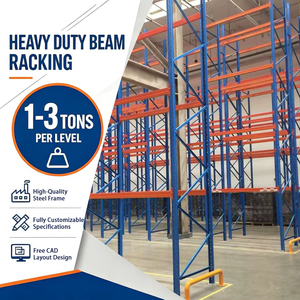
Fully compliant with European & RMI safety standards
Footprint expansion vs. conventional selective racking
Controlled carbon metallurgy with mill test traceability
Dedicated lane picking with single-aisle operational access
Explore our certified storage solutions engineered for heavy-load warehousing, material handling efficiency, and maximum volumetric utilization.
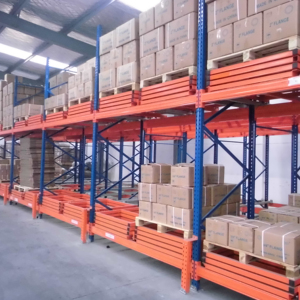
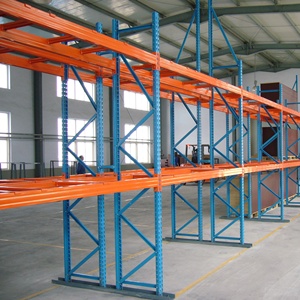
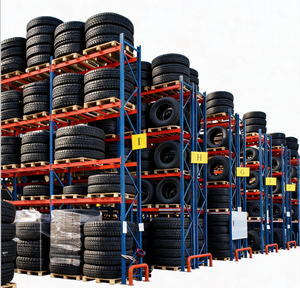
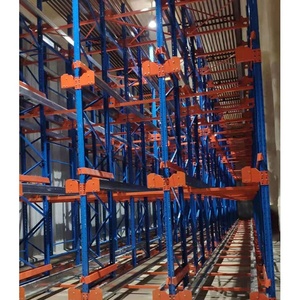
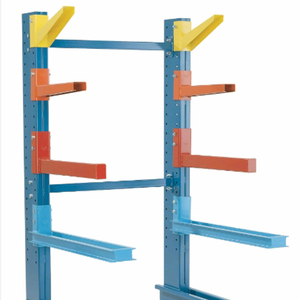
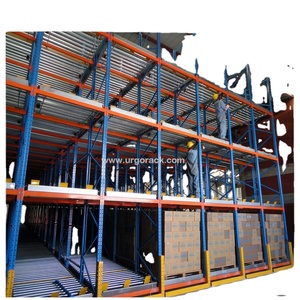
A rigorous evaluation of nested nesting carriages, gravitational gradients, and dynamic load redistribution for procurement engineers.
In high-throughput distribution environments, maximizing cubic footprint efficiency while maintaining accessible stock rotation remains a paramount operational challenge. Industrial push back pallet racking systems represent an optimal midpoint between low-density selective racking and zero-selectivity drive-in layouts. Built upon inclined steel structural guide tracks and telescoping nesting carts, push back racking operates on a Last-In, First-Out (LIFO) material handling logic.
Fabricated using precision-formed steel profiles with heavy-duty sealed flanged steel wheels. Pallets are deposited sequentially onto nested rolling carriages, eliminating mechanical carriage binding even under maximum point loads exceeding 1,500 kg per position.
Engineered with a precise 1.5% to 2.5% structural gradient. When front pallets are retrieved, trailing pallets gently advance by gravity toward the pick face. Hydraulic braking systems and safety arrestors ensure continuous velocity dampening.
By compressing 2 to 6 pallet positions deep into dedicated lanes, industrial push back racking eradicates dedicated cross-aisles, yielding up to a 75% increase in pallet storage density compared with traditional wide-aisle selective frames.
Key intelligence for supply chain directors, procurement officers, and warehouse system integrators.
Transition from standard carbon steel to high-yield Q355 and Q460 micro-alloy cold-rolled profiles. This reduces deadweight deadload stresses on foundation slabs while maximizing rated dynamic capacity and impact resistance in cold-storage environments down to -30°C.
Modern push back lanes are increasingly re-engineered with optical landing guides and precision-tolerance pick faces to interface directly with Autonomous Mobile Robots (AMRs) and reach AGVs, establishing hybrid manual-automated material flows.
Global logistics facilities are mandating integration of IoT acoustic impact sensors on critical structural uprights. Coupled with EN 15635 predictive maintenance protocols, facilities gain real-time visibility into mast collisions and deflection limits.
Engineered to EN 15512 standards with total process control from raw coil slit to turnkey installation.
Every upright, beam, and carriage profile undergoes FEA finite element structural analysis and physical tensile validation to meet European and global structural safety norms.
Raw coil certifications, automatic CNC cold-roll roll-forming, robotic welding fixtures, and automated electrostatic powder coating lines offer 100% batch transparency.
Expert engineering teams deliver non-disruptive warehouse retrofits, re-profiling beam pitches and converting under-utilized selective footprints into high-density push back blocks.
Comprehensive CAD layout generation, BIM modeling families, anchor shear calculations, and localized seismic load verifications supplied for global logistics contractors.
In-depth, technically validated answers addressing floor loading, carriage maintenance, and inventory compatibility.