Adjustable
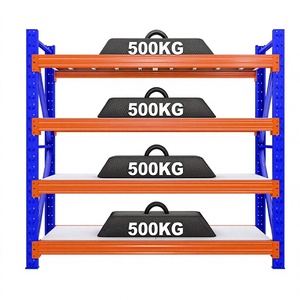
Engineered to support heavy commercial payloads, automated racking integration, and high-density inventory profiles for Los Angeles distributors and international logistics hubs.
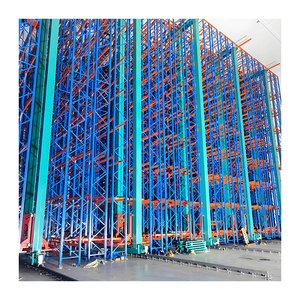
The Greater Los Angeles logistics gateway—anchored by the Port of Los Angeles and Long Beach and feeding inland through the San Gabriel Valley, South Bay, and the sprawling Inland Empire distribution corridors—represents the highest-velocity and densest industrial warehousing cluster in North America. Navigating this landscape requires more than standard shelf procurement; it necessitates precision-engineered custom OEM warehouse shelving and structural racking systems designed to maximize cubic clear height while strictly fulfilling mandatory structural criteria.
Operating distribution facilities in Los Angeles County, Orange County, and Riverside demands rigorous compliance with the California Building Code (CBC 2022/2025 updates) and ASCE 7 Seismic Design Category E & F specifications. Facilities situated on alluvial coastal soils or near active faults face extreme lateral acceleration forces ($S_{DS}$ and $S_1$ factors often exceeding 1.5g). Ordinary off-the-shelf shelving lacking rigorous dynamic finite element analysis (FEA) risks systemic joint shearing, beam dislodgement, and progressive collapse during seismic events. As experienced OEM manufacturers and direct exporters, our racking profiles leverage high-ductility, cold-formed and structural hot-rolled Q235B and Q355B mill steel, engineered to meet or exceed RMI (Rack Manufacturers Institute) MH16.1 specifications and European EN 15512 standards.
| Structural Parameter | Standard Commercial Shelving | OEM Heavy-Duty Engineered (Our Standard) | SoCal Regulatory Compliance Factor |
|---|---|---|---|
| Steel Grade & Yield Strength | Commercial Light Gauge Steel (< 235 MPa) | Certified Q235B / Q355B High-Tensile (≥ 355 MPa) | Resists cyclic lateral deformation during seismic excitation |
| Seismic Footplate Engineering | Standard 4" × 4" non-rated plates | Enlarged seismic baseplates (up to 12" × 12" × 3/4") | Distributes high point-loads across 6" to 10" concrete slabs |
| Anchor Bolt Embedment | Single 3/8" mechanical anchor | Dual or Quad Hilti/Simpson wedge anchors (3/4" dia) | Mandatory pull-out ratings for City of LA Building & Safety (LADBS) |
| Beam-to-Column Locking Mechanism | Friction drop-pin or light clips | Multi-tang forged connector clips + 5/8" grade 5 shear bolts | Prevents catastrophic beam unseating under vertical bounce |
| Corrosion Resistance Treatment | Basic wet paint coat (< 30μm) | Electrostatic thermoset epoxy polyester powder (80–120μm) | Withstands marine humidity from South Bay and Long Beach port zones |
Material handling requirements vary significantly based on supply chain positioning across the Southland. Below are the primary application paradigms where our custom OEM racking and shelving configurations solve critical footprint and throughput bottlenecks:
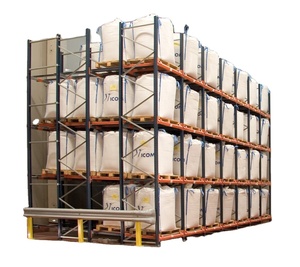
Installed extensively in Vernon, City of Industry, and Long Beach food logistics hubs. High-density shuttle systems and galvanized push-back racks maximize thermal efficiency and cube density inside sub-zero blast freezers, reducing refrigeration energy draw per pallet footprint.
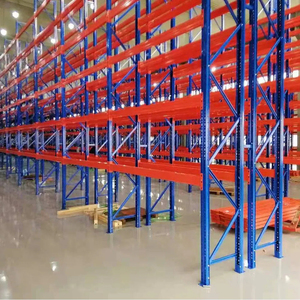
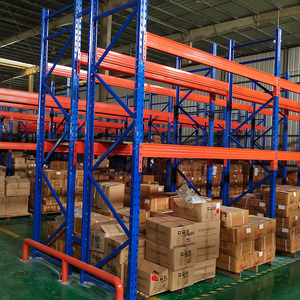
For third-party logistics (3PL) facilities in Carson and Santa Fe Springs transferring containerized break-bulk cargo. Heavy-duty 5-layer selective pallet racks allow instant accessibility (100% selectivity) for mixed SKU turnover and rapid pallet restaging under continuous 24/7 cycles.
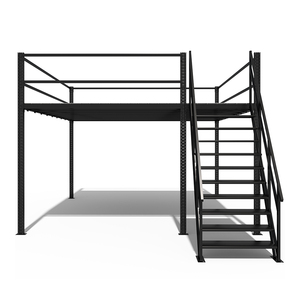
Modern micro-fulfillment centers in Ontario and Chino utilize industrial mezzanine platforms and gravity carton live racking. This triples picking surface area without expanding the building shell, addressing sky-high square-foot industrial lease rates.
Industrial real estate pressures in Southern California have structurally transformed procurement criteria for warehouse infrastructure. Facility operators no longer treat shelving as passive commodity assets, but as integrated kinematic structures designed around three dominant industry evolutions:
With class-A industrial rents reaching record levels, new developments feature 36-foot to 42-foot clear heights. Maximizing this vertical space requires precision roll-formed uprights with tighter section tolerances and continuous column splicing capable of supporting concentrated loads exceeding 40,000 lbs per bay.
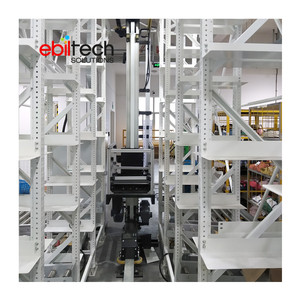
Autonomous Mobile Robots (AMRs) and automated shuttle systems demand deflection tolerances far tighter than traditional forklift racking. Beams and track guides must maintain deflection limits tighter than $L/500$ under live loading to avoid sensor disorientation and mechanical jams.
The Los Angeles Department of Building and Safety (LADBS) and regional fire departments have enforced zero-tolerance verification for high-piled combustible storage permits. Racking procurement requires stamped PE calculations, high-expansion flue space guards, and integrated ESFR sprinkler clearance design.
As an end-to-end OEM designer, structural fabricator, and global exporter, our supply ecosystem provides comprehensive structural assurance and direct mill pricing advantages:
Fully engineered in alignment with RMI MH16.1, AISC steel construction codes, and EN 15512. We deliver full PE structural calculation packages ready for municipal plan checks across all California jurisdictions.
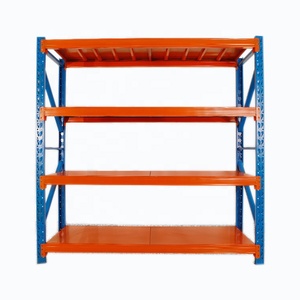
Custom upright pitch configurations (50mm, 75mm, 76.2mm / 3-inch teardrop interchangeability), proprietary beam profile roll-forming, step beam engineering for wire decking, and tailored heavy-duty shelf spans.
Every structural batch undergoes ultrasonic weld testing, coating thickness verification, and tensile yield qualification. We manage container loading optimization to eliminate in-transit freight abrasions directly to the Port of Los Angeles.
Clear, direct answers regarding structural engineering, permitting, steel quality, and turnkey commissioning.
Speak directly with our structural storage engineers. We deliver comprehensive CAD layouts, structural FEA calculations, and custom OEM manufacturing tailored to your facility's operational demands.