High-Capacity Industrial Racking Systems for Doha Facilities
Engineered to resolve vertical storage bottlenecks in high-bay logistics centers, cold chain depots, and spare parts distribution hubs throughout the State of Qatar.
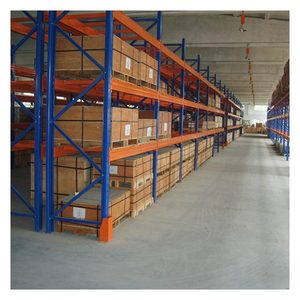
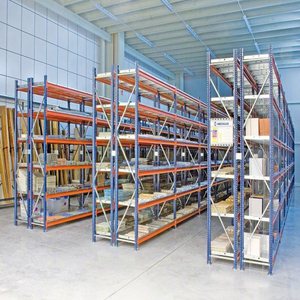
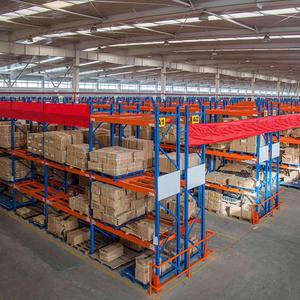
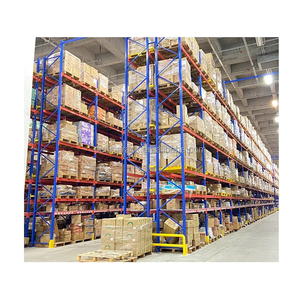
Industrial Storage Engineering for Qatar's Arid, High-Throughput Supply Chains
The accelerated transformation of Qatar's logistics infrastructure—spearheaded by the Qatar National Vision 2030 and significant capital inflows into free zones like Ras Bufontas, Umm Alhoul, and the Manateq Industrial Zones (Birkat Al Awamer and Aba Saleel)—demands industrial storage systems built far beyond generic commercial thresholds. Warehousing in Doha operates in one of the most demanding environmental and logistical intersections in the Middle East. Ambient temperatures exceeding 48°C during peak summer months, coupled with airborne maritime salinity from the Arabian Gulf and high humidity cycles along the coastline, pose severe structural degradation and corrosion risks to substandard cold-rolled racking.
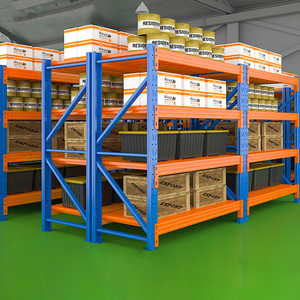
As a leading supplier and exporter of heavy-duty rivet racking and selective structural pallet racks into Doha, our systems are engineered around microclimate stability, mechanical load integrity, and structural compliance with EN 15512 and the Qatar Construction Specifications (QCS 2018). Rivet racking systems—distinguished by cold-formed uprights perforated with keyhole or teardrop slots that interlock with precision-machined twin-rivet beam pins—provide the optimal structural balance between high-capacity manual case-picking operations and heavy unit-load staging. By eliminating nuts, bolts, and loose fasteners, rivet racking prevents the structural looseness frequently induced by thermal contraction and expansion cycles inside non-conditioned or semi-conditioned buffer warehouses across Doha's Industrial Area.
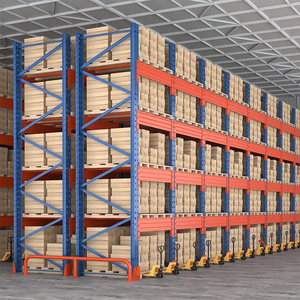
Crucial Technical Insight for Doha Facility Managers: Under Qatar Civil Defence Department (QCDD) fire and life safety guidelines, warehouse shelving and pallet racking configurations must maintain minimum flue spaces (transverse and longitudinal) of 75mm to 150mm. Our rivet and selective pallet racking systems incorporate calibrated back-to-back row spacers and integrated beam pitch locking pins that prevent deflection encroachment into automated ESFR (Early Suppression, Fast Response) sprinkler trajectories.
Cold-Formed High-Yield Steel Profiles & Advanced Metallurgical Integrity
Our upright columns and box-beam members are cold-formed from certified high-yield structural steel coils conforming to EN 10025 (Grade S355JR) or ASTM A572 Grade 50. Unlike light-duty angle-iron shelving that buckles under asymmetric torsional forces, our heavy-duty rivet uprights feature an omega-profile cross-section or multi-flanged channel geometry with continuous cold-roll forming. This geometry significantly elevates the section modulus ($Z_x$ and $Z_y$) while minimizing the total steel deadweight per bay.
Every rivet head is drop-forged from alloy carbon steel and robotically welded onto high-strength beam end connectors. When tapped into the tapering teardrop or keyhole slot, the dual-pin mechanical interlock generates a wedging action that increases frame rigidity as the downward load intensifies. This self-tightening characteristic is crucial for Doha distribution hubs handling heavy equipment, automotive replacement parts, FMCG bulk items, and construction consumables.
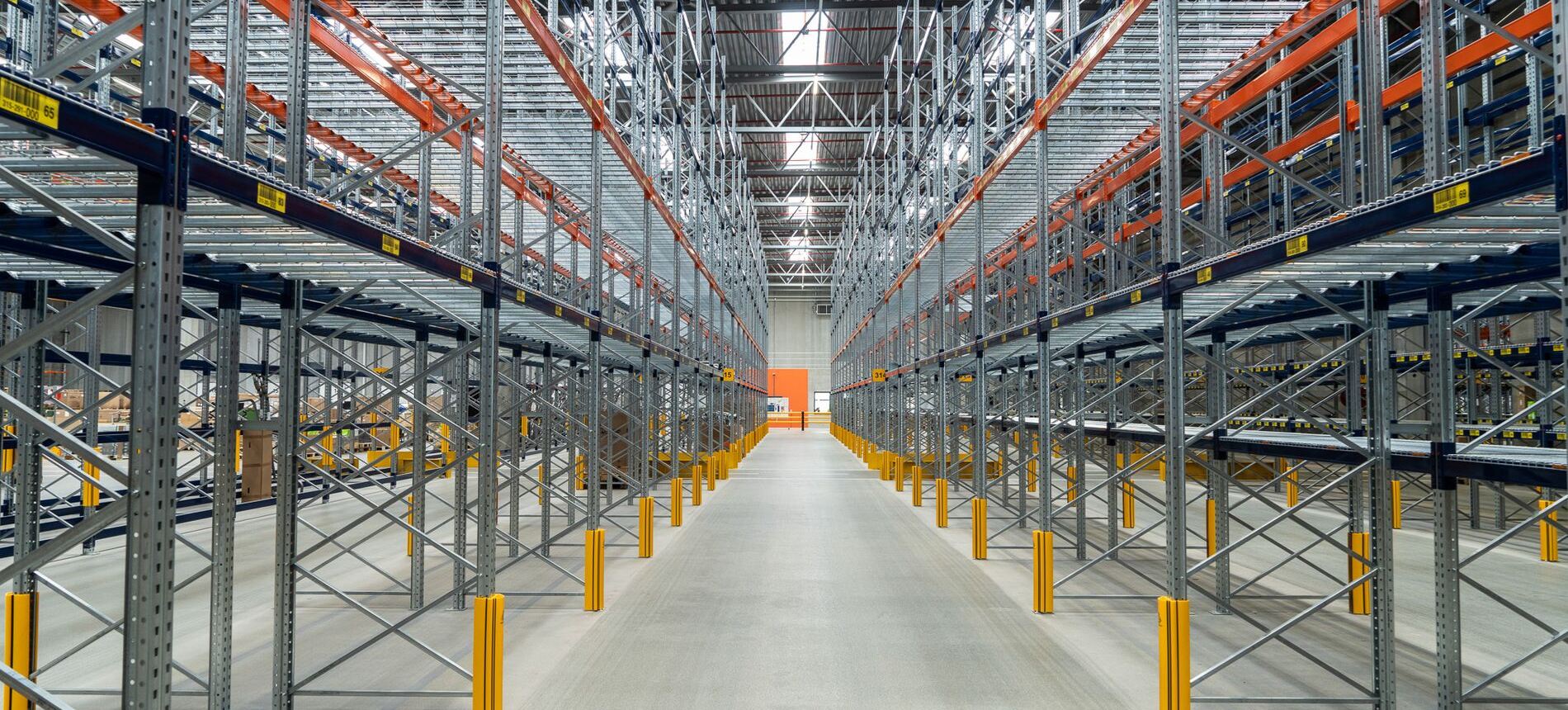
System Architecture Comparison: Rivet Racking vs. Alternative Storage Formats
Logistics directors and procurement engineers in Doha must balance storage cube utilization against operational access speed and floor-level mechanical load handling. The comparative engineering matrix below details the structural metrics governing storage selection within modern Qatari distribution facilities:
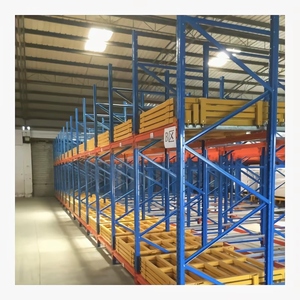
| Performance Indicator | Heavy-Duty Boltless Rivet Racking | Standard Selective Pallet Racking | High-Density Push-Back Systems | Automated Radio Shuttle Racking |
|---|---|---|---|---|
| Load Capacity (UDL / Level) | 300 kg – 1,500 kg | 1,000 kg – 4,500 kg | 1,000 kg – 1,500 kg per cart | 1,000 kg – 2,000 kg per channel |
| Target Handling Operation | Heavy manual picking, cartons, tote bins | Full pallet unit loads, VNA / reach trucks | Bulk pallet staging, LIFO inventory | High-throughput dynamic FIFO / LIFO |
| Structural Assembly Method | Tool-free keyhole/teardrop rivet interlock | Boltless beam claw with safety pins | Sloped steel track with rolling nested carts | Deep-lane rails with wireless shuttle cart |
| Footprint Density Improvement | +25% vs conventional slotted shelving | Baseline benchmark | +55% over selective layouts | +80% over selective layouts |
| Corrosion Protection Specs | 70–90µm thermoset polyester powder coat | Epoxy-polyester or Pre-galvanized zinc | Hot-dip galvanized rails & wheels | Galvanized uprights & electro-plated rails |
| Reconfiguration Agility | Immediate; re-pitch levels in minutes | Moderate; requires beam level decoupling | Low; requires mechanical incline realignment | Low; requires channel and sensor recalibration |
| Doha Climate Resilience | Superior (no hardware thermal loosening) | High (requires periodic safety-pin torque audits) | Medium (bearing lubrication checks required) | High (industrial-grade -30°C to +50°C sensors) |
Localized Deployment Scenarios in Qatar's Leading Economic Corridors
Industrial storage systems cannot be approached with a one-size-fits-all methodology. The operational demands within Doha vary dramatically depending on geographic zones, regulatory mandates, and supply chain functions:
Birkat Al Awamer Cold Chains & Food Security
Designed for multi-temperature cold storage facilities supporting Qatar's National Food Security Strategy. Our galvanized rivet racks and dense drive-in systems resist condensation cycles down to -30°C without micro-fissuring or embrittlement.
Ras Bufontas Free Zone E-Commerce Hubs
Adjacent to Hamad International Airport, fast-fulfillment 3PL hubs utilize multi-tier rivet racking configurations and mezzanines to maximize cubic room height, optimizing high-density parcel consolidation and rapid SKU picking.
Doha Industrial Area Spare Parts Warehouses
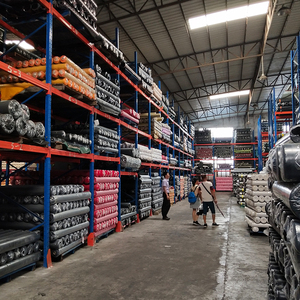
Along Streets 1 through 52, commercial fleet maintenance depots and mechanical parts suppliers employ heavy-duty boltless rivet shelving to hold heavy engine components, transmission cores, and steel dies without floor anchoring failure.
Hamad Port Logistics Maritime Transit Parks
Heavy transshipment consolidation at Umm Alhoul requires heavy-duty selective pallet racking engineered with marine-grade C4/C5 surface treatments to mitigate humidity and offshore salt mist ingress during container staging.
Mesaieed & Ras Laffan Chemical Staging
Petrochemical buffer warehouses rely on non-combustible steel decking, epoxy coatings, and earth-grounded upright grounding straps to meet the highest industrial safety standards for hazardous material inventory staging.
Lusail Commercial Distribution Facilities
Urban micro-fulfillment and retail distribution centers in northern Doha utilize modular, aesthetic, and sound-dampened rivet shelving layouts tailored for clean-room pharmaceutical items, consumer cosmetics, and luxury goods.
Key Intralogistics & Racking Trends Transforming the Qatar Logistics Sector
Procurement teams in Qatar are rapidly shifting focus from initial capital expenditure (CAPEX) to long-term operational efficiency (OPEX) and structural versatility. Three distinct macro trends are dominating warehouse design across Doha:
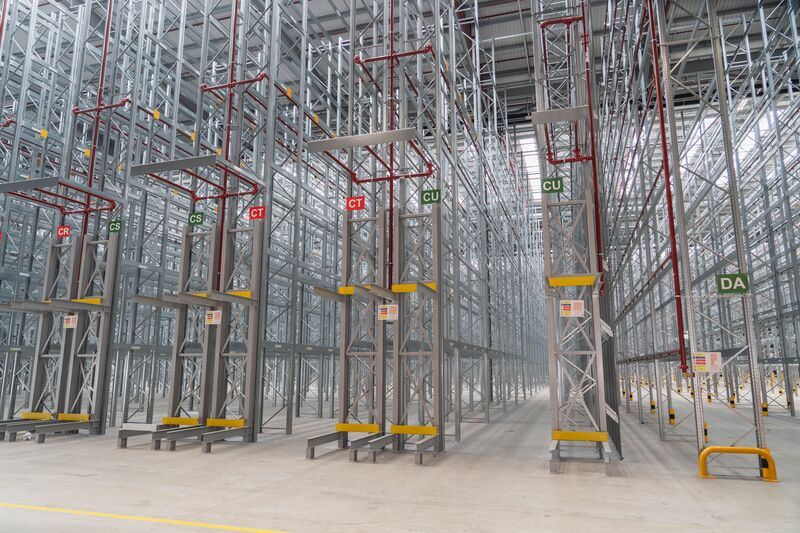
1. Convergence of Boltless Rivet Shelving and Automated Guided Vehicles (AGVs)
Warehouses in the Manateq logistics zones are increasingly deploying autonomous mobile robots (AMRs) and goods-to-person shuttles. Rivet racking is exceptionally suited for these semi-automated ecosystems because its modular, boltless design allows precise leveling, laser-guided plumb alignment, and the integration of pick-to-light (PTL) sensor profiles along the shelf front face.
2. Vertical Mezzanine Scaling in Response to Land Leasing Tariffs
With prime industrial land lease rates in Doha demanding optimal volumetric efficiency, warehouse architects are abandoning traditional single-tier layouts. Heavy-duty rivet systems serve as structural support posts for multi-tier catwalks and mezzanine floors, doubling or tripling active storage surface area without triggering secondary civil foundation permits.
3. Rigorous GCC Structural Fire Sprinkler Clearance Mandates
Qatar Civil Defence requirements regarding flue-space integrity and in-rack sprinkler clearance have driven the elimination of combustible timber shelves. Our Doha-destined rivet racking systems utilize zinc-electroplated steel drop-in panels or heavy-duty wire mesh decking with open areas exceeding 70%, ensuring unimpeded fire suppressant flow.
Enterprise Advantages: Engineering Rigor, Precision Quality & Global Export Delivery
Procuring industrial racking from an international manufacturer requires verifiable trust, documented structural calculation packages, and seamless sea freight logistics into Qatar. We stand on decades of proven supply performance:
Structural Audit
Finite element analysis (FEA) calibrated against EN 15512 standards, factoring in local concrete slab PSI and seismic zones.
Certified Rolling
Continuous CNC cold-roll forming of premium S355 grade steel with automated laser hole punching for precision pitch alignment.
Surface Treatment
Multi-stage chemical pre-wash followed by automated electrostatic polyester powder baking (70-90µm) resisting saline exposure.
Ocean Export
Export-grade steel strapping and palletized containerization directly routed to Hamad Port (Doha) on scheduled weekly sailings.
Site Compliance
Complete documentation packages, including Mill Test Certificates (MTC), load capacity signage, and installation safety protocols.
Full Traceability, Stringent Quality Audits & Inspection Readiness
Every structural upright frame, box beam, and rivet connector leaving our fabrication facilities carries a permanent trace heat code. This ensures complete traceability from the original steel mill melting process through final powder coating. We provide independent factory load test reports documenting safety factors of $\gamma = 1.95$ to $2.0$, providing absolute operational confidence for third-party racking inspections in accordance with EN 15635 guidelines.
Our dedicated Middle East export desk manages all documentation requirements for Qatar customs clearance, including Chambers of Commerce Certificates of Origin, legalized commercial invoices, SASO/GCC Conformity Declarations, and Bill of Lading consignments directly consigned to Hamad Port free zone warehouses or mainland Doha contractors.
Frequently Asked Questions: Sourcing Industrial Racking in Doha, Qatar
Direct technical answers addressing structural certification, port clearance, environmental protection, and site installation protocols for Qatari warehouse operations.