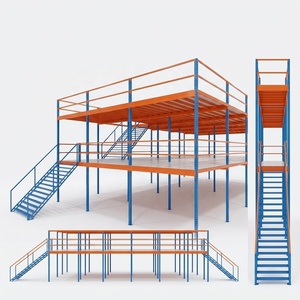
300kg/sqm Load
Multi-Level
Configured for diverse warehouse footprint constraints across the Kanto and Kansai logistics belts. Explore standard and semi-automated racking frameworks built to rigid export specifications.
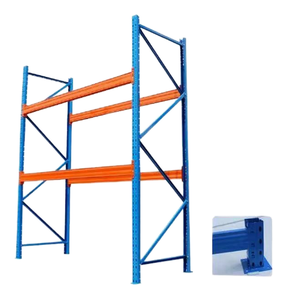
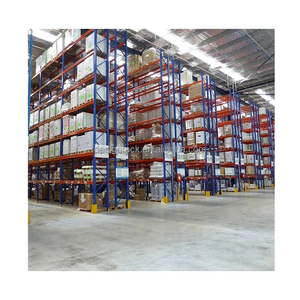
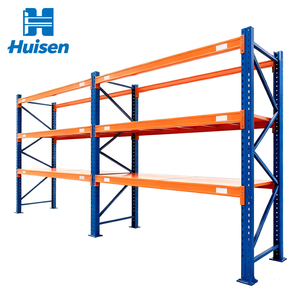
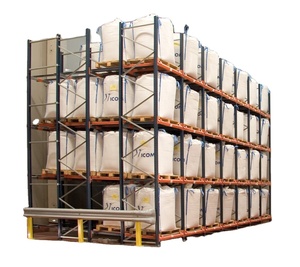
For warehouse facilities operating in seismic zones across Japan—including the Kanto plain, Tokai, and the Kansai metropolitan sector—conventional racking calculations are insufficient. When purchasing wide span racking or heavy duty pallet storage systems, structural safety under acute dynamic lateral loads is the governing metric. As a dedicated manufacturer and worldwide exporter, our engineering practice bridges international standard EN 15512 (Steel static storage systems) with Japan's rigorous seismic resilience expectations defined under the Building Standard Law of Japan (BSLJ, 建築基準法).
Wide span racking systems are engineered with heavy cold-formed box beams and upright profiles fabricated from certified structural grade steel (equivalent to JIS G 3101 SS400 and high-tensile Q355B). To mitigate brittle failure during earthquake accelerations exceeding 0.3g to 0.6g, our beam connectors employ cold-stamped, multi-tang safety claws coupled with heavy-duty grade 8.8 locking pins. Footplates are structurally expanded, providing dual anchor bolt placements using chemical capsule dowels (such as M12/M16 chemical anchors) rated to withstand massive cyclic concrete uplift and base shear forces without spalling the slab.
| Specification Parameter | Export Benchmark (Japan Market) | Standard European EN 15512 | Structural Safety Impact |
|---|---|---|---|
| Base Steel Grade | SS400 / Q355B (Tensile ≥ 490 MPa) | S235 / S355 Structural Steel | Prevents frame buckling during prolonged harmonic vibration. |
| Seismic Dynamic Factor (α) | Kh ≥ 0.20 to 0.45 Design Acceleration | Site-specific Eurocode 8 matrix | Absorbs energy without collapse; supports quick re-inspection. |
| Upright Column Perforation | 50mm/75mm Pitch Reinforced Omega Profile | 50mm Pitch Standard Teardrop / Hex | Increases torsional rigidity by up to 28% under non-uniform loads. |
| Surface Pre-treatment | Multi-stage Nano-Ceramic Zirconium Wash | Standard Iron Phosphate Degreasing | Over 500 hours salt-spray resistance; ideal for coastal ports. |
| Beam Deflection Limit | 1/250 (Customized to 1/300 on request) | 1/200 of clear beam span | Critical for precise clearance in automated AGV transfer aisles. |
Through Finite Element Analysis (FEA) and dynamic modal simulation, every wide span bay exported to Japan undergoes verification against non-linear displacement. Whether configuring multi-level platform picking systems or wide span carton shelves, the frame slenderness ratio (λ) is strictly monitored to eliminate catastrophic harmonic resonance during P-wave and S-wave earthquake cycles.
How leading logistics hubs, cold chain operators, and automotive sub-assemblers deploy wide span racking to tackle acute urban land scarcity.
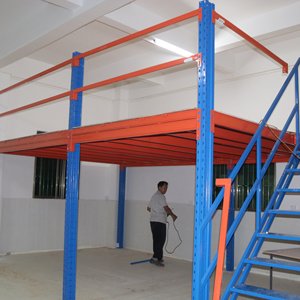
In multi-tenant logistics facilities in Odaiba, Ichikawa, and Yokohama, floor space rents command premium rates. Wide span racking combined with intermediate steel mezzanine floors creates dual-layer manual sorting tiers. This setup allows warehouse operators to maximize vertical cubic volume up to 12 meters clear height while keeping aisle footprints accessible for narrow reach trucks and autonomous picking carts.
Centering around the Nagoya and Toyota industrial corridors, Tier-1 and Tier-2 automotive component suppliers require specialized wide span storage. Our heavy-duty racking allows long, unobstructed clear spans (from 1,800mm to 3,000mm) without center uprights, accommodating large returnable plastic totes (oricon containers), sheet metal dies, and stamping wire cages directly adjacent to assembly cells.
In coastal refrigerated warehouses in Kobe and Hakata, thermal efficiency is vital. Wide span shelving equipped with heavy-duty galvanized wire mesh decking ensures optimized cooling airflow around perishables and medical supplies. Electrostatic polyester powder coatings formulated without toxic lead additives resist blistering and flaking at sub-zero temperatures down to -30°C.
The Japanese logistics sector is experiencing an unprecedented structural transition driven by the "2024 Problem" (2024年問題)—the legislative ceiling restricting annual truck driver overtime to 960 hours. This cap has resulted in localized freight transport capacity shortfalls across traditional Tokyo-Nagoya-Osaka transit routes. Consequently, distribution centers must overhaul loading, staging, and handling speeds to slash truck idle times at loading docks.
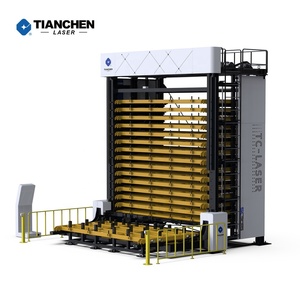
To overcome severe labor shortages and shrinking human resources in Japanese logistics, warehouse engineering is shifting from pure manual picking to hybrid automated systems. Wide span racking has evolved from static shelving into an integrated platform compatible with Autonomous Mobile Robots (AMRs), Automated Guided Vehicles (AGVs), and vertical sheet metal towers. System integrators across Japan demand millimeter-accurate beam straightness and standardized clearance tolerances to ensure sensor-guided picking robots dock without collision risks.
Wide span bottom beam levels are re-engineered with recessed base plates and 300mm–600mm elevated clear spans. This configuration allows low-profile AMRs to travel underneath lower rack tiers, dropping pallets and picking totes directly without intermediate handling.
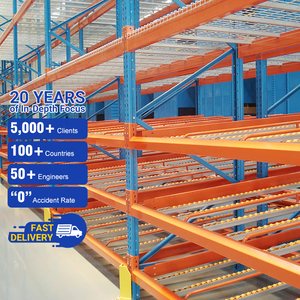
To speed up fulfillment for Japanese omnichannel retail, traditional static wide span shelves are increasingly retrofitted with dynamic roller tracks. Gravity flow racking guarantees strict First-In, First-Out (FIFO) material progression and isolates picking and restocking aisles.
Japanese environmental ESG benchmarks require industrial suppliers to provide transparent life cycle carbon data. Our wide span systems feature modular, boltless assembly connections, allowing 100% disassembly, relocation, and steel recycling without onsite flame cutting or welding.
Combining world-class steel manufacturing discipline, automated roll-forming lines, and comprehensive export compliance tailored for Japanese maritime and inland logistics.
Equipped with computerized 24-station continuous roll-forming mills, ensuring upright frame camber and bow tolerances within 1/1000 length ratio.
Every coil of cold-rolled steel is certified with Mill Test Certificates (MTC) detailing yield strength, chemical analysis, and elongation metrics.
Custom seaworthy steel packaging with anti-corrosion VCI liners. Components are bundled to match standard 40ft High Cube container door clearances.
Full CAD layout calculation sheets, 3D BIM Revit families, and load safety calculation packages supplied for seamless local building permit approvals.
Answers to technical, regulatory, and logistics questions asked by Japanese procurement teams, EPC contractors, and global 3PL operators.