Industrial Pallet Racking & High-Density Storage Portfolio
Discover our comprehensive selection of certified storage racking systems, cart-push-back platforms, and automated frameworks tailored for Canadian logistics hubs, industrial manufacturing, and sub-zero distribution networks.
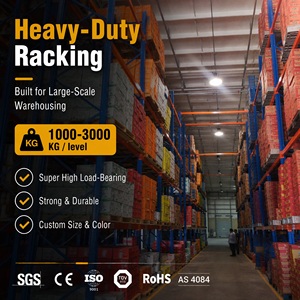
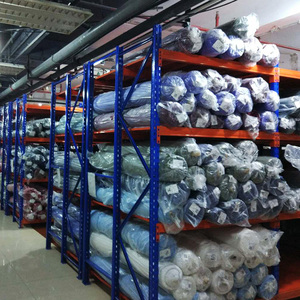
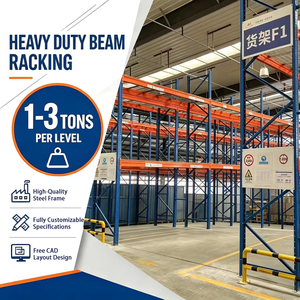
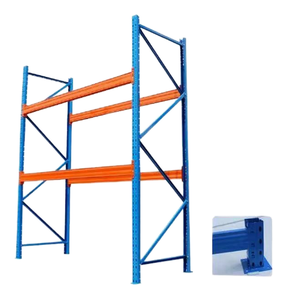
Engineering Overview: OEM/ODM Push Back Rack Systems for the Canadian Market
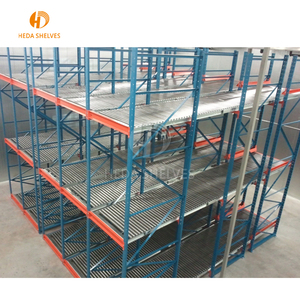
As Canadian supply chain operators grapple with premium industrial square footage costs in major distribution corridors such as the Greater Toronto Area (GTA), Metro Vancouver, and Montreal, push back pallet rack systems have evolved from optional upgrades to mission-critical infrastructure. A push back racking system offers high-density storage that functions on a Last-In, First-Out (LIFO) inventory methodology while maintaining multiple SKU selectivity across vertical rack faces. Unlike standard drive-in racking that requires lift-truck operators to steer deep into storage bays, push back racks utilize inclined structural steel guide rails and a nested nesting-cart assembly that brings pallet loads directly to the pick aisle.
In a standard 2 to 6-deep push back rack configuration, the first pallet rests effortlessly on the uppermost rolling cart. When an operator introduces a subsequent pallet, the forklift gently utilizes that pallet to push back the initial unit, exposing the next nested carrier cart beneath it. Upon unloading, gravity seamlessly glides the trailing pallets forward onto the front face at a strictly governed speed. This dynamic mechanism ensures that operators navigate solely along external aisles, slashing lift-truck transit cycle times by up to 40% and drastically mitigating frame impact liabilities that plague conventional drive-in aisles.
| Evaluation Parameter | Push Back Racking (Nested Cart) | Drive-In Racking System | Standard Selective Racking |
|---|---|---|---|
| Storage Density Efficiency | Exceptionally High (Up to 85% cube utilization) | High (Up to 75% cube utilization) | Moderate (Approx. 40-50% footprint loss) |
| SKU Selectivity | High (Individual lane selectivity per tier) | Low (Single SKU per full bay channel) | 100% Direct Accessibility |
| Forklift Rack Intrusion | Zero (Handling strictly on aisle face) | High (Frequent collisions inside rack tunnels) | Zero (Accessible along outer aisles) |
| Cycle Throughput Velocity | Rapid gravity assisted replenishment | Slow & cautious navigation inside bays | Rapid manual picking speeds |
| Sub-Zero Freezer Performance | Superior (Sealed low-temp stainless bearings) | Standard mechanical rails | Standard ambient steel beams |
Our OEM and ODM manufacturing partnerships enable Canadian racking distributors, material handling integrators, and direct enterprise end-users to secure tailor-engineered push back assemblies conforming to strict cold-formed and hot-rolled structural guidelines. Each upright profile, cart channel, and multi-roller junction is precision fabricated to withstand harsh seismic demands while offering flexible compatibility with both standard GMA 48"x40" stringer pallets and custom CHEP block formats.
Specialized Applications in Canadian Logistics Sectors
From freezing temperature conditions in rural prairie hubs to seismic zones on the Pacific rim, our push back systems deliver uncompromised reliability across targeted Canadian operational landscapes.
Refrigerated & Cold Storage Chains
In refrigerated logistics facilities across Ontario, Quebec, and Alberta, conditioned square footage carries extraordinary thermal overhead. Push back configurations maximize frozen cubic capacity, while our proprietary sub-zero synthetic bearing lubricants prevent mechanical freezing down to -30°C without cart seizure.
High-Throughput 3PL Distribution
Omnichannel 3PL providers in Mississauga and Calgary require dynamic pallet storage with distinct batch sorting. With individual lane selectivity across multi-tiered levels, operations seamlessly segregate fast-moving goods by lane without committing entire multi-bay aisles to a single product line.
Food, Beverage & Agricultural Processing
From Niagara beverage bottling to Fraser Valley produce, food compliance requires pristine surfaces and rapid pallet rotation. Smooth-flow nested carts eliminate pallet splinter jamming, while open-bottom rail channel engineering facilitates rapid sanitation wash-downs and hygiene compliance audits.
National Building Code of Canada (NBC) & CSA A344 Seismic Compliance
Structural reliability in Canadian warehouse racking demands compliance with localized provincial building codes, specifically the Ontario Building Code (OBC), the British Columbia Building Code (BCBC), and national guidelines set by CSA A344 (User Guide for Steel Storage Racks). In British Columbia and the St. Lawrence seismic corridors, high-density push back racks must undergo rigorous finite element analysis (FEA) to ensure structural stability against lateral spectral acceleration forces during seismic events.
Our OEM and ODM engineering team works closely with certified Canadian Professional Engineers (P.Eng.) to furnish signed and sealed pre-start health and safety review (PSR) documentation. Every structural steel column, bracing strut, base plate anchor, and cart stop undergoes empirical load validation to withstand not only static live loads of up to 3,000 kg per pallet position, but also seismic resonance frequencies, preventing pallet derailment during ground excitation.
Trends Modernizing Canadian Material Handling
Explore the pivotal industrial, architectural, and technological shifts transforming how distribution executives plan high-density rack storage footprints.
Skyrocketing Land & Construction Tariffs
With industrial leasing rates hovering near record premiums across primary hubs, companies favor retrofitting existing clear heights with 4-to-6 deep push back racks rather than financing costly greenfield expansions.
Electrified & Guided Lift-Truck Fleets
The accelerated rollout of lithium-ion reach trucks and AGVs in zero-emission facilities necessitates laser-straight rack channel alignment, uniform rolling friction, and high-visibility lane target stops.
Hybrid Automation Interfacing
Push back pallet systems are progressively integrated alongside automated vertical carousels and conveyor sortation tiers, creating hybrid high-throughput replenishment banks that lower overall labour overhead.
Demand for Heavy Structural Steel
Canadian facilities increasingly prefer heavy structural channel steel (C-channel) frames over light roll-formed gauges for lower upright levels, significantly enhancing impact resilience against daily forklift collisions.
Why Partner with Us for Push Back Pallet Rack Manufacturing?
Building upon decades of proven engineering prowess, our manufacturing facilities specialize in delivering high-volume OEM/ODM export contracts directly to Canadian logistics networks, system integrators, and rack distributors. We combine advanced German roll-forming mills, automated robotic weld cells, and multi-stage anti-corrosion powder coating to yield systems that stand the test of time.
Full Lifecycle Engineering & PSR
From initial DWG structural drawings to static FEA calculations, our in-house engineering team designs systems tailored specifically to provincial Canadian code requirements, facilitating smooth municipal occupancy approvals.
Complete Steel Traceability
Every structural batch is produced utilizing certified Q235B and Q355B structural grade steel with accompanying mill test certificates (MTCs), ensuring consistent tensile strength, impact absorption, and weld penetration.
Seamless Canadian Ocean & Rail Freight
Our experienced logistics department manages complete DDP/CIF export shipping across primary Canadian marine ports (Vancouver, Montreal, Halifax) and intermodal rail terminals, delivering consolidated container shipments right to the project site.
Frequently Asked Questions by Canadian Buyers
Authoritative insights addressing structural certifications, winter logistics, pallet variance, and total operational cost considerations.
Q: How do your push back systems accommodate Canadian pallet variations (CHEP vs. GMA)?
Our nested carts are custom engineered with universal support decks and multi-flange rails, safely holding standard 48"x40" GMA wood pallets, plastic skids, and heavy-duty 48"x48" dairy or CHEP grocery blocks without risk of snagging or cart tipping.
Q: Can our project secure local Canadian P.Eng. stamped certification?
Yes. We furnish comprehensive mechanical drawings, beam deflection profiles, anchor shear data, and steel material certifications to support third-party Canadian Professional Engineers in issuing sealed Pre-Start Health and Safety Reviews (PSR/PHSR) across Ontario, BC, and Alberta.
Q: How do cart roll-back mechanisms hold up in sub-zero freezers during winter?
We install sealed stainless steel roller bearings packed with cold-temperature silicone or low-temperature synthetic grease rated down to -30°C. This guarantees that carts roll freely without seizing or gumming up even during prolonged seasonal freeze cycles.
Q: What is the practical maximum lane depth for a push back rack system?
While 2-deep, 3-deep, and 4-deep layouts represent the standard configuration for optimal balance between resistance and forklift capacity, our heavy-duty structural designs scale up to 5-deep and 6-deep configurations using low-friction flanged bearing wheels.
Q: Can push back racking be retrofitted into existing selective rack structures?
In many cases, yes. Provided that existing upright columns, base plates, and concrete floor slab capacities meet structural review standards, our push back nested cart and rail assemblies can be retrofitted onto your existing structural beams to double existing capacity.
Q: What export packaging safeguards prevent freight transit corrosion and damage?
All structural components are strapped on custom steel dunnage, cushioned with high-density polyfoam edge protectors, and wrapped in moisture-barrier film. Cart bearings and mechanical parts travel in sealed moisture-resistant crates to withstand oceanic transit humidity.