Medium Duty
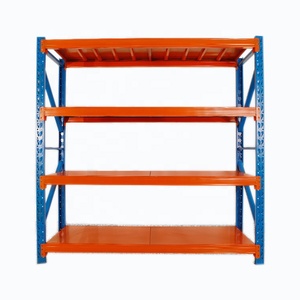
Factory-direct heavy-duty racking, electric telescopic work lifts, dynamic shuttle solutions, and corrosion-resistant boltless modules calibrated for manufacturing and distribution facilities across Brazil.
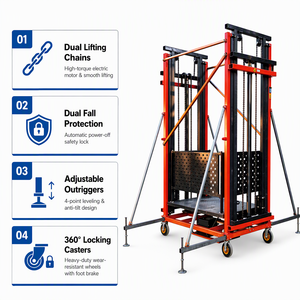
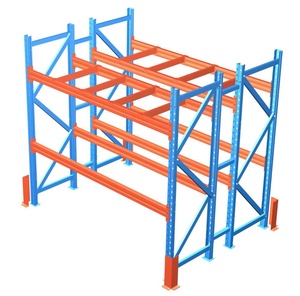
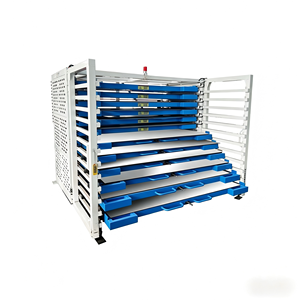
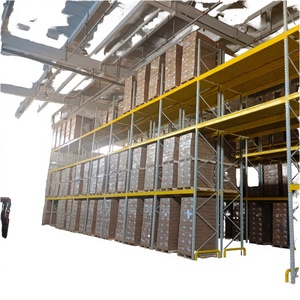
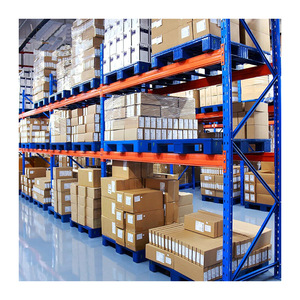
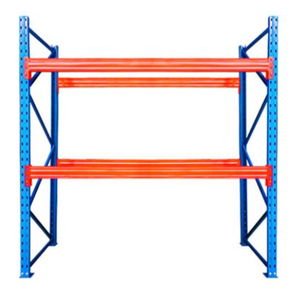
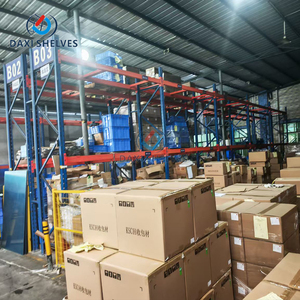
Entering the Brazilian intralogistics arena requires a comprehensive understanding of domestic structural engineering norms, pallet dimensions, seismic-soil characteristics, and work-safety regulatory standards. Warehouses in Brazil's premier industrial submarkets—such as Cajamar, Barueri, Louveira, Betim, and São José dos Pinhais—demand rigorous compliance to secure operating licenses (Auto de Vistoria do Corpo de Bombeiros - AVCB) and long-term insurance policies.
Unlike North American (RMI) or standard European (FEM/EN 15512) projects executed without localization, racking structures shipped to Brazil must specifically harmonize with ABNT NBR 15524-1:2008 (Sistemas de Armazenagem - Estruturas de Aço Porta-Paletes) and ABNT NBR 14762:2010 (Dimensionamento de Estruturas de Aço Constituídas por Perfis Formados a Frio). These standards dictate critical factors in cold-formed thin-walled steel profiles, including local buckling, torsional warping, and connection rotational stiffness evaluated via full-scale portal frame testing.
The PBR Pallet Imperative: In Brazil, the standardized PBR-1 pallet measures 1,000 mm (width) × 1,200 mm (depth) with a nominal gross payload capacity of up to 1,200 kg to 1,500 kg, established by the Associação Brasileira de Supermercados (ABRAS). When international manufacturers install standard European beam spans (such as 2,700 mm meant for three 800×1,200 mm Euro pallets), Brazilian operations face dangerous point-loading and non-compliant pallet overhangs. Our factory specifically engineers 2,250 mm clear beam spans for two PBR pallets or 3,350 mm for three PBR units, incorporating 100 mm safety clearances between pallets and upright upright protectors compliant with NR 11.
| Engineering Parameter | Standard European Export (EN 15512) | Brazilian Localized Specification (ABNT NBR 15524 / PBR) | Operational Impact in Brazil |
|---|---|---|---|
| Nominal Pallet Footprint | 800 × 1,200 mm (EUR-EPAL) | 1,000 × 1,200 mm (Standard PBR-1) | Eliminates dangerous beam bending moments & load instability |
| Standard Beam Clear Length | 2,700 mm (3 EUR pallets) | 2,250 mm (2 PBR) / 3,350 mm (3 PBR) | Maintains mandatory 75–100 mm side clearances between uprights |
| Structural Frame Depth | 1,100 mm (50 mm rear/front overhang) | 1,000 mm to 1,050 mm customized frame depth | Guarantees 50–75 mm safe resting edge on high-strength box beams |
| Deflection Limit Criteria | L/200 under total permissible load | L/200 or 10 mm max per ABNT NBR 15524 guidelines | Prevents premature elastic deformation and lift-truck mast collisions |
| Work Safety Legislation | EN 15635 Visual Inspections | NR 11 (Transport/Handling) & NR 12 (Machinery Safety) | Ensures full compliance during Ministry of Labor inspections & AVCB |
| Steel Alloy & Yield Strength | S235JR to S355MC | High-Tensile Q355B (Equivalent to ASTM A572 Gr 50) | Accommodates intensive dynamic cycling and seismic ground motions |
Brazil is continental in scale, characterized by distinctive regional climates, economic zoning, and logistics configurations. Our warehouse rack installation manufacturing operations deliver tailored steel infrastructure designed to thrive across the unique operating realities of Brazilian logistics hubs:
Dominating the Cajamar, Louveira, and Extrema (MG) fiscal incentive clusters, e-commerce giants and 3PL operators demand rapid fulfillment and multi-level picking capabilities. We provide VNA (Very Narrow Aisle) high-bay pallet racking scaling up to 16 meters with wire-guided induction pathways, paired with mezzanine platforms that multiply cubic volume without enlarging building footprints.
In Paraná, Santa Catarina, and Rio Grande do Sul—home to massive poultry, pork, and beef processing conglomerates—cold warehouse space commands premium utility expenditures. In sub-zero blast freezers operating at -28°C, our Semi-Automated Radio Shuttle Pallet Racking systems maximize cubic density by removing forklift aisles while utilizing low-temperature certified steel alloys resistant to brittle fracture.
Across the ABC Paulista, Betim, and Resende automotive corridors, heavy stamping dies, sheet coils, and engine blocks demand extreme load ratings. Our drawer-type roll-out sheet metal racks and customized 3,000 kg per level heavy beam systems feature integrated cradle supports, preventing distortion of cylindrical coils and ensuring safe crane or forklift retrieval.
The Brazilian logistics sector is undergoing a massive transformation powered by supply chain re-alignment, regional tax harmonization under recent reforms (Reforma Tributária), and surging demand for Class-A logistics parks (Condomínios Logísticos). Warehouse operators and institutional asset managers (FIIs - Fundos de Investimento Imobiliário) are prioritizing high-cube structural configurations that deliver immediate operational advantages:
Because municipal property taxes (IPTU) and land acquisition costs around São Paulo ring-roads (Rodoanel Mário Covas) continue to climb, facility operators are rejecting horizontal sprawl. Warehouses are building vertical clear heights from 12 to 16 meters. Our continuous cold-rolled uprights support uninterrupted column designs with exceptional axial capacity.
Multimodal inland transfer points across Goiás, Mato Grosso, and Minas Gerais are absorbing massive cross-docking operations. These high-throughput nodes demand hybrid pallet-and-case-flow systems capable of managing continuous 24/7 loading cycles without structural fastener loosening.
In the Polo Industrial de Manaus, electronics and micro-component assembly plants operate under extreme ambient humidity and heat. Racks installed here require anti-corrosive pre-treatment and electrostatic thermosetting polyester powder coatings that prevent oxidation and surface degradation.
Brazil faces an estimated 40% deficit in modernized refrigerated pallet positions compared to its total agricultural export scale. Retrofitting aging facilities with dynamic Radio Shuttle and Mobile Base racks delivers up to 85% higher cubic storage capacity without expanding refrigerated roof footprints.
Brazilian logistics providers are aggressively migrating from conventional manual counterbalanced trucks toward automated guided vehicles (AGVs) and stacker cranes. Our factory pre-engineers high-precision anchor plates, continuous laser-leveled rail profiles, and tight structural manufacturing tolerances (±1.0 mm) required for seamless AS/RS robotic interfacing.
Combining state-of-the-art automated roll-forming production lines with specialized Brazilian maritime freight handling, our enterprise provides end-to-end reliability from structural engineering calculations to final on-site installation sign-off.
Certified structural calculations executed to ABNT NBR 15524 and EN 15512 specifications, ready for Brazilian CREA-registered engineers to issue project ARTs.
100% prime high-grade structural coil steel with certified mill test certificates (MTC), traceable batch stamping, and rigorous ultrasonic weld audits.
Specialized heavy-gauge steel bundling and anti-corrosion desiccant packaging formulated for maritime sea freight arriving at Santos, Itajaí, and Paranaguá.
Turnkey lifecycle delivery encompassing structural design, container logistics, on-site mechanical erection, load test verification, and maintenance training.
Essential guidance on importing structural racking systems into Brazil, customs compliance, floor slab anchoring, and on-site assembly supervision.
Our engineering division calculates structural designs strictly in accordance with ABNT NBR 15524-1:2008 and NBR 14762:2010. We model beam deflection under permissible limits (L/200, max 10 mm), verify column base plate load distribution to avoid concrete punch-through, and incorporate all mandatory safety fixtures required by Norma Regulamentadora 11 (NR 11) and NR 12. This includes high-visibility RAL 1021 yellow upright impact shields, frame end-row protectors, load-capacity signage in Portuguese (Placas de Carga), and positive locking beam safety pins that prevent accidental dislodgement by forklift forks.
Yes. The standard Brazilian PBR-1 pallet measures 1,000 mm × 1,200 mm, which requires distinct beam lengths and upright frame depths compared to standard European or American racking. We produce customized beam spans of 2,250 mm (for 2 PBR pallets) and 3,350 mm (for 3 PBR pallets), allowing the mandatory 75–100 mm side clearance between pallets and upright frames. Our standard frame depths are optimized at 1,000 mm to 1,050 mm, providing the recommended 50–75 mm front and back pallet overhang for secure forklift placement.
Our experienced export documentation department works closely with your Brazilian despachante aduaneiro (customs broker). Racking components are classified under precise NCM (Nomenclatura Comum do Mercosul) codes such as 7308.90.10 (estruturas de ferro fundido, ferro ou aço). When supplying specialized semi-automated systems like our Radio Shuttle carriers, we provide complete technical datasheets, schematics, and functional descriptions to assist your application for the Ex-Tarifário regime, which temporarily reduces the Imposto de Importação (II) down to 0% for capital goods with no domestic equivalent. All shipments come with verified commercial invoices, packing lists with net/gross weights per bundle, and Bill of Lading (B/L) issued to meet Receita Federal compliance.
We provide two flexible installation models for Brazilian clients: (1) Factory Technical Supervisor Dispatch: We send bilingual installation engineers to oversee your local assembly contractors, managing laser leveling, torque wrench anchor verification, and verticality alignment according to EN 15635/ABNT tolerance envelopes. (2) Certified Local Partner Turnkey Execution: We work directly with licensed Brazilian mechanical assembly teams who perform mechanical erection, anchor drilling, and hand over the system complete with an Anotação de Responsabilidade Técnica (ART) signed by a registered CREA engineer for your local Fire Department (Corpo de Bombeiros) permit.
For installations in coastal port cities or facilities exposed to maritime atmospheric salinity (C3 to C4 corrosion categories per ISO 12944), components undergo an advanced 5-stage pre-treatment process: alkaline degreasing, zinc-phosphate conversion, multiple DI water rinses, and a thermosetting electrostatically sprayed polyester epoxy powder coating cured at 200°C (average film thickness: 60 to 90 microns). For extreme outdoor conditions or sub-zero high-humidity cold chambers, we offer hot-dip galvanized finishes compliant with ASTM A123 / ISO 1461, ensuring decades of rust-free service life.