EN 15635 AuditsFull lifecycle compliance, damage reporting & retrofit service
Engineering Authority
Addressing Structural Sag, Load Eccentricity, and Safety Limits in Long Goods Storage
Storing out-of-gauge (OOG) profiles, heavy steel bars, extruded plastics, and structural timber bundles presents mechanical challenges that standard pallet racking was never designed to solve.
When handling items spanning 3 metres to over 12 metres, conventional front rack uprights introduce severe collision hazards and consume immense horizontal floor space. Moreover, flexible materials like PVC extrusions and copper tubing experience unmitigated sag, while solid steel rounds induce high point-load concentrations capable of causing catastrophic beam deformation.
DEXION RACKING resolves these vulnerabilities through cantilever engineering designed in direct compliance with EN 15512 and FEM 10.2.09 design recommendations. By utilizing hot-rolled IPE steel profiles or rigid cold-formed structural uprights with tapered arms, our cantilever frameworks offer uninterrupted horizontal access. Arm inclination angles of 1° to 2° ensure stored goods naturally settle back against the uprights, preventing forward roll-off during loading and seismic excitation.
Full structural FEA verification under extreme asymmetric load conditions
Continuously adjustable arm pitch (typically 75mm or 100mm increments)
Integrated bolt-on stoppers, pipe divider chocks, and timber bearer decks
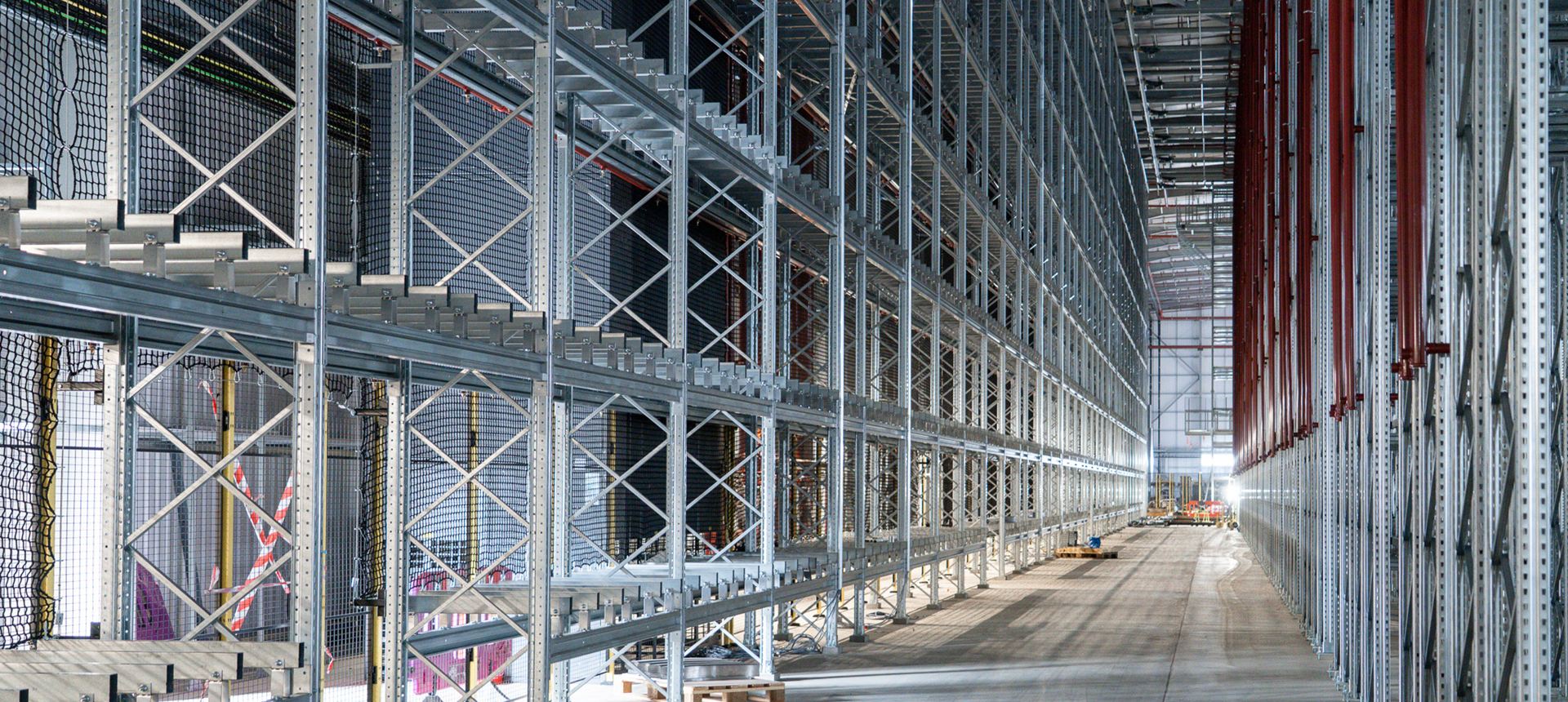
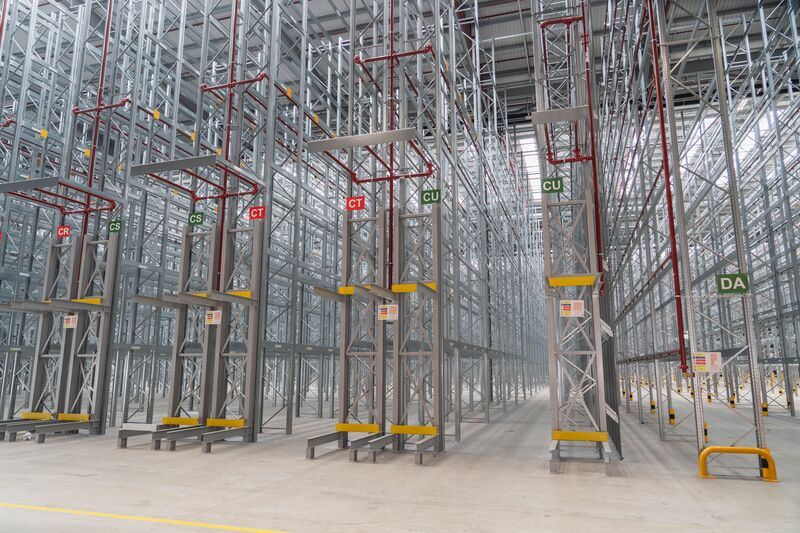
Heavy-duty cantilever long goods storage: complete horizontal accessibility without front upright obstructions.
Engineered Product Portfolio
Recommended Long Goods Storage Architectures
Engineered to match your unique material geometry, handling fleet, cycle velocity, and environmental constraints.
Heavy Duty
Heavy-Duty Cantilever Racking
Fabricated using heavy hot-rolled IPE steel profiles for raw metal distribution, steel tubing, and industrial manufacturing sites. Capable of supporting up to 5,000 kg per arm with single- or double-sided uprights.
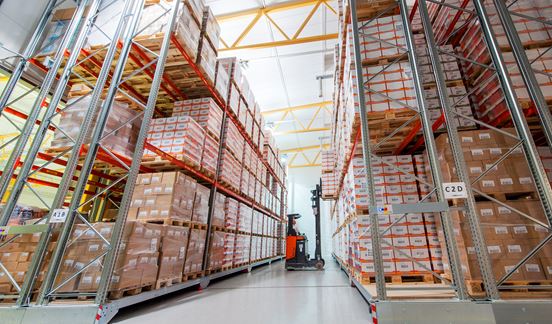
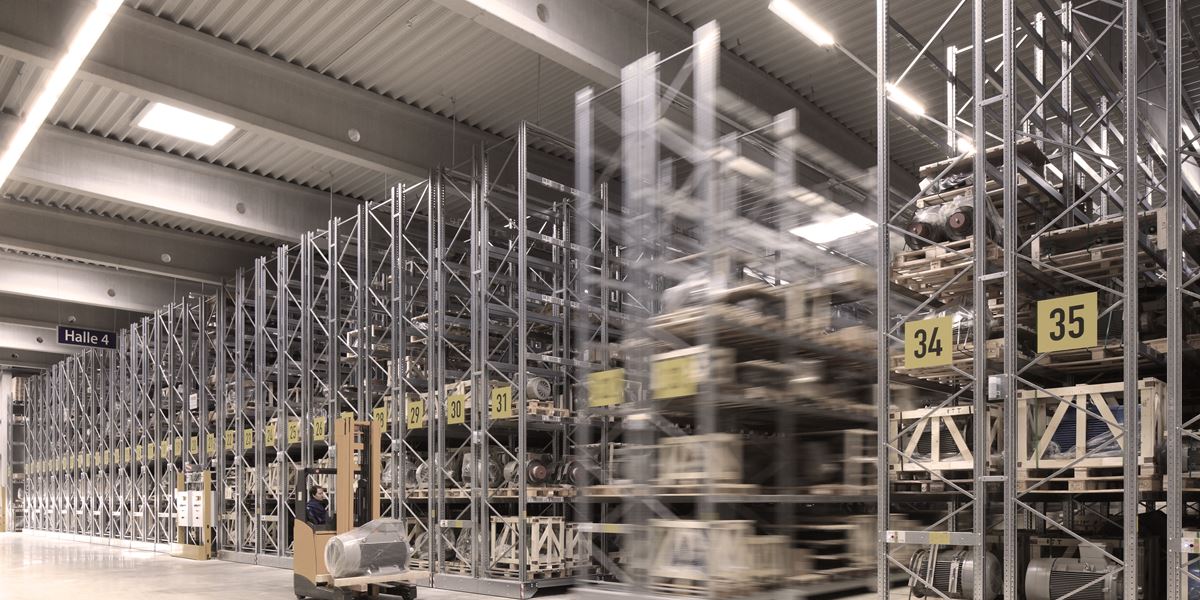
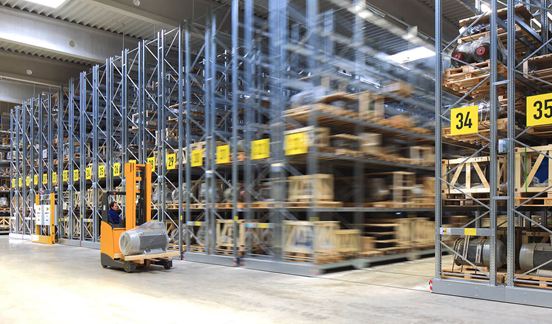
Mounting heavy cantilever uprights onto motorised carriages eliminates multiple static aisles. A single operational aisle opens via radio remote control or WMS interface, doubling long goods capacity in existing buildings.
Hot-dip galvanised to ISO 1461 for timber yards, builder merchants, and pipe storage. Configured with engineered mono-pitch or dual-pitch roof canopies, rainwater guttering, and environmental wind-load reinforcement.
Engineered for lightweight extrusions, conduit, and timber mouldings stored vertically or horizontally for manual order picking. Dividers allow rapid SKU sorting and prevent bowing of flexible goods.
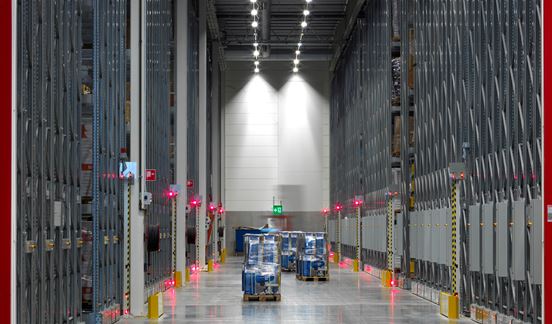
High-bay automated cassette systems designed for steel service centres and CNC machine cells. Integrates automated stacker cranes with precision material tracking for lightning-fast retrieval of bars and sheets.
Global Procurement & Engineering Trends in Long Goods Warehousing
Procurement teams are shifting from buying commoditized static steel racks toward acquiring high-density, automated, and digitally governed long goods solutions.
1. Direct Integration with Multi-Directional AGVs and Side-Loaders: Conventional wide aisles (often 4.5m to 6m) for standard counterbalance trucks are rapidly being replaced. Modern procurement demands narrow-aisle (VNA) cantilever layouts optimized for articulated 4-way reach trucks, specialized multi-directional forklifts, and sensor-guided autonomous transport vehicles (AGVs), cutting required aisle width by up to 50%.
2. Structural Retrofit of Outdoor Yards into Automated Buffer Zones: Land scarcity and soaring warehouse building costs are forcing operations to monetize raw yard space. The installation of galvanized outdoor cantilever racking equipped with integrated solar PV arrays and automatic roof canopies provides secure, weather-protected buffer storage without requiring new building construction permits.
3. Heavy Cassette Automation and Industry 4.0 Traceability: In precision CNC manufacturing and high-throughput metal fabrication, manual crane slinging is unacceptable. Modern specifications prioritize automated honeycomb and tower storage systems where steel bar cassettes are delivered directly to laser cutters with real-time ERP inventory reconciliation.
Next-generation layouts: narrow-aisle mobile cantilever configurations dramatically increase floor utilization.
Why DEXION RACKING
Engineered Reliability Across the Complete Long Goods Lifecycle
Global buyers partner with DEXION RACKING for unmatched structural integrity, compliant manufacturing, and certified installation.
Full In-House Structural Engineering
Our licensed engineers perform complete finite element modeling (FEA) and static calculations according to EN 15512 and regional seismic building codes. Every base plate, column thickness, and arm connection is engineered specifically for your building slab conditions and load profiles.
Controlled Steel Fabrication & Traceability
All load-bearing members are manufactured using certified high-tensile structural steel. Our fabrication facilities enforce stringent quality control protocols, providing complete mill test certification, ultrasonic weld testing, and environmental surface finishing (durable powder coat or hot-dip galvanisation).
Certified Erection & EN 15635 Auditing
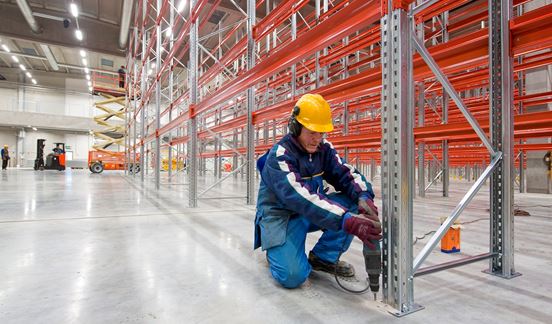
From precision chemical anchor drilling to final plumb alignment, DEXION RACKING provides certified installation supervisors. We deliver statutory load signage, formal commissioning dossiers, and accredited ongoing rack inspections to guarantee long-term workplace safety.
Cantilever racking exhibits mechanical dynamics distinct from standard pallet racking. Cantilever columns function as vertical beams subjected to massive flexural moments and eccentric arm loadings. Without correct base anchoring and continuous longitudinal bracing, eccentric live loads can induce dangerous structural torsion.
DEXION RACKING incorporates heavy-section base beams bolted to high-grade industrial slabs via mechanical or chemical resin anchors, transferring bending moments safely into the concrete foundation. Every system includes certified heavy-gauge vertical X-bracing and horizontal strut ties, delivering uncompromising structural stability under maximum permissible load envelopes.
In-depth technical answers addressing the critical parameters global engineers and procurement managers evaluate when sourcing cantilever racking systems.
What structural standards govern long goods storage cantilever racking?
Cantilever racking engineered by DEXION RACKING conforms strictly to European standards EN 15512 (structural analysis and design of steel static racking) and the FEM 10.2.09 recommendations established by the European Racking Federation. For operational maintenance, rack loading signage, and annual structural audits, we implement and certify systems against EN 15635 (Application and maintenance of storage equipment).
How is arm deflection calculated for varying lengths of structural steel profiles?
Arm deflection is engineered according to permissible elastic limits specified in FEM codes, typically not exceeding L/200 to L/150 under maximum service load (where L is the usable arm length). We factor in whether the load is uniformly distributed (UDL) or concentrated as a point load. Crucially, DEXION RACKING arms are fabricated with an intentional upward incline of 1° to 2° or configured with vertical end-stops to guarantee that the deflection under full rated load does not permit goods to slope downward toward the aisle.
Can cantilever racking be installed outdoors for heavy building materials?
Yes. Outdoor installations are manufactured with hot-dip galvanisation compliant with ISO 1461 to deliver long-term corrosion barrier protection against rain, ice, and atmospheric exposure. When integrating single- or double-pitch roof canopies, our structural calculations incorporate localized wind velocity pressures, dynamic gust factors, and ground snow loads in accordance with Eurocode 1 (EN 1991).
What is the floor slab load-bearing requirement for high-density long goods storage?
Because cantilever systems utilize slender vertical columns without front uprights, the overturning moment results in high concentrated compressive point loads and uplifting tensile forces at the base anchor points. Slabs typically require concrete compressive grades of C20/25 to C30/37 with a minimum thickness of 180mm to 300mm+. Prior to installation, DEXION RACKING supplies detailed point load calculations, footprint geometry, and anchoring shear specifications to ensure structural slab integrity.
How does mobile cantilever racking improve warehouse space efficiency?
Mobile cantilever racking (such as our MOVO system) mounts heavy cantilever upright columns onto electrically driven bogie carriages that glide on flush floor rails. Instead of maintaining dedicated forklift aisles between every run, multiple runs are clustered together, opening a single operational aisle on demand via radio remote control or WMS trigger. This engineering approach eliminates redundant aisle square footage, unlocking up to 85% higher volumetric storage capacity on the identical building footprint.
 Heavy Duty