EN 15512 & EN 15635Fully compliant installation tolerances and structural safety protocols
Zero DowntimeEngineered phased installation within live 24/7 operating fulfillment hubs
Global Project ScopeTurnkey execution and certified site managers in over 50 countries
Life-Cycle SecurityComplete post-installation anchor checks, load testing, and annual inspections
Strategic Engineering Insight
Why Professional Warehouse Rack Installation is a Mission-Critical Investment
Procuring industrial storage is only half the investment equation; the structural integrity, regulatory compliance, and operational lifecycle of any storage solution depend entirely on the precision of its installation.
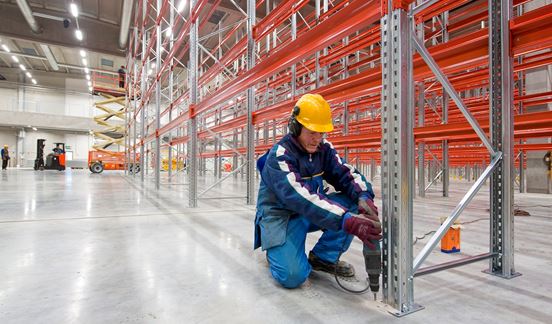
In modern industrial facilities, warehouse rack installation is an intricate structural engineering discipline rather than simple mechanical assembly. Substandard installation creates catastrophic failure vectors: eccentric column loads from out-of-plumb uprights, micro-cracks in the concrete slab caused by improperly torqued mechanical anchors, and premature metal fatigue under seismic stress or heavy reach truck vibration. DEXION RACKING provides turnkey, certified warehouse rack installation that bridges engineering layout planning with rigorous on-site installation governance.
Whether assembling multi-tier selective pallet racking, deep-lane shuttle architectures, or automated high-bay clad racks reaching 40 meters, DEXION RACKING ensures that baseplates, bracing panels, uprights, and beam locking devices interface flawlessly with real facility conditions. We control every parameter—from floor slab flatness measurements (DIN 18202 / TR34) to laser-guided vertical plumbness verification.
Full engineering review of concrete slab compressive strength and anchor pull-out ratings
Optical and laser-guided leveling ensuring vertical plumb tolerances under 1/500
Certified site supervision adhering to EN 15512, EN 15635, SEMA, and RMI requirements
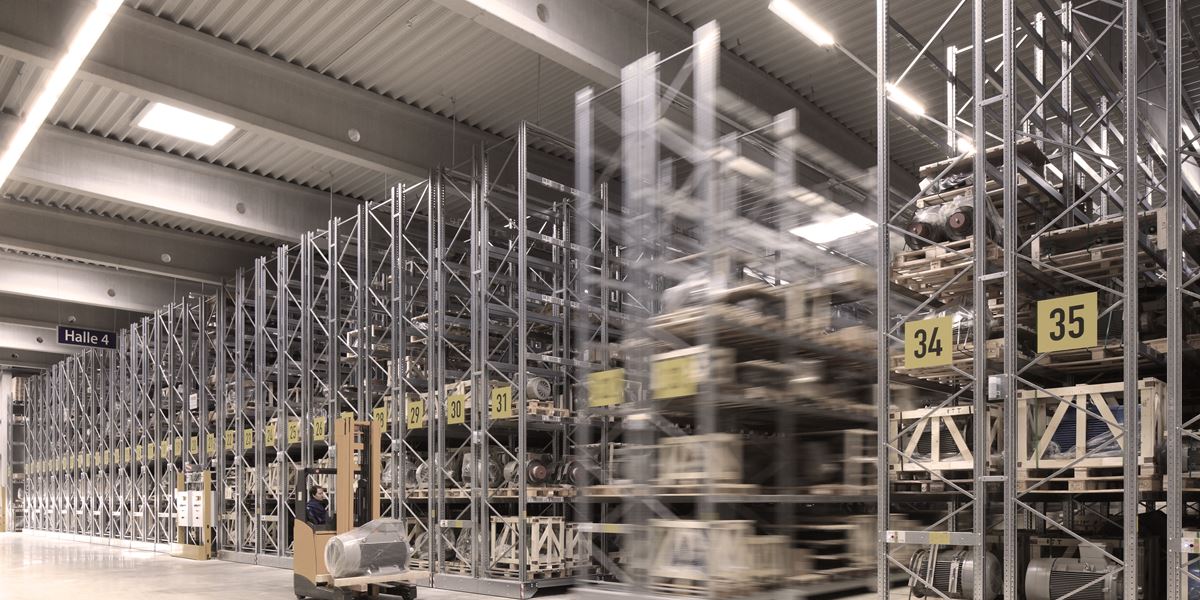
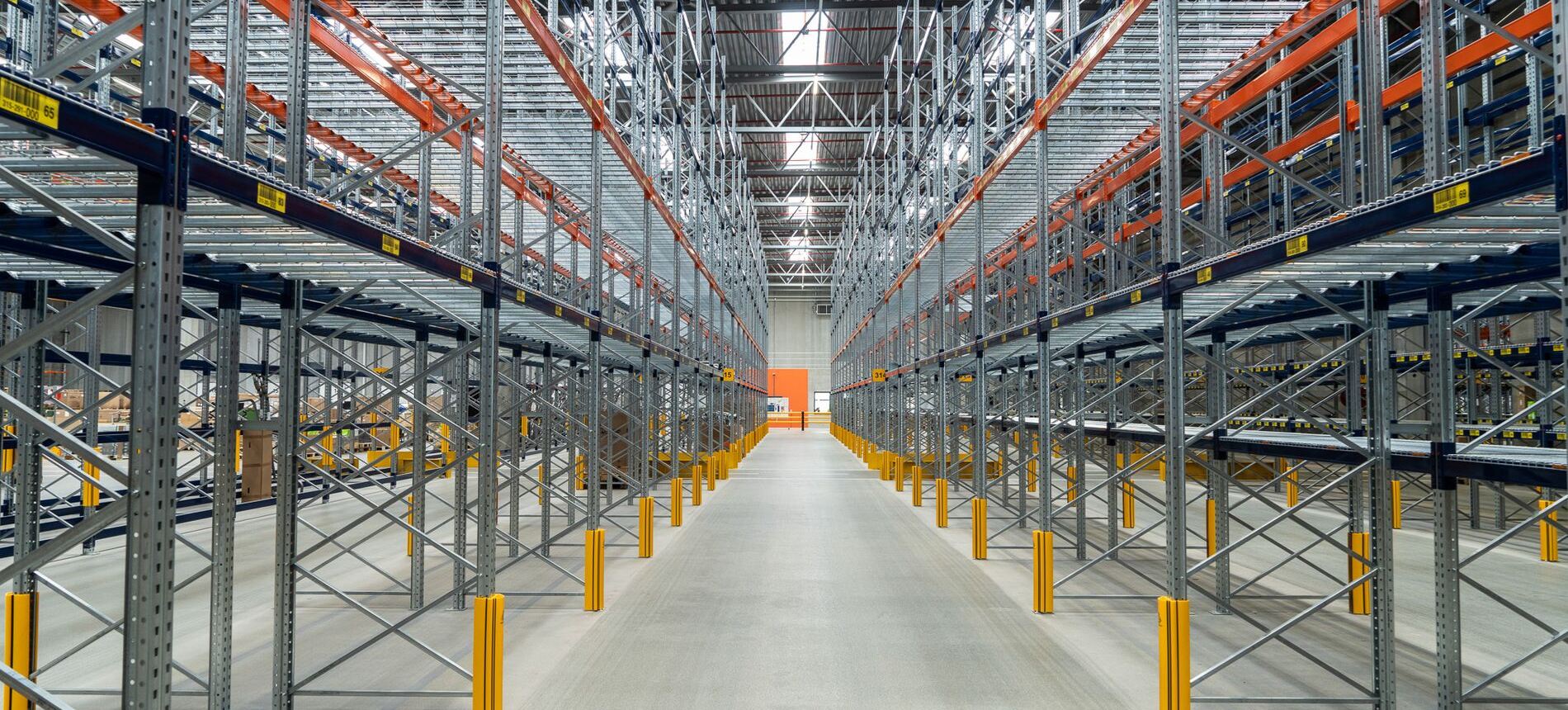
Turnkey warehouse rack installation: heavy-duty structural steel assembly under strict site management
Application-Specific Assembly
Featured Systems & Technical Installation Requirements
Different storage configurations generate distinct load paths and floor reaction forces. DEXION RACKING matches installation procedures to structural demands.
Industry Standard
Standard Selective & VNA Systems
Assembled for direct access and fast picking cycles. VNA (Very Narrow Aisle) installation requires precision wire-guidance installation, induction loop cutting, or mechanical ground guide-rail alignment with optical tolerances within ±1.5mm.
Demands civil engineering precision. Floor-recessed or surface rails must be grouted with shrink-free high-strength mortars, leveled to sub-millimeter tolerances, and synchronized with PLC safety photo-electric beams before carriage mounting.
Gravity roller beds and automated radio shuttles require precise geometric gradient settings. Rake angles must be calibrated under load to prevent pallet jams, dynamic runaway speeds, or uneven brake roller engagement.
Designed for pipes, profiles, and timber. Installation engineers manage large overturning moments with heavy-duty chemical anchor systems and oversized structural baseplates, ensuring vertical column alignment under uneven unilateral arm loading.
For installations where the racking carries both logistics loads and building envelope wind/snow loads. Rigged with heavy crawler cranes, modular lifting spreaders, and 3D theodolite tracking to maintain exact stacker crane interface channels.
Safe rack assembly requires structural validation at the interface between the rack baseplate and the building slab.
A frequent blind spot in global procurement is assuming standard concrete floors are immediately ready for rack installation. DEXION RACKING carries out rigorous slab surveying prior to anchoring. Our installation teams utilize digital floor profilometers to evaluate point load capacities and identify joint expansion boundaries. Where the slab deviates from required flatness, precision steel leveling shims with full baseplate surface contact are deployed—preventing localized baseplate shearing and anchor bolt pull-out.
Design & Erection Standards
EN 15512, EN 15620, EN 15635, FEM 10.2.02, RMI ANSI MH16.1
Concrete Anchor Types
High-tensile torque-controlled wedge expansion anchors & chemical resin injection studs
Vertical Plumb Tolerance
≤ 1/500 of height (Selective), ≤ 1/1000 of height (ASRS automated aisles)
Floor Slab Flatness
Class FM1, FM2, DM1, DM2 per TR34 or DIN 18202 Class 3
Load Signage & Safety
Statutory CE/UKCA marking, certified load placards with bay load limitations
All anchor holes are drilled using vacuum-assisted diamond-tipped rotary hammers to protect against reinforcement mesh damage, followed by verified digital torque wrench calibration recorded in the project sign-off logbook.
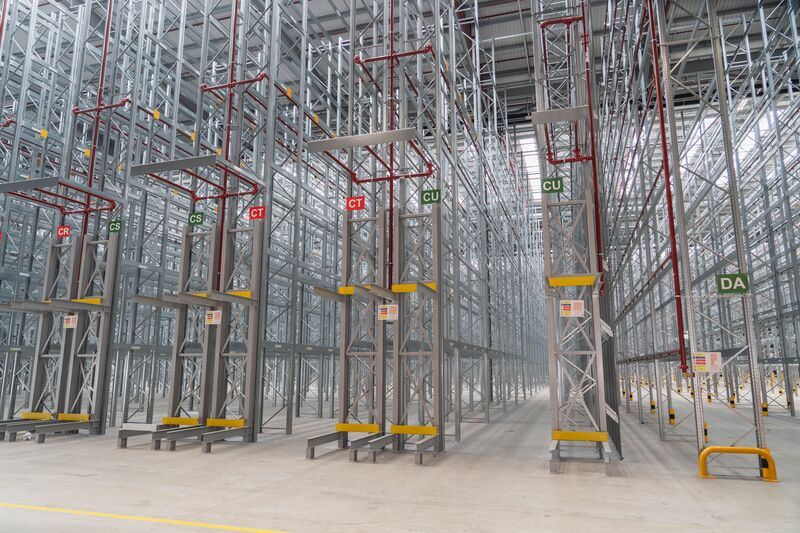
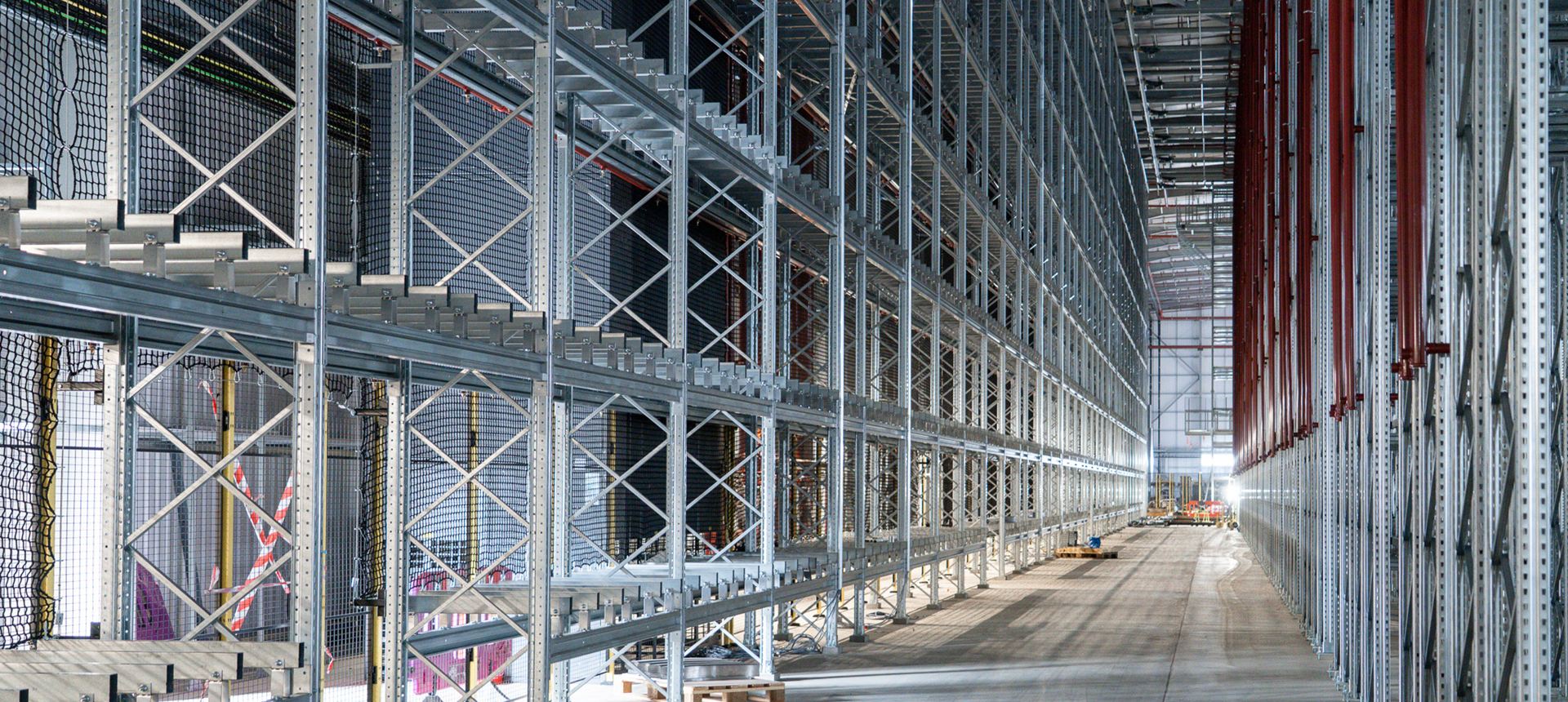
Engineered baseplate anchoring and precision optical leveling for maximum bay safety
Market Foresight
Future Procurement & Technological Trends in Warehouse Rack Installation
Procurement directors and supply chain engineers face evolving regulatory frameworks, seismic realities, and automation integration demands.
Seismic Resilience
Dynamic Seismic Anchoring Protocols
Global building codes increasingly mandate dynamic seismic calculations (EN 16681 and modern IBC standards). Modern rack installation utilizes energy-dissipating base connections and specialized high-ductility anchor studs designed to absorb horizontal acceleration forces without brittle shear failure, protecting personnel and high-value stock.
Automation Alignment
AMR & ASRS Micro-Tolerance Integration
As warehouses integrate Autonomous Mobile Robots (AMRs), Automated Guided Vehicles (AGVs), and high-speed robotic picking shuttles, installation tolerances have shifted from centimeters to fractions of a millimeter. Rack installation teams now utilize 3D LiDAR spatial scanning to confirm rack true-position within sub-millimeter margins.
Digital Twin Handover
Digital Twin & IoT Structural Monitoring Handover
Procurement teams demand more than paper sign-off sheets. Modern warehouse rack installation delivers a digital twin: 3D BIM models enriched with serial numbers, mill certificates, and IoT strain-gauge/tilt-sensor installation on critical upright nodes to provide continuous real-time structural health monitoring throughout the racking lifecycle.
Modernisation & Reconfiguration
Complex Warehouse Rack Installation in Active Logistics Hubs
Upgrading or expanding an operational 24/7 fulfillment facility requires surgical installation methodologies to maintain order flows.
Expanding or re-profiling beam elevations in an existing, operating warehouse introduces major safety and operational challenges. DEXION RACKING specializes in phased retrofit installations. Our teams set up modular acoustic and dust barricades, create isolated mobile crane working zones, and coordinate dynamic material delivery schedules that align with off-peak picking shifts.
When reconfiguring storage heights to accommodate taller reach trucks or higher mast cranes, our structural engineers recalculate the frame capacities according to altered beam spacing rules. In racking systems, adjusting a beam level changes the unsupported upright length (buckling length), directly impacting maximum bay capacity. DEXION RACKING ensures that every reconfiguration is engineered, approved, anchored, and provided with updated load signage before operations resume.
Comprehensive buckling length recalculation for every modified beam level
Physical safety barriers separating active forklift pathways from installation zones
Safe de-anchoring, slab core restoration, and diamond hole re-drilling
Decades of manufacturing expertise, in-house structural engineering, and end-to-end quality assurance.
Certified In-House Engineering
Our licensed structural engineers design every project using finite-element structural modeling, tailoring each bay to your pallet weights, seismic zones, and handling equipment. Nothing is outsourced to unverified third parties.
Traceable High-Grade European Steel
All uprights and beams are cold-formed from certified high-tensile structural steel with complete 3.1 mill test certificates. We control the roll-forming process to maintain consistent slot tolerances and high connection strength.
Global Installation Deployment
With experienced rigging teams and technical supervisors stationed across international logistics hubs, DEXION RACKING delivers on-time, safe warehouse rack installation across Europe, the Middle East, the Americas, and the Asia-Pacific.
Dedicated Automation Integration
We work directly alongside automated material handling system integrators (ASRS, shuttle systems, conveyors, AGVs), supplying high-tolerance steel structures and collaborative engineering support.
Our manufacturing and installation processes operate under ISO 9001, ISO 14001, and ISO 45001 management systems, minimizing material waste and prioritizing site safety on every project.
Authoritative technical guidance addressing the common operational, regulatory, and engineering questions asked by international buyers and project directors.
What floor slab specifications and anchor pull-out ratings are mandatory before starting warehouse rack installation?
Prior to starting warehouse rack installation, floor slab core analysis must verify compressive strength (typically minimum C20/25 to C30/37 under Eurocode 2) and flatness tolerances according to DIN 18202 or TR34 (such as FM2 or DM2 for narrow-aisle systems). Concrete anchor bolts requires calculated embedment depth based on seismic coefficient, baseplate size, and factored uplift/shear loads. DEXION RACKING performs non-destructive pull-out tests and ultrasonic slab tests to prevent punch shear failure before any baseplate anchor is tensioned.
How does professional installation directly impact compliance with EN 15512 and EN 15635?
EN 15512 governs structural calculation and design tolerances, while EN 15635 governs installation accuracy and operational maintenance. An error of even 3 mm per upright in plumbness or an uncalibrated torque wrench on anchor bolts compromises the entire load path capacity. DEXION RACKING utilizes optical laser plumb verification and digital torque-controlled tooling to ensure frame out-of-plumb ratios remain strictly within 1/500 or better, safeguarding statutory manufacturer warranties and warehouse worker safety.
What are the engineering differences between conventional and automated (ASRS/VNA) warehouse rack installation?
Conventional selective racking allows typical erection tolerances of ±3mm to ±5mm. Automated systems (ASRS high bays and VNA inductive guided lanes) demand micro-tolerances within ±1.0mm along 30+ meter upright heights. Installation of automated racking requires specialized optical theodolite alignment, precision ground-embedded guide rail leveling, thermal expansion clearance engineering, and dynamic deflection calibration to prevent high-speed crane sensor collisions.
How is warehouse rack installation safely executed in active distribution centers without halting operations?
DEXION RACKING deploys a phased containment methodology: modular safety acoustic barrier hoarding isolates the installation footprint, physical demarcation separates forklift traffic from rigging crews, and hot-work is strictly managed or pre-fabricated off-site. High-reach work and inter-aisle beam drops are phased during off-peak shifts, preserving operational continuity, fulfillment SLAs, and site safety protocols.
What certifications and project documentation are provided upon commissioning handover?
At commissioning, DEXION RACKING provides an exhaustive Turnkey Handover Dossier. This includes as-built structural calculation books verified by chartered engineers, EN 15635 statutory load safety notices indicating beam capacities and maximum bay loads, anchor torque test logs, mill test certificates (MTCs) for structural steel, and the formal Certificate of Structural Conformity signed by the lead project engineer.
Connect with Certified Rigging Specialists
Ready to Plan Your Next Warehouse Rack Installation?
Whether you require a greenfield distribution center setup, seismic retrofit anchoring, or a tight-tolerance automated high-bay installation, DEXION RACKING delivers end-to-end engineering excellence, licensed installation crews, and full regulatory certification.
 Industry Standard