High-Efficiency Carton & Pallet Live Storage Solutions
Explore our heavy-duty dynamic gravity flow racks, mobile racking units, and modular industrial shelving. Custom-engineered for cold rooms, distribution centers, and high-frequency order fulfillment hubs.
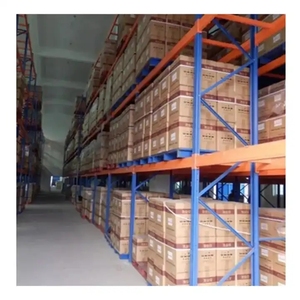
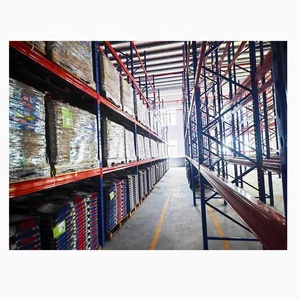
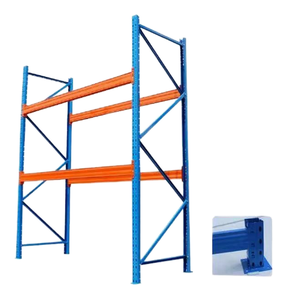
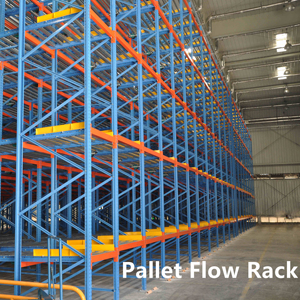
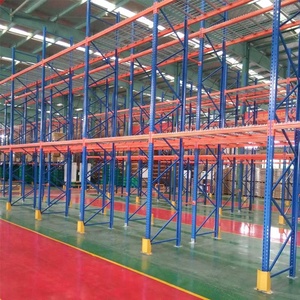
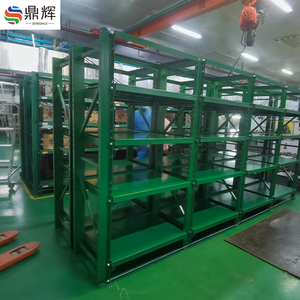
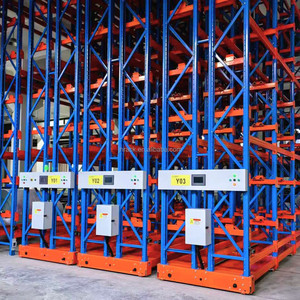
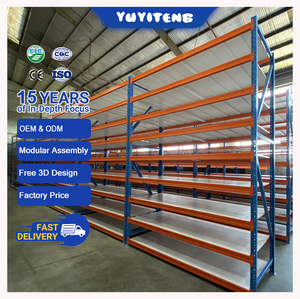
Structural Anatomy of Heavy Duty Carton Flow Racks
Carton flow racking—frequently classified under dynamic storage systems or live storage—harnesses gravitational force to transport cartons, plastic totes, and bins seamlessly from an ambient loading lane (replenishment face) down to an ergonomic retrieval lane (picking face). Designed specifically to satisfy high-throughput split-case picking and full-case order distribution, carton flow architectures eliminate pedestrian cross-traffic between stockers and order pickers, delivering a strict First-In, First-Out (FIFO) turnover.
The core structural integrity of heavy-duty carton flow systems rests on cold-rolled upright frames, heavy-gauge beam profiles, and modular roller tracks engineered with an inclination gradient usually calibrated between 2.5% and 5.5% (approx. 1.5° to 3.2°). Our roller tracks are formed from high-density polyethylene (HDPE) or galvanized steel rollers supported by rigid, corrosion-resistant cold-bent steel side channels, ensuring minimal rotational resistance and maximum track rigidity even when loaded with high-density SKUs up to 250 kg/m².
- Drop-in Polypropylene / Steel Rollers: Low-friction, impact-modified polymer wheels with hardened steel axles for continuous multi-shift operations.
- Adjustable Track Dividers: Tool-less quick-snap dividers permitting instant lane width adjustments as SKU package dimensions shift.
- Ergonomic Tilt Trays: Angular discharge shelves positioned at the picking face to provide unhindered optical visibility into open cartons and swift piece picking.
Engineering Load Capacity & Deflection Criteria
All structural frame components are verified against finite element analysis (FEA) and static load limits defined under EN 15512 (European standard for steel static storage systems). Beam deflection under maximal working load does not exceed L/200, preventing premature roller jamming and frame distortion.
Why Global Logistics Integrators & Procurement Teams Partner With Us
Drawing upon decades of specialized engineering, our manufacturing infrastructure combines fully automated continuous roll-forming lines, robotic continuous seam welding, and computerized powder coating installations. We operate under stringent ISO 9001:2015 quality management regimes and hold comprehensive CE certifications complying with the European Construction Products Regulation (CPR 305/2011/EU) and EN 1090-1 / EN 15512 standards.
Full Lifecycle Traceability
Every cold-rolled profile, upright column, and dynamic track rail is laser-etched with batch tracking numbers. Raw coil certifications (MTC EN 10204 3.1) are archived for every production run, guaranteeing verifiable chemical and mechanical steel integrity.
Turnkey CAD & Dynamic Simulation
Our in-house structural engineering bureau renders custom AutoCAD layouts, 3D Revit BIM assets, and roller velocity dynamic simulations. We calculate gravity gradients precisely based on your packaging materials (corrugated cardboard, plastic totes, blister trays).
Integrated System Compatibility
Our heavy-duty flow shelves seamlessly clip or bolt into existing pallet racking frameworks (including P90 platforms, teardrop racks, and modular mezzanine towers), making facility retrofit and brownfield warehouse optimization fast and non-disruptive.
Need an Engineering Load Calculation or Custom Bay Layout Drawing?
Share your carton weights, packaging friction metrics, and target aisle clearances. Our structural team delivers structural approval packages within 48 hours.
Future Procurement Trends in Carton Flow & Dynamic Live Racking
Strategic analysis of global supply chain dynamics reveals high-density gravity systems evolving from passive storage into intelligent, automated order replenishment cells.
Symbiosis with Autonomous Mobile Robots (AMRs)
Modern enterprise procurement increasingly favors hybrid carton flow racking configured for robotic loading. Automated Guided Vehicles (AGVs) and AMRs replenish carton runways from rear mezzanine gangways, while ergonomic manual picking occurs at the front face, maximizing fulfillment velocity without pedestrian safety hazards.
Integrated Pick-to-Light (PTL) & Sensorization
Supply chain architects require factory pre-drilled, electrostatically isolated mounting channels for digital pick-to-light indicators and photoelectric occupancy sensors. Real-time carton tracking detects out-of-stock conditions immediately, feeding instant restock directives to upstream WMS platforms.
High-Performance Cold Chain Demands
With pharmaceutical cold chains and grocery micro-fulfillment centers operating at sub-zero temperatures down to -30°C, buyers are turning away from standard plastics. Specifications demand specialty ultra-low-temperature impact polymer rollers with stainless steel ball bearings and rust-resistant galvanized steel frames.
Technological Advancements in Gravity Bed Engineering
The progression of heavy-duty carton flow technology focuses squarely on energy-free operation, acoustic attenuation, and package adaptability. As e-commerce orders diversify into variable mailer bags, recycled non-rigid corrugated cartons, and reusable plastic distribution totes, traditional roller tracks often encounter unpredictable travel speeds or skewing.
Our next-generation flow beds employ continuous full-width aluminum rollers interspaced with directional guiding ribs and speed-governing friction brakes. Unlike older gravity beds that require manual nudging or suffer from excessive velocity impacts at the pick face, self-regulating planetary brake rollers automatically absorb kinetic energy when carton speeds exceed 0.35 m/s, preventing package deformation and product crushing.
Carton Flow Performance Benchmarks
- Noise Mitigation: Low-decibel nylon axle bushings holding operating noise below 58 dBA during full-bed SKU movement.
- Variable Pitch Flexibility: Multi-tiered shelf hooks allowing vertical adjustments in 25 mm increments without disassembling structural columns.
- Heavy Tote Stability: Reinforced steel track retainers supporting container point loads up to 60 kg per tote.
- Rapid Retrofit Modularity: Universal hanger brackets directly compatible with conventional selective pallet rack crossbeams.
Frequently Asked Questions on Heavy Duty Carton Flow Racks
Critical engineering considerations, compliance standards, and installation guidelines reviewed by certified warehouse storage specialists.
What is the optimal incline slope for carton flow racking?
The standard slope gradient ranges between 2.5% and 5.5% (approximately 1.5° to 3.2°), depending directly on the weight of the goods, bottom packaging material, and roller surface friction. Lightweight paper cartons generally need a slightly steeper gradient (around 4%–5%), whereas heavy plastic totes with flat bottoms flow smoothly at 2.5%–3%. We carry out physical flow testing on actual sample packaging before finalizing production designs.
How does carton flow differ from pallet live flow racking?
Carton flow racking is engineered for individual boxes, split-case picking, and small-to-medium parts handling, with shelf lane capacities typically accommodating 20 kg to 250 kg/m² using closely spaced plastic or steel mini-rollers. Pallet flow racking, by contrast, handles full unit loads up to 1,500 kg per pallet position, featuring heavy steel cylindrical gravity rollers, centrifugal speed controllers, and entry impact protectors for forklift handling.
Can carton flow levels be retrofitted into existing selective pallet racks?
Yes. Our carton flow beds are designed with universal adapter brackets and clip-in drop hangers that clamp directly onto standard step beams or box beams. Warehouse operators can readily convert the bottom levels of existing high-bay selective pallet racking into high-velocity carton picking tunnels while retaining pallet storage reserves on the upper beam levels.
What maintenance is required to ensure long-term CE and EN compliance?
European standards (specifically EN 15635) recommend periodic visual inspections by in-house safety coordinators, supplemented by an annual structural evaluation by an independent competent engineer. Regular maintenance for carton flow systems involves inspecting roller free-spin, cleaning debris out of track guide channels, verifying that lane dividers remain rigidly locked, and checking column baseplate anchors for torque integrity.
How are damaged or deformed cartons prevented from jamming in mid-lane?
Mid-lane jamming is minimized by utilizing staggered roller patterns rather than single-line tracks, which spreads point-pressure over multiple contact surfaces. For operations with soft or uneven carton bottoms, full-width steel roller tracks or heavy-duty galvanized skate wheels ensure uninterrupted transport even if the carton base suffers partial deflection.
What documentation and certification are supplied with export shipments?
Every commercial delivery is accompanied by an extensive quality documentation dossier, including the CE Declaration of Conformity, Mill Test Certificates (MTC EN 10204 3.1) for steel raw materials, detailed installation manuals with bolt-torque specifications, and EN 15512 static load calculation summary sheets accompanied by official load capacity safety signage for bay mounting.
Accelerate Warehouse Throughput with Engineered Gravity Flow
Consult with our storage system design engineers today. We analyze your picking profiles, package dynamics, and footprint constraints to supply tailor-made, CE-certified carton flow systems built for demanding logistics hubs.