EN 15512 & CE Certified Structural Engineering

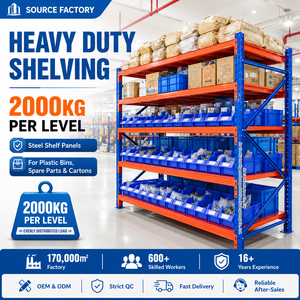
CE Certified Heavy Duty Steel Shelving Factory & Suppliers

Precision-Engineered Industrial Warehouse Storage Solutions, Automated Manipulator Racking & High-Density Pallet Systems for Global Logistics Infrastructure

50,000+ Sqm Production Footprint
EN 15512 European Structural Standard
Up to 20% Cube Density Maximisation
100% Full Material Batch Traceability
Engineered Product Catalog

Featured Industrial Storage Systems & Heavy Steel Equipment

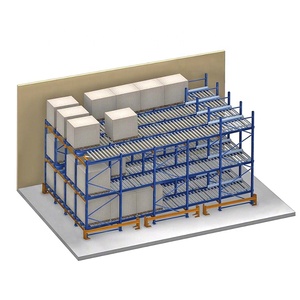
Discover high-capacity selective racks, gravity roller lines, intelligent handling systems, and precision structural fabrications tailored for demanding operational payloads.
Structural Authority & Manufacturing Reliability

Why Engineering Procurement Teams Partner with Our Factory

From mill certification of high-tensile structural steel to robotic automated roll-forming lines, we integrate lifecycle rigor into every ton of warehouse infrastructure delivered.

EN 15512 Structural Compliance

Racking design requires precise limit-state stress calculations under European norm EN 15512. We simulate sway buckling, torsional load deformation, dynamic seismic acceleration, and vertical beam deflection to guarantee maximum floor safety under non-uniform pallet placements.

In-House Cold Roll-Forming Lines

Utilising automated multistation roll-forming continuous profiling equipment with automated laser punching, our upright columns and box-beams maintain tight dimensional tolerances (±0.5mm). Every batch features full heat-number traceability back to premium domestic steel mills.

Epoxy Powder Coating & Galvanizing

All structural components pass rigorous shot-blasting surface pre-treatments (Sa 2.5) followed by electrostatic high-durability epoxy-polyester thermosetting powder baking, or hot-dip galvanization per ISO 1461, ensuring optimal anti-corrosive performance across sub-zero cold-storage facilities.

Precision OEM & Automation Integration

We supply engineering drawings, load charts, beam deflection profiles, and anchor shear load datasets to global system integrators. Our modular framing supports autonomous mobile robots (AMRs), automatic stacker cranes, push-back carts, and gravity roller cassettes effortlessly.

Turnkey Lifecycle Inspection (EN 15635)

Compliance does not end at shipment. Our operational engineers deliver detailed structural layout drawings, anchor engineering assessments, seismic calculations, and certified maintenance protocols satisfying EN 15635 periodic rack inspection and safety auditing criteria.

Rigorous Factory Proof Testing

Beam connector locks, upright base plates, splice joints, and shelf panel stiffeners undergo hydraulic destructive yield testing. We document safety factor thresholds exceeding 1.5 to 2.0x specified work loads, preventing structural failure under shock forklift impacts.

Industry Whitepaper & Strategic Insights

The Technological Evolution of Industrial Heavy Duty Steel Shelving

Navigating the paradigm shift from static manual warehouses to automated, high-density, dynamic storage facilities in the era of Industry 4.0 logistics.

1. Cold-Formed Steel Material Science & Structural Optimization

Historically, heavy duty warehouse racking relied on bulky hot-rolled structural steel profiles that inflated shipping weights and limited modular reconfigurability. Today, engineering focuses on high-yield, cold-formed structural steel grades (such as S350GD, Q355B, and high-strength galvanized coil). Advanced finite element analysis (FEA) allows manufacturers to profile upright cross-sections with multi-bend stiffeners, significantly enhancing the radius of gyration and resisting torsional-flexural buckling while reducing total steel consumption by up to 18%.

In accordance with the stringent requirements of CE Marking and European Standard EN 15512, modern heavy-duty racks feature beam-end connector brackets engineered with four or five locking claws. These configurations maximize rotational joint stiffness ($C_i$), mitigating longitudinal frame drift and ensuring operational safety under concentrated point loads up to 4,000 kg per level.

2. Structural Matrix: Comparing Modern Heavy Duty Storage Architectures

Racking Architecture Typical Load Capacity Storage Density Index Selectivity Optimal Operational Environment
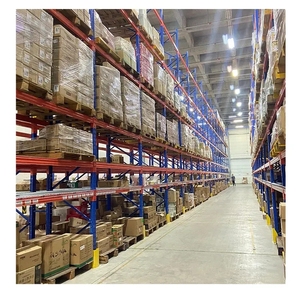
Selective Pallet Racking 1,000 – 4,000 kg/level Baseline (100%) 100% Direct Access High SKU variance, FMCG, retail distribution hubs
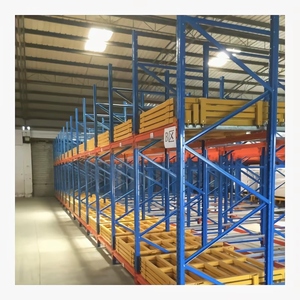
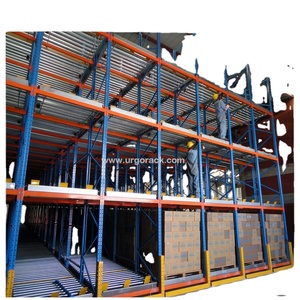
Push-Back Cart Systems 1,500 kg/pallet position High (+60% vs. Selective) LIFO (Per lane) Medium SKU turnover, cold stores, buffer accumulation
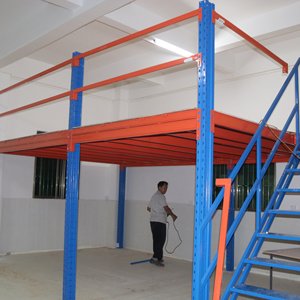
Multi-Tier Mezzanine 300 – 1,200 kg/m² floor Ultra-High (Vertical Cube) 100% Manual Hand-Pick E-commerce fulfillment centers, automotive spare parts
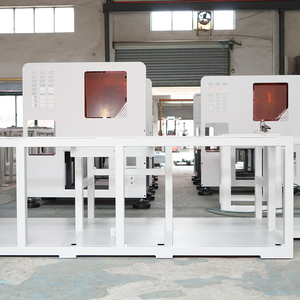
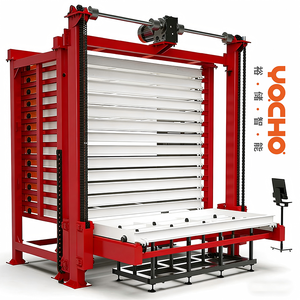
Automated Sheet Metal / ASRS 2,000 – 5,000 kg/cassette Maximum (+150%) Computerized Automatic Heavy machining, precision sheet manufacturing, tooling dies
FIFO Gravity Flow Racks 500 – 2,500 kg/lane Very High (+85%) Strict FIFO Flow Perishable foods, pharmaceuticals, high-speed cross-docking

3. Future Procurement Trends Shaping 2025–2030 Supply Chains

Enterprise procurement professionals and warehouse operations directors must adapt to three structural shifts currently transforming industrial storage investments:

  • Retrofit-First Upgrades over Greenfield Expansion: Surging commercial land costs across Europe and North America have made industrial greenfield construction prohibitively capital-intensive. Buyers are prioritizing high-bay vertical extensions, multi-tier solid steel plate mezzanines, and mobile racking conversions that nearly double capacity inside existing facilities without altering warehouse exterior footprints.
  • AGV / AMR Interface Standardization: Modern rack frames are increasingly engineered with wide bottom clearance tolerances, recessed floor guide rails, and heavy-duty steel collision barrier deflector plates designed specifically to accommodate autonomous automated guided vehicles and laser-guided forklifts.
  • Embodied Carbon Reduction & Sustainable Metallurgy: Green building certifications (such as LEED and BREEAM) are influencing supply chains. Industrial buyers prioritize manufacturers utilizing zero-VOC electrostatic powder coatings, energy-efficient closed-loop phosphating, and scrap-reduced scrap-metal sorting programs that lower the embodied carbon footprint per pallet position stored.
Procurement Intelligence

Frequently Asked Questions by Industrial Racking Buyers

Detailed engineering answers addressing structural certifications, load calculations, custom fabrication tolerances, and cross-border installation.

What certifications should an international buyer require for industrial steel shelving?
International buyers should verify compliance with the CE marking under EN 1090-1 (Execution of steel structures), EN 15512 (Steel static storage systems — adjustable pallet racking systems — principles for structural design), and EN 15620 (Tolerances, deformations and clearances). Furthermore, ISO 9001 (Quality Management) and ISO 14001 (Environmental Standards) confirm factory consistency. Manufacturers must supply factory production control (FPC) certificates and structural design calculations backed by third-party notified bodies.
How do you calculate safe working loads (SWL) for heavy-duty shelving and pallet beams?
Safe Working Load is determined by calculating both bending moment capacity and deflection limits under uniformly distributed loads (UDL). In modern logistics standards, the maximum allowable beam deflection under full working load cannot exceed L/200 (where L is clear beam length). In automated crane or VNA applications, this criterion is restricted further to L/300 or L/400. In addition, vertical safety factors typically require a minimum yield margin of 1.5 to 1.65 against permanent plastic deformation.
Can heavy-duty steel shelving be customized for automated picking or robot interfaces?
Yes. Customization includes installing precision gravity roller tracks, push-back telescopic cart channels, cantilever arms, and sheet-metal cassettes designed for loading manipulators and cranes. Furthermore, we customize baseplate bolt holes for high-tensile chemical anchors (M12–M16), integrate magnetic QR navigation tape channels for AMRs, and engineer column crash barriers that shield the upright profiles from robotic navigation adjustments.
What is the standard protective finish against corrosion and cold room humidity?
For standard ambient distribution warehouses, components are treated with a multi-stage degreasing and phosphating wash followed by an electrostatic thermosetting epoxy-polyester powder coat baked at 180°C–200°C (film thickness 60–80 microns). For deep-freeze cold storage (-30°C), high-humidity chemical storage, or outdoor installations, continuous pre-galvanized coils (Z275/Z350) or post-fabrication hot-dip galvanizing per ISO 1461 are implemented to prevent electrolytic oxidation and rust pitting.
How often must industrial warehouse racking undergo structural safety inspection?
Under EN 15635 standards, racking systems require systematic visual checks carried out weekly or monthly by an internal Person Responsible for Racking Safety (PRRS), supplemented by an exhaustive structural inspection conducted at least once every 12 months by a qualified, technically competent racking inspector. Any upright profile dent exceeding 3mm in depth or beam deflection showing permanent deformation requires immediate red-risk isolation and beam or upright replacement.
What information is required to receive an engineered layout and factory quotation?
To generate full CAD engineering layouts and competitive pricing, we require: (1) Warehouse building DWG architectural drawings showing clear heights, column grids, and floor slab load capacity; (2) Pallet specifications including width, depth, height, and maximum gross weight; (3) Materials handling equipment data (forklift turning radius, mast lift height, and aisle clearance requirements); and (4) Special environment parameters such as seismic zone rating or cold-store temperature range.

Scale Your Storage Density with Direct Factory Engineering

Consult with our storage engineering specialists today to receive customized CAD layouts, structural calculations, and competitive direct-from-manufacturer volume pricing for your upcoming warehouse expansion or retrofit.

Get a Quote