Featured Industrial Storage Systems & Heavy-Duty Racking Components
Engineered to strict EN 15512, ANSI MH16.1, and FEM 10.2.02 international load design codes. Each product undergoes rigorous finite element structural analysis, automated continuous roll-forming, and certified destructive batch testing.
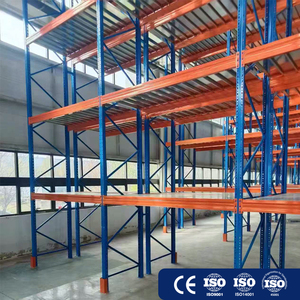
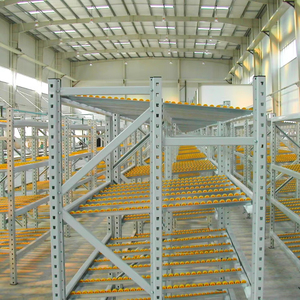
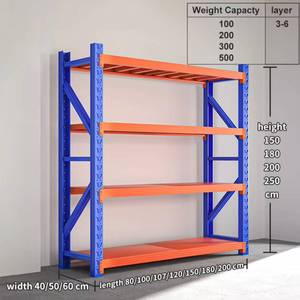
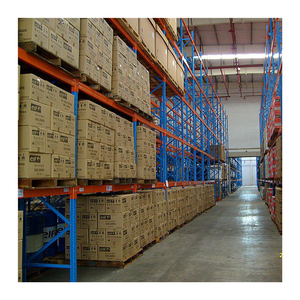
Why China Best Heavy Duty Radio Shuttle Racking Suppliers Command Global Intralogistics
Procuring radio shuttle storage systems demands substantially higher metallurgical accuracy, dimensional tolerance, and robotic integration prowess than static storage. As China's premier heavy-duty radio shuttle racking supplier, our manufacturing matrix unites world-class structural engineering with high-throughput automated robotics.
Certified Q355B Metallurgical Grade
We strictly utilize certified hot-rolled coil steel (Q235B and Q355B high-tensile grade) sourced directly from Tier-1 state mills like Baosteel and Shougang. Every production batch comes accompanied by EN 10204 Type 3.1 chemical composition and tensile elongation mill test certificates, guaranteeing structural ductility under seismic forces.
Cold-Formed Continuous Rolling Lines
Our shuttle guide rails and heavy-duty upright frames are extruded through multi-station precision continuous cold roll-forming lines. The shuttle sub-rail profile features internal dimensional tolerances kept within ±0.5 mm, eliminating carrier wheel slippage, dynamic rail spreading, and emergency stop friction wear.
Integrated Autonomous Carrier Tech
Unlike standard steel fabricators, our heavy-duty shuttle platform is engineered as a unified electromechanical ecosystem. The radio shuttle car features high-torque dual brushless DC servomotors, internal accelerometer obstacle avoidance, optoelectronic distance meters, and remote telemetry directly linkable to your warehouse WMS/WCS.
The Anatomy of Heavy-Duty Radio Shuttle Racking Mechanics
The radio shuttle system (also termed pallet runner or pallet mole) replaces conventional forklift drive-in aisles with automated sub-lane channels. Forklifts position pallets only at the outer face of the lane; the autonomous carrier travels along specialized guide rails beneath the pallet, mechanically elevating the unit load via an internal eccentric cam or hydraulic scissor lift, and traversing up to 40 meters deep.
- Dual-direction operation: High-density LIFO (Last-In-First-Out) or FIFO (First-In-First-Out).
- Patented integrated galvanised shuttle track profile acting as load-bearing shelf and precision guide track.
- Seismic and dynamic braking load transfer calculating 2nd-order sway (P-Δ effects).
Radio Shuttle Racking vs. Alternative High-Density Systems
Procurement directors often weigh radio shuttle racking against Drive-In, Push-Back, and Stacker Crane AS/RS. The engineering trade-off matrix below delineates space efficiency, equipment cost, operator safety, and cycle times.
| Storage System Architecture | Volumetric Density | Throughput Velocity | Forklift Collision Risk | CAPEX per Pallet | Cold-Store Viability |
|---|---|---|---|---|---|
| Radio Shuttle Racking | Extremely High (85-90%) | Fast (Automated Sub-lane) | Minimal (Aisle Exterior Only) | Moderate ($85 - $140) | Exceptional (-30°C Pack) |
| Drive-In / Drive-Through | High (70-75%) | Slow (Driver Enters Lane) | Severe (Frequent Upright Impact) | Low ($55 - $80) | Acceptable (High Labour Drain) |
| Push-Back Racking (Cart/Roller) | Moderate (60-70%) | Moderate (Gravity Bound) | Low (Exterior Facade) | Medium-High ($110 - $160) | Prone to Ice Binding |
| Automated AS/RS (Stacker Crane) | Maximum (90-95%) | Fully Automated | Zero (Unmanned) | Very High ($400 - $800+) | Optimal (Unmanned Cold) |
Future Procurement Trends in Shuttle Warehousing
Global warehouse procurement is experiencing a decisive paradigm shift from rigid manual storage towards agile semi-automation. Multinational buyers, 3PL logistics giants, and FMCG distributors are adapting strategic sourcing criteria to mitigate long-term inflation and labor scarcity:
Furthermore, sustainability compliance (Scope 1 and Scope 2 emission monitoring) is placing the carbon footprint per pallet stored at the forefront of warehouse tenders. Radio shuttle installations eliminate massive forklift travel distances inside racking lanes, drastically lowering battery cycling, forklift fleet wear, and tire emissions in enclosed facilities.
Procurement teams are also demanding complete open-protocol integration, ensuring the carrier's proprietary micro-controller interfaces seamlessly with third-party AGV/AMRs (Automated Guided Vehicles) and warehouse management architectures.
Next-Generation Radio Shuttle Development Trends
The technological horizon of radio shuttle racking is accelerating toward autonomous multi-directional dexterity, predictive diagnostics, and hybrid power systems:
Predictive IoT Telemetry: Modern shuttle vehicles incorporate vibration sensors, motor temperature probes, and wheel-wear encoders transmitting real-time operational health to cloud monitoring suites, stopping lane blockages before mechanical failure occurs.
Supercapacitor & Fast-Charging LiFePO4: Next-generation power banks achieve an 80% charge within 25 minutes of conductive induction pad contact during standard pallet transfer pauses, eliminating the need for manual battery-swap stations in round-the-clock distribution centers.
Frequently Asked Questions by Global Racking Buyers
Direct engineering responses to critical operational, structural, and procurement inquiries encountered by warehouse directors, supply chain heads, and safety auditors.
What structural certifications and engineering standards must a Chinese radio shuttle racking supplier adhere to?
How does a heavy-duty radio shuttle racking system perform in cold storage and deep-freeze environments?
What are the strict concrete floor slab tolerances required for shuttle racking installation?
How do we prevent pallet quality defects from jamming an autonomous shuttle deep within a channel?
What is the standard payback period (ROI) for converting a conventional warehouse to heavy-duty radio shuttle racking?
Strategic Procurement Checklist: Sourcing from Chinese Suppliers
When vetting Chinese manufacturers for heavy-duty radio shuttle racking systems, procurement teams should evaluate both mechanical fabrication and automation software competency:
1. Sub-Rail Profile Die Precision
Ensure the supplier possesses dedicated precision roll-forming dies for the galvanized shuttle guide rails. The rail profile must incorporate both the dynamic wheel running surfaces and the top pallet load contact flanges in one continuous cold-formed section without weld seams.
2. Core Component Provenance
Audit the Bill of Materials (BOM) for the radio shuttle cart. World-class suppliers incorporate globally serviced electrical components: Festo or SMC pneumatic units, Panasonic or Siemens micro-controllers, Omron photoelectric sensors, and Schneider contactors.
3. Installation Supervision & Spares
Verify that your procurement contract covers on-site installation supervisors or certified overseas engineering partners, along with comprehensive FAT (Factory Acceptance Test) sign-offs and a guaranteed 5-year emergency spare parts provisioning program.
Ready to Engineer Your High-Density Intralogistics Facility?
Consult with our senior warehouse racking engineers for complimentary CAD layout calculations, structural FEM simulations, and customized radio shuttle racking technical proposals.
Get Catalog