High-Performance Heavy Duty Pallet Racking & Engineered Systems
Direct manufacturer supply of industrial-grade selective, teardrop, mold, and dynamic FIFO racking systems engineered for intense warehouse operations.
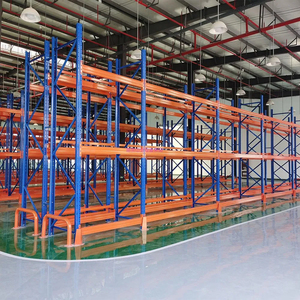
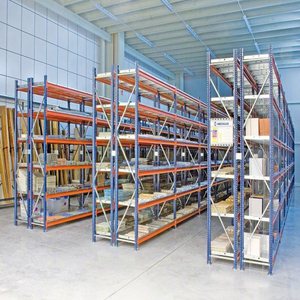
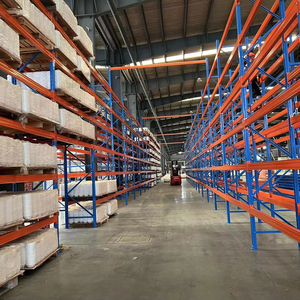
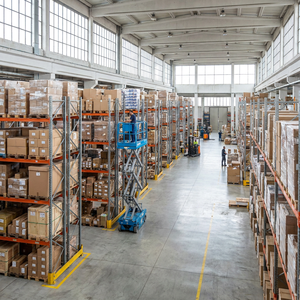
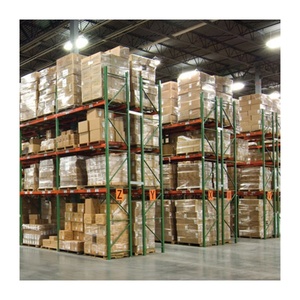
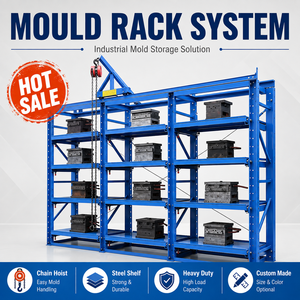
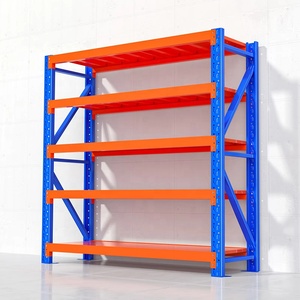
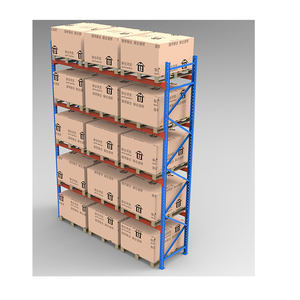
Demystifying Heavy Duty FIFO (Pallet Flow) Dynamics & Structural Integrity
A rigorous examination of physics, metallurgy, and throughput efficiency across high-turnover fulfillment centers.
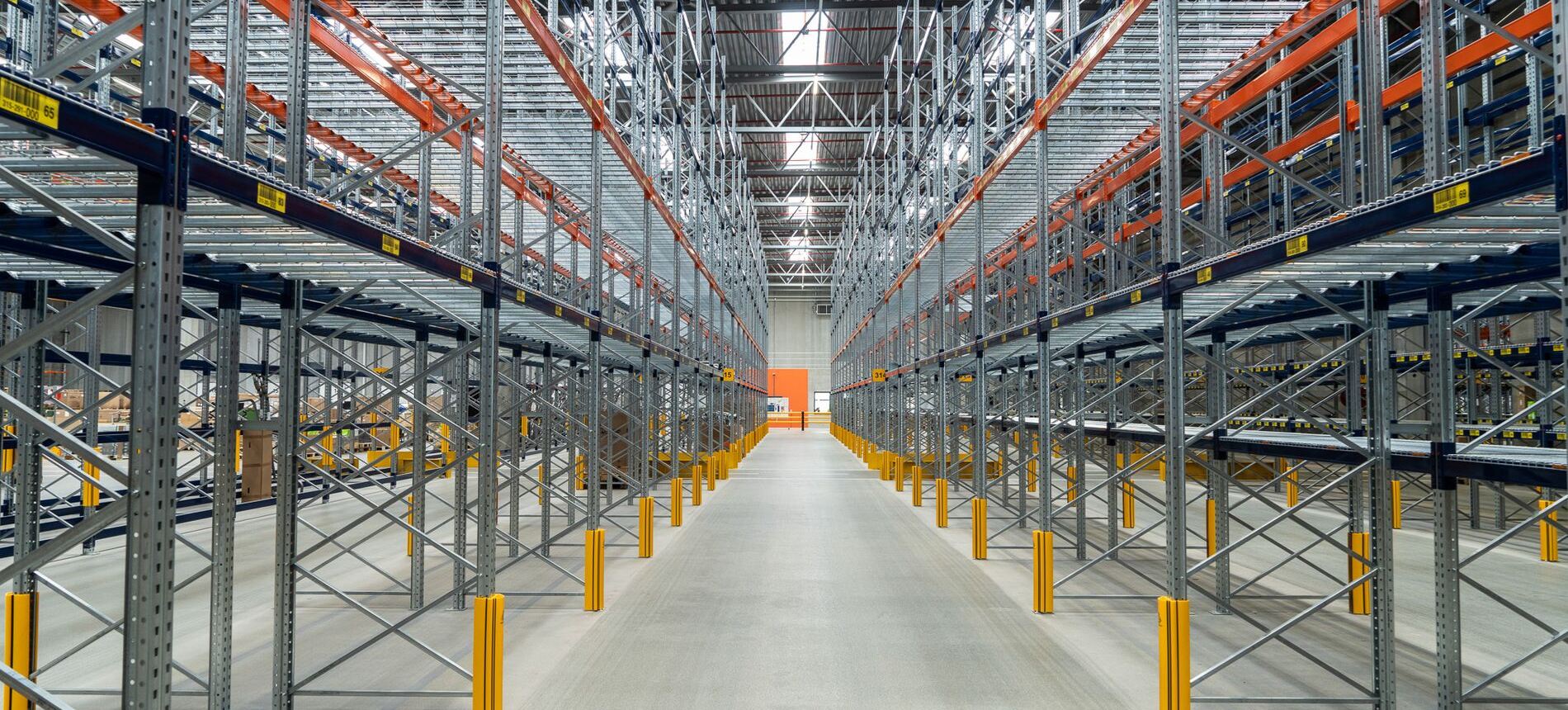
In modern industrial intralogistics, FIFO (First-In, First-Out) live storage systems represent the pinnacle of density and inventory rotation. Unlike static selective racking—where lift trucks traverse dedicated interior aisles to access inventory—a heavy-duty FIFO pallet flow system leverages high-capacity inclined roller beds and natural gravity to move palletized inventory continuously from the replenishment aisle to the retrieval face.
As premier Chinese wholesale manufacturers certified to international structural benchmarks (including European Standard EN 15512 and the American Rack Manufacturers Institute RMI MH16.1), we fabricate heavy-duty FIFO platforms engineered to withstand excessive dynamic loading, roller shock-loading, and horizontal seismic shear forces. By integrating mechanical speed controllers, directional guide rollers, and centrifugal braking drums, each lane ensures stable, non-runaway deceleration even for concentrated pallet loads ranging from 1,000 kg up to 2,500 kg per position.
| Evaluation Parameter | Live Heavy Duty FIFO Racking | Standard Selective Pallet Racking | Drive-In / Drive-Through (LIFO/FIFO) |
|---|---|---|---|
| Cube Utilization | Maximum (up to 75% floor footprint occupied) | Moderate (35% to 45% footprint occupied) | High (60% to 70% footprint occupied) |
| Stock Rotation Discipline | Strict Automatic FIFO (Physics-driven) | Manual FIFO (Dependent on WMS routing) | LIFO (Drive-In) or Slow FIFO (Drive-Thru) |
| Forklift Travel Distance | Minimal (Dedicated Loading & Picking Aisles) | High (Constant aisle navigation) | High (Risk of rack collision inside lanes) |
| Braking & Velocity Control | Centrifugal speed governors / Separator kits | Not applicable (Static beams) | Not applicable (Static guide rails) |
| Ideal Industry Fit | Cold Storage, Food & Beverage, Pharma, Fast 3PL | High SKU diversity with low volume per SKU | Low SKU count, batch processing, non-perishable |
The structural core of our wholesale heavy-duty systems utilizes premium cold-rolled continuous-formed steel profiles with yield points reaching Q235B (235 MPa) and high-stress Q355B (355 MPa). To ensure fail-safe performance during seismic events, connection beam connectors feature precision multi-tooth mechanical lock claws and high-tensile 8.8-grade security pins, guaranteeing structural stabilization against dynamic torsional deflection.
Centrifugal Brake Rollers
Patented magnetic or internal-gear centrifugal brake drums automatically regulate the terminal velocity of descending pallet weights between 300kg and 2,500kg, preventing load collisions.
Pallet Separation Mechanisms
Mechanical spring-loaded front pallet separators isolate the discharge pallet from rear track lane pressures, enabling forklift operators to retrieve items effortlessly and safely.
Cold-Room Anti-Corrosion
Hot-dip galvanized roller assemblies and zinc-rich thermoset epoxy powder coats certified to ISO 12944 C4M guarantee flawless long-term performance in -30°C deep-freeze chambers.
Future Procurement & Technological Trends in Heavy Duty FIFO Systems
How global supply chain leaders are transforming static warehouse steel into data-integrated, automated dynamic infrastructure.
1. The Convergence of Gravity Flow and Automated Guided Vehicles (AGVs/AMRs)
Historically, heavy-duty FIFO pallet flow relied purely on human-operated counterbalance or reach trucks. As distribution centers face chronic labor shortages, the next three to five years will see wholesale racking specifications shift toward precision AMR-docking interfaces.
- Sub-Millimeter End-Stop Tolerances: Heavy-duty discharge points now integrate laser-aligned guide aprons so autonomous picking arms and robotic forklifts dock without positional error.
- Digital Lane-Occupancy Sensing: Integration of low-power optical, ultrasonic, and IoT RFID sensors along roller tracks communicating live capacity metrics straight into Tier-1 WMS software.
- Dynamic Speed Regulation for Non-Standard Pallets: Adjustable planetary rollers designed to accommodate polymer, perimeter base, or non-homogenous slave pallets without track jams.
2. ESG Metrics, Modular Circularity, and Total Cost of Ownership (TCO)
Global procurement directors are no longer purchasing steel racking purely on immediate cost-per-pallet position. Environmental, Social, and Governance (ESG) mandates and life-cycle durability dictate international procurement decisions.
- Zero-Emission Gravity Energy: Unlike powered AS/RS shuttle systems that generate continuous electrical demand, heavy-duty FIFO utilizes potential energy, slashing operating carbon footprint.
- High-Tensile Thin-Walled Cold-Forming: Advanced finite element analysis (FEA) empowers our factory to cut total embodied steel tonnage while elevating deflection thresholds.
- Modular Retrofitting & Reconfiguration: Interchangeable upright perforation designs allow seamless conversion between Selective, Live Flow, Push-Back, and Automated Shuttles.
Why International Buyers Partner Directly With Our Manufacturing Base
Comprehensive turnkey engineering, rigorous structural calculations, and full lifecycle quality assurance engineered in China.
Full Structural Compliance
Every FIFO upright and beam assembly is calculated and certified against European EN 15512, EN 15620, and American RMI MH16.1 specifications with comprehensive static and seismic engineering calculation packages provided.
Direct High-Precision Roll-Forming
Operating high-speed automatic cold-roll forming lines, high-precision robotic welding arms, and automated multi-stage pre-treatment powder coating systems that yield tight dimensional tolerances and uniform finish thickness.
Certified Material Traceability
Mill test certificates (MTC) accompany every coil of Q235B/Q355B structural steel. Complete ultrasonic inspection and destructive weld penetration tests are documented for total supply chain transparency.
Global Deployment & Supervision
From preliminary AutoCAD / Revit BIM layout planning to on-site assembly supervision and annual EN 15635 rack safety inspections, our engineers support overseas clients and system integrators seamlessly.
Frequently Asked Questions on Heavy Duty FIFO Racking Procurement
Critical architectural, mechanical, and logistical questions addressed by Senior Structural Storage Engineers.