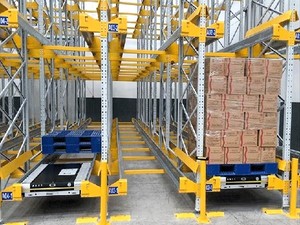
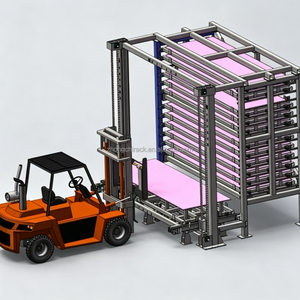
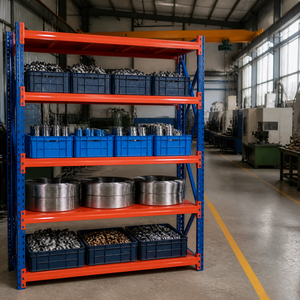
Precision-manufactured structural steel racking solutions engineered for autonomous mobile robots (AMR), automated guided vehicles (AGV), laser-guided forklifts, sheet manipulators, and high-density radio shuttle carts.
Evaluating static vs. dynamic deflection thresholds, cross-aisle harmonic vibration damping, and kinematic floor-to-rack anchoring for robotic logistics systems.
In contemporary high-throughput automated fulfillment centers, robotic storage racking ceases to function as passive static shelving. Instead, it constitutes a dynamically loaded mechanical interface subject to high-frequency accelerations, cyclical kinetic impacts, and exacting kinematic tolerance constraints. Conventional selective pallet racking systems engineered according to standard static load tables typically tolerate beam deflection thresholds of L/200 or L/250 under uniformly distributed loads (UDL). However, when integrating Autonomous Mobile Robots (AMR), Automated Guided Vehicles (AGV), or high-speed radio shuttle carts operating at velocities up to 2.0 m/s and acceleration rates of 1.2 m/s², such generous deflection envelopes cause catastrophic sensor misalignment, optical guide failure, and load-pickup abort errors.
As China's leading wholesale robotic racking manufacturer and direct global exporter, our engineering practice designs according to strict EN 15512:2020 European structural codes, FEM 10.2.02 / 9.831 automated handling parameters, and RMI (ANSI MH16.1) specifications. We enforce an elastic deflection limit of L/400 to L/500 across load-bearing longitudinal beams and transverse shuttle support rails. This structural stiffness eliminates racking bounce during robot deceleration and stops resonance frequency coupling between high-cycle AGV travel tracks and vertical steel upright frames.
When autonomous robots enter rack bays or transport automated pod frames, floor anchoring and upright column stiffness determine cycle repeatability. Our custom roll-formed Omega-profile uprights (featuring cold-rolled structural steel grades Q355B and S355JR) utilize closed-seam robotic laser welding on seismic baseplates. This increases column torsional resistance by 34% compared to standard open-channel profiles, ensuring that vertical column out-of-plumbness remains under H/1000 throughout 10-year operating duty cycles.
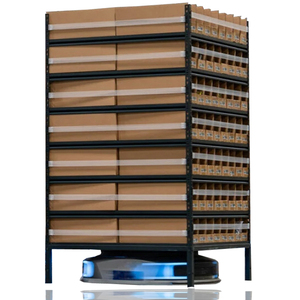
Every tier of our AMR-supporting shelving and sheet-metal cassettes is calibrated with CNC-machined datum locating pins, retroreflective docking targets, and recessed ground-marker pockets. This provides micro-millimeter precision for 2D barcode, LiDAR SLAM, and vision-guided robotic manipulators.
Robotic shuttle docking and rapid multi-axis manipulator loading deliver localized cyclical fatigue stress. We incorporate hot-dipped galvanized guide-rail profiles, gusseted connector brackets with 5-hook cold-punched teeth, and high-tensile Grade 8.8 structural hardware to resist plastic deformation.
Our FEA (Finite Element Analysis) structural engineering team executes 3D response-spectrum modal simulations under Eurocode 8 (EN 1998-1) and US IBC criteria. We evaluate soil-structure interaction, anchor embedment depth, and inter-story drift limits to guarantee zero structural collapse during seismic events.
Combining European engineering heritage, rigorous ISO/EN structural standards, and vertically integrated Chinese manufacturing economics for global intralogistics deployments.
Unlike regional distributors supplying generic warehouse steel, every project manufactured in our export facility is backed by third-party audited structural calculations, Finite Element Analysis (FEA), and full static/dynamic load certification to European and American standards.
We source certified prime coil steel exclusively from domestic Tier-1 mills (such as Baosteel and Shougang). Every production heat is supplied with EN 10204 3.1 inspection certificates verifying yield strength (minimum 355 MPa), elongation percentage, and chemical composition.
From 24-station continuous roll-forming lines, computerized punching dies with ±0.1mm indexing accuracy, and robotic continuous welding cells to an automated 8-stage pre-treatment, shot-blasting, and thermosetting epoxy-polyester powder coating finishing plant.
From initial DWG/BIM warehouse layout optimization and pallet turnover simulations to on-site assembly supervision, load testing, commissioning, and periodic EN 15635 rack safety inspections, our technical teams provide seamless engineering support across 60+ countries.
We specialize in modernizing legacy selective pallet racking infrastructures—re-profiling upright pitch levels, integrating high-density 4-way radio shuttle channels, and constructing structural pick-tower mezzanines while the client's operations remain live.
Evaluate operational metrics, payload limits, floor preparation standards, and capital expenditure profiles across leading automated racking topologies.
| Storage System Classification | Primary Robotics Equipment | Payload Capacity (Per Level / Pallet) | Max Storage Height | Floor Flatness Class (DIN 18202 / TR34) | Volume Utilization Improvement |
|---|---|---|---|---|---|
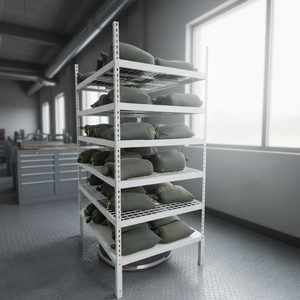
| AMR Pod Supporting Shelving | Autonomous Mobile Pod Carriers (QR/SLAM) | 500 – 1,500 kg / Bay | 2.5 – 4.5 Meters | Table 3, Group 4 (Standard) | +40% vs. Static Manual Shelving |
| 4-Way Radio Shuttle High-Density Racking | Autonomous Pallet Shuttles & Vertical Lifts | 1,000 – 1,500 kg / Pallet | Up to 24 Meters | FM2 / Free Movement Class | +80% vs. Selective Pallet Racking |
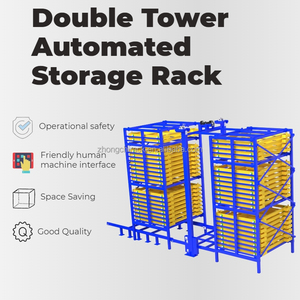
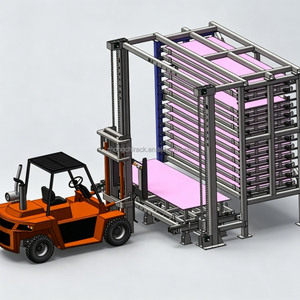
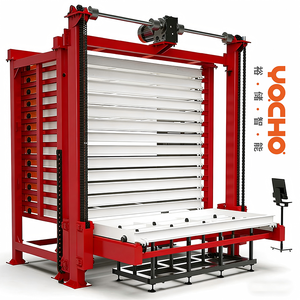
| Vertical Automated Sheet Metal Storage Tower | Manipulator / Gantry Vacuum Feeder | 3,000 – 5,000 kg / Drawer | Up to 12 Meters | Direct Chemical Anchor / Rigid Base | +300% Footprint Space Reclaimed |
| Very Narrow Aisle (VNA) High-Bay Pallet Rack | AGV Turret Trucks / Robotic VNA Stackers | 1,000 – 2,000 kg / Level | Up to 18 Meters | DM1 / Defined Movement (Superflat) | +50% vs. Conventional Wide-Aisle |
| Automated Stacker Crane AS/RS High-Bay | Single/Double Mast Stacker Cranes | 1,500 – 3,500 kg / Pallet | Up to 40 Meters | Special Heavy Dynamic Foundation | +120% Cube Storage Density |
Crucial structural, operational, and sustainability paradigms reshaping automated intralogistics investments over the coming decade.
The global intralogistics industry is experiencing an accelerating migration away from rigid, single-point-of-failure stacker crane systems toward flexible, modular multi-directional swarm-robotics. Procurement directors at multinational 3PL corporations, automotive tier-1 suppliers, and e-commerce distribution networks are actively realigning structural racking specifications to accommodate evolving autonomous fleets.
Traditional 2-way radio shuttles that run only along a single channel are being replaced by 4-way autonomous shuttles capable of cross-aisle travel and automatic tier-changing via vertical lifts. This architecture requires racks with bidirectional precision track junctions, dual-axis optical stops, and tight thermal expansion clearances in cold-storage environments down to -30°C.
High-mix low-volume smart factories are moving raw steel storage directly into machining workcells. Intelligent multi-layer sheet metal storage towers with automated loading manipulators connect CNC fiber laser cutting centers with vertical racking buffers, cutting material transfer delays by 75% and removing manual forklift intervention.
Corporate ESG procurement mandates favor lightweight, high-yield micro-alloyed structural steels (e.g., S420MC, S460MC). By leveraging higher yield strengths, roll-form engineers reduce overall structural steel mass by 14–18% per pallet position while improving elastic return, lowering both shipping weights and embodied lifecycle carbon emissions.
Review engineering guidance, import compliance details, and structural tolerance standards from our technical sales directors before issuing your Project RFQ.
Get CatalogPartner directly with China's dedicated heavy-duty robotic storage racking manufacturing exporter. Contact our engineering team for technical layouts, 3D CAD/BIM models, structural calculations, and wholesale price schedules.