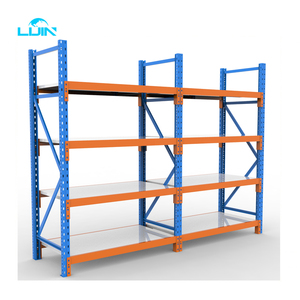
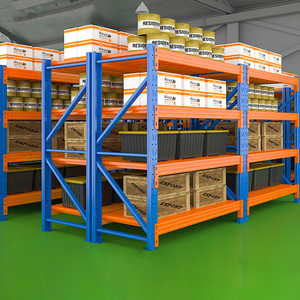
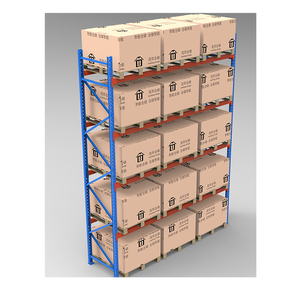
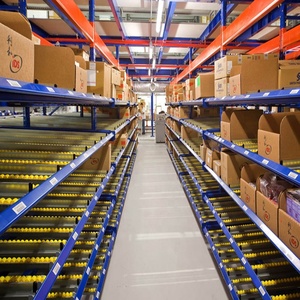
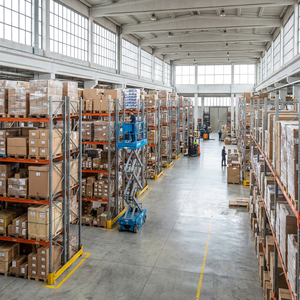
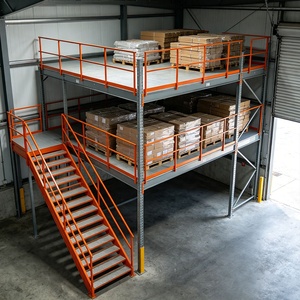
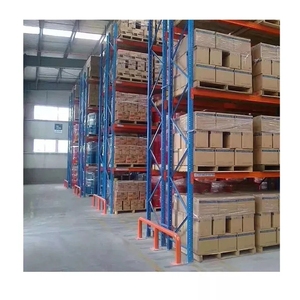
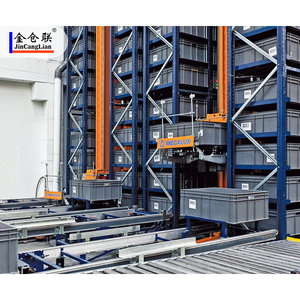
Discover our OEM/ODM portfolio of heavy-duty longspan shelving, structural selective pallet racks, automated ASRS buffering bays, and multi-tier platforms designed for maximum pallet density and strict load-safety compliance.
Heavy duty longspan racking and industrial pallet shelving operate under complex static and dynamic load regimes. Unlike standard retail shelving, industrial longspan systems must withstand concentrated mechanical abuse from Material Handling Equipment (MHE), eccentric pallet positioning, and cumulative vertical frame deflection.
Our OEM/ODM engineering methodologies incorporate finite element analysis (FEA) compliant with EN 15512:2020 (European Standard for Steel Static Storage Systems) and the Rack Manufacturers Institute (RMI MH16.1) specification. We optimize the cold-rolled upright profile with cold-formed omega and teardrop geometric punches, reinforcing the column cross-section against torsional-flexural buckling while ensuring seamless beam-connector engagement.
Our structural box beams are cold-roll formed from dual interlocking C-sections continuous seam-welded by multi-axis robotic welders. All beam deflection is mathematically constrained to exceed the stringent 1/200th of the clear span threshold under maximum rated working load limits (WLL), eliminating cumulative deflection fatigue.
Each connection between the beam connector and vertical upright utilizes a tapered claw mechanism secured by heavy-gauge spring safety locking pins. This architecture absorbs kinetic vibration caused by high-throughput counterbalance forklifts, VNA (Very Narrow Aisle) turret trucks, and AGV shuttles without risking unseating or notch shear failure.
| Structural Parameter | Engineering Specification | Compliance Reference |
|---|---|---|
| Steel Specification | Q235B / Q355B (Yield Strength: 235 - 355 MPa) | GB/T 700 / EN 10025 |
| Column Deflection Index | Max allowable lateral displacement ≤ H / 350 | FEM 10.2.02 / EN 15512 |
| Beam Deflection Limit | Max vertical deflection ≤ L / 200 (Elastic Zone) | RMI MH16.1 / AS4084 |
| Upright Pitch Adjustability | 50 mm or 75 mm modular hole matrix | Universal International Standard |
| Coating Thickness | 60 - 90 μm Electrostatic Epoxy-Polyester | ISO 12944 (Corrosion C2/C3) |
| Connector Geometry | 3 to 5-claw high-moment interlocking bracket | Anti-Dislodgement Tested |
| Seismic Damping Baseplate | Reinforced ductile steel base with dual anchor pins | Eurocode 8 / IBC Chapter 16 |
Continuous automated roll-forming lines transform certified prime steel coils into reinforced upright profiles with tight radius tolerances, preventing micro-fractures in structural folds.
Our 9-stage pre-treatment wash incorporates alkaline degreasing, nano-ceramic silane conversion, and hot-cured thermosetting powder coating that resists chemical abrasion.
End-to-end quality assurance from coil master heats down to container loading diagrams ensures seamless field erection and structural certification compliance globally.
We partner with warehouse system integrators, intralogistics engineering consultancies, and large-scale industrial distributors to deliver custom-engineered storage platforms on schedule and within budget.
Standard off-the-shelf shelving rarely meets the stringent velocity and spatial profiles of modern distribution centers. As an established OEM/ODM exporter, we specialize in tailor-made configurations: spanning beam lengths up to 3,900 mm, bay depths ranging from 400 mm to 1,500 mm, and continuous multi-tier mezzanine decks reaching up to 4 floor levels.
Our in-house design engineering department utilizes advanced 3D SolidWorks and structural FEA software to model specific point loads, forklift impact dynamics, and thermal expansion factors. For regional projects subject to high seismic acceleration, we calculate specific dynamic modal shapes and specify high-ductility anchor foundations.
Drawing on decades of structural manufacturing heritage, our technical capabilities extend far beyond metal stamping and welding. Global clients rely on our complete project lifecycle support framework:
Procurement executives and supply chain directors are navigating shifting supply chain paradigms. Here are the core procurement strategies redefining the international heavy racking market through 2030.
Rising global trade in frozen pharmaceutical biologics and perishable food requires pre-galvanized racking alloys engineered to endure down to -30°C without undergoing ductile-to-brittle steel phase transitions.
Rising construction costs and industrial land scarcity are accelerating the modernization of existing sites. Retrofitting existing selective racking with mobile bases or multi-tier mezzanines delivers 80% capacity gains at 35% of greenfield CAPEX.
B2B buyers are procuring hybrid rack profiles designed for manual hand picking on lower tiers while simultaneously engineered with tight millimeter tolerances ready for autonomous mobile robots (AMRs) overhead.
European and North American buyers increasingly require Environmental Product Declarations (EPDs), demanding low-embodied-carbon steel produced via electric arc furnaces (EAF) and zero-effluent powder coating facilities.
The frontier of heavy-duty industrial storage is evolving rapidly from passive structural steel into intelligent, sensor-monitored, dynamic intralogistics assets.
Integration of wireless strain-gauge sensors along critical load-bearing beams to monitor live deflection in real-time, instantly alerting operators to load overages.
Baseplates engineered with internal hysteretic energy dissipation dampers, preventing ground-shear transmission to upper rack bays during high-magnitude seismic events.
Longspan and dynamic pallet systems embedded with low-friction galvanized guide rails designed for multi-directional autonomous pallet shuttles and robotic pickers.
Electro-welded wire decking with progressive wire gauge spacing designed to optimize ESFR (Early Suppression, Fast Response) fire sprinkler water penetration per NFPA standards.
Column upright protectors manufactured from molecular-memory impact polymers that absorb MHE kinetic collisions and rebound to their original profile without transfer of anchor stress.
Direct answers from our structural storage engineers regarding technical specifications, compliance verification, OEM customizations, and global shipping logistics.
Send an InquiryWhile both systems utilize cold-rolled vertical upright frames and horizontal beams, heavy duty longspan racking is engineered primarily for medium-to-heavy hand-loaded goods, large bulky cartons, and bin storage, typically rated between 300 kg and 1,500 kg per shelf level. Pallet racking is designed specifically for unitized pallet handling with forklifts, with beam capacities commonly ranging from 1,000 kg up to 4,500 kg per level. Longspan systems incorporate drop-in steel panels, wire mesh decks, or high-density timber, whereas pallet racks feature open pallet supports or structural wire decks.
Our production facilities maintain full adherence to EN 15512 (European standard for static steel storage systems), FEM 10.2.02, and American RMI (Rack Manufacturers Institute) MH16.1 codes. Every cold-formed profile undergoes physical stub-column testing, beam-to-column connector moment rotation testing, and shear-lock cyclic loading. Complete engineering design packages, including load rating charts and seismic site analysis, can be stamped by certified Professional Engineers (P.E.) for municipal permitting.
Yes. As a dedicated OEM/ODM manufacturer, over 65% of our export volume is tailored to exact client specifications. We can customize upright depths (400 mm to 1,500 mm), frame heights up to 15 meters, beam step or box profiles, and hole pitching (50 mm, 75 mm, or 76.2 mm). Our automated electrostatic powder-coating lines support any RAL color code to match your corporate branding or warehouse safety zone requirements.
Under maximum rated static working load limit (WLL), our beams are calculated strictly to an elastic deflection limit of L/200 (maximum deflection ≤ length of beam divided by 200). For automated ASRS installations or robotic shuttle integration, we design to an even tighter tolerance of L/300 or L/400 to ensure laser sensor alignment and error-free automated extraction.
Upright frames and beams are nested on heavy-duty timber dunnage skids, wrapped with multi-layer waterproof stretch film, and bound with high-tensile steel banding equipped with protective edge boards. Small accessories such as baseplates, safety pins, row spacers, and anchor bolts are crated in seaworthy wooden cases with moisture-absorbing desiccant packs to prevent transit corrosion.
European Standard EN 15635 mandates that racking systems receive an annual formal inspection by a technically competent racking safety inspector. In addition, internal visual checks should be performed weekly or monthly by the site’s designated PRRS (Person Responsible for Racking Safety) to log any green, amber, or red risk-level impacts and schedule component replacement immediately.
Collaborate with our structural engineering team to calculate load capacity, develop CAD layouts, and receive certified OEM/ODM export pricing for your next warehouse project.