Heavy Duty
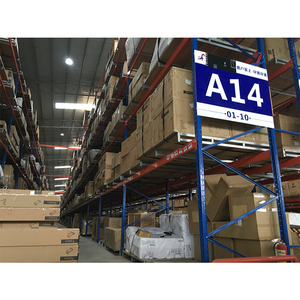
Standardized engineering components fabricated from premium Q235B and Q355B structural steel, supporting modular configurations for selective, push-back, multi-tier mezzanine, and 4-way robotic shuttle operations.
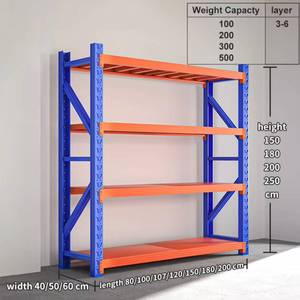
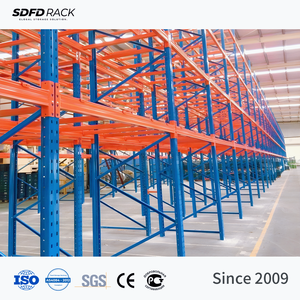
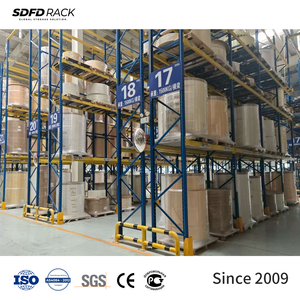
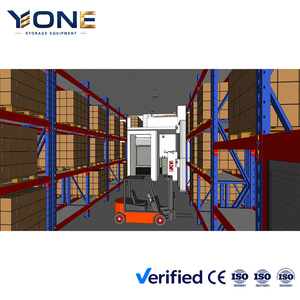
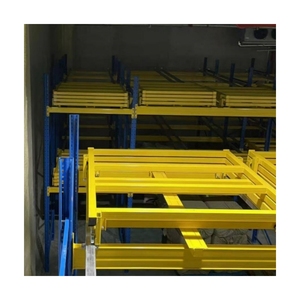
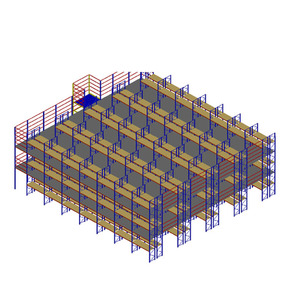
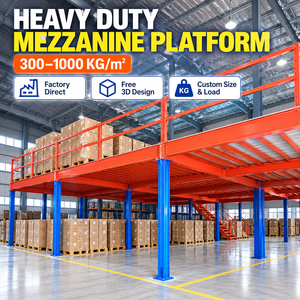
An exhaustive technical evaluation of four-way radio shuttle matrices versus traditional crane AS/RS and two-way shuttle systems.
Unlike conventional two-way shuttles constrained strictly to longitudinal lanes, the Heavy Duty Four-Way Shuttle combines two independent wheeled drive trains oriented at 90 degrees. Integrated hydraulic or electric screw-jack lifting assemblies transition the shuttle between primary cross-aisles and secondary deep-storage tracks seamlessly. This kinematic decoupling allows any shuttle unit within a designated operational matrix to access any pallet location across both X and Y axes, while dedicated high-speed vertical reciprocating conveyors (VRCs) handle Z-axis inter-tier transport.
Traditional Stacker Crane Automated Storage and Retrieval Systems (AS/RS) present an inherent architectural vulnerability: a single crane breakdown completely halts access to an entire aisle containing thousands of stock keeping units. In contrast, 4-way robotic fleets operate on distributed multi-agent logic. If an individual carrier experiences a traction motor fault or sensor calibration offset, the central Warehouse Execution System (WES) dynamically reroutes sibling shuttles to fulfill tasks, keeping overall warehouse operations uninterrupted at 99.8% fleet availability.
Because heavy duty shuttles carry dynamic payloads between 1,000 kg and 1,500 kg while traveling horizontally at speeds up to 1.5 m/s, cumulative racking tolerances must be controlled far beyond standard static racking thresholds. EN 15512 and FEM 9.831 engineering regulations demand strict deflections: rail joint gaps must not exceed 1.0 mm, vertical step variations cannot surpass 0.5 mm, and track levelness under dynamic wheel point-loading must maintain tighter tolerances than 1/1000 of the span to protect drive gears and laser positioning sensors.
| Performance Criteria | Selective Pallet Racking | Drive-In Racking System | Stacker Crane AS/RS | 4-Way Heavy Duty Shuttle |
|---|---|---|---|---|
| Cube Utilization | 40% – 50% | 65% – 75% | 75% – 85% | 85% – 95% |
| Direct Pallet Selectivity | 100% Immediate | Low (Last-In-First-Out) | 100% In-Aisle | 100% Dynamic FIFO/LIFO |
| Throughput Scalability | Constrained by FLT Fleet | Severely Constrained | Fixed (1 Crane per Aisle) | Elastic (Add Shuttles On-Demand) |
| Single Point of Failure | Zero (Manual Dependency) | Zero (Manual Dependency) | Critical (Crane Downtime) | None (Multi-Shuttle Redundancy) |
| Operating Energy Profile | Internal Combustion / Lead-Acid | Manual Truck Fuel/Battery | High Power Peak In-Rush | Ultra-Low (Supercapacitor Assisted) |
An analytical overview of global suppliers based on manufacturing capabilities, structural design standards, software orchestration, and international project execution.
Widely acknowledged for pioneer storage engineering, the P90 racking platform, and compliance with European structural standard EN 15512. Supplies end-to-end engineered racking structures, high-density mobile racking, and high-bay integration tailored for systems integrators and automated deep-lane storage facilities.
A global leader in fully integrated intralogistics systems, SSI Schaefer provides heavy duty pallet shuttle variants featuring proprietary WAMAS logistics software. Their structures are renowned for high dynamic load capacity and specialized cold storage design down to -30°C.
Recognized for scalable high-bay pallet shuttle configurations integrated with stacker cranes or transfer cars. Mecalux combines cold-formed profile roll-forming mills with their proprietary Easy WMS platform, ideal for fast-moving consumer goods (FMCG) distribution centers.
Swisslog's automated pallet shuttles (such as the PowerStore system) offer high throughput rates for compact warehouse formats. Designed for high-frequency operations, their systems maximize cubic utilization across beverage, pharmaceutical, and 3PL fulfillment networks.
Dematic delivers heavy duty pallet shuttles for automated high-bay warehouses, backed by advanced supply chain simulation and software architectures. Dematic systems emphasize structural precision and low energy consumption per transport cycle.
The world's largest material handling system provider by revenue. Daifuku supplies ultra-reliable heavy duty deep-lane pallet vehicles engineered to withstand seismic challenges, supported by cleanroom compatibility and robust manufacturing quality control.
Pioneering automated solutions through their Stow Robotics division and the Atlas 2D/4D pallet shuttle series. Stow produces structural cold-formed profiles capable of bearing high dynamic stress, serving retail and third-party logistics operators worldwide.
Part of Toyota Industries Corporation, Vanderlande specializes in automated warehouse systems for eCommerce, grocery, and general merchandise, integrating high-density shuttle storage directly into automated sortation and picking networks.
Renowned for precision mechanical engineering and long-lasting automated storage hardware. Muratec's shuttle-based high-density systems are widely deployed in precision electronics, cold storage, and pharmaceutical cleanroom distribution.
TGW designs and builds heavy duty automated systems with modular engineering. Their structural steel profiles and high-cycle storage architectures prioritize low maintenance overhead and high system lifetime efficiency.
Key market and technological shifts supply chain managers and project engineers should factor into long-term capital investments.
Heavy duty four-way shuttles are rapidly phasing out traditional lead-acid and standard ternary lithium batteries. Future-proof procurement focuses on fast-charging supercapacitor units coupled with lithium iron phosphate (LiFePO4) packs. Shuttles recharge via dynamic busbars or inductive docking stations in just 10–20 seconds per cycle while resting during pallet transfer, enabling continuous 24/7 operations without dedicated charging downtime.
Tomorrow's warehouse management systems integrate real-time artificial intelligence into shuttle scheduling. By parsing predictive dispatch queues, regional seasonality patterns, and velocity metrics, modern 4-way systems dynamically relocate high-turnover inventory to lower, front-facing rack tiers during operational downtimes. This proactive consolidation shortens travel paths, cutting average cycle fulfillment times by up to 35%.
Leading suppliers now integrate Industrial Internet of Things (IIoT) sensors directly into shuttle assemblies and critical rack uprights. Real-time vibration analysis, track deflection metrics, and motor thermal telemetry stream directly into a 3D digital twin of the racking matrix. Potential mechanical fatigue, track misalignments, or bearing wear are flagged well before catastrophic failure, shifting maintenance from reactive to predictive regimes.
Delivering engineered storage systems certified to rigorous European standards, combining direct factory manufacturing with complete lifecycle support.
Every beam, column section, and shuttle rail is engineered to meet EN 15512 and FEM design regulations. We provide verified structural load calculations and stamped layout drawings, accounting for localized seismic profiles, soil slab dynamics, and cold storage thermal expansion.
Our structures use certified high-yield Q235B and Q355B structural steel from top mills. Production lines utilize multi-station continuous roll-forming mills, automated robotic laser cutting, and continuous electrostatic epoxy powder coating to guarantee millimeter precision across every bay.
We work closely with automation providers and system integrators worldwide, delivering detailed 3D BIM models, mechanical interface details, and rail connection profiles to ensure seamless coordination between racking structures, 4-way shuttles, and elevator towers.
We provide comprehensive lifecycle support, from initial site survey and structural analysis through certified on-site installation supervision and EN 15635 annual safety audits, keeping your high-density warehouse safe, compliant, and operating efficiently.
Clear, engineering-backed answers to the key questions procurement teams and operations directors face when investing in four-way shuttle systems.
Consult with our storage system engineers for layout feasibility reviews, load capacity calculations, and custom four-way shuttle racking quotes designed to EN 15512 standards.