Featured Industrial Pallet Racking & Heavy Storage Units
Precision cold-roll formed systems certified for extreme dynamic warehouse loading, automated forklift handling, and multi-tier distribution logistics.
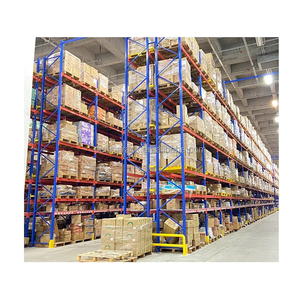
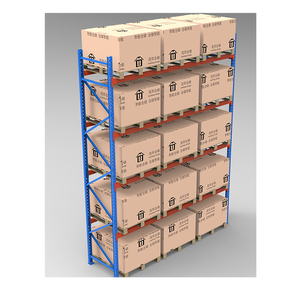
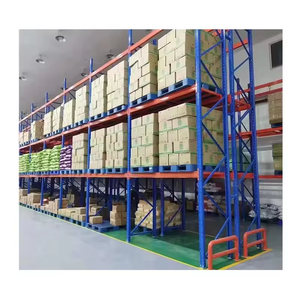
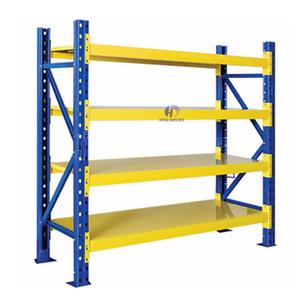
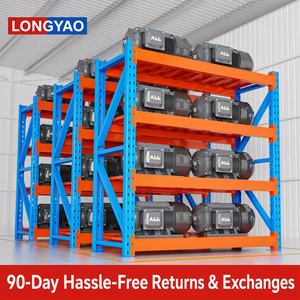
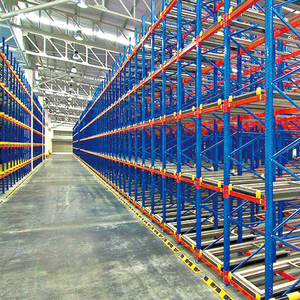
State of Global Industrial Selective Pallet Racking Manufacturing (2025–2030)
Selective pallet racking represents the foundational architecture of global supply chains, accounting for over 72% of installed industrial pallet storage systems worldwide. In high-velocity fulfillment centers, manufacturing buffer yards, and third-party logistics (3PL) terminals, the primary engineering objective is balancing immediate pallet selectivity (100% direct access) against cubic volume utilization and load safety margins under dynamic operating conditions.
Recent advances in cold-formed thin-walled structural steel engineering have radically altered the procurement landscape. Global procurement executives and logistics design directors no longer purchase pallet racking merely as inert structural hardware. Instead, modern racking procurement is treated as an engineered structural safety subsystem governed by strict non-linear buckling calculations, dynamic seismic response spectra, and strict robotic weldment standards.
Structural Design Standards: Regional Discrepancies & Global Compliance
When sourcing heavy-duty selective pallet racking internationally, procurement teams must navigate significant variances between European, American, and Australasian engineering criteria. Sourcing from manufacturers that lack certified calculation methodologies can lead to catastrophic structural collapse under cyclic forklift mast impacts or seismic excitation:
| Standard / Code | Governing Region | Safety Factor Metric | Beam Deflection Limit | Seismic & Impact Mandates |
|---|---|---|---|---|
| EN 15512:2020 | European Union / Global | Limit State Design ($\gamma_M$ partial factors) | $L/200$ (Serviceability Limit) | Specific dynamic stub-column impact & twist-restraint tests |
| RMI ANSI MH16.1 | North America / US | LRFD / ASD permissible stresses | $L/180$ maximum under full load | Base plate anchorage & seismic design categories A through F |
| AS 4084:2023 | Australia / New Zealand | Limit state design (strict ductile limits) | $L/200$ max allowable deflection | Mandatory annual inspection compliance tag plate & bay load signs |
| FEM 10.2.02 | Continental Europe | Stress verification under service loads | $L/200$ standard beam span | Integration criteria for AGV / VNA truck guided operations |
Leading exporters engineer their upright profiles and step/box beam connectors with 3 to 5 multi-tang locking clips accompanied by spring-steel safety pins capable of resisting an upward dislodgement shear force greater than 5 kN (conforming to EN 15512 Clause 5.3.4).
Comparative Structural Systems: Selective Racking vs. Alternative High-Density Systems
Selective pallet racking offers unmatched versatility, but trade-offs exist between aisle clearances, equipment investment, and storage density. Below is a comparative operational matrix based on 10,000 square meters of warehouse floor area:
| Storage Topology | Direct Selectivity | Floor Footprint Utilization | Picking Cycle Speed | Lift Equipment Required | Relative CAPEX / Pallet |
|---|---|---|---|---|---|
| Standard Selective Rack | 100% (Instant) | 35% – 42% | High (30–45 pallets/hr) | Standard Counterbalance / Reach | Baseline (1.0x) |
| Very Narrow Aisle (VNA) | 100% (Instant) | 50% – 58% | Very High (40–55 pallets/hr) | Wire/Rail Guided Turret Truck | 1.45x – 1.70x |
| Double-Deep Selective | 50% (Last-In) | 55% – 62% | Moderate (20–30 pallets/hr) | Deep-Reach Pantograph Forklift | 1.15x – 1.25x |
| Push-Back (2–5 Deep) | 20% – 50% (FILO) | 65% – 72% | Moderate (22–32 pallets/hr) | Standard Counterbalance / Reach | 2.20x – 2.80x |
| Drive-In / Drive-Through | < 15% (Strict LIFO/FIFO) | 70% – 78% | Low (12–20 pallets/hr) | Specialized Narrow Forklift | 1.30x – 1.50x |
Top 10 Heavy Duty Selective Pallet Racking Factories & Exporters
An authoritative evaluation of leading global manufacturers based on automated production capacity, structural steel metallurgy, certified export footprint, and lifecycle testing validation.
DEXION RACKING
- Pioneer of industrial cold-rolled modular slotted steel racking with decades of engineering IP.
- Proprietary P90 upright profile delivers up to 20% greater volumetric density than legacy structural designs.
- Turnkey international project engineering, FEA finite element structural calculation reports, and worldwide installation supervision.
Tianchen Steel Storage Equipment
- Over 80,000 square meters of high-capacity automated continuous roll-forming production lines.
- Integrated automatic powder-coating lines utilizing DuPont anti-corrosion polyester resin powder.
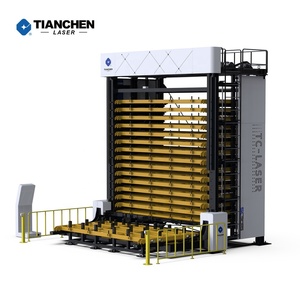
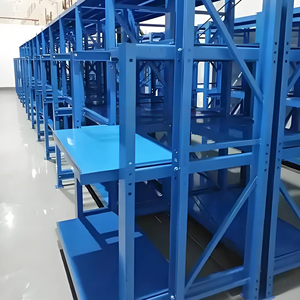
- Specialized heavy-capacity mold drawer racking, vertical sheet towers, and automated buffer systems.
Mecalux S.A.
- Extensive European automated roll-forming and robotic welding facilities across Spain and Poland.
- Seamless proprietary WMS (Easy WMS) software integration for high-bay narrow aisle operations.
- Highly optimized standard catalog solutions with rapid delivery pathways across North America and Europe.
SSI Schaefer Group
- German precision heavy structural steel solutions designed for automated high-bay warehouses (HBW).
- Ultra-high structural safety factors with specialized cold-chain and seismic dampening integrations.
- Global systemic integration network with end-to-end logistics automation hardware and software.
Ridg-U-Rak, Inc.
- Leading American producer of heavy-duty roll-formed teardrop and heavy structural steel channel racking.
- Over 40,000,000 lbs annual steel consumption capacity serving large North American 3PL and retail DCs.
- Patented Column Sentry reinforcement and seismic base connection engineering.
Steel King Industries
- Proprietary closed seamless tubular upright columns delivering 250% higher torsional stiffness than open-back channels.
- Superior impact resistance designed for aggressive forklift operations and high-turnover food depots.
- Heavy 7-gauge structural steel base plates for massive floor slab point-load dissipation.
Modula / Ferretto Group
- Italian industrial design emphasizing high tensile strength with optimized structural profile weight.
- Galvanized structural steel uprights ensuring zero coating degradation in humid or cold-room environments.
- Robust engineering packages for multi-tier mezzanine and rack-supported building architectures.
Constructor Group (Gonvarri Material Handling)
- Extensive Nordic engineering heritage focused on ultra-tough cold-temperature steel toughness ($KV \ge 27\text{ J}$ at -20°C).
- Pre-galvanized high-yield beam profiles eliminating volatile organic compound (VOC) off-gassing.
- Standardized universal beam hook brackets compatible across historic logistics retrofits.
Stow Group
- Massive automated fabrication facilities across Belgium, France, and Germany exporting globally.
- High degree of standardization with modular drop-in connector safety locks.
- Comprehensive compatibility with 2D pallet shuttle systems and automated high-bay cranes.
Advance Storage Products
- Specialists in hot-rolled structural steel channel racking for punishing heavy industrial environments.
- Massive load resistance against recurring forklift side collisions in beverage and freezer warehousing.
- Custom modular base-leg bolting systems preventing anchor shear under high-torque seismic shear waves.
Key Technological Trends Transforming Racking Sourcing
Procuring heavy-duty selective pallet racking across the 2025–2030 cycle is driven by three intersecting macro trends: high-bay automation integration, sustainable lifecycle steel metallurgy, and real-time structural health monitoring.
1. Automated Guided Vehicle (AGV) & AMR Floor Integration Clearances
Traditional selective racking aisles were laid out for reach trucks requiring 2.8m to 3.2m clearances or counterbalance trucks needing 3.5m to 4.2m. Modern brownfield retrofit facilities are systematically transitioning to Autonomous Mobile Robots (AMRs) and automated counterbalance AGVs. This shift requires tighter manufacturing tolerances on beam level consistency (within ±1.5mm across a 2700mm bay span) and specific bottom-tier upright frame deflector brackets to prevent laser sensor blind-spot collisions.
2. Cold-Chain Logistics & Cryogenic Steel Metallurgy
The explosive growth of pharmaceutical cold storage (-80°C to -20°C) and frozen food retail has exposed critical vulnerabilities in standard grade Q235 carbon steel. At temperatures below -15°C, standard commercial carbon steels suffer from ductile-to-brittle transition (DBTT), making them vulnerable to shattering under slight forklift mast impact. Procurement tenders now mandate micro-alloyed steels treated with vanadium or niobium (e.g., Q355ND or European S355J2H), possessing certified Charpy V-notch impact toughness of at least 27 Joules at -20°C.
3. Low-Carbon Steel & Life-Cycle Circularity (Scope 3 Emissions)
Multinational 3PL providers and Fortune 500 manufacturers are evaluating suppliers based on embodied carbon in raw hot-rolled strip steel. Leading European and Chinese rolling mills now provide Environmental Product Declarations (EPDs) certified by UL or TÜV. Procurement contracts favor electric arc furnace (EAF) steel with recycled scrap content exceeding 65%, resulting in a 40% reduction in Scope 3 supply chain carbon emissions compared to traditional blast-furnace/basic-oxygen-furnace (BF-BOF) steel production.
4. Digital Twin Structural Health Monitoring (IoT Strain Telemetry)
Overloading and undetected forklift impact damage remain the leading causes of progressive warehouse rack collapse. Future-proof procurement specifications increasingly include factory-installed digital strain gauges and MEMS accelerometers embedded into critical lower upright frames. These telemetry nodes communicate via LoRaWAN to cloud-based warehouse digital twins, triggering maintenance alerts when localized plastic deformation or eccentric point-loading exceeds allowable EN 15635 limits.
Engineering Superiority & Factory Assurance
Engineered to exceed EN 15512, RMI, and AS 4084 standards with fully traceable raw steel, certified robotic welding, and end-to-end global project management.
Certified Steel Metallurgy
100% prime high-tensile steel coils with Mill Test Certificates (MTC) verifying yield strength ($f_y \ge 355\text{ MPa}$), chemical elongation, and impact values.
Continuous CNC Roll-Forming
In-line multi-station cold-roll forming lines providing strict cross-section dimensional accuracy and zero punch perforation burrs.
DuPont Thermoset Coating
Automatic 7-stage pre-treatment iron phosphate wash followed by electrostatic robotic powder coating cured at 200°C for superior scratch and salt resistance.
FEA Structural Calculations
Full 3D finite element calculation dossiers under EN 15512 or RMI standards covering seismic shear, live loads, and floor slab anchor reactions.
Frequently Asked Questions on Pallet Racking Procurement
Direct engineering answers to the critical structural, regulatory, and logistics questions asked by warehouse project managers.