Engineered Warehousing Racking & Dynamic Picking Systems
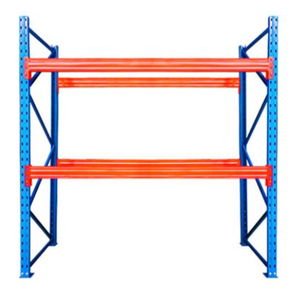
Manufactured to EN 15512 and ISO standards, our custom-configured racking platforms deliver structural stability, complete traceability, and modular compatibility for high-capacity warehouse operations across Osaka and export shipping terminals.
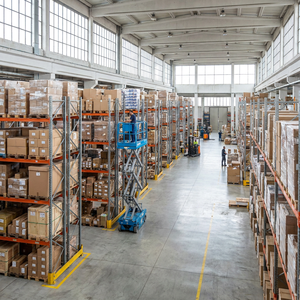
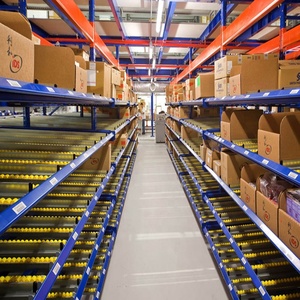
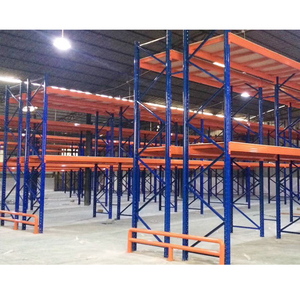
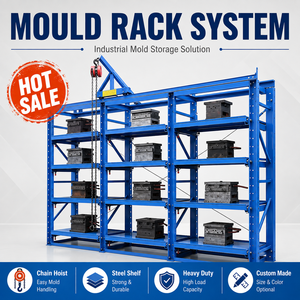
Engineering Fall-Protection & High-Tenacity Netting for High-Bay Facilities
In modern automated logistics and high-bay racking corridors, falling cartons or displaced pallets during material handling and seismic resonance present catastrophic operational risks. Discover how our custom OEM netting systems mitigate structural impact and safeguard workforce personnel.
High-Tenacity Knotless Webbing & Cordage
Our OEM containment nets are fabricated using high-tenacity polypropylene (HTPP) or UV-stabilized ultra-high-molecular-weight polyethylene (UHMWPE). By utilizing knotless interlaced mesh geometries, stress concentrations are uniform across the boundary cord, preventing point failures during sudden carton displacement.
Treated for fire retardancy (DIN 4102 B1 and Japanese Fire Service Act certifications), these nets maintain elongation properties between 15% and 22%, absorbing dynamic kinetic energy without permanent deformation.
Engineered Beam & Upright Anchor Brackets
Netting efficacy relies fundamentally on hardware anchorage. We manufacture laser-cut, galvanized cold-formed steel mounting clips that fasten directly to teardrop, hexagonal, or diamond upright perforations without requiring drilling that could violate steel structural warranties.
Offset standoff brackets (ranging from 75mm to 300mm) ensure that pallet overhang does not rub against the containment net during standard reach-truck picking, prolonging netting service life and preserving unobstructed aisle passage.
Modular Push-Through & Aisle Protection
Our OEM modular netting designs support rapid retrofit on operating racks. Systems can be configured as fixed rear-bay backing barriers, sliding walk-through curtains for pick-faces, or automated drop-down mesh curtains integrated with photo-eye interlocks on automated crane interfaces.
By decoupling horizontal cable tensions from vertical upright sway, our modular net assemblies do not induce uncalculated lateral torsions on tall rack towers during seismic oscillations.
| Netting / System Grade | Material Core | Mesh Aperture | Boundary Tensile Strength | Dynamic Absorption | Recommended Racking Application |
|---|---|---|---|---|---|
| Series LN-Light Cartons | Knotless High-Tenacity PP | 25 mm x 25 mm | 1,200 daN perimeter cord | Up to 800 Joules | E-commerce split-case picking, Carton Flow racks |
| Series MN-Industrial Pallet | UV-Stabilized Polyamide 6 | 45 mm x 45 mm | 2,400 daN aircraft wire rope | Up to 2,200 Joules | Selective pallet racking, Narrow aisle high bay |
| Series HN-Seismic Heavy | Braided UHMWPE Composite | 60 mm x 60 mm | 4,500 daN stainless wire rope | Up to 5,000 Joules | Heavy plate storage, Osaka seismic coastal warehouses |
| Series FR-Cold Storage | Low-Temp Sub-Zero Polyolefin | 40 mm x 40 mm | 2,800 daN nylon-coated cable | Up to 2,500 Joules | -30°C Cold chain frozen food distribution centers |
Deploying Racking & Fall Protection Across Greater Osaka Logistics Hubs
Osaka serves as Western Japan's primary maritime and inland cargo interchange. The intersection of dense land usage, heavy port traffic, and stringent earthquake mitigation standards dictates specific engineering requirements for warehouse storage infrastructure.
Osaka Bay Waterfront & Nanko Container Logistics
Facilities situated in Konohana-ku, Minato-ku, and the Nanko waterfront encounter aggressive coastal humidity alongside high turnover of import-export containerized cargo. Warehouses handling fast-moving SKUs require galvanized and anti-rust coated uprights combined with saline-resistant synthetic containment nets.
These barriers prevent palletized freight from shifting into truck staging docks during cross-dock operations, ensuring continuous stevedore safety and rapid turnaround for overseas container stuffing.
Inland Multimodal Hubs (Ibaraki, Takatsuki, Kadoma)
Strategically clustered along the Meishin Expressway and Kinki Expressway corridors, inland Osaka fulfillment centers face extreme floor-space rental premiums. Operators rely on high-bay selective pallet racking exceeding 10 to 14 meters in clear ceiling clearance.
At these heights, top-beam deflection and manual picking hazards increase exponentially. Our full-height back-of-rack netting systems create a continuous containment envelope, preventing carton falls into pedestrian transit corridors or automated picking lanes.
Cold Chain & Central Wholesale Market Storage
Serving Osaka's renowned food manufacturing and marine import sector, cold storage warehouses in Sakai and Fukushima wards operate at temperatures from -20°C to -35°C. Conventional metal wire decking and standard brittle plastic nets suffer stress cracking under cryo-conditions.
We supply specialized low-temperature elastomer-treated netting and powder-coated heavy-duty metal racking systems designed to prevent frost adhesion, allowing cold-air convection while arresting carton slippage caused by pallet icing.
Evolving Japanese Logistics: Structural Retrofit & Regulatory Trends
The Japanese supply chain landscape is undergoing historic disruption. From the implementation of driver overtime caps (the '2024 Logistics Problem') to updated Building Standards Act seismic benchmarks, warehouse engineering must evolve rapidly.
The '2024 Problem' Driving Dense Urban Buffering
Statutory caps on commercial driver overtime in Japan have restricted long-haul trucking ranges, transforming Osaka into the critical transshipment nexus for Western Japan. Regional hubs must now accommodate larger safety buffers and dynamic SKU turnarounds within existing facility perimeters.
Instead of capital-intensive real estate expansion, facilities are transitioning conventional selective racks into FIFO Dynamic Gravity Carton Flow and Narrow Aisle systems. Incorporating custom OEM fall-prevention netting ensures fast-cycling automated equipment operates continuously without emergency stops caused by protruding cartons.
Nankai Trough Earthquake Preparedness Mandates
Osaka prefectural disaster-prevention ordinances have placed renewed scrutiny on warehouse occupational safety. Under seismic resonance (long-period ground motions typical of sedimentary Osaka plains), palletized merchandise can slide off upper beam levels, creating dangerous falling hazards and blocking evacuation routes.
Our engineering division designs seismic damping brackets and high-capacity containment netting in direct alignment with JIS B 8941 standards. By retrofitting existing high-bay steel racks with flexible containment netting, facility managers satisfy regulatory safety audits while protecting costly inventory.
Engineering-Led Manufacturing & Global OEM Export Strengths
As a dedicated OEM manufacturer and international exporter, DEXION RACKING pairs European structural calculation standards (EN 15512) with precision Asian manufacturing efficiency, delivering turnkey reliability from structural analysis to site commissioning.
Certified Structural Engineering & CAD Modeling
Every racking system and netting installation is verified through finite element analysis (FEA). We calculate beam deflection limits, upright column buckling, and seismic base-plate shear forces based on exact building slab compressive data, handling equipment parameters, and localized seismic acceleration coefficients.
Controlled In-House Manufacturing
Utilizing high-grade structural steel (Q235B, Q355B, and high-tensile coil stock), our automated roll-forming lines produce uprights and box beams with millimeter tolerances. Automated robotic welding stations and automated multi-stage pre-treatment powder coating lines ensure corrosion resistance in humid maritime climates.
Full Lifecycle Support & EN 15635 Auditing
We do not merely supply hardware; we provide complete lifecycle integration. Our certified engineers perform on-site structural rack inspections, dynamic deflection measurements, and damage classification (Green, Amber, Red hazard coding), followed by non-disruptive component replacement and netting retensioning.
Frequently Asked Questions by Kansai & Global Facility Directors
Detailed answers addressing structural ratings, Japanese local compliance, OEM custom sizing, and international logistics operations.