Up to 20%
Volumetric Density Gain
2,500 KG+
Load Capacity Per Level
EN 15512 & RMI
Seismic Structural Design
100% Traceable
High-Tensile Q235B / Q355B Steel
Engineered Warehouse Solutions
Industrial-Grade Pallet Racking Systems
Direct manufacturer supply of scalable selective, high-density shuttle, and motorized mobile racking designed to withstand heavy daily cycles in demanding Northeast supply chain environments.
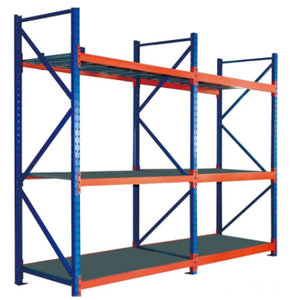
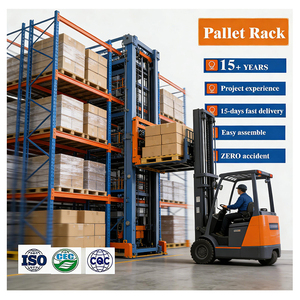
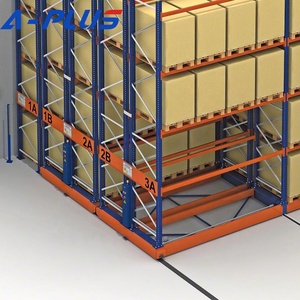
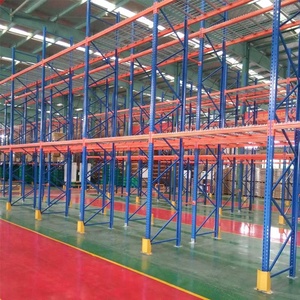
Warehouse Density Engineering in Greater Boston & New England
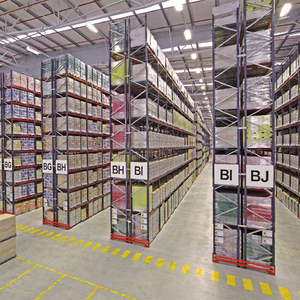
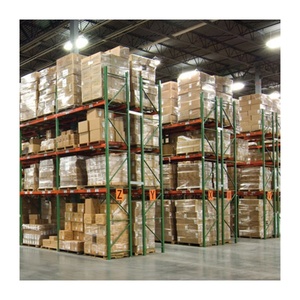
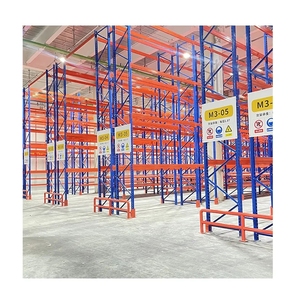
Industrial warehousing space along the Interstate 95 (Route 128) beltway and the Interstate 495 distribution spine in Eastern Massachusetts represents some of the most expensive and space-constrained industrial square footage in North America. With commercial real estate lease rates remaining elevated across Middlesex, Essex, and Norfolk counties, operations cannot afford vacant vertical headroom or wide, under-utilized access aisles.
As direct factory fabricators and structural pallet rack engineers, our systems address this critical spatial footprint challenge. By implementing structural configurations engineered under ANSI MH16.1 (RMI specification) alongside the stringent finite element analysis criteria of EN 15512, our platforms enable Boston enterprise buyers to maximize vertical cubic clearance up to 40+ feet while retaining certified deflection thresholds of L/200 under peak continuous loads.
"Maximizing warehouse efficiency in high-barrier New England submarkets demands an engineering transition from generic off-the-shelf selective racking to application-calibrated, high-density shuttle and mobile bases that reclaim upwards of 80% redundant aisle volume without sacrificing SKU traceability."
Engineered for Greater Boston's Dominant Industrial Clusters
Logistics facilities in Greater Boston, Central Massachusetts, and southern New Hampshire exhibit vastly divergent handling requirements compared to sprawling Mid-Atlantic regional hubs. Our manufacturing framework produces custom profiles, seismic footings, and specialized coatings customized for three principal commercial applications:
Biotech & Life Sciences Cold Chain
Deployments in Cambridge, Waltham, and Bedford biomedical corridors demand cleanroom-grade, thermoset epoxy powder-coated racking capable of structural integrity within -30°C blast-freeze conditions and strict Class 10,000 particulate constraints.
I-495 Corridor 3PL Distribution
Consolidated multi-client fulfillment operations situated in Worcester, Franklin, and Marlborough rely on flexible, heavy-duty adjustable beams rated at 2,500 KG per level, facilitating immediate SKU re-profiling for rapid consumer delivery networks.
Historic Mill & Urban Retrofits
Converting brick masonry and legacy post-and-beam spaces in Charlestown, Chelsea, or Lawrence demands custom baseplates, load-distributing floor rails, and tailored column spans to accommodate non-standard building structural column grids.
System Architecture & Density Engineering Comparison
Selecting the optimal racking architecture requires balancing initial investment, mechanical throughput velocity, building slab loading limitations, and volumetric footprint consolidation:
| Storage Architecture | Floor Footprint Utilization | Direct Selectivity | Throughput Velocity | Optimal Boston Market Application |
|---|---|---|---|---|
| Adjustable Selective Racking (P90) | Baseline (35% - 40%) | 100% Direct Access | High (Standard MHE) | General e-commerce, high-SKU distribution, fast pick modules |
| 4-Way Automated Shuttle / Radio Runner | High Density (70% - 80%) | Lane Dependent (FIFO / LIFO) | Continuous Automated Runs | Raw material holding, batch manufacturing, cold storage staging |
| Electrically Driven Mobile Racking (MOVO) | Maximum Density (85% - 90%) | 100% Selectivity (Dynamic Aisle) | Controlled Single-Aisle Shift | Deep-freeze storage facilities, expensive urban parcel logistics |
| Heavy Duty Drive-In / Drive-Through | High Density (65% - 75%) | LIFO / Strict FIFO | Moderate (Forklift Entry Required) | Homogeneous product runs, seasonal inventory consolidation |
Emerging Supply Chain & Racking Trends Across New England
The warehousing landscape in Massachusetts is undergoing an accelerated modernization phase propelled by three market-defining developments:
Automation-Ready Upright Engineering
Boston supply chain managers are specifying heavier section moduli on uprights and stiffener arrays upfront, allowing facilities to convert conventional selective lanes into AGV corridors or shuttle pathways without structural re-engineering.
Rigorous Life Safety & Seismic Permitting
Municipal building inspectors across Massachusetts require PE-stamped structural calculations and high-grade seismic anchorages under IBC / ASCE 7 parameters, making manufacturer-certified calculations mandatory during permit review phases.
Energy-Efficient Cold Storage Compaction
With electrical energy tariffs in New England among the highest nationwide, cold storage operators are leveraging motorized mobile racking (MOVO) and multi-deep shuttles to slash refrigerated air volume per pallet by over 45%.
Direct Factory Engineering, Controlled Tolerances & Global Reliability
Unlike third-party equipment brokers, we operate as a direct steel fabricator and structural solutions provider with complete lifecycle accountability. From initial laser-guided facility layouts and finite element load simulations to roll-forming and sub-zero powder finishing, our quality systems eliminate supply chain friction:
Certified Structural Engineering
Our in-house design office provides complete static calculations, baseplate deflection analysis, and structural CAD integration conforming to EN 15512 and RMI requirements, complete with verified load signage data packages.
High-Grade Steel Mill Integrity
We source certified structural steels (Q235B, Q355B, and high-yield European equivalents) with rigorous tensile testing, automated multi-stage roll-forming lines, and comprehensive mill heat traceability on all structural members.
Lifecycle Maintenance & Inspection
Racking longevity requires ongoing care. We supply standardized damage replacement assemblies, column deflection guards, and EN 15635 compliant inspection protocols to guarantee lifetime operational safety.
Procurement Intelligence
Boston Warehouse Pallet Racking FAQs
Essential structural, logistical, and compliance considerations addressed directly by industrial storage engineers.
What permits and structural codes are required for pallet racking in Boston?
Warehouses across Massachusetts must comply with 780 CMR (Massachusetts State Building Code), which incorporates the International Building Code (IBC) and ASCE 7 seismic standards. Industrial pallet racks are classified as building storage racks and require stamped structural drawings from a licensed Professional Engineer (PE), demonstrating proper anchorage and seismic load compliance based on local soil conditions.
Can our existing selective racking be retrofitted into high-density storage?
Yes. Many Boston and Worcester area facilities preserve their existing structural steel footprint while upgrading capacity through beam re-profiling, vertical frame splicing, or retrofitting specific aisles into radio shuttle channels or carton live-pick tunnels. Our engineering team conducts full structural load calculations to confirm that the existing slab and steel uprights safely handle the increased density.
How does cold storage impact pallet rack coating and steel selection?
In sub-zero cold chain and pharmaceutical cleanroom environments, standard low-cure coatings can turn brittle and crack under thermal contraction. We apply thermoset epoxy and polyester hybrid powder formulations pre-baked at elevated temperatures, providing superior impact resistance at temperatures down to -30°C without flaking or chemical degradation.
How often must industrial racking be inspected in commercial distribution centers?
Both European EN 15635 standard guidelines and OSHA general duty safety clauses mandate visual safety audits. Facilities should conduct weekly or monthly visual checks by an appointed Person Responsible for Racking Safety (PRRS), supplemented by an annual structural inspection by a qualified racking engineer to catch beam deflection or anchor shear before failure occurs.
What is the typical shipping and customs transit timeline to New England ports?
Direct manufacturer ocean shipments to the Port of Boston (Conley Terminal) or Port of New York/New Jersey generally transit within 28 to 35 days. We prepare complete export shipping documentation, mill test certificates, container loading maps, and customs clearance dossiers to streamline delivery directly to your job site along Route 128, I-95, or I-495.
Do you support warehouse automation integrators with custom racking structures?
Yes. We collaborate directly with material handling automation integrators and AGV developers across North America. We manufacture ultra-precise tolerance upright profiles, rail-guided mobile bases, and shuttle track profiles that ensure smooth mechanical clearances and seamless sensor interaction across high-bay installations.