Product Architecture
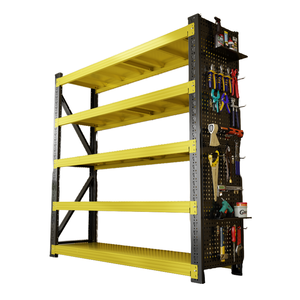
Industrial Pallet Racking & High-Density Storage Solutions
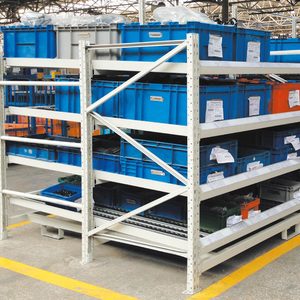
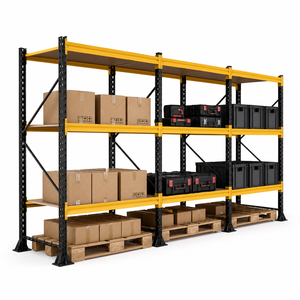
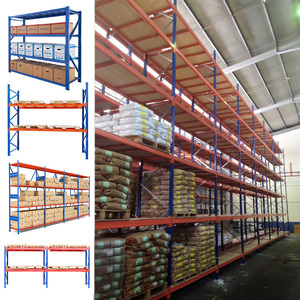
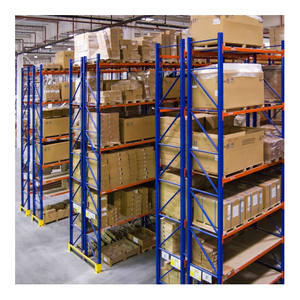
Precision-engineered, heavy-duty racking fabricated to international European (EN 15512) and FEM design specifications, purpose-built for UAE climatic extremes, seismic requirements, and accelerated high-throughput cycles.
85%+
Cubic Volume Utilization
EN 15512
Certified European Engineering
Q355B
Structural High-Tensile Steel
48 Hr
CAD Layout & Static Calculation
Strategic Whitepaper
High-Density Storage Dynamics in the United Arab Emirates Logistics Landscape
The United Arab Emirates—anchored by global multimodal distribution hubs such as Jebel Ali Free Zone (JAFZA), Dubai South (DWC), Khalifa Industrial Zone Abu Dhabi (KIZAD), and Sharjah Airport International Free Zone (SAIF Zone)—is witnessing an unprecedented demand for volumetric efficiency. Industrial warehousing real estate in the GCC region commands a steep premium. Coupled with high energy expenditures required to maintain climate-controlled and temperature-sensitive cold chain facilities (+4°C chill down to -28°C blast freezing), traditional wide-aisle selective pallet racking often represents an inefficient allocation of capital expenditure.
Within this logistical theater, Drive-In and Drive-Through Racking Systems provide the definitive engineering solution for organizations handling homogeneous inventory with moderate to high pallet volume per Stock Keeping Unit (SKU). By eliminating conventional intermediate forklift aisles, drive-in systems compact storage blocks into contiguous channels, transforming unutilized aisle airspace into revenue-generating storage cube. Warehouses converting from standard selective setups routinely realize between 65% to 85% storage density expansion across identical square meter footprints.
Structural Mechanics: Drive-In vs. Drive-Through Configurations
A rigorous understanding of supply chain kinetics dictates whether a warehouse manager should deploy a Drive-In (LIFO) or Drive-Through (FIFO) structural topology:
- Drive-In Systems (Last-In, First-Out - LIFO): Forklift operators enter and exit through the same access aisle. The first pallet positioned into the structural rail lane is the last pallet retrieved. This setup is universally prized in deep-freeze cold storage, chemical raw materials storage, and non-perishable bulk consumer goods, maximizing cube utilization against perimeter concrete walls.
- Drive-Through Systems (First-In, First-Out - FIFO): Featuring dedicated loading and picking faces on opposite ends of the racking block. Pallets travel continuously through the aisle. This architecture is indispensable for perishable food processing, pharmaceutical distribution under strict Ministry of Health (MOH) batch controls, and high-velocity fast-moving consumer goods (FMCG) subjected to rigorous expiry dates.
| Engineering Criteria | Standard Selective Racking | Drive-In Racking (LIFO) | Drive-Through Racking (FIFO) |
|---|---|---|---|
| Footprint Utilization | 35% – 45% (Aisle Intensive) | 75% – 85% (Ultra-Dense) | 70% – 80% (Dual Access) |
| Pallet Selectivity | 100% Immediate Access | Low (Lane-by-Lane Batch) | Moderate (Strict Sequential Access) |
| Inventory Rotation | Arbitrary / Flexible | Last-In, First-Out (LIFO) | First-In, First-Out (FIFO) |
| Cold Storage Operating Cost | High (Refrigerating Empty Aisles) | Optimal (Maximum Thermal Mass) | Very Efficient (Controlled Airflow) |
| Handling Equipment Requirements | Counterbalance or Reach Trucks | Slim-Chassis Counterbalance / Reach | Slim-Chassis Counterbalance / Reach |
Localized UAE Application Scenarios & Sector Integration
The adoption of custom drive-in and drive-through racking systems across Dubai Industrial City, Dubai Maritime City, Al Quoz, and ICAD (Abu Dhabi) aligns with distinct structural workflows:
Cold Storage & Food Security
Aligned with the UAE National Food Security Strategy 2051. Dense thermal mass storage in sub-zero facilities significantly slashes kilowatt-hour refrigeration refrigeration overhead.
FMCG & Retail Fulfillment
Handling bulk seasonal buffers for mega-retailers during Ramadan and national holiday peak shopping surges, ensuring buffer stock is consolidated into narrow footprints.
Chemical & Construction Raw Materials
Accommodating heavy pallet loads up to 1,500kg per position for cement, plastics, tile adhesives, and packaging supplies across manufacturing parks in Ras Al Khaimah and Sharjah.
Key Engineering Benchmarks for UAE Procurement Directors
When vetting international manufacturers and exporters supplying the Arabian Gulf market, procurement engineers must verify compliance against stringent localized environmental and seismic dynamics:
- Steel Metallurgy & High-Yield Raw Material: Racking uprights and pallet rails must be manufactured from prime structural grade certified cold-rolled coil steel (such as Q355B or S355JR). This ensures structural elasticity under dynamic load impact without permanent deformation.
- Civil Defense & Seismic Calculation Compliance: Engineering files must provide static calculation documentation compliant with Dubai Civil Defense (DCD) fire suppression clearance requirements (NFPA 13 in-rack fire sprinkler clearance) as well as regional seismic parameters outlined in the UAE Uniform Building Code.
- Surface Pre-Treatment & Anti-Corrosion Coating: Due to saline coastal breezes and hyper-humid conditions across JAFZA and Khalifa Port, structural components require multi-stage phosphating followed by thermosetting electrostatic powder coating (thickness ≥ 70-90μm) or hot-dip galvanizing for cold storage longevity.
- Floor Guide Rails & Impact Armor: Because lift trucks physically drive inside the structural bay corridors, continuous structural steel guide rails (bolted to C25/30 concrete floors with mechanical chemical anchors) and heavy-gauge column leg protectors are paramount to eliminate chassis collision hazards.
Procurement Insights
Frequently Asked Questions by UAE Warehouse Engineers
Expert answers addressing customs clearance, structural calculations, Civil Defense compliance, and material handling dimensions.
What clear building height and forklift specifications are required for Drive-In racking?
Drive-in racking typically operates effectively in warehouse facilities with clear heights ranging from 6.0 meters up to 13.0 meters. Because the forklift enters the racking lane, the overall mast width, overhead guard width, and chassis dimensions of your reach truck or counterbalance forklift dictate the clear bay width. Typically, an internal clearance allowance of 75mm to 100mm per side between the forklift chassis and the pallet support rail is engineered.
How does Drive-In racking integrate with Dubai Civil Defense (DCD) fire safety codes?
Under NFPA 13 and UAE fire codes, deep racking configurations require specialized fire protection analysis. Depending on the building roof height, commodity hazard classification (Class I through IV or Plastics), and storage depth (over 6 pallets deep), internal in-rack sprinkler channels, horizontal barriers, or ceiling high-density ESFR (Early Suppression Fast Response) sprinkler systems must be incorporated into the structural racking layout prior to municipality submittal.
Can Drive-In and Drive-Through systems handle both Euro (1200x800mm) and ISO/Industrial (1200x1000mm) pallets?
Yes, but this must be defined during the CAD design phase. Pallet support rails and bracket cantilever arms must be customized. In the UAE market, the 1200mm (depth) x 1000mm (width) industrial perimeter base pallet is standard. If Euro pallets (800mm width) enter the same lane, they will fall between standard rails without custom dual-flange support rails or intermediate structural pallet adaptors.
What is the standard manufacturing and shipping lead time to UAE ports (Jebel Ali / Port Khalid)?
Standard production cycles for typical 1,000 to 10,000 pallet position installations span 3 to 4 weeks upon engineering drawing sign-off. Ocean freight from our primary manufacturing terminals to Jebel Ali Port or Port Khalid (Sharjah) requires approximately 14 to 21 transit days. Full container load (40HQ) consolidation is optimized using customized bundling techniques to protect powder-coated surfaces and prevent transit friction damage.
How does EN 15635 compliance apply to drive-in racking maintenance in the Middle East?
European Standard EN 15635 dictates regular systematic inspections for steel storage racks. Drive-in systems, due to continuous forklift incursions within upright lanes, present a higher statistical risk of impact to lower uprights and entry guide funnels. An annual structural inspection by a certified rack safety technician, paired with weekly visual audits using the standard Green-Amber-Red damage categorization matrix, is mandatory to maintain facility insurance validity across the UAE.
Direct Factory Engineering
Maximize Your UAE Warehouse Capacity Today
Submit your facility architectural drawings, pallet weight metrics, and forklift specifications. Our senior structural storage engineers will calculate static load capacities and deliver a complete 2D/3D CAD layout within 48 hours.
Send an Inquiry