Core Robotic Racking Systems Engineered for High-Throughput Hubs
Explore our certified robotic racking portfolio designed specifically for automated warehouses, Autonomous Mobile Robots (AMR), Automated Guided Vehicles (AGV), and heavy-duty industrial automation.
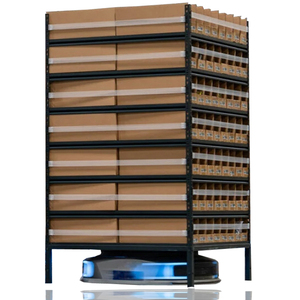
Heavy Duty Industrial Steel Customized 5 Layer AMR Robot Supporting Shelf AGV Applicable Racks with Corrosion Protection
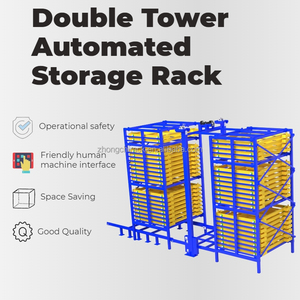
Smart Steel Sheet Storage System Vertical Type Rack For Industrial Warehouse Automation
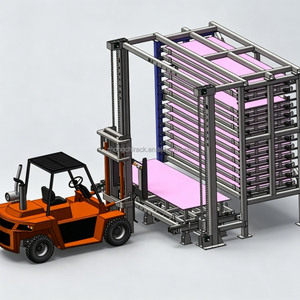
Intelligent Steel Vertical Sheet Storage Rack Automated Plate Warehouse with Robot Automatic Loading Function Heavy Duty
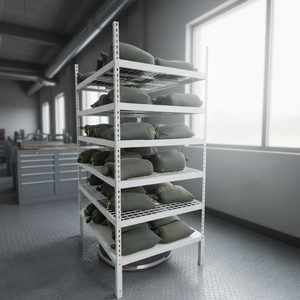
Heavy Duty Industrial Intelligent Robot Warehouse Automation Storage Holders Mobile AGV AMR Steel Rack Shelves Corrosion
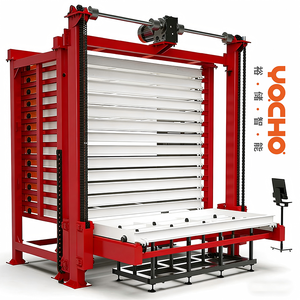
Intelligent Automated 5-Layer Durable Sheet Metal Storage Warehouse System with Loading/Unloading Manipulator and Warehouse Rack
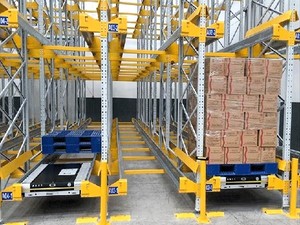
Factor Direct Hot Popular Save Your Space Heavy Duty Pallet Racking Automated Storage Radio Shuttle Rack System Solutions
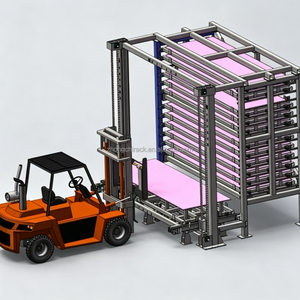
Space Saving Automated Industrial Adjustable Heavy Duty Anti-Rust Steel Plate Storage Rack For Warehouse Storage Solution
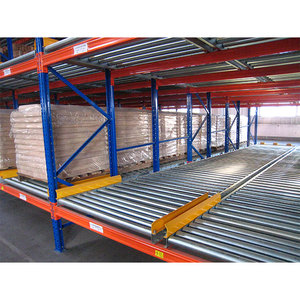
Q235 Steel 2000kg Capacity FIFO High Density Industrial Warehouse Storage Gravity Pallet Flow Rack System
Executive Analysis: The Robotic Racking Transformation Across the Hamburg Metropolitan Region
The Free and Hanseatic City of Hamburg represents northern Europe’s most critical intermodal supply chain gateway. Home to the Port of Hamburg (Hamburger Hafen)—Europe’s third-largest container port—and an economic powerhouse spanning aviation (Airbus Finkenwerder), green hydrogen, maritime logistics, and cold-chain transshipment, the metropolitan region faces unprecedented pressures on industrial warehousing footprint.
Transitioning from manual counterbalanced forklift aisles (typically 3.2m to 3.8m clear width) to autonomous robotics (such as floor-traveling AMRs operating in 1.1m to 1.6m profiles or 2D automated radio shuttle runs) elevates volumetric cube utilization by 65% to 180%. However, integrating robotics into heavy-duty storage places non-negotiable structural demands on steel racking tolerances, floor deflections, and dynamic load dissipations governed strictly by German and European statutory bodies.
Aluvial Soil Settlement
Elbe estuary silt requires custom heavy-duty spreader footplates (≥280 cm²) and anchor embedments to counteract localized subgrade deflection and high-load settling in port polders.
VDMA 15251 Floor Flatness
High-speed autonomous mobile robots operating under dense uprights require strict adherence to DIN 18202 Table 3 Group 4 leveling to prevent beam clipping and sensor misreads.
DIN EN 15512 Statics
Every racking tier must carry structural static verification with finite element calculations, validating second-order limit states, beam unbraced lengths, and seismic safety coefficients.
Top 10 Heavy Duty Robotic Storage Racking Factories & Suppliers for Hamburg
Navigating the capital equipment market for high-density, automated robotic racking requires examining engineering capabilities, production steel grades, regional service presence, and system integrator interface capabilities. Below is an engineering evaluation of the premier 10 manufacturers and suppliers serving Hamburg and Northern Germany.
DEXION RACKING Systems
European Engineering · Turnkey Robotic RackingHamburg Footprint: Turnkey local delivery
Jungheinrich AG
Headquartered in Hamburg · Automated High-BayService: Direct factory fleet in HH
SSI SCHÄFER Systems International
Neunkirchen / Northern Germany Sales BureauPayload: Up to 2,500 kg/pallet
Mecalux Deutschland GmbH
Automated Pallet Shuttle & Stacker CranesTolerances: Class 100/200 Robotic
Bito-Lagertechnik Bittmann GmbH
Meisenheim / Hamburg Regional BranchSurface: High-adhesion powder coat
Stow Robotics (Stow Group)
High-Density 2D Matrix Shuttle & Silo SystemsShuttle Speed: 1.5 m/s acceleration
Kardex Remstar & Mlog
Automated High-Bay Storage & Vertical CarouselsCapacity: 5,000 kg/tray
Vanderlande Industries Germany
Automated Logistics & Fast Sortation RackingInterface: PLC / SCADA linkage
NEDCON Storage Management
Complex Automated Racking Structural EngineeringFinish: Continuous hot-dip galvanized
voestalpine Krems Finaltechnik
Cold-Formed High-Bay Silo Racking StructuresSteel: Ultra-high-yield automotive grades
Technical Benchmark: Robotic Racking vs. Conventional Pallet Racking in Hamburg
Robotic storage interfaces eliminate human operator cushion. In conventional forklift warehouses, a 20 mm beam deflection under peak load is absorbed visually by drivers. In contrast, an autonomous optical-guided vehicle, stacker crane sensor, or AMR navigating on top of a rack shelf will trip collision faults or miss bay indexing if structural deformation exceeds calibrated tolerances.
| Structural Parameter | Conventional Wide Aisle (APR) | Autonomous Radio Shuttle | Robotic AMR/AGV Supporting Racking | ASRS High-Bay Silo |
|---|---|---|---|---|
| Governing Standard | DIN EN 15512 / EN 15635 | DIN EN 15512 / FEM 9.831 | DIN EN 15512 / VDMA 15251 | FEM 9.832 / Eurocode 3 |
| Max Beam Deflection | L / 200 (Standard load) | L / 250 to L / 300 | L / 350 (Tight robotic index) | L / 400 (Ultra-low deflection) |
| Aisle Clearance Required | 3,000 mm – 3,600 mm | Zero working aisles in block | 1,200 mm – 1,600 mm | 1,400 mm – 1,600 mm (Crane) |
| Volumetric Efficiency | 35% – 45% Cube Usage | 75% – 85% Cube Usage | 60% – 72% Cube Usage | 85% – 92% Cube Usage |
| Floor Flatness Class | DIN 18202 Line 3 (General) | DIN 18202 Line 3 (Rails level) | DIN 18202 Line 4 / VDMA Group A | Special VDMA Tight Track Specs |
| Corrosion Specification | Dry Indoor Powder Coat (C1) | C2 / C3 Standard Protection | C3 / C4 Salt-spray resistant | Hot-Dip Galvanized / C5-M Maritime |
Localized Use Cases Across Hamburg's Strategic Industrial Hubs
Deploying heavy-duty robotic racking in Hamburg is intrinsically tied to the operational realities of the local corporate landscape. Below are four key deployment profiles where precision engineering delivers quantifiable ROI.
Port Buffer Hubs (Altenwerder)
Rapid container stripping and buffer warehousing in Altenwerder demand high-throughput automated radio shuttle channels. Palletized cargo unloaded from 40-foot shipping containers is loaded directly into deep-lane channels under continuous FIFO or LIFO dispatch logic, reducing yard dwell time by 42%.
Aerospace Production (Finkenwerder)
Supporting Airbus manufacturing ecosystems requires specialized vertical drawer sheet metal storage systems and heavy-duty AMR staging racks. High-strength aircraft alloys, titanium sheets, and wing sub-assemblies are retrieved via robotic manipulators with zero scratch risks and 100% ERP serial traceability.
Urban Micro-Fulfillment (Billbrook)
Urban grocery and next-day eCommerce logistics in Billbrook and Allermöhe leverage high-density multi-tier AMR picking structures. Floor-level robot pods glide autonomously beneath elevated racking decks, shuttling inventory to ergonomic goods-to-person picking stations operating 24/7.
Emerging Technology Trends in Hamburg Racking Deployments
Driven by Germany’s national Climate Action Plan (Klimaschutzplan 2050), ESG mandates, and sharp power rate adjustments, warehouse operators throughout Hamburg are modernizing their storage strategies. Three dominant macro-trends define future-proof racking investments:
Our Engineering Advantages: Certified Precision for Mission-Critical Facilities
When engineering and supplying robotic heavy-duty racking for Hamburg's exacting industrial market, we combine deep in-house cold-roll forming manufacturing with certified European structural integrity:
DIN EN 15512 Compliance
Every beam, connector, and upright section undergoes finite element static validation under the latest European standard EN 15512:2020, backed by complete mill test certificates and traceable steel coil heats.
System Integrator Ready
We deliver comprehensive 3D BIM, CAD, and kinematic interface data packages to automation system integrators, guaranteeing frictionless sensor, shuttle, and PLC commissioning on site.
Full Lifecycle Protection
From site survey across the Elbe polder soils to certified installation supervision, load signage, and annual DIN EN 15635 rack safety inspections, our engineers maintain your operational compliance.
Frequently Asked Questions: Purchasing Robotic Racking in Hamburg
Straightforward technical answers to the most critical questions posed by project directors, structural engineers, and supply chain managers.