OEM/ODM Heavy Duty Stacking Racks Manufacturers & Suppliers
Precision-engineered structural steel stackable racking systems, post pallets, and high-density modular storage engineered to EN 15512 and ISO standards for global supply chains.
2,500+ KG
Payload Per Tier Verified
EN 15512
Structural Compliance
100% OEM/ODM
Custom Geometric Profiles
80% Space
Reverse Logistics Collapse
Precision Structural Systems
Heavy Duty Stacking Racks Portfolio
Explore heavy-payload modular racking systems, post nesting pallets, boltless metal shelving, and engineered high-density configurations tailored for warehousing, automotive supply, and intermodal logistics.
Structural Design & Failure Mode Analysis in Stacking Racks
A rigorous review of structural calculations, yield strengths, post-to-cup tolerances, and seismic safety requirements based on EN 15512 and FEM 10.2.02 standard frameworks.
Load Transfer Mechanics in Stacked Post Configurations
Traditional selective pallet racks permanently anchor into the floor slab via baseplates and chemical anchors. Conversely, portable heavy duty stacking racks (manuracks) transfer aggregate multi-tier dynamic loads exclusively through inter-tier column engagement mechanisms. When stacking units 4 to 6 tiers high under dynamic fork impacts, stress concentration around the stack-cup receptacle and base welded joints becomes the primary failure risk.
High Tensile Steel S235JR / S355JR: Cold-formed tubular hollow sections (SHS/RHS) with minimum 3.0mm wall thickness ensure structural rigidity and eliminate buckling under full vertical loads.
MIG Automated Robot Welding: Deep-penetration automated welds on load-bearing cup corners to eliminate structural failure under heavy cyclic dynamic handling.
Conical Stacking Guides: Geometric self-centering locator cups mitigate operator error during elevated fork truck placement, cutting alignment cycle times by 35%.
Engineering Performance Baseline
Mechanical Metric
Standard Market Spec
OEM Industrial Standard
Yield Strength (Fy)
215 MPa
≥ 355 MPa (Certified Q345/S355)
Safety Factor (FEM 10.2)
1.35x Limit State
≥ 1.50x Dynamic Load Tested
Post Concentricity Dev.
± 3.0 mm
≤ ± 0.8 mm (CNC Punch/Cut)
Corrosion Protection
30-40μm Standard Paint
70-110μm Thermoset Epoxy or HDG
Market Foresight & Procurement Analysis
Emerging Procurement & Technology Trends in Industrial Racking
How automation, warehouse real-estate inflation, and lifecycle decarbonization are redefining the global request-for-proposal (RFP) landscape for OEM/ODM steel storage fixtures.
1. Automated Guided Vehicle (AGV/AMR) Tolerances
As autonomous counterbalanced forklifts and heavy-payload AMRs replace manual forklift operators, standard manual manufacturing tolerances (±3mm) are failing. Enterprise buyers now mandate CNC robotic cell tolerances within ±0.8mm for nesting feet, optical reflector index holes, and pallet pocket clear dimensions to eliminate sensor false-trips.
2. Demountable & High-Ratio Foldable Architecture
Reverse logistics freight costs continue to pressure 3PL operating margins. The modern procurement trend prioritizes 4:1 to 7:1 nesting reduction ratios. By engineering removable corner posts or interlocking hinge mechanisms, returning trucks carry up to 80% fewer cubic dead-volume spaces, lowering carbon emissions and transportation costs.
3. Digital Product Passports & Steel Traceability
Under tightening CBAM (Carbon Border Adjustment Mechanism) and ESG scrutiny in European and North American markets, enterprise buyers demand certified steel heat numbers, mill test reports (MTR), and low-carbon electric arc furnace (EAF) raw material verification for all structural steel tubular racks.
With temperature-controlled storage space reaching record valuations, multi-tier stacking racks operating at -30°C face severe condensation, ice accretion, and hydrogen embrittlement risks. The industry is rapidly switching from basic liquid paints to hot-dip galvanizing according to ISO 1461, ensuring over 25 years of corrosion-free performance.
Combining structural engineering precision, certified high-tensile steel manufacturing, and end-to-end lifecycle consulting to deliver uncompromising warehouse performance worldwide.
In-House Structural FEA & Calculation
Every OEM/ODM production run undergoes finite element analysis (FEA) testing under static, dynamic, and seismic simulations. We engineer upright sections and base perimeter channels to precise floor bearing load thresholds and building column spans.
Strict Adherence to EN 15512 & EN 15635
Our manufacturing protocols are certified to EN 15512 static steel racking design codes, ensuring predictable deflection limits under full payloads. All finished projects include factory load-rating identification plates for international safety compliance.
Turnkey Engineering & Global Integrator Fit
We supply engineering data packages, DWG/BIM CAD models, and finite structural documentation directly to system integrators, warehouse design consultants, and multinational 3PL operators for seamless automated warehouse integration.
Procurement Intelligence
Frequently Asked Questions on Heavy Duty Stacking Racks
Critical structural, operational, and logistics considerations answered by our senior storage engineering team.
What are the key technical differences between portable stacking racks and fixed selective pallet racking?
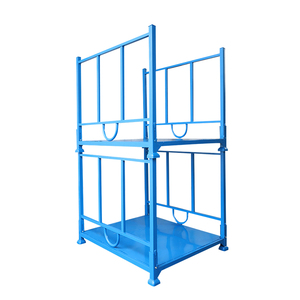
Fixed selective pallet racking relies on vertical upright frames bolted directly into the warehouse concrete slab, creating permanent aisle geometries. Portable stacking racks (post pallets or manuracks) function as self-contained dynamic load units. They require zero floor anchoring, allowing warehouse managers to reconfigure layouts on demand, deploy block-stacking density in seasonal peaks, and clear the warehouse floor entirely during turnaround periods.
How is safe stacking capacity calculated for multi-tier configurations (e.g., 4 to 6 units high)?
Safe stacking height depends on structural post buckling limits, payload center of gravity, and base cup nesting tolerances. For example, in a "1+3" stack (one ground base plus three elevated tiers) rated at 1,500 kg per tier, the ground unit's bottom columns and nesting feet must withstand a combined static compressive load of 4,500 kg plus dynamic impact allowances conforming to EN 15512 safety factors (typically ≥ 1.50). Warehouse floor slab load-bearing PSI must always be verified prior to multi-level tiering.
Can custom post lengths and base geometries be engineered for non-standard cargo profiles?
Yes. As an OEM/ODM manufacturer, we customize base footprints (such as 1200x1000mm, 1500x1200mm, or specialized elongated sizes for pipes and automotive subassemblies) and clear usable post heights ranging from 1000mm to over 2400mm. We can also integrate wire mesh side panels, sheet metal decks, drop-down gates, and forklift guide channels into the base chassis based on your facility's bill of materials.
Which surface finish is recommended: Thermoset Powder Coating or Hot-Dip Galvanization?
Thermoset electrostatic epoxy polyester powder coating (60-90μm) is ideal for ambient dry distribution centers, offering cost-effective durability and color-coded inventory zoning. For sub-zero cold storage facilities, outdoor intermodal marshaling yards, and corrosive agricultural or chemical applications, Hot-Dip Galvanization conforming to ISO 1461 is mandatory. The metallurgical zinc alloy bond prevents subsurface oxidation even when impacted by industrial forklift tines.
What inspection and safety protocols apply under international storage standards like EN 15635?
According to standard EN 15635, all industrial steel storage equipment requires weekly visual inspections by the internal Person Responsible for Racking Safety (PRRS) and comprehensive annual audits by an independent qualified engineer. Key inspection parameters for stacking racks include post straightness (deviation under 1/200th of post height), stack-cup weld integrity, presence of deformation in lower tube pockets, and visual legibility of factory rated-capacity placards.
What are the lead times and sea-freight container packing optimizations for OEM bulk orders?
Standard OEM/ODM production lead times range between 20 to 35 calendar days following engineering CAD sign-off. Demountable and collapsible post pallet systems are bundled in high-density nested steel strapping configurations, enabling up to 140-180 complete rack units to fit inside a single 40ft High Cube (40HQ) container. This design reduces intercontinental ocean freight costs per unit by over 40% compared to rigid welded alternatives.
Accelerate Your Storage Capacity with Engineered OEM/ODM Systems
Consult with our structural engineering team today to review load calculations, request bespoke CAD layouts, or receive complete technical parameter data sheets for your warehouse facility.