EN 15512
Certified Engineering
+100%
Capacity Optimization
5,000 KG
Max Layer Capacity
60+ Countries
Global Logistics Reach
Engineered Heavy-Duty Portfolio
Featured Heavy-Duty Industrial Tool Storage & Pallet Racking Systems
Manufactured using premium cold-rolled Q235B and Q355B high-tensile structural steel. Every unit undergoes automated continuous punching, roll-forming, and non-toxic thermoset electrostatic powder coating.
Engineering Paradigms in Industrial Heavy-Duty Tool and Pallet Storage
Modern manufacturing ecosystems, aerospace assembly bays, automotive toolrooms, and high-velocity distribution centers require advanced structural engineering. The selection of an industrial tool storage racking and pallet racking infrastructure involves strict load calculations, material science, and dynamic mechanical design. As a premier Chinese manufacturer and global tier-1 supply partner, our facility leverages continuous cold-roll forming, automated laser matrix punching, and high-ductility certified Q235B and Q355B structural steel to ensure high mechanical integrity.
Unlike lightweight retail units, heavy-duty industrial storage must handle extreme point loads, asymmetric weight distributions from heavy tooling dies, and repetitive forklift or crane impacts. Systems engineered under European standard EN 15512 and RMI (Rack Manufacturers Institute) guidelines account for second-order sway, beam connection rotational stiffness, and long-term deflection tolerances limited to L/200 under maximum rated operational capacity.
Structural Integrity & Steel Chemistry
Fabricated using cold-rolled structural steel coils with verified yield strengths ranging from 235 MPa to 355 MPa. Batch tracking and metallurgical testing ensure zero structural inclusions.
Interlocking Boltless Mechanics
Engineered multi-claw connector pins with heavy-gauge safety lock pins eliminate beam detachment risks during seismic sway or erratic vertical forklift picking operations.
Surface Passivation & Coating
Multi-stage ultrasonic degreasing, zinc-phosphate conversion, and anti-static thermoset epoxy-polyester powder coating cured at 200°C for superior corrosion and abrasion resistance.
Future Procurement Trends in Heavy-Duty Tool & Warehouse Racking
The global logistics landscape is undergoing structural transformations. Procurement teams evaluating Chinese original equipment manufacturers (OEMs) look beyond basic cost-per-kilogram metrics, focusing on total lifecycle efficiency, software integration capabilities, and ESG compliance. Global purchasing behavior points toward four fundamental trajectories:
1. Automated & Semi-Automated Integration (ASRS & AGV Readiness)
Standard manual static racking is increasingly configured for automated guided vehicles (AGVs) and autonomous mobile robots (AMRs). Storage channels must maintain tighter manufacturing tolerances—often within ±1.0 mm deviations across complete aisle spans—to accommodate automated positioning sensors, optical laser navigation, and robotic fork extraction without binding risks.
2. Modularity, Retrofitting & Spatial Verticalization
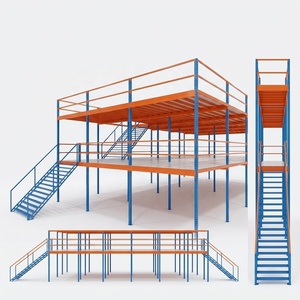
With industrial land rates escalating globally, enterprises are turning toward high-bay vertical configurations. Instead of ground footprint expansions, procurement strategies prioritize multi-tier mezzanine floor integrations and ultra-narrow aisle (VNA) systems capable of clearing vertical structural heights in excess of 15 to 30 meters, effectively doubling cubic operational volume within the existing building envelope.
3. Lifecycle Traceability & Environmental ESG Compliance
Cross-border supply chains require rigorous environmental verification. Sustainable powder coatings formulated without volatile organic compounds (VOCs), closed-loop chemical reclamation during phosphating, and verified recyclable steel sourcing are now prerequisites for tier-1 supply qualification.
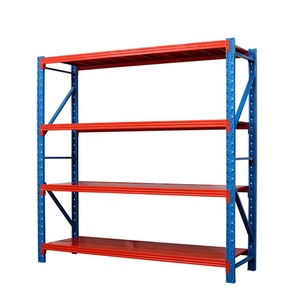
Engineering Parameter Comparison: Industrial Racking Systems
| Storage System Type | Typical Load Rating | Space Utilization Ratio | Stock Rotation Method | Handling Equipment Compatibility |
|---|---|---|---|---|
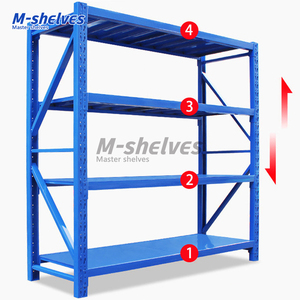
| Wide Span Shelving | 300 – 1,000 kg / level | Moderate (40% - 50%) | 100% Direct Selectivity | Manual Picking, Hand Carts |
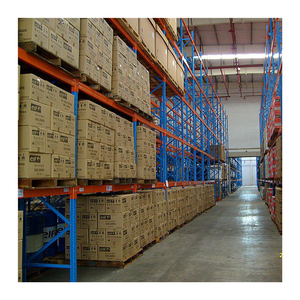
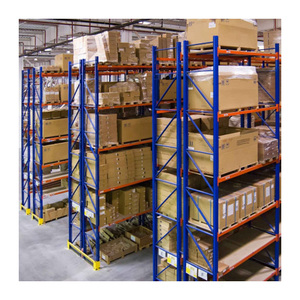
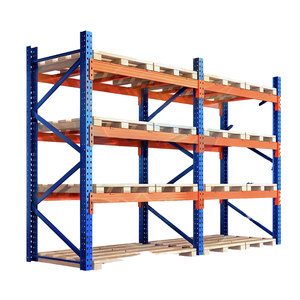
| Heavy Duty Pallet Racks | 1,000 – 4,500 kg / level | High (60% - 70%) | FIFO / Direct Selectivity | Counterbalance, Reach Trucks, VNA |
| Steel Mezzanine Systems | 300 – 1,200 kg / m² | Extreme (Up to 200% Floor Gain) | Multi-tiered / Configurable | Pallet Jacks, Scissor Lifts, Conveyors |
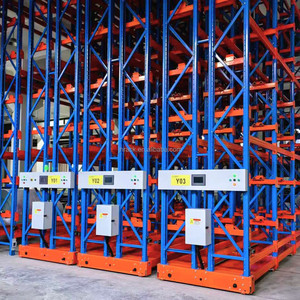
| Electric Mobile Racking | Up to 24,000 kg / bay | Maximum (85% - 90%) | FIFO / Direct via Single Aisle | Standard Reach Trucks, AGVs |
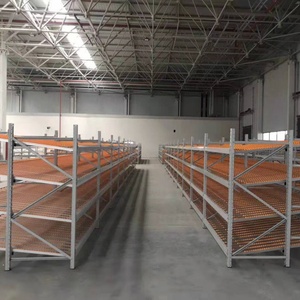
| Carton Flow Systems | 50 – 200 kg / roller lane | Dynamic High-Density | Strict FIFO System | Gravity Feed, Pick-to-Light Integration |
Emerging Design & Technology Trends in Tool Storage Racking
Modern high-capacity tool storage systems are evolving into intelligent, monitored assets. Key technological developments include:
Structural Health Monitoring via Embedded IoT: Next-generation installations are piloting piezoelectric strain gauges and 3-axis accelerometer sensor arrays installed on critical baseplates and lower uprights. These units detect forklift impacts, provide early deflection alerts, and deliver continuous weight telemetry to warehouse management software (WMS).
High-Yield Thin-Wall Steel Optimization: Finite Element Analysis (FEA) enables cold-roll forming lines to create complex multi-bend stiffening profiles. These geometries achieve higher torsional resistance and upright buckling limits while reducing raw material weight, lowering ocean freight expenditures per structural component.
Procurement Knowledge Base
Frequently Asked Questions: B2B Sourcing from China
Technical and commercial answers for logistics directors, system integrators, and procurement managers.
How do your structural rack load ratings comply with international safety standards like EN 15512 and ANSI/RMI MH16.1?
Every rack profile undergoes FEA simulations and physical destructive testing to determine ultimate load and deflection values. Safety factors are designed into all calculation packages, adhering to European standards EN 15512, EN 15620, EN 15635, and American RMI specifications. Certified mill test certificates (MTC) detailing steel yield, tensile strength, and elongation accompany every project shipment.
Can existing warehouse racking layouts be expanded, retrofitted, or re-profiled without halting operations?
Yes. Our modular upright punching pitches (typically 50 mm, 75 mm, or 76.2 mm) permit level adjustments to accommodate changing pallet dimensions. We execute phased retrofitting strategies—such as swapping damaged frames, elevating upright heights, or introducing heavy-duty mezzanine platforms—allowing operations to continue safely around designated work zones.
What are the protective surface finishing protocols against humidity, chemical exposure, and rust?
Our manufacturing process employs a continuous automated pre-treatment line featuring acid washing, surface rust extraction, alkaline degreasing, and nanotech silane/zirconium or zinc-phosphate surface passivation. The electrostatic thermoset powder coat is cured between 180°C and 200°C, achieving an average dry film thickness of 60 to 90 microns and passing 500+ hour neutral salt spray tests. Hot-dip galvanization is also available for harsh chemical or outdoor installations.
What documentation and technical engineering support are provided for system integrators and cross-border buyers?
Our technical support includes full CAD floor layouts, static structural calculations, 3D BIM/Revit models, seismic loading simulations, component assembly manuals, and statutory load warning plaques. On-site technical supervisors or remote video verification engineering services can be scheduled during installation phases.
How is container space optimized to prevent surface scratching and structural deformation during ocean shipping?
Upright frames and horizontal beams are systematically bundled using protective corrugated cardboard, protective edge guards, non-marking PET strapping, and polyethylene shrink wrap. Upright frames feature custom steel shipping dunnage, ensuring high weight density in 40ft High Cube containers while eliminating movement or finish abrasion during maritime shipping.
Enterprise Advantages: Why Global Buyers Partner with Our Manufacturing Hub
With an extensive manufacturing footprint, continuous roll-forming mills, automated robotic welding cells, and dedicated export logistics teams, our factory serves as an OEM/ODM partner for major storage brands, intralogistics system integrators, and industrial enterprises globally.
End-to-End Quality Traceability
Every steel coil undergoes raw material testing. Structural parts receive automated tracking numbers to maintain transparency throughout roll-forming, punching, welding, and coating.
Custom Toolroom Tooling Capabilities
We supply modular storage configurations for press tool dies, injection molds, aerospace jigs, and bar profiles with accessories like drop-in wire decks, pallet support bars, and steel bin dividers.
Global Project Logistics & Packing
Specialized export packaging protocols prevent surface abrasions. Container weight and volume models maximize shipping container cube utilization, minimizing freight costs per metric ton.
Maximize Warehouse Cube Efficiency and Storage Safety
Contact our structural engineering team for customized load evaluations, static structural analysis, and factory-direct price estimates tailored to your project requirements.
Get a Quote