Cantilever System
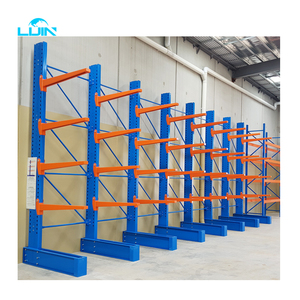
Factory Price Cantilever Rack Heavy Duty Industrial Cantilever Racking Steel Storage
Long Goods
Tubing & Timber
Heavy Duty
From Colón Free Trade Zone (Zona Libre de Colón) consolidation warehouses to Tocumen Cargo Terminal and Panama Pacífico logistics parks, we supply high-tensile containment safety nets, seismic-compliant rack frames, and modular automated storage systems meeting rigorous European EN 15512 and American ANSI/RMI MH16.1 codes.
A technical briefing for logistics directors, port terminal operators, supply chain engineers, and EHS managers operating across the Isthmus of Panama.
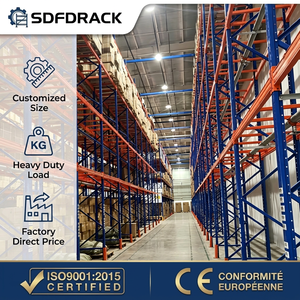
The Republic of Panama commands an unmatched role in world commerce. Driven by the Panama Canal expansion, the trans-isthmian railway, and strategic multimodal hubs like the Colón Free Trade Zone (Zona Libre de Colón - ZLC), Pacific logistics clusters (Panama Pacífico, Howard), and Tocumen International Airport Air Cargo terminal, the country manages tens of thousands of high-cube freight movements every 24 hours. However, this hyper-velocity environment exposes industrial warehousing facilities to distinct structural risks: extreme vertical stacking heights (often exceeding 12 to 14 meters clear height), persistent tropical relative humidity averaging 80% to 95%, intense seismic ground acceleration demands defined by the REP-2014 building code (Reglamento de Diseño Estructural para la República de Panamá), and stringent life safety criteria demanded by international 3PL operators.
Within high-bay selective pallet racking, narrow aisle (VNA), and automated storage and retrieval systems (ASRS), the mitigation of falling inventory is a non-negotiable health and safety imperative. Pallet racking nets (also engineered as rack safety containment nets, high-tenacity nylon fall screens, or modular wire mesh backstops) prevent loose boxes, unstable palletized loads, and sheared stretch-wrap inventory from collapsing into active pedestrian aisles, cross-tunnels, and picking tunnels. Unlike rigid sheet steel backstops that add immense dead loads to rack upright frames, our high-tenacity knotted polyamide and polypropylene pallet racking containment netting systems dissipate dynamic kinetic impact energies through engineered deflection, ensuring absolute employee safety without restricting emergency sprinkler fire water dispersion.
Fabricated from UV-stabilized, high-tenacity synthetic polymers (nylon, polypropylene, and ultra-high-molecular-weight polyethylene) capable of arresting dynamically surging pallets from 500 kg up to 1,500 kg. Features custom aircraft-grade steel perimeter cables, spring dampers, and turnbuckle hardware calibrated to absorb sudden shear forces without causing structural racking upright deflection.
Panama's fire authority (Benemérito Cuerpo de Bomberos de la República de Panamá) enforces strict horizontal and vertical flue space regulations under NFPA 13 / NFPA 231C. Our containment mesh and pallet net apertures provide over 88% open ventilation, preventing heat traps, preserving early ESFR ceiling sprinkler actuation, and completely eliminating solid barrier pooling risks.
Panama's geological profile spans intermediate to high seismic risk zones, notably adjacent to the Pedro Miguel and Miraflores fault zones in Panama City and Chiriquí Province. We deliver FEM 10.2.02, EN 15512, and RMI MH16.1 validated engineering calculations. Structural steel frames utilize oversized anchor baseplates, seismic column bracing, and flexible net energy dissipators.
| Performance Characteristic | High-Tenacity Synthetic Netting | Rigid Welded Wire Mesh Panels | Solid Corrugated Steel Backing |
|---|---|---|---|
| Dynamic Energy Absorption | Extreme (Viscoelastic elongation up to 24% before rebound) | Moderate (Elastic wire deformation; risk of weld separation) | Low (Immediate structural plastic buckling & frame shock) |
| Tropical Marine Corrosion (C4/C5) | Immune (Polymer synthetic weave, rust-proof stainless hardware) | Requires Hot-Dip Galvanizing or thick powder coat | High susceptibility to pitting rust and micro-perforation |
| Dead-Load Added to Racks | Minimal (< 0.45 kg/m²; negligible structural load on columns) | Medium (4.5 – 8.0 kg/m²; adds dead weight to frame) | High (> 12.0 kg/m²; significantly penalizes seismic payload) |
| ESFR Sprinkler Penetration | Optimal (> 88% aperture transparency; NFPA 13 compliant) | Good (70% - 80% open aperture) | Zero (Prohibited in deep flue corridors without in-rack heads) |
| Installation Velocity | Fast (Modular snap-hooks, aircraft cables & span brackets) | Labor intensive (Bolt-on upright brackets per bay) | Slow (Heavy lifting apparatus & continuous fastening) |
In high-throughput bonded hubs like the Colón Free Zone (ZLC), handling containers destined for South America, Central America, and the Caribbean, warehouses experience rapid pallet turnover where forklifts operate in narrow aisles around the clock. Pallet rack rear overhang, unstrapped shrink-wrapped boxes, and rapid mast deceleration can easily lead to pallet extrusion across push-through aisles. Installing certified pallet racking netting on double-run rack flues, single-run building perimeter walls, and pedestrian walkways mitigates million-dollar inventory damage liabilities and guarantees occupational compliance under MITRADEL (Panama Ministry of Labor) safety audits.
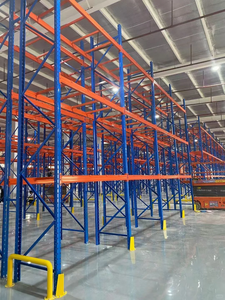
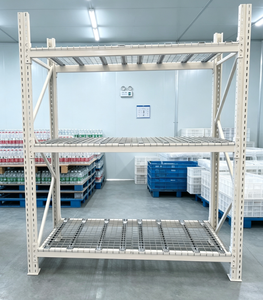
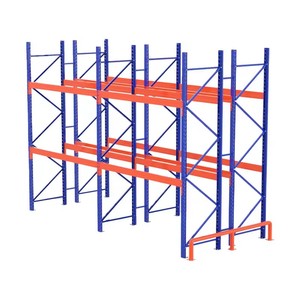
Panama's domestic industrial base produces minimal primary cold-rolled structural steel or high-spec synthetic safety textiles. Consequently, 3PLs and logistics operators across Juan Díaz, Costa del Este, Tocumen, and Colón have historically faced inflated middleman pricing, mismatched imperial/metric specs, and protracted delivery intervals from general traders. By establishing a direct manufacturer-to-project supply line, our factory supplies custom-fabricated pallet racking solutions, certified racking nets, cantilever timber systems, four-way radio shuttle racking, and AMR robotics shelves engineered specifically for Panama's coastal tropical climate.
Every rack column upright is cold-roll formed from certified high-yield Q235B / Q355B steel, surface-treated with a multi-stage zinc-phosphate immersion bath, and coated with an automated electrostatic thermosetting epoxy-polyester powder finish cured at 200°C. For unconditioned port facilities directly exposed to the salt-laden maritime air of Bahía de Manzanillo or Balboa, we provide hot-dip galvanized components certified under ASTM A123 / ISO 1461, ensuring over 25 years of corrosion-free operational lifespan.
How regional redistribution hubs are evolving from legacy low-bay storage to high-bay intelligent automation.
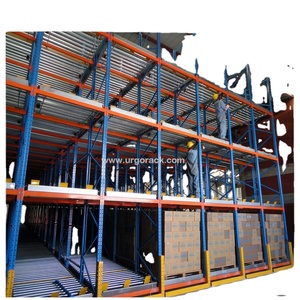
With industrial land costs climbing along the Corredor Sur and Transístmica highway, logistics providers are abandoning conventional 3.5-meter forklift aisles in favor of 1,500 kg 4-way pallet shuttle systems. These compact cubes deliver up to 80% spatial utilization while integrating directly with WMS systems for FMCG cross-docking.
Panama's position as a regional hub for biopharmaceuticals and frozen foodstuffs has spurred explosive demand for cold storage (-25°C to +4°C). In thermal environments, our low-temperature impact netting resists embrittlement down to -40°C, while pre-galvanized racking prevents condensation-induced delamination.
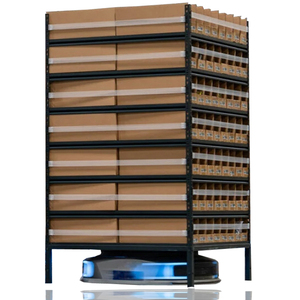
E-commerce fulfillment centers serving Central America are rapidly implementing autonomous mobile robots (AMRs). Our precision-rolled shelving systems are engineered with laser-leveled tolerances, zero-play connections, and high-visibility perimeter mesh backdrops that safeguard goods-to-person automation zones.
As a specialized global manufacturer and OEM partner producing industrial racking, mezzanine platforms, and warehouse fall-safety containment nets, our enterprise provides end-to-end reliability for international EPC contractors, logistics integrators, and industrial facility owners throughout Central America. Here is why procurement teams select our infrastructure for Panama deployments:
Every installation is verified using advanced 3D FEA structural modeling. Load tables, beam deflection ratios (L/200 standard), and anchor uplift calculations are tailored to the concrete slab specification (F-min numbers) and soil classifications of your Panama facility.
All raw cold-rolled coils are procured with EN 10204 Type 3.1 mill test certificates. Continuous automated roll-forming lines, robotic CNC beam welding, and ultrasonic testing guarantee zero seam failure under heavy cyclical dynamic loads.
Optimized nesting packaging minimizes ocean freight cube, fitting maximum linear meters of uprights and beams into 40ft High Cube containers. We provide complete bilingual Spanish-English customs documentation, EUR.1 / Certificate of Origin, and complete assembly schematics.
Answers to common structural, logistical, and compliance questions asked by Panama warehouse project directors.