Featured Live Pallet & Industrial Storage Systems
Precision-machined roll tracks, high-yield Q345B steel structural profiles, and modular configurations engineered for heavy-duty Mexico City supply chain applications.
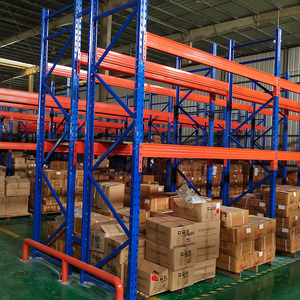
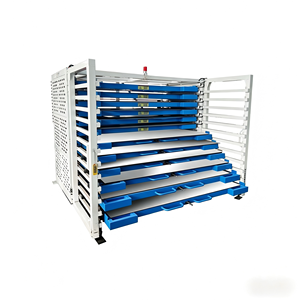
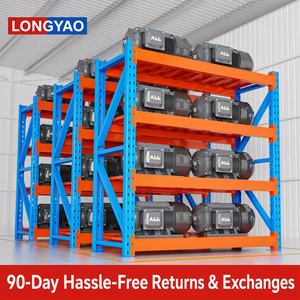
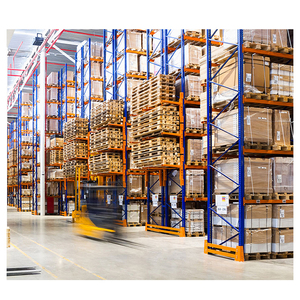
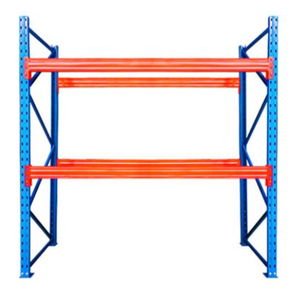
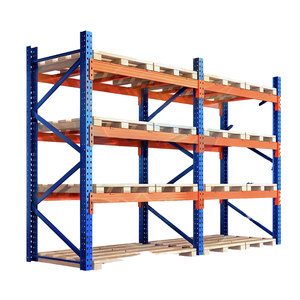
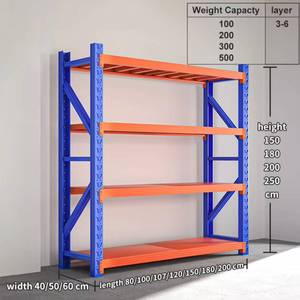
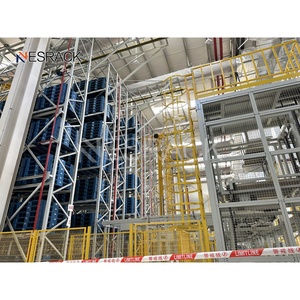
Engineering Live Pallet Racking for the Valley of Mexico
Navigating the intersection of geotechnical soil mechanics, high seismic acceleration, and dense logistics corridors across CTT and the Metropolitan Zone.
Optimizing High-Throughput Buffers in Cuautitlán, Tultitlán, and Tepotzotlán (CTT)
The Cuautitlán-Tultitlán-Tepotzotlán (CTT) submarket represents over 60% of modern industrial absorption in the greater Mexico City area. Facing soaring industrial real estate lease rates—surpassing historic peaks per square meter—logistics operators, 3PLs, and FMCG cold chains cannot afford vacant internal circulation corridors. Live pallet racking (dynamic gravity flow storage) condenses storage by eliminating forklift access aisles between loading and unloading faces.
Our gravity systems integrate precision brake rollers configured specifically for standard Mexican GMA pallets (48×40 inches) and European pooling formats (1200×800 mm). By utilizing controlled slope angles between 3.5% and 4.0%, pallet live flow lanes guarantee continuous FIFO (First-In, First-Out) operations without relying on motor-driven automation, reducing electrical demand while maximizing picking throughput during peak distribution windows.
- Centrifugal speed controllers ensuring constant descent velocity regardless of load weight (250 kg to 1,500 kg per pallet).
- Mechanical separation stops at the discharge face relieving line pressure for smooth forklift extraction.
- Dedicated entry guides preventing skewed pallet entry and preventing lane hang-ups.
| Track Slope Pitch | 3.5% to 4.2% nominal gradient |
| Roller Spacing | 50 mm, 75 mm, or 100 mm pitch centers |
| Brake Controller Ratio | 1 centrifugal brake every 2–3 pallet positions |
| Pallet Weight Range | 300 kg minimum to 1,500 kg maximum |
| Structural Steel | High-tensile Q345B / ASTM A572 Grade 50 |
| Seismic Ductility (R) | Engineered up to R=4.0 structural response factor |
Structural Seismic Dissipation in Mexico City's Lacustrine Clay Soils
Industrial warehousing in the Valley of Mexico operates over some of the most complex soil mechanics in structural engineering. From the firm basalt volcanic soils in the southern peripheral hills to the highly compressible saturated lacustrine clays in the central lakebeds (Zone IIIb and IIIc), seismic waves undergo significant site amplification during subduction-zone seismic events along the Cocos-North American plate interface.
Standard racking configurations imported without seismic validation pose severe failure liabilities under dynamic fluidification conditions. Our live pallet racking systems for CDMX facilities undergo FEM modal spectrum and non-linear dynamic time-history simulation conforming with both European EN 15512 and the local Mexico City Building Code (Reglamento de Construcciones para el Distrito Federal - RCDF / NTC-Sismo).
- Over-engineered base plates with ductile post-installed chemical anchor arrays transferring shear without puncturing concrete slabs.
- High-ductility beam-to-column locking connecters with 5-hook engagement mitigating catastrophic dislodgment during lateral sway.
- Heavy cold-formed omega upright channels manufactured with certified minimum yield strength exceeding 355 MPa.
| Local Code Compliance | RCDF / NTC-Diseño por Sismo (CDMX) |
| Design Acceleration (A0) | 0.16g to 0.40g site-specific amplification |
| Soil Interaction Model | Type III soft clay deep-foundation dynamic response |
| Connection Rigidity | Semi-rigid rotational stiffness verified by testing |
| Safety Factor (Steel) | 1.67 ASD / 1.5 LRFD design margins |
| Pallet Retention Safety | Dynamic end-stop buffers certified to 2.5x kinetic load |
Market Dynamics Shaping Live Racking Procurement in Mexico
How nearshoring, urban infill distribution, and cold chain expansion dictate modernized high-density warehouse racking architectures.
Supply Chain Decoupling & North American Re-Shoring
As multinational corporations establish Tier-1 and Tier-2 automotive, aerospace, and electronics fabrication hubs along the Bajío-Mexico City corridor, buffer storage requirements have shifted from just-in-time (JIT) to resilient just-in-case (JIC) inventory models. Live pallet racking provides high-throughput buffer staging between assembly and regional distribution without expanding facility footprints.
Last-Mile Saturation in Central Mexico City
Land scarcity inside the Circuito Interior and Periférico belts has driven industrial developers to convert brownfield properties into multi-temperature urban delivery hubs. Gravity carton flow and pallet live storage allow rapid loading and unloading in restricted-height buildings, driving 40% faster order dispatch for quick-commerce and pharmaceutical fulfillment.
Energy-Conserving Cold Storage Systems
With electricity tariffs posing major operational expenditures for frozen protein and dairy distributors operating out of Tlalnepantla and Iztapalapa, live pallet flow maximizes cold warehouse cube utilization. Removing warm aisle volumes reduces refrigeration cubic volume requirements by up to 35%, creating direct long-term operational savings.
Why Engineering Teams Choose Our Production Facilities
Decades of specialized intralogistics manufacturing, rigorous EN 15512 structural certifications, and comprehensive supply chain coordination serving Mexican enterprises.
Full Lifecycle Engineering & PE Calculations
We provide complete project structural deliverables: certified finite element analysis (FEA), static structural calculation packages, detailed CAD layout studies, and seismic design documentation tailored to local municipal permitting standards across Mexico.
Automated Production & Steel Traceability
Operating continuous cold-roll forming lines, laser tube cutting, and robotic welding cells with full mill heat certificates (MTR). Every upright frame and beam carries verifiable material traceability to guarantee zero structural defect propagation under dynamic loading.
Containerized Ocean Logistics to Manzanillo & Lázaro Cárdenas
Optimized nesting and bundle packing ensure maximum cubic filling of 40' High Cube shipping containers, direct sea freight delivery to Mexican Pacific ports (Manzanillo/Lázaro Cárdenas), streamlined customs paperwork, and inland multi-modal transit direct to Mexico City job sites.
Frequently Asked Questions by Mexico City Procurement Teams
Clarifying technical standards, local pallet compatibility, import tariffs, and seismic certification requirements.
How does live pallet racking accommodate Mexican standard 48x40 inch wooden pallets versus CHEP/plastic skids?
What seismic design codes and documentation are provided for Mexico City (CDMX) industrial permits?
How are import duties, shipping, and customs clearances handled when importing racking from China to Mexico?
Can live pallet flow systems be retrofitted into our existing selective pallet rack upright frames?
What routine maintenance and safety inspection standards apply to gravity roller beds?
Accelerate Your Storage Capacity with Engineered Racking Systems
Consult directly with our structural engineering team to receive customized warehouse layout CAD drawings, seismic calculations for Mexico City, and direct-from-factory pricing schedules.